
This Pasta e Ceci is a satisfying one-pot meal that combines protein-rich chickpeas with small pasta in a savory broth. It is an affordable, vegetarian dish that can be prepared in under 20 minutes using common pantry items.
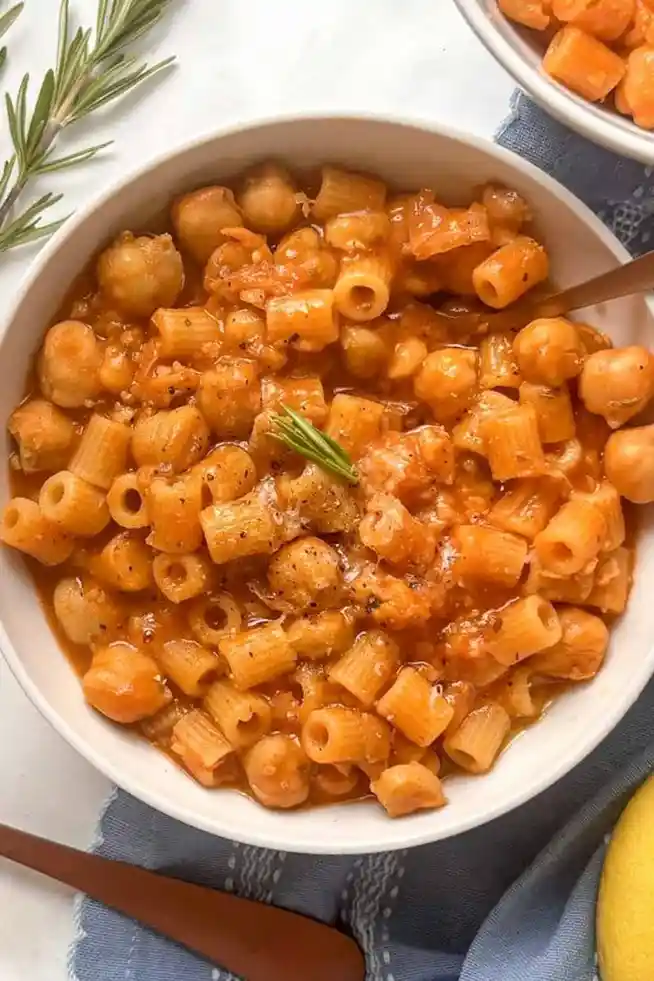
List of ingredients
- 1 400g tin of chickpeas, drained – use high-quality canned chickpeas for convenience.
- 120g ditalini pasta – small tube-shaped pasta that matches the chickpea size.
- 1 tablespoon olive oil – plus additional extra virgin olive oil for the final drizzle.
- 2 sliced garlic cloves – freshly sliced for maximum aromatic flavor.
- 1 sprig of fresh rosemary, diced – ensure the woody stem is removed.
- 2 tablespoon tomato paste – used to thicken and add deep color to the sauce.
- 60ml white wine vinegar – provides the necessary acidity to balance the legumes.
- 2 cups (500ml) vegetable stock – use a low-sodium version to control salt levels.
- 30g grated Pecorino – ensure a microbial-rennet variety for dietary suitability.
- 1 teaspoon red pepper flakes (Optional) – add these for a subtle spicy kick.
- Salt and pepper, to taste – used for final seasoning adjustments.
step-by-step instructions
- Sauté aromatics: Heat the olive oil in a wide pan over medium heat. Add the sliced garlic and diced rosemary, sautéing for 1-2 minutes until fragrant but not browned.
- Develop the base: Stir in the tomato paste and optional red pepper flakes. Cook for 2-3 minutes, stirring constantly, until the paste darkens in color and becomes concentrated.
- Deglaze the pan: Pour in the white wine vinegar. Use a wooden spoon to scrape the bottom of the pan, releasing the browned bits for deeper flavor.
- Prepare chickpeas: Add the drained chickpeas to the pan and stir. Use the back of your spoon to crush about one-quarter of the chickpeas, which helps thicken the broth naturally.
- Cook pasta: Pour in the vegetable stock and add the ditalini pasta. Simmer for 7-9 minutes, stirring frequently to prevent the pasta from sticking, until it reaches an al dente texture.
- Finish with cheese: Remove the pan from the heat. Stir in the grated Pecorino cheese until melted and incorporated.
- Serve: Portion the pasta into bowls. Season with fresh black pepper, extra grated cheese, and a drizzle of extra virgin olive oil.
Detailed Ingredient Guidance
Selecting the Ideal Pasta Shape
Ditalini is the traditional choice because its size mirrors the chickpeas, ensuring a consistent texture in every bite. If unavailable, acini di pepe or small macaroni are excellent alternatives. Avoid large pasta shapes as they disrupt the balance of the stew.
The Role of Tomato Paste
Tomato paste provides more than just color; it adds a concentrated umami depth to the broth. Cooking the paste until it darkens removes the raw metallic taste and enhances the overall sweetness of the dish.
Fresh Rosemary vs Dried
Fresh rosemary provides a piney, aromatic quality that defines this Italian classic. If using dried rosemary, reduce the quantity to one teaspoon as dried herbs are more potent and can become overpowering.
Using High-Quality Olive Oil
Since this recipe has few ingredients, the quality of the oil is noticeable. Use a refined olive oil for the initial sautéing and a high-quality extra virgin olive oil for the finishing drizzle to add a peppery, fresh note.
Customizations and Substitutions
Alternative Legume Options
While chickpeas are traditional, you can substitute them with cannellini beans or borlotti beans. This transforms the dish into a variation of pasta e fagioli, providing a creamier texture and a slightly different flavor profile.
Vegan Cheese Alternatives
To make this recipe plant-based, omit the Pecorino and replace it with nutritional yeast or a cashew-based parmesan alternative. These options provide the salty, nutty flavor required to finish the dish.
Preparing Dried Chickpeas
For a deeper flavor, use dried chickpeas soaked overnight and simmered until tender. Replace the canned chickpeas with the cooked version and use the chickpea cooking liquid in place of part of the vegetable stock for added richness.
Substituting Pecorino Cheese
If Pecorino is unavailable, a microbial-rennet Parmesan or Grana Padano works well. These aged hard cheeses offer similar saltiness and sharpness that cuts through the starchiness of the pasta and beans.
Professional Cooking Techniques
The Importance of Deglazing
Deglazing with white wine vinegar lifts the caramelized particles, known as the fond, from the bottom of the pan. This process integrates those concentrated flavors back into the liquid, preventing a burnt taste and adding complexity.
Thickening the Sauce Naturally
Crushing a portion of the chickpeas releases natural starches into the liquid. This creates a creamy, emulsified consistency without the need for heavy cream or flour-based thickeners.
Preventing Pasta from Sticking
Ditalini pasta releases a significant amount of starch as it cooks in the broth. Frequent stirring is essential to keep the pasta moving and prevent it from clumping or sticking to the bottom of the pan.
Managing Liquid Levels
Depending on the heat of your stove, liquid may evaporate faster than expected. If the sauce becomes too thick before the pasta is cooked, add a small amount of boiling water or extra stock to maintain a stew-like consistency.
Serving and Pairing Ideas
Incorporating Fresh Greens
Adding a handful of fresh baby spinach or chopped kale during the last two minutes of cooking adds color and nutrients. The residual heat will wilt the greens perfectly without overcooking them.
Recommended Side Dishes
Pair this dish with a crisp arugula salad dressed with lemon and olive oil to provide a bitter contrast. Warm, crusty sourdough bread is also ideal for soaking up the remaining savory broth.
Optimal Garnishments
Beyond cheese and oil, a sprinkle of fresh parsley or a zest of lemon can brighten the heavy flavors. Freshly cracked black pepper is vital for adding a sharp heat that complements the chickpeas.
Storage and Reheating
Refrigeration Guidelines
Store leftovers in an airtight glass container in the refrigerator for up to five days. The pasta will continue to absorb liquid over time, causing the dish to thicken into a denser consistency.
Freezing Instructions
This dish can be frozen for up to three months in freezer-safe containers. Be aware that the pasta may soften further upon thawing, so slightly undercook the pasta if you plan to freeze the meal.
Reheating for Freshness
When reheating in a microwave or on the stovetop, add a splash of water or vegetable broth. This loosens the starches and restores the creamy, brothy texture of the original dish.
Troubleshooting Common Issues
Correcting an Overly Thick Sauce
If the pasta absorbs too much liquid and becomes a thick paste, stir in hot vegetable broth one tablespoon at a time. Continue adding liquid until the desired stew-like consistency is restored.
Balancing Excessive Acidity
If the white wine vinegar makes the dish too tart, add a tiny pinch of sugar or an extra drizzle of olive oil. This neutralizes the sharp acidity and rounds out the flavor profile.
Handling Overcooked Pasta
If the pasta becomes too soft, avoid further simmering once it reaches al dente. Remember that the pasta continues to cook slightly after being removed from the heat due to residual temperature.
Frequently Asked Questions
Can I make this recipe gluten-free?
Yes, you can use a gluten-free pasta alternative such as chickpea pasta or brown rice ditalini. Note that gluten-free pastas often release different starches, which may slightly alter the thickness of the sauce.
Can I add more vegetables to the base?
Adding a finely diced mirepoix of carrots, celery, and onion at the beginning of the sauté process adds depth. Sauté these vegetables until softened before adding the garlic and rosemary.
What is the best vegetable stock to use?
A low-sodium vegetable stock is recommended so you can control the salt levels yourself. If using a high-sodium stock, omit additional salt until the very end of the cooking process.
How do I prevent the garlic from burning?
Keep the heat at a medium level and ensure the oil is warm but not smoking. Add the rosemary at the same time as the garlic to help regulate the temperature and prevent browning.
Print
Hearty Pasta e Ceci (Pasta with Chickpeas)
- Total Time: 25 minutes
- Yield: 4 portions 1x
- Diet: Vegetarian
Description
This pasta e ceci recipe (pasta with chickpeas) is simple, budget-friendly vegetarian Italian comfort food at its finest. Ready in less than 20 minutes with basic pantry ingredients.
Ingredients
- 1 400g tin of chickpeas, drained
- 120g ditalini pasta
- 1 tablespoon olive oil (plus more for drizzling)
- 2 sliced garlic cloves
- 1 sprig of fresh rosemary, diced and stem removed
- 2 tablespoon tomato paste
- 60ml white wine vinegar
- 2 cups (500ml) vegetable stock
- 30g grated Pecorino
- 1 teaspoon red pepper flakes (optional)
- Salt and pepper, to taste
Instructions
- Step 1: Heat your olive oil in a pan and add the diced garlic and rosemary. Saute for 1-2 minutes.
- Step 2: Add your tomato paste to the pan and cook for another 2-3 minutes, stirring constantly, until the tomato paste has significantly darkened in colour. If you’re using red pepper flakes, add them to the pan now too.
- Step 3: Add the white wine vinegar to deglaze the pan – use your wooden spoon to help release any black bits at the bottom of the pan for extra flavor.
- Step 4: Add the chickpeas and stir them into the sauce. Use the back of your spoon to crush about 1/4 of the chickpeas to help thicken up the sauce!
- Step 5: Pour in the vegetable stock and the ditalini pasta. Cook for 7-9 minutes, stirring very often to avoid the pasta sticking, until the pasta is al dente.
- Step 6: Remove the pan from the heat and grate in your hard cheese.
- Step 7: Dish up your pasta e ceci into bowls, season with more black pepper and hard cheese, and drizzle with a little extra virgin olive oil before serving.
Notes
This is a versatile dish that can be made in a variety of ways. You could add carrots and celery to the vegetable sofrito, you could use a different pasta shape, substitute the chickpeas for beans (for pasta e fagioli), use fresh cherry tomatoes instead of tomato paste, or add more vegetables for a heartier stew version of this recipe. Store any leftovers in an airtight container in the refrigerator for up to 5 days.
- Prep Time: 5 minutes
- Cook Time: 20 minutes
- Category: Pasta
- Method: One-pot
- Cuisine: Italian
Nutrition
- Serving Size: 1 portion
- Calories: 337 kcal
- Sugar: 8 g
- Sodium: 366 mg
- Fat: 10 g
- Saturated Fat: 2 g
- Unsaturated Fat: 6 g
- Trans Fat: 0 g
- Carbohydrates: 44 g
- Fiber: 9 g
- Protein: 17 g
- Cholesterol: 11 mg