
This rich and comforting beef stew is designed for simplicity and deep flavor, simmering for hours to achieve melt-in-your-mouth tenderness. It is an ideal one-pot meal for cold evenings or for those who prefer a set-it-and-forget-it approach to dinner. Serve it over creamy potatoes for a satisfying, restaurant-quality experience at home.
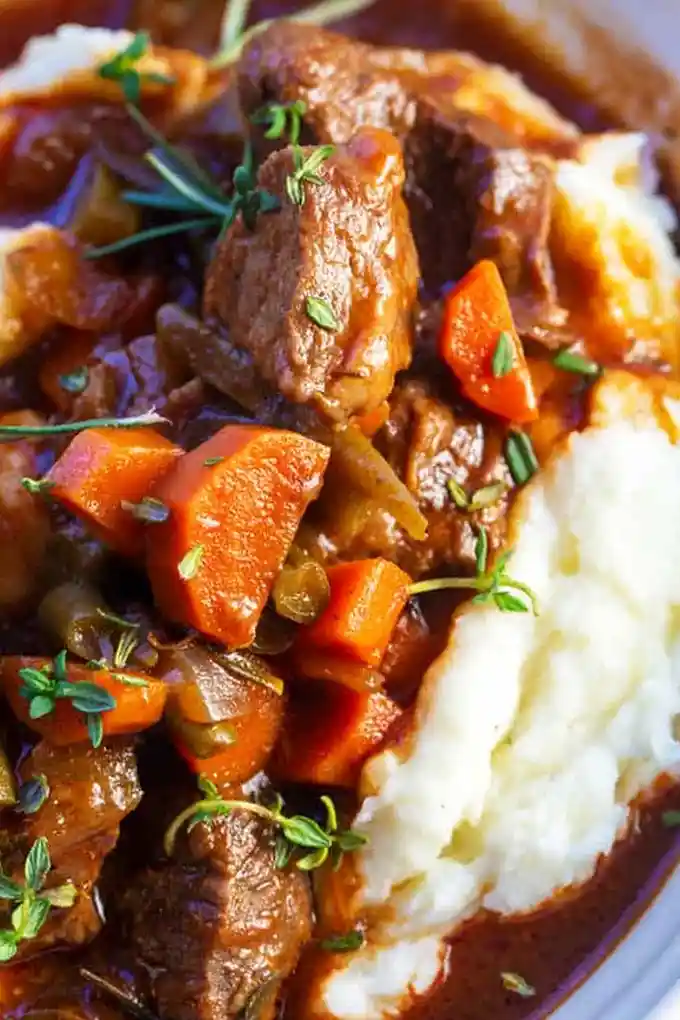
List of ingredients
- 1 lb beef stew meat – cut into bite-sized cubes for even cooking.
- 2 tbsps flour – all-purpose or tapioca flour for a gluten-free alternative.
- 1/2 tsp sea salt – used to season and enhance the beef.
- 1/2 tsp black pepper – adds a subtle warmth to the stew.
- 1 1/2 cups alcohol-free red wine substitute – provides the tart, deep profile of Cabernet Sauvignon.
- 4 carrots – peeled and sliced into thick rounds.
- 2 celery stalks – diced to add aromatic crunch.
- 1 large onion – diced to create a savory base.
- 1 cup beef broth – adds essential liquid and richness.
- 1 large bay leaf – adds a classic herbal depth.
- 2-3 tsps dried rosemary – for a woody, aromatic scent.
- 2-3 tsps dried thyme – complements the savory beef flavor.
- 1 6 oz can tomato paste – thickens the sauce and adds a concentrated umami taste.
- Optional: cooked garlic mashed potatoes – for serving as a hearty base.
step-by-step instructions
- Coat the Meat: Place the beef stew meat in the slow cooker and sprinkle with salt, pepper, and flour. Stir well to ensure every piece of meat is evenly coated, which helps thicken the sauce during the cooking process.
- Add Liquid Bases: Pour in the alcohol-free red wine substitute and the beef broth. Stir in the tomato paste until it is mostly blended into the liquid.
- Incorporate Vegetables: Add the sliced carrots, diced celery, and diced onion to the pot. Gently stir to distribute the vegetables around the meat.
- Add Aromatics: Stir in the rosemary and thyme, then place the bay leaf on top of the mixture.
- Slow Cook: Cover the slow cooker with a tight-fitting lid and set it to the low heat setting. Let the stew simmer for 8 to 10 hours until the meat is tender.
- Final Serve: Remove the bay leaf from the pot. Spoon the stew and its rich gravy over a bed of warm garlic mashed potatoes.
Selecting the Best Beef for Stewing
Using Beef Chuck Roast
Beef chuck is the gold standard for slow cooking because it contains a high amount of connective tissue. As the meat simmers slowly, this collagen breaks down into gelatin, resulting in a succulent texture and a naturally thick sauce.
Choosing Pre-Cut Stew Meat
Pre-cut stew meat is convenient for quick prep and usually consists of various lean cuts. While easier to use, ensure the pieces are uniform in size so they cook at the same rate and avoid toughness.
Managing Excess Fat
Trim large chunks of hard white fat from the exterior of the beef before coating it in flour. While some fat is necessary for flavor, too much can create an oily layer on top of your stew that is difficult to remove.
Optimizing Vegetable Preparation
Uniform Carrot Slicing
Cut your carrots into thick rounds of about half an inch each. Slicing them too thin may cause them to disintegrate during a ten-hour cook time, while keeping them thick ensures they retain their shape and bite.
Dicing Celery for Texture
Dice the celery into small, consistent pieces. This allows the celery to melt into the background of the sauce while still providing occasional bursts of fresh, aromatic flavor.
Onion Sizing for Flavor
A medium to large dice for the onion is recommended. Smaller pieces will dissolve completely into the gravy, whereas larger pieces will remain visible and provide a sweet, cooked onion taste.
Effective Thickening Techniques
The Flour Coating Method
Tossing the raw meat in flour before adding liquid creates a roux-like effect inside the pot. This method is the most convenient as it thickens the stew gradually throughout the entire cooking process.
Creating a Cornstarch Slurry
If the stew is too thin at the end of the cooking time, mix one tablespoon of cornstarch with cold water. Stir this slurry into the bubbling stew for the final 30 minutes of cooking for a glossy, thick finish.
Using a Reduction Process
For those avoiding extra starches, leave the lid slightly ajar during the last hour of cooking. This allows some of the liquid to evaporate, concentrating the flavors and naturally thickening the sauce.
Substituting the Red Wine
Alcohol-Free Red Wine Alternatives
Use a dedicated alcohol-free red wine available at most specialty stores. These products mimic the fermentation flavors and acidity of real wine without containing any alcohol.
Beef Broth and Balsamic Vinegar
A mixture of extra beef broth and a tablespoon of balsamic vinegar can replicate the tartness of red wine. This combination provides the acidity needed to balance the richness of the beef and tomato paste.
Unsweetened Pomegranate Juice
Pomegranate juice offers a similar color and a deep, tannic quality that mimics red wine. Ensure the juice is unsweetened to avoid making the beef stew taste like a dessert.
Enhancing the Flavor Profile
Adding Fresh Minced Garlic
Adding three to four cloves of minced garlic along with the onions increases the aromatic depth. Garlic pairs perfectly with the rosemary and thyme to create a more complex savoriness.
Using Umami Boosters
A splash of coconut aminos or a bit of mushroom powder can add an extra layer of umami. These additives deepen the savory notes of the beef broth and tomato paste.
Fresh vs Dried Herbs
While dried herbs are convenient for slow cooking, you can use fresh rosemary and thyme for a brighter taste. Use a three-to-one ratio of fresh to dried herbs to ensure the flavor remains balanced.
Serving and Pairing Ideas
Garlic Whipped Potatoes
Whip boiled potatoes with butter, a splash of cream, and plenty of roasted garlic. This creamy base absorbs the red wine gravy and turns the stew into a complete, filling meal.
Toasted Crusty Bread
Serve the stew with thick slices of sourdough or a French baguette toasted with olive oil. The bread is perfect for soaking up the remaining sauce from the bowl.
Steamed Green Vegetables
Balance the richness of the beef with a side of steamed broccoli or sautéed spinach. The bitterness and freshness of green vegetables cut through the heavy fats of the stew.
Storage and Preservation
Refrigeration Guidelines
Allow the stew to cool slightly before transferring it to an airtight container. Store it in the refrigerator for up to four days, ensuring the lid is sealed tight to prevent odors from escaping.
Freezing for Future Meals
Beef stew freezes exceptionally well for up to three months. Place the stew in freezer-safe bags or containers, leaving a small amount of space at the top for expansion during freezing.
Choosing the Right Containers
Glass containers are preferable for storage as they do not absorb flavors or stains from the tomato paste and red wine substitute. Ensure they are BPA-free and leak-proof.
Reheating for Best Quality
Stovetop Reheating
Place the stew in a pot over medium-low heat and stir occasionally. Add a splash of beef broth or water if the stew has thickened too much during refrigeration.
Microwave Instructions
Heat the stew in a microwave-safe bowl in one-minute intervals. Stir between each interval to ensure the heat is distributed evenly and avoid hot spots.
Slow Cooker Reheating
For a more gradual warm-up, place the chilled stew back into the slow cooker on low for two to three hours. This method helps the meat regain its tenderness without overcooking.
Troubleshooting Common Issues
Handling a Watery Consistency
If the stew is too thin, it is often due to excess moisture from the vegetables. Simmer the stew without a lid on the stove for 15 minutes to reduce the liquid quickly.
Fixing Tough Meat
If the beef is still tough after the allotted time, it simply needs more heat. Continue cooking on low for another hour or two, as different cuts of beef break down at different speeds.
Correcting Over-Salting
If the stew tastes too salty, add a peeled, halved potato to the pot and simmer for 30 minutes. The potato will absorb some of the excess salt before you remove it before serving.
Frequently Asked Questions
Can I use a different meat?
Yes, you can use pork-free alternatives like venison or bison. These lean meats work well, though you may need to add a bit more fat or oil to prevent them from drying out.
Is this recipe freezer friendly?
Absolutely. The stew maintains its flavor and texture well after freezing and thawing, making it a great option for meal prep.
How do I make it gluten-free?
Substitute the all-purpose flour with tapioca flour, cornstarch, or a certified gluten-free flour blend. The cooking process remains exactly the same.
Can I add potatoes directly to the pot?
Yes, you can add diced russet or Yukon Gold potatoes during the last four hours of cooking. This makes the stew a one-pot meal without needing a separate potato side.
What is the best slow cooker setting?
The low setting is highly recommended for beef stew. A lower temperature over a longer period allows the collagen in the beef to melt, ensuring the meat is tender rather than chewy.
Print
Hearty Slow Cooker Beef Stew with Savory Red Wine Flavor
- Total Time: 8 hours 10 minutes
- Yield: 6 servings 1x
- Diet: Dairy-Free
Description
Simmered in beef broth and a non-alcoholic red wine alternative for hours, this beef stew is perfect for your slow cooker. It’s hearty and comfort food at its finest.
Ingredients
- 1 lb beef stew meat
- 2 tbsps flour (or tapioca flour for gluten free)
- 1/2 tsp sea salt
- 1/2 tsp pepper
- 1 1/2 cups non-alcoholic red wine alternative
- 4 carrots, peeled and sliced
- 2 celery stalks, diced
- 1 large onion, diced
- 1 cup beef broth
- 1 large bay leaf
- 2–3 tsps rosemary
- 2–3 tsps thyme
- 1 6 oz can tomato paste
Instructions
- Coat: In a slow cooker add your meat, salt, pepper and flour. Stir to ensure meat is coated.
- Slow Cook: Add the rest of the ingredients, cover and cook on low for 8-10 hours.
- Serve: Optional: When the stew is cooked, serve over garlic mashed potatoes.
Notes
To make gluten-free, substitute all-purpose flour with tapioca flour.
- Prep Time: 10 minutes
- Cook Time: 8 hours
- Category: Main Course
- Method: Slow Cooker
- Cuisine: American
Nutrition
- Serving Size: 1 serving
- Calories: 197 kcal
- Sugar: 3 g
- Sodium: 234 mg
- Fat: 4 g
- Saturated Fat: 1 g
- Unsaturated Fat: 3 g
- Trans Fat: 0 g
- Carbohydrates: 9 g
- Fiber: 1 g
- Protein: 18 g
- Cholesterol: 46 mg