
This creamy herby artichoke pasta combines rich textures and aromatic herbs for a satisfying meal. It is a versatile dish that works well for quick weeknight dinners or as a sophisticated side for guests.
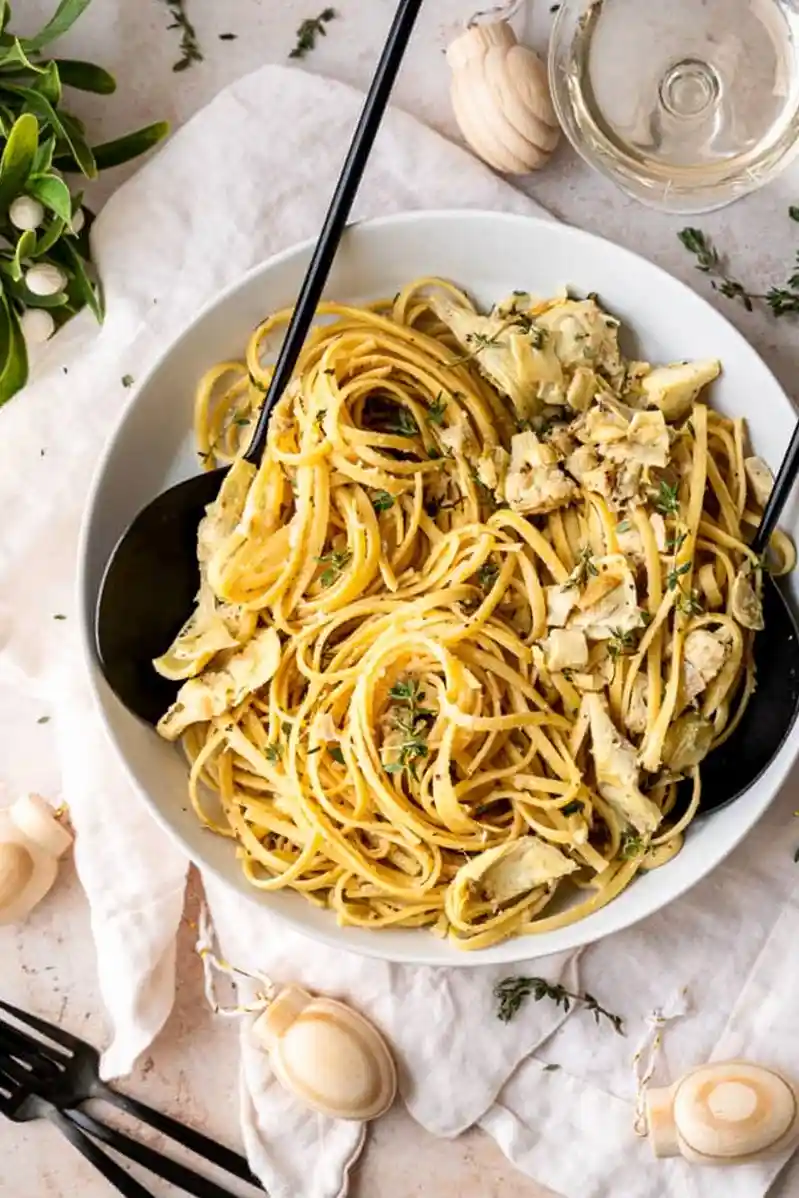
List of ingredients
- 1 lb linguine – cook until al dente to maintain structure.
- 2 tablespoons olive oil – used for sautéing the aromatics.
- 1 shallot, minced – provides a delicate, sweet onion base.
- 3 cloves garlic, minced – adds a pungent, savory depth.
- 1/2 teaspoon salt – balances and enhances the overall flavor.
- 1/2 teaspoon black pepper – adds a subtle spicy kick.
- 1/2 teaspoon dried thyme – contributes earthy, woody notes.
- 1/2 teaspoon dried oregano – gives the dish a classic Italian aroma.
- 1/4 teaspoon red pepper flakes – introduces a mild, warm heat.
- 1 can quartered artichoke hearts, drained – provides substantial, meaty bites.
- 1 can chopped artichoke hearts, drained – ensures artichoke flavor in every forkful.
- 1/4 cup heavy cream – creates a smooth, velvety sauce consistency.
- 1/2 cup grated parmesan cheese – used for a salty, nutty finishing touch.
- Fresh thyme – used as a bright, aromatic garnish.
step-by-step instructions
- Boil Pasta: Bring a large pot of salted water to a boil. Add the linguine and cook according to the package directions. Remember to reserve 1 cup of the starchy pasta water before draining the noodles.
- Sauté Aromatics: Place a large skillet over medium heat and add the olive oil and minced shallot. Sauté for 3 to 4 minutes until the shallots are soft and translucent.
- Bloom Spices: Stir in the minced garlic, salt, black pepper, dried thyme, dried oregano, and red pepper flakes. Sauté for an additional 2 to 3 minutes until the garlic is fragrant but not browned.
- Brown Artichokes: Add both the quartered and chopped artichoke hearts to the skillet. Stir well and sauté for 5 to 6 minutes, allowing the artichokes to become golden and slightly caramelized.
- Combine and Finish: Add the cooked linguine and 1/4 cup of the reserved pasta water to the pan. Toss thoroughly, then pour in the heavy cream and toss again until the sauce is emulsified. Top with grated parmesan cheese and fresh thyme before serving.
Cooking Mastery Tips
Maintaining the Al Dente Texture
Cook your linguine for one to two minutes less than the package suggests. Because the pasta continues to cook when tossed in the hot skillet with the cream sauce, undercooking slightly prevents the noodles from becoming mushy. This ensures a professional, firm bite.
Utilizing Starchy Pasta Water
Do not discard all the pasta water, as the released starches act as a natural emulsifier. When added to the cream and oil, it helps the sauce cling to the pasta rather than sliding off. This technique creates a cohesive, glossy finish to the dish.
Achieving Golden Artichokes
Allow the artichokes to sit undisturbed in the pan for a minute or two during the sauté process. This contact with the heat creates browning, which develops a deeper, nuttier flavor profile. Golden artichokes provide a better contrast to the creamy sauce than steamed ones.
Preventing Garlic Bitterness
Always add the minced garlic after the shallots have already softened. Garlic has a lower burn point and can turn bitter if exposed to high heat for too long. Adding it later in the process ensures a sweet, fragrant aroma.
Ingredient Substitutions and Swaps
Low-Fat Cream Alternatives
For a lighter version, you can replace heavy cream with half-and-half or whole milk. Since these are thinner, you may want to simmer the sauce slightly longer to reduce it. Alternatively, a tablespoon of Greek yogurt can provide creaminess with added protein.
Alternative Pasta Shapes
While linguine is traditional, short pastas like penne, fusilli, or farfalle work excellently. These shapes have ridges and holes that trap the chopped artichokes and cream sauce more effectively. Choose based on your preference for noodle length.
Switching to Fresh Herbs
If using fresh thyme and oregano instead of dried, increase the quantity by threefold. Fresh herbs are less concentrated than dried ones and should be added at the very end of cooking. This preserves their bright color and delicate oils.
Variations in Cheese
Pecorino Romano can be used instead of parmesan for a sharper, saltier flavor. For a milder taste, try Grana Padano or a blend of mozzarella and parmesan. Always grate the cheese fresh to avoid anti-clumping agents found in pre-shredded versions.
Flavor Enhancements and Variations
Incorporating Fresh Baby Spinach
Fold in two cups of fresh baby spinach during the final tossing step. The residual heat from the pasta and cream will wilt the spinach in about a minute. This adds a vibrant green color and an extra dose of nutrients.
Adding Lemon for Brightness
Stir in one teaspoon of fresh lemon zest and a squeeze of lemon juice at the end. The acidity of the lemon cuts through the richness of the heavy cream and parmesan. It highlights the natural tanginess of the artichokes.
Adding Protein for a Hearty Meal
Grilled chicken strips or sautéed shrimp complement this dish perfectly. Cook the protein separately and stir it in just before serving to keep it tender. This transforms the dish from a side or light main into a protein-rich meal.
Using Sun-Dried Tomatoes
Add a handful of chopped sun-dried tomatoes along with the artichokes. The concentrated sweetness and tartness of the tomatoes provide a sophisticated contrast to the earthy herbs. This adds a pop of red color to the presentation.
Serving and Pairing Ideas
The Perfect Bread Accompaniment
Serve this pasta with toasted garlic bread or a crusty sourdough baguette. The bread is ideal for soaking up the leftover cream sauce on the plate. Brush the bread with olive oil and a pinch of salt before toasting.
Complementary Salad Pairings
A crisp green salad with a lemon-vinaigrette dressing balances the richness of the cream. Arugula or mixed field greens provide a peppery contrast that cleanses the palate between bites of pasta.
Roasted Vegetable Sides
Roasted cauliflower or honey-glazed carrots make excellent side dishes. These vegetables maintain the vegetarian theme while adding different textures to the meal. Roast them at 400 degrees Fahrenheit until caramelized.
Non-Alcoholic Beverage Pairings
Sparkling water infused with a slice of lime or lemon is a refreshing choice. An iced herbal tea, such as mint or chamomile, also complements the herbal notes of the thyme and oregano.
Storage and Preservation
Refrigeration Guidelines
Store leftovers in an airtight glass container to keep the pasta from absorbing other odors in the fridge. The dish will stay fresh and safe to eat for 4 to 5 days. Ensure the container is completely sealed to prevent the cream sauce from drying out.
Freezing Instructions
While cream sauces can separate during freezing, this dish can be kept in a freezer-safe container for up to 3 months. Thaw the pasta slowly in the refrigerator overnight before reheating. This minimizes the risk of the sauce breaking.
Maintaining Texture During Storage
If you plan to store the pasta for several days, consider keeping the parmesan cheese separate. Add the cheese only during the reheating process. This prevents the cheese from becoming rubbery or overly integrated into the sauce.
Reheating Best Practices
The Skillet Method
The best way to reheat this pasta is in a skillet over low heat. Add a tablespoon of milk or water to loosen the sauce and restore its creaminess. Stir gently until the pasta is warmed through to avoid breaking the noodles.
Microwave Reheating Tips
Heat the pasta in 30-second intervals, stirring thoroughly between each segment. This prevents hot spots and ensures the cream is distributed evenly. Adding a damp paper towel over the bowl helps steam the pasta and keep it moist.
Correcting Sauce Consistency
If the sauce appears too thick after reheating, stir in a small amount of warm milk. If it is too thin, simmer it on the stove for an extra minute without a lid. This allows the liquid to reduce and thicken again.
Make-Ahead Planning
Prepping Aromatics in Advance
Mince the shallots and garlic several hours before you plan to cook. Store them in a small airtight container in the refrigerator. This reduces the active preparation time during the actual cooking process.
Preparing the Artichoke Base
You can sauté the shallots, garlic, and artichokes a day in advance. Store this mixture in the fridge and simply reheat it in the skillet before adding the fresh pasta and cream. This cuts the cooking time by nearly ten minutes.
Storing Pasta Separately
If preparing for a crowd, cook the linguine slightly underdone and toss it in olive oil to prevent sticking. Store the pasta and the sauce base in separate containers. Combine them only when you are ready to serve.
Troubleshooting Common Issues
Fixing a Sauce That Is Too Thick
If the sauce becomes too heavy or clings too tightly to the pasta, add more reserved pasta water one tablespoon at a time. Stir continuously over low heat until the desired silkiness is achieved. This is a common occurrence if the pasta is overcooked.
Balancing Excessive Saltiness
If the dish tastes too salty, add a small squeeze of fresh lemon juice or an extra tablespoon of heavy cream. The acidity of the lemon or the fat in the cream helps neutralize the salt. Avoid adding more water, as this may dilute the flavor too much.
Preventing Garlic From Burning
If you notice the garlic turning dark brown quickly, immediately remove the skillet from the heat. Stir in the artichokes immediately to lower the pan’s temperature. In the future, lower the heat setting to medium-low for the aromatic stage.
Frequently Asked Questions
What flavors go well with artichokes?
Artichokes pair exceptionally well with garlic, lemon, and fresh herbs. These ingredients highlight the natural tanginess and earthiness of the vegetable. They also balance the sweetness of shallots and the richness of cream.
What is the best herb to serve with artichokes?
Fresh thyme is highly recommended for artichoke dishes. Its grassy and slightly lemony profile complements the flavor of the artichoke hearts without overpowering them. Oregano is also a great secondary herb for a Mediterranean feel.
Can I use frozen artichokes instead of canned?
Yes, frozen artichokes can be used as a substitute. Ensure they are completely thawed and patted dry with a paper towel before adding them to the skillet. Excess water from frozen vegetables can make the cream sauce too thin.
How do I prevent the cream from curdling?
Avoid boiling the sauce aggressively once the heavy cream has been added. Keep the heat on low or medium-low and stir constantly. High heat can cause the fats in the cream to separate from the liquids, leading to a curdled appearance.
Print
Herby Artichoke Pasta
- Total Time: 25 minutes
- Yield: 6 servings 1x
- Diet: Vegetarian
Description
A delicious Herby Artichoke Pasta featuring a light cream sauce, fragrant herbs, and a blend of quartered and chopped artichokes, perfect for weeknight dinners or holiday entertaining.
Ingredients
- 1 lb linguine
- 2 tablespoons olive oil
- 1 shallot (minced)
- 3 cloves garlic (minced)
- 1/2 teaspoon salt
- 1/2 teaspoon black pepper
- 1/2 teaspoon dried thyme
- 1/2 teaspoon dried oregano
- 1/4 teaspoon red pepper flakes
- 1 can Reese quartered artichoke hearts (drained)
- 1 can Reese chopped artichoke hearts (drained)
- 1/4 cup heavy cream
- 1/2 cup grated parmesan cheese (for serving)
- Fresh thyme (for serving)
Instructions
- Step 1: Bring a large pot of salted water to a boil. Add linguine and cook according to package directions. Reserve 1 cup pasta water before draining.
- Step 2: Heat a large skillet over medium heat. Add olive oil and shallot. Sauté for 3-4 minutes.
- Step 3: Add garlic, salt, black pepper, dried thyme, dried oregano, and red pepper flakes. Sauté for 2-3 minutes, until fragrant.
- Step 4: Add Reese quartered and chopped artichokes. Stir well. Sauté for 5-6 minutes, until artichokes are golden.
- Step 5: Add pasta and 1/4 cup reserved pasta water to the pan. Toss, then add heavy cream. Toss until combined. Top with grated parmesan cheese and fresh thyme and serve.
Notes
Refrigerator Storage: Store in an airtight container and eat leftovers within 4-5 days.
- Prep Time: 0 minutes
- Cook Time: 25 minutes
- Category: Main Course
- Method: Sautéing
- Cuisine: Italian
Nutrition
- Serving Size: 1 serving
- Calories: 406 kcal
- Sugar: 6 g
- Sodium: 780 mg
- Fat: 16 g
- Saturated Fat: 7 g
- Unsaturated Fat: 9 g
- Trans Fat: 0 g
- Carbohydrates: 54 g
- Fiber: 6 g
- Protein: 14 g
- Cholesterol: 45 mg