
I used to think baking high altitude sourdough bread was impossible, but this recipe changed everything for me. Baking high altitude sourdough can be tricky—the lower air pressure and drier climate often make dough rise too quickly and dry out before it develops flavor. This recipe offers specific adjustments and techniques to overcome those challenges, ensuring you get a beautiful rise and perfectly chewy crumb every time. Follow this guide for a truly foolproof high altitude sourdough bread recipe that will impress your family and friends.
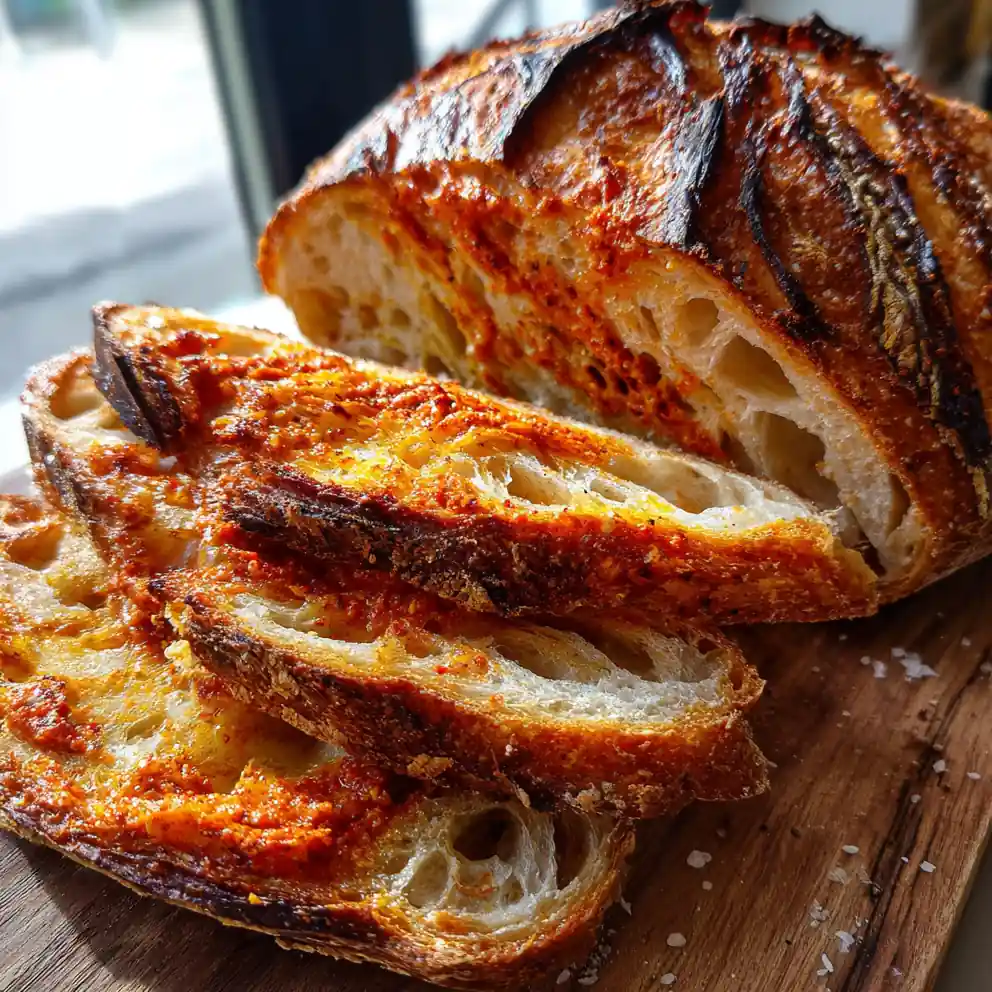
Ingredients
- Active Sourdough Starter (350 g / 1 ½ cups): Make sure your starter is fed and bubbly, at its peak activity level. A strong starter is crucial for achieving a good rise in high altitude conditions where fermentation speeds up.
- Bread Flour (500 g / 4 cups): High-protein bread flour is essential for creating strong gluten structure for high altitude sourdough bread. The extra strength helps prevent the loaf from collapsing in thin air.
- Warm Water (350 ml / 1 ½ cups): Water temperature between 32-35°C (90-95°F) helps ensure proper initial dough temperature. Adjust slightly based on your kitchen temperature to keep the dough from fermenting too fast.
- Fine Sea Salt (10 g / 1 ½ teaspoons): Salt is necessary for flavor development and to control the fermentation rate. It strengthens the gluten network, preventing over-proofing at high altitude.
- Whole Head Garlic (1 count): Roasting creates a mellow, sweet flavor that contrasts beautifully with the smoked paprika. Do not substitute with garlic powder for this recipe.
- Olive Oil (35 ml / 2 tablespoons + 1 teaspoon, divided): Used for roasting the garlic and creating the swirl paste. Use good quality olive oil for a better flavor profile.
- Smoked Paprika (10 g / 1 tablespoon): Provides the deep, smoky flavor and vibrant color for the swirl. Use high-quality smoked paprika for best results.
- Dried Oregano (2 g / ½ teaspoon): Adds an aromatic, Mediterranean note to complement the garlic. If substituting with fresh herbs, reduce the amount to avoid overwhelming the other flavors.
- Flaky Sea Salt (for garnish): Used to add texture and a final touch of saltiness to the crust after baking. A small amount sprinkled on top enhances the presentation.
Instructions
- Roast Garlic: Preheat oven to 200°C (400°F). Cut off the top of the whole garlic head to expose the cloves, drizzle with 5 ml (1 tsp) olive oil, wrap tightly in foil, and roast for 30-40 minutes until very soft. Squeeze out the cloves and mash into a smooth paste; set aside to cool completely.
- Autolyse: In a large mixing bowl, combine the bread flour and warm water. Mix by hand until all dry flour is incorporated and a shaggy dough forms. Cover with a kitchen towel and let rest for 30 minutes to 1 hour to fully hydrate the flour.
- Mix Dough: Add the active sourdough starter (350g) and fine sea salt (10g) to the autolysed dough. Mix thoroughly by hand until the starter and salt are fully integrated and the dough feels cohesive and slightly elastic.
- Bulk Fermentation with Stretch and Folds: Cover the bowl. Over the next 3-4 hours, perform 4 sets of stretch and folds every 30 minutes. Gently stretch a portion of the dough upwards and fold it over itself towards the center; repeat 3-4 times per set, rotating the bowl each time, then recover the dough.
- Prepare Swirl Paste: While the dough completes its final stretch and folds, combine the mashed roasted garlic with 30 ml (2 tbsp) of olive oil, smoked paprika (10g), and dried oregano (2g). Stir well until you have a vibrant, thick paste.
- Integrate Swirl: Lightly flour your work surface and turn out the dough. Stretch the dough into a rough rectangle (approximately 30×20 cm / 12×8 inches). Spread the swirl paste over two-thirds of the dough, leaving one long edge clean. Fold the clean third over the middle section, then fold the remaining third over that. Gently flatten and then tightly roll the dough from one short end to create a tight log.
- Pre-shape & Rest: Gently pre-shape the dough log into a round or oval, creating good surface tension. Let the dough rest on the counter, covered with a damp kitchen towel, for 20-30 minutes. This allows the gluten to relax before final shaping.
- Final Shape: Lightly flour your work surface and your banneton (proofing basket). Gently shape the dough into your desired final loaf shape (round or oval), creating good surface tension by pulling the edges and tucking them under. Place the dough seam-side up into the floured banneton.
- Cold Proof: Cover the banneton. Refrigerate for 12-18 hours; this long cold proof is essential for high altitude baking as it slows fermentation and develops flavor. What can go wrong & fix it: If the dough feels overly sticky and slack after bulk fermentation, try reducing the hydration by 1-2 tablespoons next time to adjust for the higher altitude.
- Bake Prep: Preheat your oven to 230°C (450°F) with a Dutch oven inside for at least 30 minutes. Gently invert the cold dough from the banneton directly into the hot Dutch oven and score the top with a sharp razor blade or lame.
- Bake Covered: Cover the Dutch oven with its lid and bake for 20 minutes. The trapped steam creates a moist environment for a great rise before the crust hardens.
- Bake Uncovered: Remove the lid and reduce the oven temperature to 220°C (425°F). Continue baking for an additional 25-35 minutes, or until the crust is a deep golden brown. Check doneness: internal temperature should reach 96-99°C (205-210°F).
- Cool: Carefully remove the bread from the Dutch oven and transfer to a wire rack. Cool completely for at least 2-3 hours before slicing; slicing early can result in a gummy crumb texture.
- Plating & Visual Styling: Present the cooled, sliced loaf on a rustic cutting board. Arrange slices to prominently display the reddish-orange swirl. Lightly drizzle with extra olive oil and sprinkle with flaky sea salt and a pinch of paprika for enhanced flavor and visual appeal.
Troubleshooting Sourdough Baking at High Altitude
Baking above sea level introduces unique challenges, mainly due to lower atmospheric pressure and drier air. Here are solutions for common issues that arise when baking this high altitude sourdough bread recipe.
- Dough rises too fast: High altitude’s lower air pressure accelerates fermentation, causing dough to rise too quickly and potentially overproof before baking. To compensate, decrease the amount of starter you use or significantly shorten the bulk fermentation time. You can also proof the dough in a cooler area of your kitchen to slow down the process.
- Dough dries out: The drier atmosphere at high altitudes can rapidly dry out the dough’s surface, which restricts rise and crust development. Make sure your dough is always tightly covered during bulk fermentation, using plastic wrap or a container with a sealed lid. If you notice a recipe feels too stiff, a slight hydration increase (1-2 tablespoons extra water) can help.
- Crust hardens too quickly: A high-altitude environment can cause the crust to set quickly before the inside fully bakes. Using a preheated Dutch oven traps steam, ensuring a moist environment during the initial bake. This allows for proper oven spring and prevents a thick, tough crust.
- Loaf collapses after baking: A loaf that collapses after baking often indicates it overproofed before going into the oven. The cold proofing step in this high altitude sourdough bread recipe is essential for strengthening the gluten structure. Make sure the dough holds its shape and feels firm before baking.
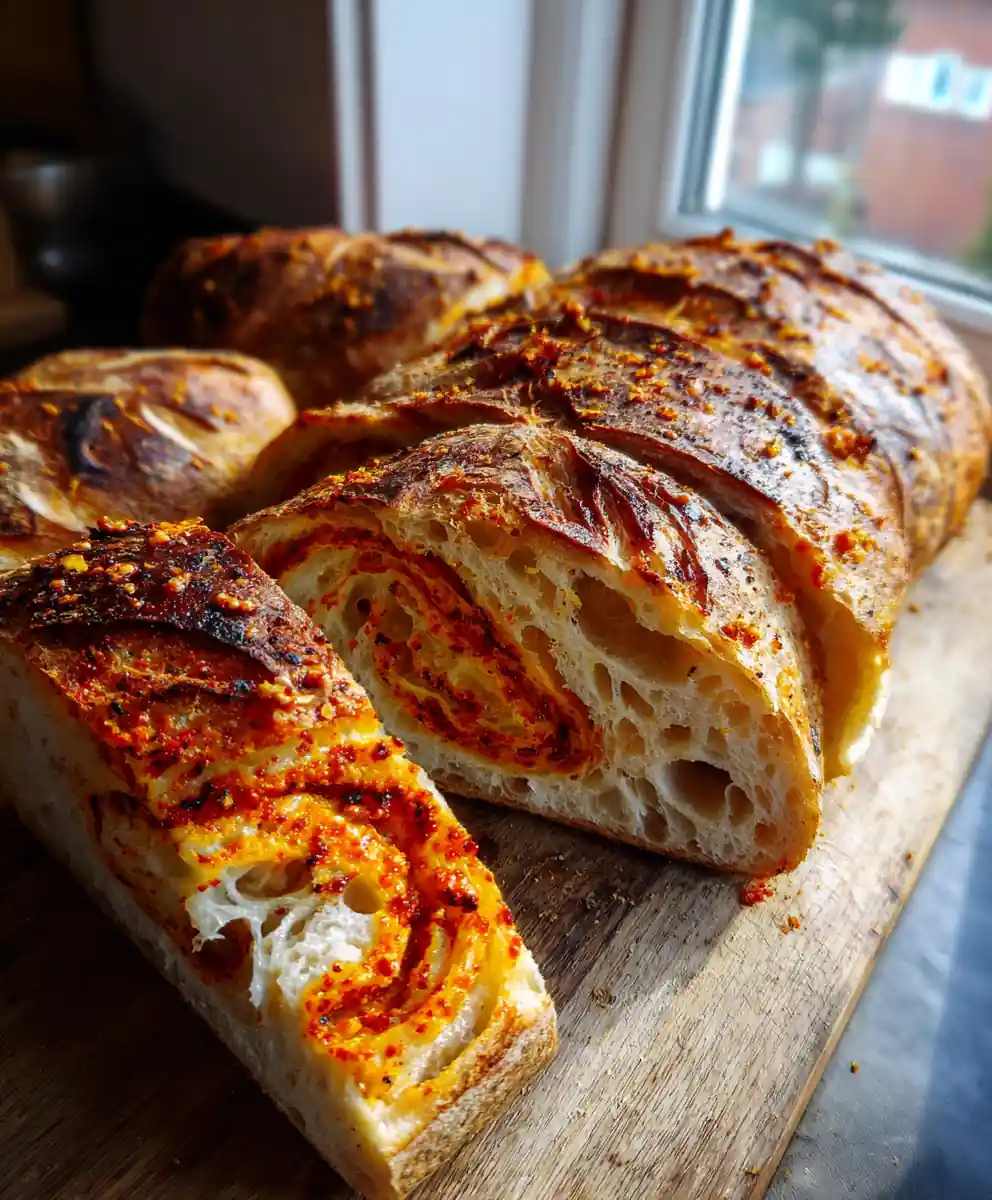
Delicious Ways to Serve Your Smoked Paprika and Roasted Garlic Sourdough
This savory loaf has so much flavor on its own that it truly shines with simple pairings. The roasted garlic and smoked paprika combination pairs well with rich, simple meals for easy dinner ideas.
- Simple Spreads: Serve thick slices of this high altitude sourdough bread simply with high-quality butter, cream cheese, or a light hummus. A simple olive oil and balsamic vinegar dip also works perfectly.
- Family Dinners: Use thick slices for grilled cheese sandwiches with sharp cheddar or provolone. The smoky flavor pairs exceptionally well with tomato soup, hearty chili, or a family-friendly beef stew. My kids love it for grilled cheese on a quick weeknight.
- Appetizer Boards: Cut the loaf into cubes or slices and serve alongside a charcuterie board. The vibrant red swirl and savory flavor make it an eye-catching centerpiece. Pair with hard cheeses like aged gouda or manchego, and pickled vegetables.
FAQs
How do I know if my dough is overproofed for high altitude baking?
Overproofed dough will expand quickly and feel jiggly; it may spread out rather than hold its shape when you turn it out. It may also lack a strong spring during baking. This is common at high altitude where fermentation is faster.
Can I use all-purpose flour for this recipe instead of bread flour?
Bread flour is best for high altitude sourdough bread because its higher protein content provides better structure. If you only have all-purpose flour, reduce the hydration slightly (by 1-2 tablespoons) to prevent the dough from becoming overly slack during fermentation.
What is the purpose of the long cold proof (12-18 hours)?
Cold proofing slows down the fermentation process, allowing the dough to develop complex flavors. It also strengthens the gluten network, helping the loaf achieve better oven spring and crumb structure, which is especially important for high altitude baking.
Is this recipe suitable for low-altitude bakers too?
This high altitude sourdough bread recipe can be used at low altitudes, but you may need to increase bulk fermentation time slightly at room temperature (by 30 minutes to 1 hour). Monitor your dough carefully and adjust based on visual cues (doubling in size).
Can I freeze sourdough bread?
Yes, freezing is great for meal prep. Once the loaf has cooled completely, wrap it tightly in plastic wrap, then aluminum foil, and store in the freezer for up to 3 months. To thaw, leave it at room temperature for several hours or reheat in a low oven.
What if I don’t have a banneton basket?
You can proof the final shape in a bowl lined with a heavily floured clean kitchen towel. Make sure the towel is well floured (use rice flour if possible) to prevent sticking. I often find this works just as well when I make this recipe.
Conclusion
Baking sourdough at high altitude can be challenging, but this recipe makes it achievable for any home cook, resulting in a stunning high altitude sourdough bread recipe perfect for family meals. Save this easy, high altitude sourdough bread recipe to your Pinterest board for quick access when you’re ready to bake your next loaf.
Print
high altitude sourdough bread recipe
- Total Time: 115 minutes
- Yield: 1 loaf 1x
- Diet: General
Description
A high-altitude sourdough recipe with specific adjustments to achieve a beautiful rise and chewy crumb, despite the challenges of lower air pressure and drier climate.
Ingredients
- 350 g (1.5 cups) active sourdough starter
- 500 g (4 cups) bread flour
- 350 ml (1.5 cups) warm water (32-35°C / 90-95°F)
- 10 g (1.5 teaspoons) fine sea salt
- 1 head whole garlic
- 35 ml (2 tbsp + 1 tsp) olive oil, divided
- 10 g (1 tablespoon) smoked paprika
- 2 g (0.5 teaspoon) dried oregano
- flaky sea salt, for garnish
Instructions
- Roast Garlic: Preheat oven to 400°F (200°C). Cut off the top of the garlic head, drizzle with 1 tsp olive oil, wrap tightly in foil, and roast for 30-40 minutes until very soft. Squeeze out the cloves, mash into a paste, and set aside to cool.
- Prepare Autolyse: In a large mixing bowl, combine the bread flour and warm water until all dry flour is incorporated. Cover and let rest for 30 minutes to 1 hour to hydrate the flour.
- Mix Dough: Add the active sourdough starter and fine sea salt to the autolysed dough. Mix thoroughly by hand until the starter and salt are fully integrated and the dough feels cohesive.
- Bulk Fermentation and Folds: Cover the bowl and let the dough rise for 3-4 hours, performing 4 sets of stretch and folds every 30 minutes during this period.
- Prepare Swirl Paste: Combine the mashed roasted garlic with the remaining 2 tbsp olive oil, smoked paprika, and dried oregano in a small bowl. Stir to form a thick paste.
- Integrate Swirl: Turn the dough out onto a lightly floured surface and stretch it into a rectangle. Spread the prepared paste evenly over two-thirds of the dough, leaving one long edge clean. Fold the clean third over the middle section, then fold the remaining third over that. Gently flatten and roll the dough tightly from one short end to create a log.
- Pre-shape and Rest: Gently form the dough log into a round or oval shape to build surface tension. Cover with a damp towel and rest for 20-30 minutes to relax the gluten.
- Final Shape: Lightly flour a banneton basket and the work surface. Shape the dough into its final form, creating good surface tension. Place the dough seam-side up into the prepared banneton.
- Cold Proof: Cover the banneton and refrigerate for 12-18 hours. This slows fermentation and develops flavor.
- Bake Prep: Preheat the oven to 450°F (230°C) with a Dutch oven inside for at least 30 minutes. Gently invert the cold dough into the hot Dutch oven and score the top with a sharp blade.
- Bake Covered: Cover the Dutch oven and bake for 20 minutes to trap steam.
- Bake Uncovered: Remove the lid and reduce the oven temperature to 425°F (220°C). Continue baking for 25-35 minutes, or until the crust is a deep golden brown and the internal temperature reaches 205-210°F (96-99°C).
- Cool: Transfer the bread to a wire rack and cool completely for at least 2-3 hours before slicing.
Notes
To avoid a gummy crumb texture, always cool the bread completely on a wire rack for 2-3 hours before slicing. If the dough feels overly sticky and slack after bulk fermentation, try reducing the hydration by 1-2 tablespoons next time to adjust for the higher altitude conditions.
- Prep Time: 60 minutes
- Cook Time: 55 minutes
- Category: Bread
- Method: Baking
- Cuisine: General
Nutrition
- Serving Size: 1/10 loaf
- Calories: 250 kcal
- Sugar: 1 g
- Sodium: 388 mg
- Fat: 3 g
- Saturated Fat: 0.5 g
- Unsaturated Fat: 2.5 g
- Trans Fat: 0 g
- Carbohydrates: 48 g
- Fiber: 2 g
- Protein: 7 g
- Cholesterol: 0 mg
FREE PRINTABLE RECIPE
Get the Printable Recipe PDF (Free)
Enter your email and we’ll send you the ingredients + step-by-step instructions as a clean PDF you can save to your phone.
- ✅ Printable PDF (ingredients + steps)
- ✅ Save it to your phone (no long scrolling)
- ✅ Includes cook time + servings
- ✅ Easy to follow
FAQ
Where’s the full recipe?
It’s delivered as a printable PDF so you can save it and cook without scrolling.
I didn’t get the email.
Check Spam/Promotions and search your inbox for your site name. Then click Confirm to receive the PDF.