
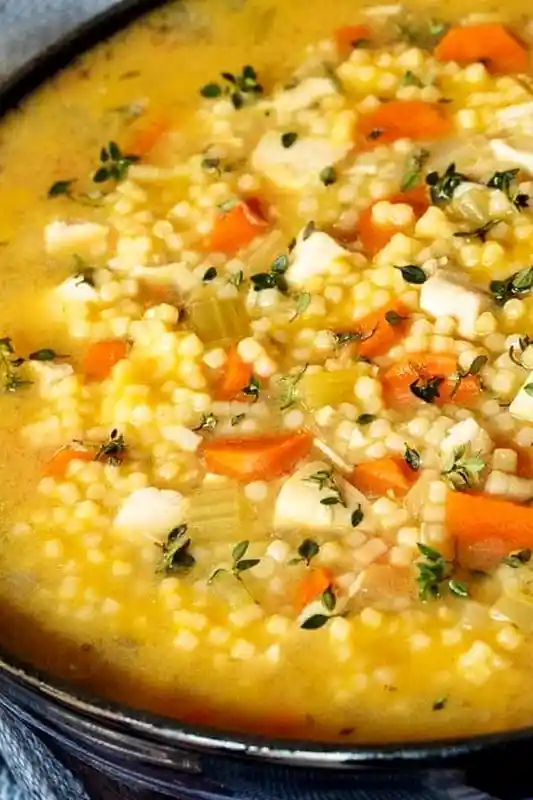
This comforting chicken pasta soup is a quick and hearty meal that comes together in less than an hour. It is an ideal way to utilize leftover rotisserie chicken or turkey for a nutritious dinner.
List of ingredients
- 2 tablespoons extra virgin olive oil – used for sautéing the aromatics.
- 3/4 cup finely chopped shallots (about 2 large shallots) – provides a refined onion flavor.
- 3 medium celery stalks (diced) – adds a classic savory base.
- 8 medium carrots (peeled and diced) – adds sweetness and color.
- 12 cups low sodium chicken broth – the primary liquid base.
- 2 medium bay leaves – adds subtle herbal depth.
- 1 teaspoon finely chopped fresh rosemary – used in two stages for flavor.
- 1 teaspoon finely chopped fresh thyme – used in two stages for flavor.
- 1 1/2 teaspoons kosher salt – adjust based on the saltiness of your broth.
- 1/4 teaspoon freshly ground black pepper – for a hint of spice.
- 1 cup Acini di pepe pasta – tiny bead pasta, or substitute with orzo or pastina.
- 3-4 cups leftover turkey or chicken (diced) – pre-cooked rotisserie works best.
- 1 teaspoon finely chopped fresh rosemary (additional) – for finishing the soup.
- 1 teaspoon finely chopped fresh thyme (additional) – for finishing the soup.
step-by-step instructions
- Sauté Aromatics: Heat olive oil over medium heat in a large Dutch oven or pot. Add chopped shallots and cook for 2 minutes, stirring frequently to avoid browning.
- Cook Vegetables: Add the diced celery and carrots to the pot. Cook for another 3-4 minutes, stirring frequently until they begin to soften.
- Simmer Base: Pour in the chicken broth and add the bay leaves, initial rosemary, thyme, salt, and pepper. Bring the soup to a boil, then reduce heat to a steady simmer and cook uncovered for 20 minutes.
- Cook Pasta: Remove the bay leaves from the broth. Stir in the Acini di pepe pasta and return the pot to a simmer. Cook for 8-10 minutes, or until the pasta is tender.
- Add Protein and Herbs: Stir in the diced chicken or turkey along with the remaining rosemary and thyme. Remove the pot from the heat immediately.
- Final Seasoning and Rest: Taste the soup and add more salt or pepper if needed. Cover the pot and let it sit for 15 minutes before serving to allow the flavors to meld.
Pasta Selection Guide
Using Acini di Pepe
Acini di pepe is a tiny, bead-shaped pasta that is specifically designed for soups. Its small size allows it to distribute evenly throughout the broth without dominating the dish. Unlike larger noodles, it does not absorb as much liquid, which helps the soup maintain its consistency over time.
Substituting with Orzo
Orzo is a rice-shaped pasta that provides a silkier texture and a slightly more substantial bite. If you choose orzo, be aware that it may absorb more broth than acini di pepe. Keep a small amount of extra chicken broth on hand to thin the soup if it becomes too thick after simmering.
Using Israeli Couscous
Israeli couscous, also known as pearl pasta, consists of larger, toasted spheres. These provide a chewier texture and a nuttier flavor profile than standard small pastas. They are excellent for those who prefer a more filling, hearty soup texture.
Pastina Options
Pastina is a very small pasta variety often used in traditional Italian comfort soups. It is almost identical in function to acini di pepe and can be used as a direct one-to-one substitute. It cooks quickly and integrates well with the diced vegetables.
Vegetable Prep and Flavor Basics
Chopping Shallots for Better Texture
Shallots offer a more refined and sweeter flavor than standard yellow onions. To get the best result, mince them very finely so they almost dissolve into the broth during the simmering process. This ensures a smooth consistency without large pieces of onion.
Consistent Carrot and Celery Dicing
Dicing your carrots and celery into uniform, small cubes ensures they cook evenly. This prevents some pieces from being mushy while others remain hard. A consistent dice also makes the soup easier to eat, especially for children.
Fresh vs Dried Herbs
Fresh rosemary and thyme provide a brighter, more aromatic profile than dried versions. This recipe uses a double-layering technique, adding herbs both during the simmer and at the end. This preserves the volatile oils that can be lost during the boiling process.
The Role of Bay Leaves
Bay leaves add a subtle, woody depth that balances the sweetness of the carrots. They should be simmered for the full 20 minutes to release their flavor. Always remember to remove them before adding the pasta to ensure no one accidentally consumes a leaf.
Protein Options
Using Rotisserie Chicken
Store-bought rotisserie chicken is an excellent time-saver and often has a deeper flavor than home-poached breast. Simply remove the skin and dice the meat into bite-sized pieces. Add it at the very end to ensure the meat stays moist and does not overcook.
Utilizing Leftover Turkey
Leftover roasted turkey is a fantastic substitute that makes this recipe a great post-holiday meal. Turkey has a slightly different flavor profile than chicken but pairs perfectly with the rosemary and thyme. Use the same quantity as the chicken for a consistent result.
Poaching Fresh Chicken Breast
If you do not have leftovers, you can poach raw chicken breasts directly in the broth. Simmer the breasts in the liquid before adding the pasta, then remove them to dice. This method creates a very clean taste and ensures the meat is perfectly tender.
Storage and Reheating
Proper Refrigerator Storage
Store the soup in airtight containers in the refrigerator for up to 3-4 days. Because the pasta continues to absorb liquid while cooling, the soup may appear thicker the next day. Ensure the containers are completely cool before sealing them to prevent condensation.
Freezing Pasta Soup
While the broth and vegetables freeze well, pasta can become mushy when thawed and reheated. For the best results, freeze the soup base without the pasta. Cook fresh pasta separately and add it to the soup when reheating from frozen.
Stovetop Reheating Method
Reheat the soup slowly over medium-low heat on the stove. Stir gently to avoid breaking the small pasta pieces. This gradual heating process ensures the chicken is warmed through without becoming rubbery.
Microwave Reheating Tips
When using a microwave, heat the soup in short intervals, stirring in between. This prevents hot spots and ensures the pasta is heated evenly. Use a microwave-safe lid to keep the moisture from evaporating.
Adjusting Liquid After Storage
It is common for the pasta to soak up a significant amount of broth during storage. When reheating, add a splash of chicken broth or water to restore the original soup-to-pasta ratio. This brings back the intended light consistency.
Customization and Serving Ideas
Adding Fresh Greens
For added nutrition, stir in a handful of fresh spinach or chopped kale at the very end of the cooking process. The residual heat of the soup will wilt the greens in about a minute. This adds a pop of color and a boost of vitamins.
Pairing with Crusty Bread
This soup pairs exceptionally well with a toasted baguette or a slice of sourdough bread. The acidity of sourdough helps balance the richness of the chicken broth. Rubbing a clove of raw garlic on toasted bread adds an extra layer of flavor.
Enhancing with Lemon Juice
A small squeeze of fresh lemon juice added just before serving brightens the entire dish. The acidity cuts through the salt and enhances the aromatic notes of the fresh thyme and rosemary. This is a professional trick to make home-cooked soups taste more vibrant.
Adding Extra Garlic
While shallots provide a great base, adding two cloves of minced garlic can increase the savory punch. Sauté the garlic with the shallots for only 30 to 60 seconds before adding the other vegetables to prevent it from burning and becoming bitter.
Cooking Troubleshooting
Preventing Overcooked Pasta
Cook the pasta until it is just al dente, meaning it still has a slight firmness in the center. Since the soup sits covered for 15 minutes before serving, the pasta will continue to cook in the residual heat. This prevents the noodles from becoming overly soft.
Adjusting Saltiness
Always taste your broth before adding the full amount of salt. Some store-bought low-sodium broths are saltier than others, and pre-cooked chicken may already be seasoned. Start with half the salt and increase gradually to avoid over-salting.
Fixing a Thin Broth
If the broth feels too thin, simmer the soup uncovered for an additional 10 minutes before adding the pasta. This reduces the water content and concentrates the flavors of the vegetables and herbs. Alternatively, you can blend a small portion of the cooked carrots and stir them back in.
Dealing with Cloudy Broth
To keep the broth clear, avoid boiling the soup vigorously once the vegetables are added. A gentle simmer is sufficient for extracting flavor. You can also skim any foam or impurities that rise to the surface during the initial boil using a spoon.
Frequently Asked Questions
Can I use a slow cooker for this recipe?
You can slow cook the vegetables and broth on low for 6-8 hours, but do not add the pasta or cooked chicken at the start. Add the pasta and chicken during the last 30 minutes of cooking to prevent them from overcooking.
How long does this soup last in the fridge?
When stored in an airtight container, the soup will remain fresh and safe to eat for 3 to 4 days. Be sure to reheat it thoroughly to an internal temperature of 165 degrees Fahrenheit.
What is the best chicken broth to use?
A low-sodium organic broth is recommended to control the salt levels and avoid artificial dyes. Homemade chicken stock is an even better choice for a richer, more authentic flavor.
Can I make this recipe dairy-free?
Yes, this recipe is naturally dairy-free as it relies on olive oil and broth for richness. No substitutions are needed to maintain a dairy-free diet.
Print
Homemade Chicken Pasta Soup
- Total Time: 50 minutes
- Yield: 12 servings 1x
- Diet: General
Description
This delicious Homemade Chicken Pasta Soup tastes like you spent all day in the kitchen, but in reality, you can put it together, start to finish in less than an hour!
Ingredients
- 2 tablespoons extra virgin olive oil
- ¾ cup finely chopped shallots
- 3 medium celery stalks, diced
- 8 medium carrots, peeled and diced
- 12 cups low sodium chicken broth
- 2 medium bay leaves
- 1 teaspoon finely chopped fresh rosemary
- 1 teaspoon finely chopped fresh thyme
- 1½ teaspoons kosher salt
- ¼ teaspoon freshly ground black pepper
- 1 cup Acini di pepe pasta
- 3–4 cups leftover turkey or chicken, diced
- 1 teaspoon finely chopped fresh rosemary
- 1 teaspoon finely chopped fresh thyme
Instructions
- Sauté: Heat olive oil over medium heat in a large Dutch oven or pot. Add chopped shallots and cook for 2 minutes, stirring frequently.
- Vegetables: Add celery and carrots and cook for another 3-4 minutes, stirring frequently.
- Simmer: Add the broth, bay leaves, fresh rosemary and thyme, salt and pepper. Bring soup to a boil then reduce to a steady simmer and cook, uncovered for 20 minutes.
- Pasta: Remove bay leaves and add the Acini di pepe pasta. Stir and return to a simmer. Cook for 8-10 more minutes, or until pasta is tender.
- Finish: Add diced chicken (or turkey), rosemary and thyme. Stir well and remove from heat. Taste and add more salt and/or pepper, as needed. Cover and allow soup to sit for 15 minutes before serving.
Notes
This soup reheats wonderfully on the stovetop or in the microwave. If stored in the refrigerator for a day or two, you may need to add a little additional chicken broth before reheating as the pasta continues to absorb liquid.
- Prep Time: 20 minutes
- Cook Time: 30 minutes
- Category: Main Dish, Soup
- Method: Simmering
- Cuisine: American
Nutrition
- Serving Size: 1 serving
- Calories: 151 kcal
- Sugar: 3 g
- Sodium: 401 mg
- Fat: 6 g
- Saturated Fat: 1 g
- Unsaturated Fat: 5 g
- Trans Fat: 0 g
- Carbohydrates: 16 g
- Fiber: 2 g
- Protein: 9 g
- Cholesterol: 10 mg