
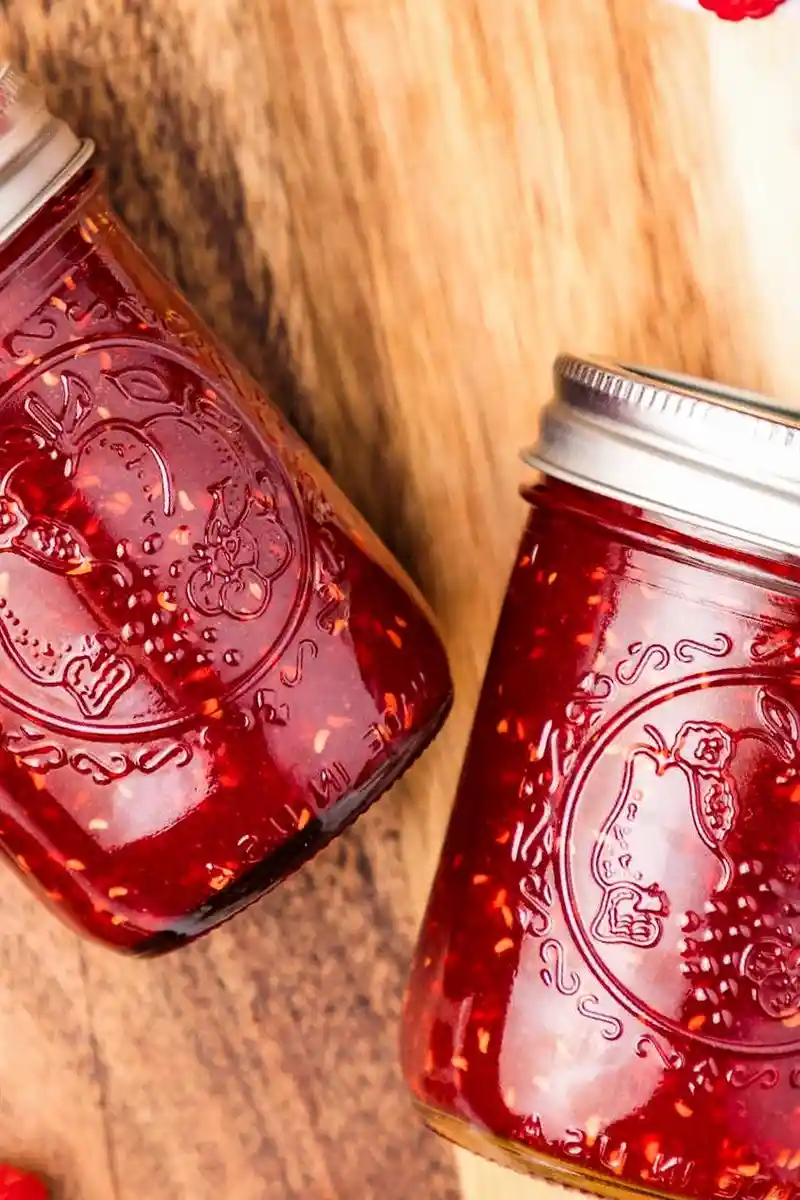
This vibrant jam blends the sweetness of summer peaches with tart raspberries for a balanced spread. It is a high-quality preserve perfect for breakfast toast or as a thoughtful homemade gift.
List of ingredients
- 3 cups peaches – chopped; fresh or frozen; do not thaw
- 2 cups raspberries – fresh or frozen
- 2 tablespoons lemon juice – bottled
- 1 1.75 oz package powdered pectin – for thickening
- ½ teaspoon fruit fresh powder – optional; prevents peaches from browning
- 5 ½ cups sugar – for sweetness and preservation
step-by-step instructions
- Prepare for canning: Wash your jars with hot, soapy water. Fill them with water and place them in your water bath canner, ensuring they are fully submerged. Place the canner over medium-low heat, cover, and simmer the jars. Place lids and rings in a saucepan with water and simmer over medium-low heat without boiling.
- Cook the fruit base: Combine the raspberries, peaches, lemon juice, fruit fresh powder (if using), and pectin in an 8-quart pot. Place the pot over medium heat and stir frequently until the mixture reaches a boil. Continue heating until it becomes a full rolling boil that cannot be stirred down.
- Integrate sugar and boil: Add the sugar all at once and stir well until fully incorporated. Increase heat to medium-high and bring the mixture back to a rolling boil while stirring constantly. Once it reaches a full rolling boil, let it boil for exactly 1 minute, then remove from heat.
- Texture adjustment: If you prefer a smoother jam, pulse the mixture with an immersion blender to break up remaining fruit chunks. Skip this step if you prefer a chunkier consistency.
- Fill the jars: Remove hot jars from the canner. Use a canning funnel to ladle the hot jam into the jars, leaving a ¼-inch headspace at the top.
- Seal the jars: Wipe the jar rims with a moist, clean towel, potentially using white vinegar to remove sticky residue. Place lids and rings on the jars and tighten them until they are fingertip-tight.
- Water bath processing: Return filled jars to the water bath canner, ensuring they are submerged under 2 inches of water. Cover the canner, bring the water to a boil, and process for 10 minutes.
- Rest period: Turn off the heat after 10 minutes. Remove the lid and let the jars sit undisturbed in the canner for 5 minutes.
- Cooling and sealing check: Move jars to a heat-resistant surface and let them cool for 12-24 hours. Press the center of the lid to check the seal; it should not pop up. Store sealed jars in a cool, dark place for up to 18 months, or refrigerate unsealed jars and use within one week.
Mastering the Canning Process
Sterilizing Mason Jars
Proper sterilization prevents spoilage and extends the shelf life of your preserves. Simmering the jars in water ensures that no bacteria remain on the glass surfaces. Always keep the jars warm until the moment you fill them to prevent the glass from cracking due to thermal shock.
Understanding Headspace Requirements
Leaving a ¼-inch headspace is critical for creating a proper vacuum seal. Too much space can prevent the lid from sealing, while too little can cause jam to bubble over during processing. This gap allows the air to be pushed out as the jam cools and the vacuum to form.
Proper Lid Tightening Technique
Tighting the rings to a fingertip-tight level allows air to escape the jar during the boiling process. Over-tightening the ring can trap air or prevent the lid from seating correctly against the rim. If you tighten too hard, the vacuum may not form properly during the cooling phase.
Maintaining Processing Temperatures
The water in the bath canner must remain at a full boil for the entire 10-minute processing duration. If the temperature drops, the jars may not reach the internal temperature required to kill microorganisms. Ensure your canner is large enough to allow water to circulate freely around each jar.
Verifying the Vacuum Seal
A successful seal is indicated by a concave lid that does not move when pressed. If the lid pops up or clicks, the vacuum was not established, and the food is not shelf-stable. These jars must be moved to the refrigerator immediately to avoid spoilage.
Ingredient Substitutions and Alternatives
Using Liquid Pectin Instead of Powdered
Liquid pectin can be used, but it requires a different mixing method as it is usually added after the fruit has boiled. Check the manufacturer’s instructions to adjust the sugar and fruit ratios. Powdered pectin is generally preferred for high-sugar jams due to its stability.
Replacing White Sugar with Cane Sugar
Organic cane sugar can be substituted for granulated white sugar in a one-to-one ratio. This may slightly alter the color of the jam, giving it a deeper golden hue. Ensure the sugar is fine-grained to allow it to dissolve quickly during the rolling boil.
Swapping Raspberries for Blackberries
Blackberries provide a similar tartness and pectin content to raspberries, making them an excellent substitute. The resulting jam will have a darker purple color and a slightly more earthy flavor profile. Maintain the same quantity of 2 cups for the substitution.
Using Nectarines instead of Peaches
Nectarines can be used as a direct replacement for peaches since they belong to the same fruit family. Nectarines often have a slightly more tart flavor and smoother skins. If using nectarines, you can skip the peeling process if you prefer the skins in your jam.
Natural Alternatives to Fruit Fresh Powder
If you do not have fruit fresh powder, a small increase in lemon juice can help maintain the color of the peaches. Alternatively, adding a pinch of ascorbic acid powder serves the same purpose. These options prevent the oxidation that causes peaches to turn brown.
Creative Ways to Use Fruit Jam
Pairing with Soft Cheeses
This raspberry peach jam pairs exceptionally well with creamy cheeses like Brie, Camembert, or goat cheese. The tartness of the raspberries cuts through the richness of the cheese. Serve it on a charcuterie board with crackers for a professional appetizer.
Creating a Fruit-Based Glaze for Meats
You can thin the jam with a small amount of water or apple cider vinegar to create a savory-sweet glaze. This works particularly well on grilled pork loin or roasted chicken. Brush the glaze on during the last 10 minutes of cooking for a caramelized finish.
Enhancing Baked Goods
Use the jam as a filling for thumbprint cookies, cake layers, or homemade donuts. It can also be swirled into a cheesecake batter before baking for a marbled effect. The high sugar content helps the jam maintain its structure during baking.
Topping Breakfast Grains and Yogurt
Stir a spoonful of jam into plain Greek yogurt or overnight oats for natural sweetness. It also serves as an excellent topping for warm quinoa porridge or chia seed pudding. Pair it with toasted almonds for added texture.
Using Jam in Mocktails
Shake a tablespoon of jam with sparkling water and a squeeze of lime for a refreshing non-alcoholic drink. The jam acts as both a sweetener and a flavoring agent. Strain the mixture through a fine mesh sieve to remove seeds if a smoother drink is desired.
Storage and Shelf-Life Guidance
Optimal Pantry Conditions
Store sealed jars in a cool, dark, and dry environment to maintain flavor and color. Exposure to direct sunlight can degrade the pectin and fade the vibrant red and orange hues. A kitchen pantry or a basement cellar is usually an ideal location.
Handling Unsealed Jars
Any jar that fails the seal test must be stored in the refrigerator immediately. These jars do not have the protection of a vacuum seal and are susceptible to mold. They should be consumed within seven days to ensure food safety.
Long-Term Freezer Storage
If you prefer not to use a water bath canner, you can freeze the jam in freezer-safe containers. Leave at least an inch of headspace to allow for expansion as the jam freezes. Freezer jam typically has a softer set and should be used within a year.
Signs of Spoilage to Watch For
Inspect your jars for any signs of mold on the surface of the jam or a bulging lid. A foul odor or a change in color to a dull grey can also indicate spoilage. Always discard the entire contents of a jar if any of these signs are present.
Maintaining Quality After Opening
Once a jar is opened, always use a clean spoon to avoid introducing bacteria into the preserve. Keep the lid tightly closed and store the jar in the refrigerator. Opened jam typically maintains its peak quality for about three to four weeks.
Troubleshooting Common Jam Issues
Fixing Jam That Is Too Runny
If the jam does not set, it is often because the rolling boil was not maintained for the full minute. You can re-boil the jam with an additional small amount of pectin and sugar to thicken it. Ensure the mixture reaches a full rolling boil again before removing it from the heat.
Addressing Over-thickened Preserves
Jam that is too stiff may have been boiled for too long or contained too much pectin. To fix this, gently heat the jam with a small amount of water or lemon juice. Stir over low heat until the desired consistency is achieved, then re-can if necessary.
Managing Fruit Separation
Separation occurs when the fruit solids settle at the bottom and the syrup rises to the top. This is often caused by inadequate stirring during the boiling process. Using an immersion blender before jarring can help emulsify the mixture and prevent separation.
Preventing Surface Mold
Mold usually develops due to improper sterilization or inadequate headspace. Ensure that rims are completely clean of sugar residue before applying the lids. Using white vinegar to wipe the rims is an effective way to remove sticky residues that attract mold.
Solving Cloudy Jam Appearance
Cloudiness can be caused by the type of pectin used or under-cooking the fruit. While it does not affect the safety of the jam, it can affect the visual appeal. Using bottled lemon juice instead of fresh can sometimes provide a more consistent, clear result.
Frequently Asked Questions
Can I use frozen fruit for this recipe?
Yes, frozen peaches and raspberries are perfectly suitable and do not need to be thawed. They often maintain a more intense flavor and color than fresh fruit out of season. Simply add them to the pot frozen as directed.
What is the best way to peel peaches?
Score a small ‘X’ on the bottom of each peach and boil them for one minute. Immediately transfer them to an ice water bath, which allows the skins to slip off easily. This method is faster and more consistent than using a vegetable peeler.
Why is lemon juice required in the jam?
Lemon juice provides the necessary acidity to activate the pectin, allowing the jam to gel. Without it, the pectin may not bond correctly, resulting in a syrup rather than a jam. It also helps balance the sweetness of the sugar.
Can I reduce the amount of sugar used?
Reducing the sugar may affect the set of the jam and significantly shorten its shelf life. If you use less sugar, the jam may remain runny and must be stored in the refrigerator. For low-sugar versions, you must use a specific low-sugar pectin.
Is a water bath canner mandatory for this recipe?
A water bath canner is mandatory if you intend to store the jam in a pantry for several months. If you do not have one, you can store the jam in the refrigerator or freezer. The canning process is what makes the jam shelf-stable by removing air and killing bacteria.
Print
Homemade Raspberry Peach Jam
- Total Time: 26 minutes
- Yield: 6 pints 1x
- Diet: Vegetarian
Description
This jam combines the bright, sweet flavors of summer fruits into a homemade preserve perfect for spreading on toast or gifting to friends.
Ingredients
- 3 cups peaches (chopped; fresh or frozen)
- 2 cups raspberries (fresh or frozen)
- 2 tablespoons lemon juice (bottled)
- 1 1.75 oz package powdered pectin
- ½ teaspoon fruit fresh powder (optional)
- 5 ½ cups sugar
Instructions
- Prep for canning: Wash your jars with hot, soapy water. Fill them with water and place them in your water bath canner. Fill your water bath canner so your jars are fully submerged. Place over medium-low heat, cover the canner, and simmer the jars. Place your lids and rings in a saucepan with water. Place over medium-low heat and simmer. Do not boil.
- Cook fruit, lemon juice, and pectin: In an 8-quart pot, add the raspberries, peaches, lemon juice, fresh fruit powder (if using), and pectin. Place over medium heat and allow the mixture to come to a boil, stirring frequently. Let it come to a full rolling boil so it cannot be stirred down.
- Add sugar and boil again: Add the sugar all at once and stir the mixture well so it is fully incorporated. Increase the heat to medium-high and bring the mixture back up to a rolling boil, stirring constantly. Once it reaches a full rolling boil, boil for 1 minute then remove from the heat.
- Blend (optional): Using an immersion blender, pulse the mixture to break up any of the fruit that wasn’t broken down during the cooking process. If you want a chunkier jam, skip this step.
- Fill jars: Remove the jars from the canner and, using a canning funnel, ladle the hot jam into the hot jars, leaving a ¼-inch headspace.
- Wipe rims and attach lids: Wipe the rims of the jars using a moist, clean towel. You can moisten it with white vinegar to make sure there isn’t any sticky residue left on the rims. Place the lids and rings on the jars and tighten them so they’re fingertip-tight.
- Process: Place the filled jars back into the water bath canner so they’re fully submerged and there’s about 2 inches of water over them. Cover the canner and bring the water to a boil. Process the jars for 10 minutes.
- Rest: After 10 minutes, turn off the heat, remove the lid, and let the jars sit in the canner for 5 minutes.
- Cool and check seals: Remove the jars from the water bath canner and place them in a heat-resistant area so they can cool for 12-24 hours. After they have fully cooled, check the jars for a seal by pressing the middle of the lid. If it doesn’t pop up, remove the rings and store the jars in a cool, dark place for up to 18 months. Any jars that do not have a proper seal need to be stored in the fridge and used within 1 week.
Notes
The easiest way to peel the peaches is by scoring the bottoms of the peaches and placing them in a pot of boiling water. Boil for about 1 minute. Transfer them to an ice water bath. The skins should come right off. Then chop them into small pieces, removing the pit.
- Prep Time: 15 minutes
- Cook Time: 1 minute
- Category: Canning
- Method: Water Bath Canning
- Cuisine: American
Nutrition
- Serving Size: 1 serving
- Calories: 52 kcal
- Sugar: 13 g
- Sodium: 2 mg
- Fat: 0.1 g
- Saturated Fat: 0.002 g
- Unsaturated Fat: 0.03 g
- Trans Fat: 0 g
- Carbohydrates: 14 g
- Fiber: 0.3 g
- Protein: 0.1 g
- Cholesterol: 0 mg