This savory skillet combines golden hash brown potatoes with tender cabbage and rich cheddar cheese. It is an ideal side dish for festive gatherings or a hearty addition to a family dinner.
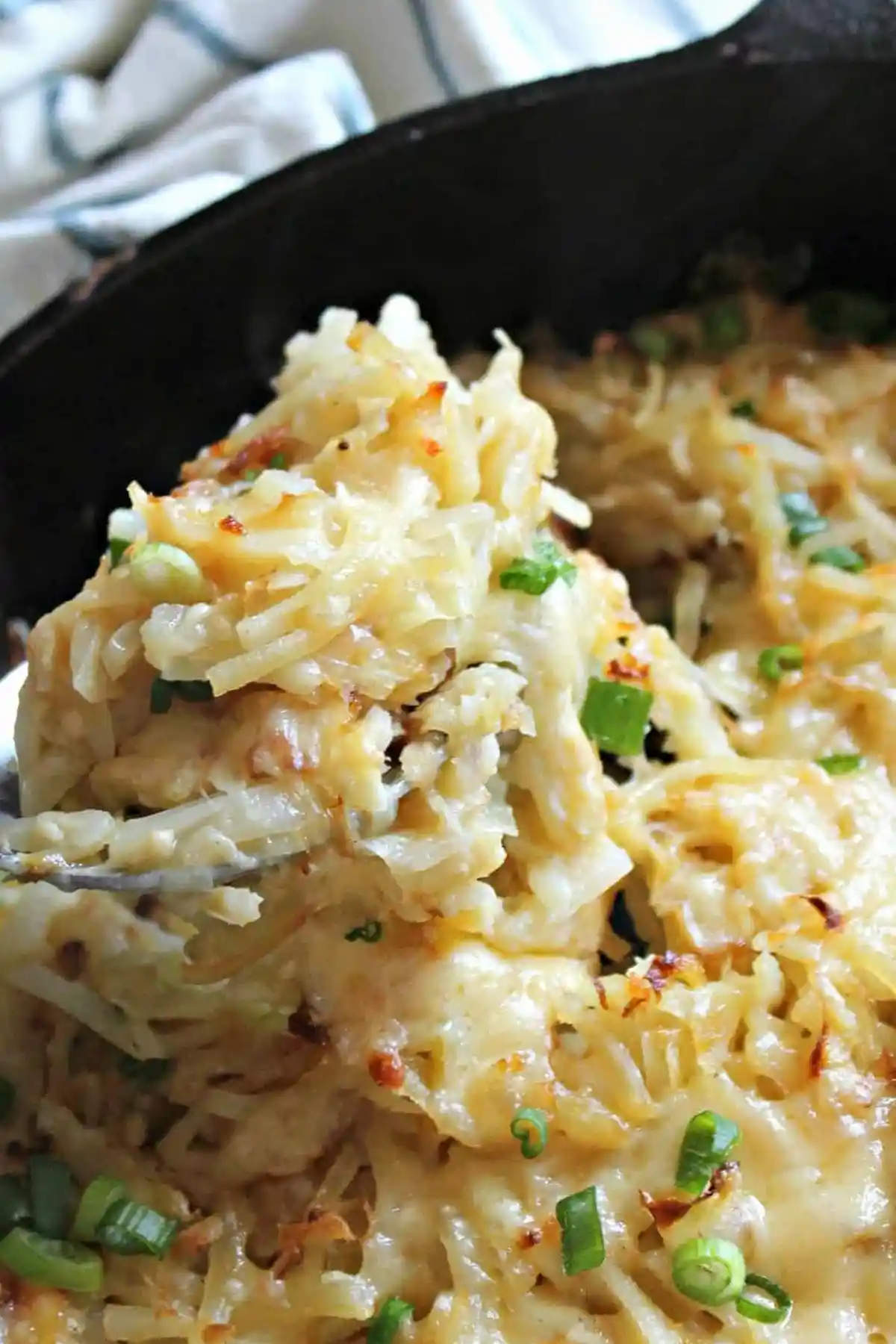
List of ingredients
- 4 tablespoons butter – preferably high-fat Irish butter for richness.
- 1 cup diced yellow onion – provides a sweet, aromatic base.
- 10 ounces shredded green cabbage – adds texture and savory flavor.
- ½ teaspoon sea salt – or adjust to your personal taste.
- 2 garlic cloves – minced or grated for a pungent kick.
- 20 ounce bag of frozen hash browns – a convenient shortcut for the potato base.
- 2½ cups shredded Irish cheddar – divided for mixing and topping.
- 2 green onions – chopped for a fresh finish.
step-by-step instructions
- Prepare Oven: Preheat your oven to 375°F.
- Melt Butter: In a large 15-inch cast iron skillet, heat the butter over medium-high heat until it is melted and slightly frothy.
- Sauté Onions: Add the diced onion to the skillet and sauté for 2-3 minutes until fragrant and translucent.
- Cook Cabbage: Stir in the shredded cabbage and season with sea salt. Cook for 5-6 minutes until the cabbage softens and develops light golden brown spots.
- Add Garlic: Stir in the minced garlic and cook for about one minute. Remove the skillet from the heat and allow the mixture to cool slightly.
- Combine Ingredients: Stir in the frozen hash browns and 1½ cups of the shredded cheddar cheese. Mix until well-combined and smooth the top with a spatula.
- First Bake: Place the skillet in the preheated oven and bake for 30-35 minutes, or until the top is golden brown.
- Final Melt: Sprinkle the remaining 1 cup of cheese over the top. Bake for an additional 4-5 minutes until the cheese is melted and bubbly.
- Garnish: Remove from the oven and top with chopped green onions before serving.
Expert Techniques for Skillet Success
Utilizing Cast Iron for Even Heating
A cast iron skillet is the best tool for this recipe because it retains heat exceptionally well. This ensures that the bottom of the potatoes develops a crisp crust while the cabbage caramelizes evenly. If you do not have cast iron, use an oven-safe stainless steel skillet.
Achieving the Perfect Cabbage Caramelization
To get those golden brown spots on the cabbage, avoid overcrowding the pan or stirring too frequently. Let the cabbage sit undisturbed for a minute or two at a time. This allows the natural sugars to brown, adding a deep, nutty flavor to the dish.
Managing Moisture in Frozen Potatoes
Frozen hash browns can sometimes release excess water during the baking process. By sautéing the onions and cabbage first and letting them cool slightly, you create a stable base. Ensuring the oven is fully preheated helps the moisture evaporate quickly, preventing a soggy texture.
Precise Garlic Timing
Garlic burns quickly at high temperatures and can become bitter. Adding it only after the cabbage has softened ensures the garlic infuses the oil and vegetables without scorching. This preserves the aromatic quality of the garlic.
Ingredient Substitutions and Alternatives
Swapping Irish Cheddar for Other Varieties
If you cannot find authentic Irish cheddar, a sharp white cheddar is the best substitute. For a nuttier flavor, you can use Gruyere or a blend of sharp cheddar and Swiss cheese. Ensure the cheese is shredded from a block for better melting compared to pre-shredded options.
Preparing Fresh Potatoes from Scratch
To use fresh potatoes, shred about 4 medium russet potatoes to get approximately 20 ounces. Rinse the shreds in cold water to remove excess starch, which prevents them from sticking together. Squeeze them very dry using a clean kitchen towel before stirring them into the cabbage mixture.
Using Alternative Leafy Greens
While green cabbage is traditional, you can substitute half of the cabbage with chopped kale or spinach. These greens add more nutrients and a different earthy tone to the skillet. Kale holds its structure better during the long bake time than spinach does.
Dairy-Free and Vegan Modifications
For a vegan version, replace the butter with a plant-based butter alternative. Use a high-quality vegan shredded cheddar or omit the cheese entirely and add a pinch of nutritional yeast for a cheesy flavor. Ensure the plant-based butter has a high smoke point for sautéing.
Adding Protein for a Main Course
Integrating Ground Beef
To turn this side dish into a full meal, brown 1 pound of lean ground beef in the skillet before adding the butter and onions. Drain the excess fat thoroughly to prevent the hash browns from becoming greasy. The beef adds a rich, savory depth that pairs perfectly with the cabbage.
Using Turkey Sausage Alternatives
If you prefer a sausage flavor without using pork, use ground turkey sausage or plant-based sausage crumbles. Brown the meat completely and cook until crisp before proceeding with the onion and cabbage steps. This adds a spicy, seasoned element to the potato base.
Serving with Corned Beef
This skillet is an excellent accompaniment to slow-cooked corned beef. You can serve the skillet as a bed for the sliced meat or place the meat directly on top before the final cheese melt. The saltiness of the beef complements the sweetness of the sautéed cabbage.
Storage and Reheating Instructions
Proper Refrigeration Methods
Store leftovers in an airtight container in the refrigerator for up to 4 days. Allow the skillet to cool completely before sealing the container to prevent steam from creating excess moisture. This keeps the potatoes from becoming mushy during storage.
Best Oven Reheating Technique
To maintain the crispiness of the potatoes, reheat the dish in the oven at 375°F. Place a portion in a small oven-safe dish and bake for 10-15 minutes. Adding a small sprinkle of fresh cheese on top during reheating refreshes the flavor and texture.
Microwave Reheating Tips
If using a microwave, heat the portion on medium power in 1-minute intervals. Stir gently between intervals to ensure the center is heated through. Be aware that the potatoes will be softer and less crisp than when oven-reheated.
Freezing Guidelines
This dish can be frozen, though the cabbage texture may change slightly. Freeze the baked skillet in portions wrapped in foil and plastic wrap for up to 3 months. Thaw overnight in the refrigerator before reheating in the oven.
Troubleshooting Common Issues
Preventing a Soggy Texture
Sogginess usually occurs if the heat is too low or the vegetables are over-crowded. Ensure you use a large enough skillet to allow moisture to evaporate. If using fresh potatoes, the squeezing step is critical to remove excess water.
Fixing Cheese That Browns Too Quickly
If the top cheese is browning before the potatoes are cooked through, cover the skillet loosely with aluminum foil. This protects the cheese from direct heat while allowing the interior to continue baking. Remove the foil for the last 5 minutes to achieve the desired bubble.
Managing Bitter Cabbage Tastes
If the cabbage tastes too sharp or bitter, ensure it is sautéed long enough to soften. The process of browning the cabbage converts harsh flavors into sweetness. Adding a small pinch of sugar can also help balance the bitterness of certain cabbage varieties.
Frequently Asked Questions
What is the best type of cabbage for this recipe?
Green cabbage is the most traditional and provides the best balance of sweetness and crunch. However, Savoy cabbage can be used for a more tender, crinkly texture that absorbs the butter and cheese more effectively.
Can I make this in a baking dish instead of a skillet?
Yes, you can sauté the ingredients in a pan and then transfer them to a greased 9×13 inch baking dish. The cooking time will remain similar, though you may need to add 5 minutes to the bake time depending on the depth of the dish.
How do I prevent the potatoes from sticking to the pan?
Using a well-seasoned cast iron skillet and sufficient butter prevents sticking. If using stainless steel, ensure the pan is fully heated before adding the butter to create a non-stick surface.
Can this be served as a breakfast dish?
Absolutely. This skillet works well as a breakfast hash. You can top the finished dish with poached or fried eggs for added protein and a rich sauce from the yolk.
Can I add other vegetables to the mix?
Yes, diced carrots or bell peppers can be added along with the onions for extra color and nutrition. Just ensure they are sautéed until tender before adding the frozen hash browns.
Is this recipe gluten-free?
Yes, this recipe is naturally gluten-free as it uses potatoes and vegetables. Always check the labels on your frozen hash browns and butter to ensure no gluten-containing additives are present.
Print
Irish Cheddar and Cabbage Hash Brown Skillet
- Total Time: 60 minutes
- Yield: 6 servings 1x
- Diet: Vegetarian
Description
Irish Cheddar & Cabbage Hash Brown Skillet! You can’t go wrong with cheesy hash brown potatoes and savory cabbage baked until golden and bubbly. A great side dish for St. Patrick’s Day!
Ingredients
- 4 tablespoons butter
- 1 cup diced yellow onion
- 10 ounces shredded green cabbage
- ½ teaspoon sea salt
- 2 garlic cloves, minced or grated
- 20 ounce bag of frozen hash browns
- 2½ cups shredded Irish cheddar, divided
- 2 green onions, chopped
Instructions
- Step 1: Preheat the oven to 375℉. In a large skillet, heat the butter until melted and slightly frothy.
- Step 2: Add the onion and saute until fragrant and beginning to turn translucent, about 2-3 minutes.
- Step 3: Add the cabbage and combine with onions. Season with salt. Cook for about 5-6 minutes or until the cabbage has softened and is beginning to turn lightly golden in spots.
- Step 4: Stir in the garlic and cook for about a minute. Remove from heat and let the mixture cool slightly.
- Step 5: Add the frozen hash browns and 1½ cups of cheese and mix until well-combined. Smooth the top with a spatula.
- Step 6: Bake in the preheated oven for about 30-35 minutes or until the top begins to turn golden brown.
- Step 7: Add the remaining cheese to the top and bake for another 4-5 minutes until the cheese is melted and bubbly.
- Step 8: Remove from oven and top with chopped green onion before serving.
Notes
To use fresh potatoes instead of frozen: Shred about 4 medium russet potatoes (about 20 ounces). Rinse the shreds in cold water to remove excess starch, then drain and squeeze them dry with a clean kitchen towel. Stir the fresh potatoes into the onion and cabbage mixture and cook for 5–7 minutes to soften before adding the cheese. Bake as directed, adding 5 extra minutes if needed until the top is golden.
- Prep Time: 10 minutes
- Cook Time: 50 minutes
- Category: Side Dish
- Method: Baking
- Cuisine: Irish-American
Nutrition
- Serving Size: 1 serving
- Calories: 380 kcal
- Sugar: 5 g
- Sodium: 620 mg
- Fat: 24 g
- Saturated Fat: 14 g
- Unsaturated Fat: 9 g
- Trans Fat: 0 g
- Carbohydrates: 26 g
- Fiber: 4 g
- Protein: 13 g
- Cholesterol: 65 mg