
Create a structured, restaurant-quality lasagna with distinct layers of rich meat sauce and creamy cheese. This method focuses on moisture control to ensure every slice holds its shape perfectly on the plate.
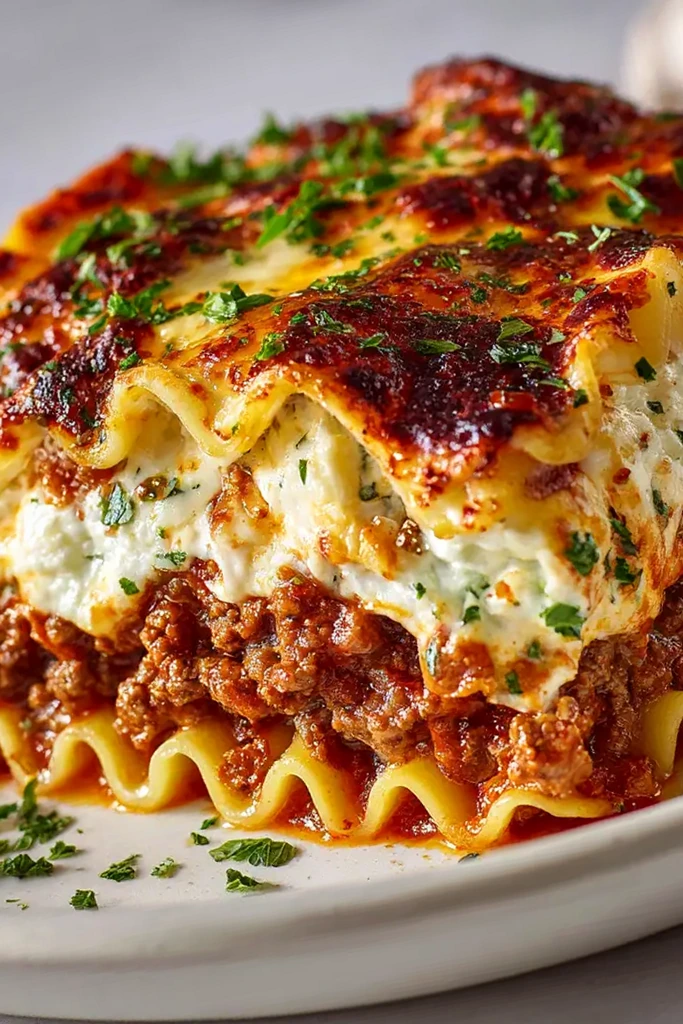
List of ingredients
- 12 oz wavy lasagna noodles – boiled until al dente for structural integrity.
- 1 lb lean ground beef – use an 80/20 ratio for the best balance of flavor and texture.
- 1 tbsp olive oil – used for searing the beef.
- 1 cup yellow onion – finely diced to blend into the sauce.
- 4 cloves garlic – minced for a pungent aromatic base.
- 28 oz crushed tomatoes – provides the bulk of the rich sauce.
- 3 tbsp tomato paste – used to thicken and darken the sauce.
- 15 oz whole milk ricotta cheese – ensures a thick, white cheese layer.
- 1 large egg – acts as a binder for the ricotta.
- 0.5 cup grated parmesan cheese – adds saltiness and stabilizes the cheese layer.
- 1 tbsp dried Italian seasoning – adds herbal notes and green specks to the ricotta.
- 4 cups low-moisture part-skim mozzarella cheese – freshly shredded for optimal melting.
- 2 tbsp fresh green parsley – chopped for a vibrant final garnish.
step-by-step instructions
- Cook the Meat Sauce: Heat olive oil in a skillet over medium-high heat. Add ground beef and break into small chunks, searing for 5-7 minutes until browned. Drain excess fat, then stir in diced onions and minced garlic until translucent. Stir in tomato paste and toast for 2 minutes before adding crushed tomatoes. Reduce heat to low and simmer for 20 minutes until the sauce is thick and dark red.
- Prepare the Ricotta Mixture: In a medium mixing bowl, combine the whole milk ricotta, egg, grated parmesan, and dried Italian seasoning. Mix vigorously until the egg is fully incorporated and the mixture is thick. Ensure the green herbs are evenly distributed throughout the white cheese.
- Boil the Pasta: Bring a large pot of salted water to a boil. Cook the wavy lasagna noodles for 2 minutes less than the package directions to keep them al dente. Drain the noodles and lay them flat on parchment paper to prevent them from sticking together.
- Assemble the Layers: Preheat your oven to 375°F (190°C). Spread a thin layer of meat sauce on the bottom of a 9×13-inch baking dish. Place a layer of noodles, followed by one-third of the meat sauce, half of the ricotta mixture, and a handful of mozzarella. Repeat the sequence once more. Finish with a final layer of noodles and the remaining meat sauce.
- Bake and Finish: Cover the dish tightly with aluminum foil, tenting it to avoid touching the sauce. Bake for 35 minutes. Remove the foil, top with the remaining mozzarella, and bake for another 15 minutes. Broil on high for 2-3 minutes until the cheese has golden brown caramelized spots. Let the lasagna rest for 20 minutes before slicing and garnish with fresh parsley.
Cheese Selection and Preparation
Freshly Grated Mozzarella for Better Melting
Avoid using pre-shredded cheese from bags because it is coated in cellulose or potato starch. These anti-caking agents prevent the cheese from melting smoothly and stop the formation of deep golden brown blisters. Grating your own low-moisture mozzarella ensures a professional, bubbly finish.
Whole Milk Ricotta for Structural Stability
Use whole milk ricotta instead of part-skim versions to maintain the visual distinction of the layers. The higher fat content in whole milk ricotta provides a denser texture that resists weeping. This prevents the cheese from blending into the meat sauce during the baking process.
Using Parmesan and Egg as Binders
The combination of a large egg and grated parmesan is critical for the stability of the white layer. The egg coagulates during baking, effectively setting the ricotta in place. This prevents the layers from sliding apart when the lasagna is sliced and served.
Choosing Microbial-Rennet Cheeses
For the best results and dietary compatibility, select mozzarella and parmesan made with microbial rennet. These cheeses provide the same sharp and creamy profiles without relying on traditional animal-derived additives. Always check the ingredient label to ensure a clean, plant-based enzyme source.
Meat Sauce Optimization
Achieving Deep Color with Tomato Paste
Toasting the tomato paste for two minutes before adding the crushed tomatoes is a vital step. This process, known as caramelization, deepens the red color and concentrates the savory flavors. It results in a rich, dark sauce that contrasts beautifully with the white ricotta.
Managing Beef Fat Content
Using an 80/20 lean-to-fat ratio ensures the beef remains tender without creating a greasy sauce. Draining the excess fat after the initial sear prevents the lasagna from becoming oily. Leaving a tiny amount of fat allows the onions and garlic to sauté properly.
Controlling Sauce Thickness
A watery sauce is the primary cause of a soggy lasagna base. Simmer the sauce uncovered until it is thick enough to coat the back of a spoon. If the sauce remains too thin, extend the simmering time by another 10 minutes to reduce the moisture.
Enhancing Aromatics
Finely dicing the yellow onion ensures that the vegetable blends into the sauce rather than creating large chunks. Mincing the garlic finely allows the flavor to distribute evenly throughout the meat. This creates a consistent flavor profile in every bite of the lasagna.
Pasta Texture and Handling
The Importance of Undercooking Noodles
Boiling noodles to a full soft texture leads to mushy lasagna after it spends an hour in the oven. Cooking them for two minutes less than the package instructions keeps them al dente. The pasta then absorbs the remaining moisture from the sauce while baking, reaching the perfect consistency.
Using Parchment Paper for Separation
Newly boiled noodles are extremely sticky and tend to clump together. Laying them flat on parchment paper immediately after draining prevents them from fusing. This makes the assembly process much faster and ensures the noodles lay flat in the pan.
Selecting Wavy-Edge Pasta
Wavy-edge noodles are superior to flat noodles for this recipe because the ridges catch and hold the sauce. This increases the surface area for the cheese and meat to cling to. It also adds a visually appealing texture to the final cross-section of the slice.
Layering and Assembly Techniques
Creating a Non-Stick Base
Smearing a thin layer of meat sauce on the bottom of the baking dish acts as a barrier. This prevents the bottom layer of noodles from sticking to the ceramic or glass. It also ensures the bottom pasta is seasoned and moist during the baking process.
Even Distribution of Ricotta
Spoon the ricotta mixture in dollops and then gently spread it to the edges. Avoiding over-mixing during this stage keeps the ricotta layer distinct from the meat sauce. This creates the striking white-and-red visual contrast characteristic of this recipe.
Maintaining Layer Borders
Avoid stirring the layers together once they are placed in the dish. Keep the meat sauce and ricotta in their own dedicated strata. This forensic approach to construction is what prevents the lasagna from becoming a muddy mixture of ingredients.
Baking and Finishing Methods
The Role of the Aluminum Foil Tent
Covering the lasagna with foil traps steam, which ensures the pasta cooks through without drying out. Tenting the foil slightly prevents it from touching the cheese, which would cause the topping to stick to the metal. This protects the surface of the dish during the first 35 minutes of baking.
Caramelizing with the Broiler
The final 2-3 minutes under the broiler create the signature blistered cheese spots. High, direct heat quickly browns the mozzarella, creating a contrast of crispy edges and gooey centers. Monitor the oven closely during this stage to prevent the cheese from burning.
The Mandatory Resting Period
Slicing a lasagna immediately after it leaves the oven results in sliding layers. Letting the dish rest for 20 to 30 minutes allows the proteins and fats to solidify. This ensures that the slices come out as thick, distinct blocks rather than collapsing on the plate.
Storage and Preservation
Refrigeration Guidelines
Store leftover lasagna in an airtight container in the refrigerator for up to four days. The flavors often merge and improve after 24 hours of chilling. Ensure the container is sealed tightly to prevent the cheese from absorbing refrigerator odors.
Freezing Individual Slices
To freeze, allow the baked lasagna to cool completely before wrapping individual slices in plastic wrap. Place the wrapped slices in a heavy-duty freezer bag to prevent freezer burn. This method allows for convenient single-serving portions that last up to three months.
Best Reheating Methods
For the best texture, reheat frozen slices in a 350°F (175°C) oven covered with foil. This prevents the cheese from drying out while the center warms. Alternatively, use a microwave in one-minute increments, though the cheese will be softer than the oven method.
Customization and Variations
Adding Vegetable Nutrition
You can incorporate sautéed spinach or finely diced carrots into the meat sauce for added nutrition. Sauté the vegetables with the onions and garlic before adding the tomato paste. This adds color and nutrients without altering the structural integrity of the layers.
Adjusting the Heat Level
To add a spicy kick, stir in a half-teaspoon of red pepper flakes into the meat sauce while it simmers. For a more earthy heat, add a pinch of cracked black pepper to the ricotta mixture. These small changes allow you to customize the flavor profile to your preference.
Herb Alternatives
If you do not have dried Italian seasoning, a mixture of dried oregano and basil works perfectly. Fresh basil leaves can also be layered between the ricotta and mozzarella for a burst of fresh aroma. Ensure fresh herbs are added toward the end of assembly to prevent them from darkening.
Common Troubleshooting and FAQs
Why is my lasagna watery?
Wateriness is usually caused by under-simmered sauce or ricotta that hasn’t been bound. Ensure your meat sauce is reduced to a thick consistency and always use the egg and parmesan in the ricotta mixture to lock in moisture.
Why do the layers slide apart?
This happens when the lasagna is cut too soon. The heat keeps the cheese in a liquid state, causing it to slip. A 20-to-30-minute resting period is mandatory for the layers to set and hold their shape.
Can I assemble this a day in advance?
Yes, you can assemble the entire dish and refrigerate it for up to 24 hours. When baking a cold lasagna, you may need to add 10-15 minutes to the initial covered baking time to ensure the center reaches the proper temperature.
Do I really need to boil the noodles?
For this specific Million Dollar style, boiling is necessary. Pre-cooked noodles provide the structure needed to support the heavy weight of the ricotta and beef. No-boil noodles often result in a different texture and may absorb too much sauce.
How to prevent the cheese from burning during broiling?
The broiler works very quickly, so you must watch the dish through the oven window. Remove the lasagna the moment the cheese develops deep golden brown spots. Do not leave the oven unattended during the broiling phase.
Essential Kitchen Tools
Using a Heavy-Bottomed Skillet
A heavy skillet or Dutch oven is ideal for the meat sauce because it distributes heat evenly. This prevents the ground beef from scorching in one spot while remaining raw in others. It also allows for a more consistent reduction of the tomato sauce.
Ceramic vs Glass Baking Dishes
Ceramic dishes are preferred for lasagna because they retain heat longer than glass. This helps the lasagna stay warm on the table while resting. However, glass is useful for seeing the layers as they brown from the bottom up.
The Benefit of a Box Grater
A manual box grater is the best tool for shredding mozzarella. It allows you to control the thickness of the shreds, which affects how the cheese melts. Coarser shreds typically result in better blistered spots when broiled.
Print
Million Dollar Layered Beef Lasagna
- Total Time: 75 minutes
- Yield: 12 slices 1x
- Diet: General
Description
Achieve visually stunning, distinct layers with this Million Dollar Lasagna. Featuring a rich dark red meat sauce, bright white speckled ricotta, and a beautifully blistered mozzarella top, it’s the ultimate comfort food.
Ingredients
- 12 oz wavy lasagna noodles
- 1 lb lean ground beef
- 1 tbsp olive oil
- 1 cup yellow onion
- 4 cloves garlic
- 28 oz crushed tomatoes
- 3 tbsp tomato paste
- 15 oz whole milk ricotta cheese
- 1 large egg
- 0.5 cup grated parmesan cheese
- 1 tbsp dried Italian seasoning
- 4 cups low-moisture part-skim mozzarella cheese
- 2 tbsp fresh green parsley
Instructions
- Prepare Meat Sauce: Heat olive oil in a skillet over medium-high heat. Add ground beef, breaking it into small chunks. Sear for 5-7 minutes until browned. Drain excess fat. Stir in onions and garlic, cooking until translucent. Add tomato paste and toast for 2 minutes. Pour in crushed tomatoes, reduce heat to low, and simmer for 20 minutes until thick and dark red.
- Mix Ricotta: In a bowl, combine ricotta, egg, parmesan, and dried Italian seasoning. Mix until very thick and visibly speckled with green herbs.
- Boil Noodles: Boil wavy lasagna noodles in salted water for 2 minutes less than package directions so they remain al dente. Drain and lay flat on parchment.
- Assemble Layers: Preheat oven to 375°F (190°C). Smear a thin layer of sauce in a 9×13 dish. Layer: wavy noodles, one-third meat sauce, half ricotta mixture, and a handful of mozzarella. Repeat once. Top with a final layer of noodles and the remaining meat sauce.
- Bake and Rest: Cover tightly with foil (tented slightly to avoid touching the sauce) and bake for 35 minutes. Remove foil, blanket with remaining mozzarella, and bake uncovered for 15 minutes. Broil on high for 2-3 minutes until deep golden brown caramelized spots form. Let the lasagna rest for at least 20 minutes before slicing. Garnish with freshly chopped green parsley.
Notes
Shred your own mozzarella cheese from a block to avoid anti-caking agents. Do not skip the 20-minute resting period to ensure distinct layers.
- Prep Time: 20 minutes
- Cook Time: 55 minutes
- Category: Dinner
- Method: Baking
- Cuisine: Italian-American
Nutrition
- Serving Size: 1 slice
- Calories: 480 kcal
- Sugar: 8 g
- Sodium: 850 mg
- Fat: 24 g
- Saturated Fat: 12 g
- Unsaturated Fat: 12 g
- Trans Fat: 0 g
- Carbohydrates: 35 g
- Fiber: 3 g
- Protein: 30 g
- Cholesterol: 110 mg