
This one-pot pasta dish offers a rich, garlicky flavor with a creamy cheese sauce and fresh spinach. It is designed for quick preparation and minimal cleanup, making it an efficient choice for weeknight dinners.
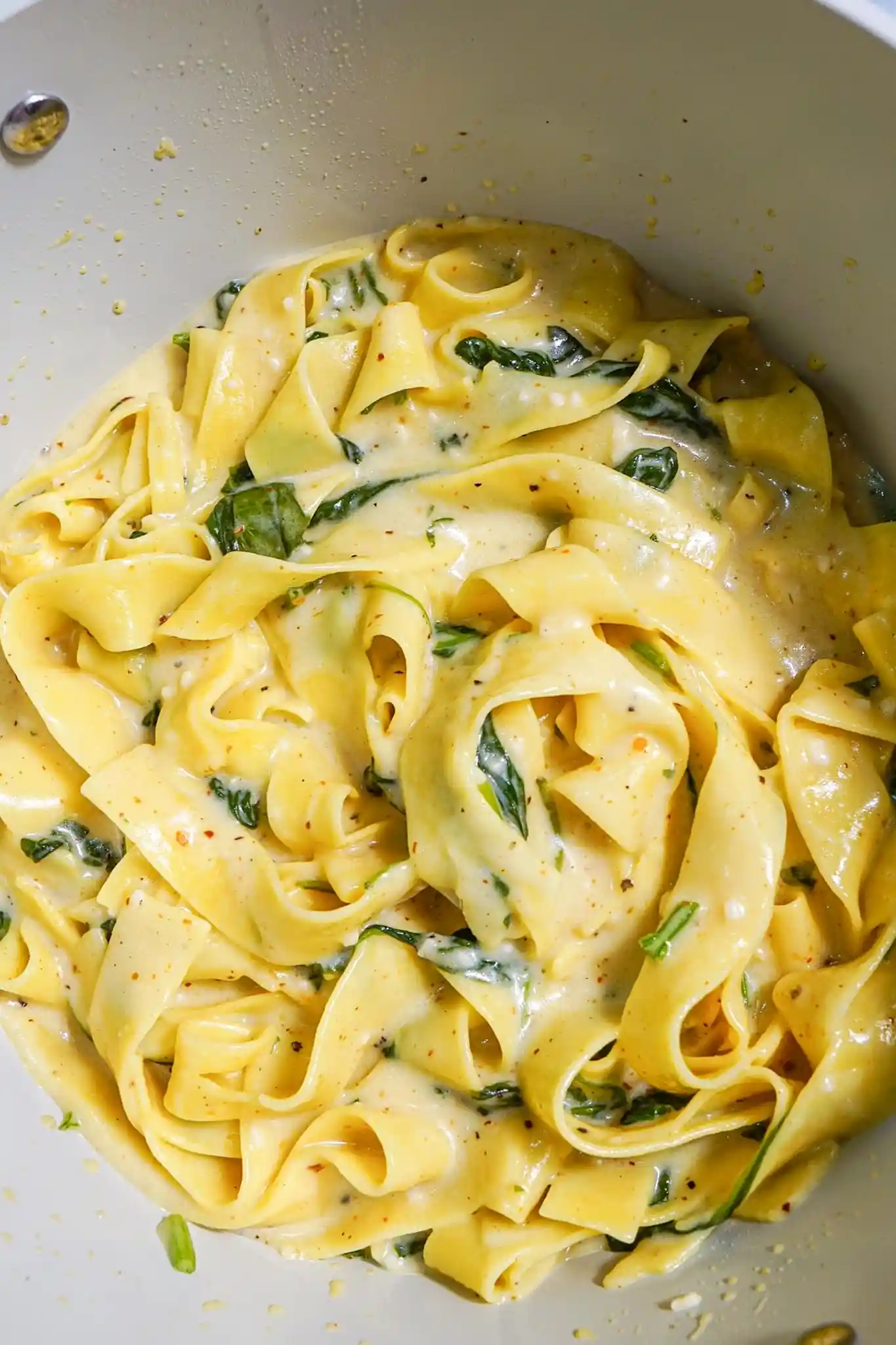
List of ingredients
- 4 servings of pappardelle or pasta of choice – use a sturdy noodle to maintain texture.
- 2 tbsps butter – provides the base for the garlic infusion.
- 2-3 cloves garlic, minced – freshly minced for maximum aromatic potency.
- 2 cups stock or water – vegetable stock adds more depth than water.
- 2 cups milk – whole milk creates a creamier emulsion.
- 1 tsp salt, or to taste – adjust based on the saltiness of your stock.
- 150g or 2-3 loose cups of spinach – fresh baby spinach wilts quickly and stays tender.
- 1 cup Parmesan – use a microbial-rennet version for a clean substitute.
- 1 cup of shredded cheddar – or any favorite easy-melting cheese.
- black pepper, or to taste – freshly cracked for a sharper bite.
- 1 tsp chilli flakes, optional – adds a subtle heat to balance the creaminess.
- 2 tbsps parsley – finely chopped for a fresh finish.
step-by-step instructions
- Infuse the butter: Melt butter and garlic in a pan over low heat. Let the garlic infuse the butter until fragrant, or when the butter completely melts and starts to bubble.
- Combine liquids and pasta: Add dry pasta, stock, milk and salt. Stir to combine, and let this come to boil.
- Cook the pasta: Let pasta cook to al dente, 7-8 minutes if using pappardelle, or follow the timing on the pasta packet. Occasionally stir to evenly distribute pasta and prevent sticking.
- Wilt the spinach: Add spinach, and stir to incorporate with the pasta until spinach wilts. Turn off the heat immediately.
- Final emulsification: Immediately add parmesan, shredded cheddar, black pepper, chilli flakes and parsley. Stir until cheese melts into the sauce. Serve immediately!
Optimizing Sauce Consistency
Managing the Liquid Ratio
The balance between milk and stock is critical for the final thickness of the sauce. If you use too much liquid, the pasta may overcook before the sauce reduces enough to coat the noodles. Ensure the liquid just barely covers the dry pasta to achieve the ideal creamy texture.
The Role of Pasta Starch
Unlike traditional methods where pasta water is drained, one-pot cooking keeps the starch in the pan. This starch acts as a natural thickener that binds the fats from the butter and cheese to the liquid. Stirring occasionally helps release more starch, creating a glossier and more cohesive sauce.
Preventing Sauce Separation
Turning off the heat before adding the cheese is essential to prevent the sauce from breaking. High temperatures can cause the fats in the cheese to separate from the proteins, resulting in an oily appearance. Stirring the cheese in off-heat allows it to melt smoothly into a stable emulsion.
Ingredient Substitutions and Variations
Alternative Pasta Shapes
While pappardelle provides a wide surface area for the sauce, other shapes like fettuccine or linguine work equally well. If using short pasta like penne or fusilli, you may need to slightly increase the cooking time and adjust the liquid levels. Always monitor the pasta’s doneness rather than relying solely on the packet timer.
Choosing Different Melting Cheeses
If you do not have cheddar, Gruyere or Fontina are excellent alternatives due to their superior melting properties. For a sharper taste, use an aged white cheddar. Always ensure the cheese is finely shredded to facilitate faster melting and a smoother texture.
Substituting the Liquid Base
Vegetable broth is the preferred choice for a savory depth, but water can be used if you increase the salt slightly. For an even richer sauce, you can replace one cup of milk with heavy cream. This increases the fat content and results in a thicker, more velvet-like consistency.
Exploring Other Leafy Greens
Kale or Swiss chard can replace spinach, though these greens require more cooking time. Add kale early in the boiling process so it has time to soften. Baby spinach is added at the end because its thin leaves wilt in seconds.
Professional Cooking Techniques
Mastering the Garlic Butter Infusion
Cooking garlic on low heat prevents the cloves from browning or burning. Burnt garlic introduces a bitter flavor that can overpower the entire dish. The goal is to achieve a translucent appearance and a fragrant aroma before adding the liquids.
Controlling the Boil
Once the liquid reaches a boil, reduce the heat to a simmer. A violent boil can cause the milk to scorch on the bottom of the pan or evaporate too quickly. A gentle simmer ensures the pasta cooks evenly from the center outward.
Achieving Perfect Al Dente Texture
Start testing the pasta two minutes before the recommended packet time. Since the pasta continues to cook in the residual heat while you stir in the cheese, removing it from the heat slightly early prevents mushiness. The pasta should have a slight resistance when bitten.
Integrating Fresh Herbs Correctly
Adding parsley at the very end preserves its bright green color and fresh flavor. Cooking herbs for too long can dull their taste and turn them brown. Stir them in along with the cheese for the best aesthetic and flavor profile.
Serving and Pairing Suggestions
Best Side Dish Pairings
A crisp green salad with a lemon vinaigrette cuts through the richness of the garlic butter sauce. Roasted asparagus or steamed broccoli also complement the creamy textures. A side of toasted sourdough bread is useful for soaking up any remaining sauce.
Garnishing for Visual Appeal
Top the dish with an extra sprinkle of freshly grated Parmesan and a pinch of red chili flakes. A drizzle of high-quality olive oil can add a professional sheen to the plating. Adding a few whole baby spinach leaves on top provides a fresh color contrast.
Plating for Heat Retention
Serve the pasta in warmed bowls to keep the sauce from thickening too quickly. One-pot pastas tend to set faster than traditional sauces as they cool. Prompt serving ensures the sauce remains fluid and creamy.
Storage and Reheating Guidelines
Optimal Refrigeration Methods
Store leftovers in an airtight container in the refrigerator for up to three days. The pasta will absorb more liquid as it sits, which will make the sauce appear disappeared or dry. This is a normal occurrence due to the starch in the noodles.
Effective Reheating Techniques
Avoid reheating the pasta in the microwave on high power, as this can cause the cheese to separate. Instead, heat it in a pan over low heat and add a splash of milk or water. This re-emulsifies the sauce and restores the original creamy consistency.
Freezing One-Pot Pasta
Freezing is not recommended for this specific recipe due to the high milk and cheese content. Dairy-based sauces often break or become grainy upon thawing. For the best quality, consume the pasta within a few days of cooking.
Common Cooking Challenges
Fixing a Watery Sauce
If the sauce is too thin after adding the cheese, continue stirring for another minute off the heat. The residual heat and constant movement help the starch and cheese bind more effectively. If it remains watery, you can stir in a tablespoon of grated Parmesan to thicken it instantly.
Preventing Grainy Cheese Sauce
Graininess usually occurs when cheese is overheated or when low-quality pre-shredded cheeses with cornstarch coatings are used. Shredding your own cheese from a block ensures a smoother melt. Always ensure the heat is off before the cheese enters the pan.
Avoiding Mushy Pasta
Mushy pasta is the result of overcooking or stirring too vigorously, which can break the noodles. Stir gently and only when necessary to prevent sticking. Follow the al dente guidelines strictly to maintain the structural integrity of the pasta.
Frequently Asked Questions
Can I use heavy cream instead of milk?
Yes, you can use heavy cream for a denser and richer sauce. If you do this, you may want to slightly reduce the amount of butter to balance the overall fat content of the dish.
Is it possible to add chicken to this pot?
Yes, you can add diced, pre-cooked chicken during the final step when adding the spinach. If using raw chicken, sear it in the butter first, remove it from the pan, cook the pasta, and then stir the chicken back in at the end.
What is the best substitute for Parmesan?
Pecorino Romano is a strong alternative, though it is saltier than Parmesan. If using Pecorino, reduce the added salt in the recipe to avoid over-seasoning the dish.
Can I use dried spinach?
Dried or frozen spinach can be used, but it must be thawed and squeezed dry first. Add frozen spinach during the last two minutes of the pasta cooking time to ensure it is heated through.
Print
One Pot Creamy Garlic Butter Spinach Pasta
- Total Time: 15 minutes
- Yield: 4 servings 1x
- Diet: General
Description
A quick and fulfilling one-pot pasta dish featuring rich, creamy garlic butter, fresh spinach, and a blend of melted cheeses.
Ingredients
- 4 servings of pappardelle or pasta of choice
- 2 tbsps butter
- 2–3 cloves garlic, minced
- 2 cups vegetable stock or water
- 2 cups milk
- 1 tsp salt, or to taste
- 150g or 2–3 loose cups of spinach
- 1 cup microbial-rennet Parmesan
- 1 cup microbial-rennet shredded cheddar
- black pepper, or to taste
- 1 tsp chilli flakes, optional
- 2 tbsps parsley
Instructions
- Step 1: Melt butter and garlic in a pan over low heat. Let the garlic infuse the butter until fragrant, or when the butter completely melts and starts to bubble.
- Step 2: Add dry pasta, stock, milk and salt. Stir to combine, and let this come to boil.
- Step 3: Let pasta cook to al dente, 7-8 minutes if using pappardelle, or follow the timing on the pasta packet. Occasionally stir to evenly distribute pasta.
- Step 4: Add spinach, and stir to incorporate with the pasta until spinach wilts. Turn off the heat.
- Step 5: Immediately add parmesan, shredded cheddar, black pepper, chilli flakes and parsley. Stir until cheese melts into the sauce. Serve immediately!
Notes
If the sauce appears too liquid, continue stirring after adding the cheese; the starch released from the pasta will thicken the liquid. Ensure the heat is turned off before adding cheese to avoid overcooking the pasta into a mushy consistency.
- Prep Time: 5 minutes
- Cook Time: 10 minutes
- Category: Dinner
- Method: One Pot
- Cuisine: Italian-inspired
Nutrition
- Serving Size: 1 serving
- Calories: 680 kcal
- Sugar: 9 g
- Sodium: 850 mg
- Fat: 32 g
- Saturated Fat: 18 g
- Unsaturated Fat: 12 g
- Trans Fat: 0 g
- Carbohydrates: 68 g
- Fiber: 5 g
- Protein: 28 g
- Cholesterol: 95 mg