
Create a professional steakhouse experience at home using a simple pan-searing technique. This method produces a deeply caramelized crust while keeping the interior tender and juicy.
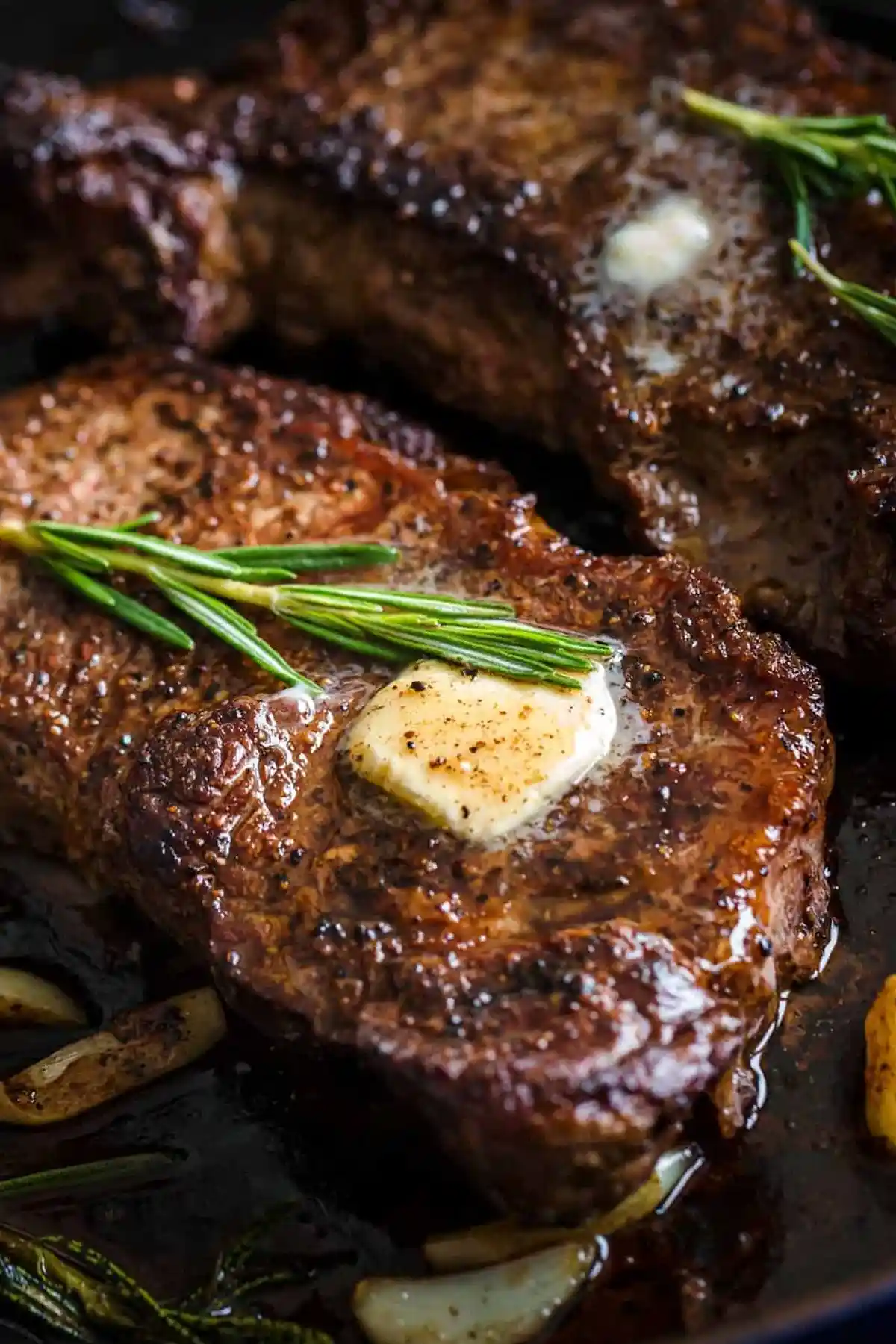
List of ingredients
- 2 lbs New York Strip Steaks (2 steaks, about 1 lb each and 1 1/4″ thick) – Ribeye or Top Sirloin also work well.
- 1/2 Tbsp vegetable oil – or any high-smoke point oil like canola or extra light olive oil.
- 1 1/2 tsp sea salt – used for seasoning both sides.
- 1 tsp black pepper – freshly ground for maximum flavor.
- 2 Tbsp unsalted butter – for basting.
- 2 cloves garlic – peeled and quartered.
- 1 sprig fresh rosemary – adds a classic aromatic finish.
step-by-step instructions
- Prepare the meat: Thoroughly pat the steaks dry using paper towels. Just before you begin cooking, season both sides generously with 1 1/2 tsp salt and 1 tsp black pepper.
- Heat the pan: Place a cast iron skillet over medium-high heat until it is very hot. Add 1/2 Tbsp of oil and swirl it to coat the surface evenly.
- Sear the steaks: Carefully add the steaks to the hot skillet. Sear on the first side for 4 minutes without moving them to develop a brown crust. Flip and cook the other side for 3-4 minutes.
- Sear the edges: Using tongs, turn the steaks onto their sides to render the white fat and sear the edges for about 1 minute per edge.
- Baste with butter: Reduce the heat to medium. Immediately add 2 Tbsp butter, the quartered garlic, and the rosemary sprig. Tilt the pan and spoon the melting butter sauce over the steaks continuously for about a minute.
- Check doneness: Continue basting until the internal temperature is 5-10 degrees below your target doneness.
- Rest and serve: Transfer the steaks to a cutting board and cover them loosely. Let them rest for 10 minutes. Slice into 1/2″ strips and spoon the remaining butter sauce over the meat.
Guide to Selecting the Right Cut
New York Strip for Balance
The New York Strip is an excellent choice for pan-searing because it offers a great balance of tenderness and beefy flavor. It typically has a strip of fat along one edge that renders beautifully during the searing process.
Ribeye for Maximum Juiciness
Ribeye steaks are highly marbled with intramuscular fat, which melts during cooking to baste the meat from the inside. This cut is generally the most flavorful and juicy option for a skillet meal.
Top Sirloin for Leaner Preferences
Top Sirloin is a leaner cut that provides a strong beef flavor without as much fat as a ribeye. It is an affordable option that remains tender if not overcooked.
Filet Mignon for Supreme Tenderness
The tenderloin, or filet mignon, is the most tender cut of beef available. Because it is very lean, it relies heavily on the butter-basting step to add moisture and richness to the final dish.
Mastering the Searing Process
The Importance of Patting Steak Dry
Moisture on the surface of the meat creates steam, which prevents the steak from browning. By using paper towels to remove all surface water, you ensure the Maillard reaction occurs quickly for a dark, crispy crust.
Using High-Smoke Point Oils
Avoid using extra virgin olive oil or butter for the initial sear, as they burn at lower temperatures. Vegetable, canola, or grapeseed oils can withstand the high heat needed to sear beef without smoking or tasting bitter.
Preheating the Pan Correctly
A cold pan leads to sticking and a grey, steamed exterior. Heat your skillet for about 5 minutes until the oil shimmers or just begins to smoke before adding the meat.
Avoiding Overcrowding the Skillet
Adding too many steaks at once drops the pan temperature significantly. Cook in batches if necessary to maintain a high heat, ensuring every piece of meat sears rather than boils in its own juices.
Temperature and Doneness Guide
Using an Instant-Read Thermometer
The only way to guarantee perfect doneness is with a digital thermometer. Insert the probe horizontally into the side of the steak to reach the center of the thickest part without hitting the bone.
Target Temperatures for Medium Rare
For a soft, dark pink center, remove the steak from the pan when it hits 125°F. The internal temperature will rise to a final 130°F during the resting phase.
Target Temperatures for Medium
If you prefer a soft center with some pink, remove the meat at 135°F. It will carry over to a final temperature of 140°F after resting.
Target Temperatures for Medium-Well
For a steak with only a slightly pink center, remove it from the heat at 145°F. This will result in a final internal temperature of 150°F.
Target Temperatures for Well Done
For a very firm steak with little to no pink, remove the meat at 155°F. The resting process will bring the final temperature to 160°F.
Understanding Carryover Cooking
Meat continues to cook after being removed from the heat source because the exterior is much hotter than the interior. Always pull your steak 5-10 degrees early to avoid overshooting your desired doneness.
The Art of Butter Basting
The Role of Aromatics
Adding garlic and rosemary to the butter creates an infused oil that permeates the crust of the steak. These aromatics add depth and a steakhouse aroma that plain searing cannot achieve.
How to Properly Spoon the Butter
Tilt the pan so the melted butter pools at the bottom with the garlic and herbs. Use a large spoon to continuously scoop this hot, flavorful fat over the top of the steaks during the final minutes of cooking.
Timing the Butter Addition
Butter contains milk solids that burn quickly if added at the start. Wait until the steaks are nearly finished and the heat is reduced to medium before adding the butter to prevent it from turning black.
Resting and Slicing Techniques
Why Resting is Mandatory
During cooking, the muscle fibers tighten and push juices toward the center. Resting for 10 minutes allows the fibers to relax and the juices to redistribute, ensuring the meat stays moist when sliced.
Slicing Against the Grain
Identify the direction of the muscle fibers (the grain) and cut perpendicular to them. This shortens the fibers, making each bite significantly more tender and easier to chew.
Optimal Slicing Thickness
Slice the steak into 1/2-inch strips. Slicing too thinly can cause the meat to cool down too rapidly, while thicker slices may be harder to eat comfortably.
Storage and Preservation Tips
Refrigeration Guidelines
Store leftover cooked steak in an airtight container in the refrigerator. It will remain safe and flavorful for 3 to 4 days.
Freezing for Long-Term Storage
To freeze steak, use a vacuum sealer or a heavy-duty freezer bag with all the air squeezed out. This prevents freezer burn and keeps the meat fresh for 2 to 3 months.
Reheating Without Overcooking
To avoid turning your steak into rubber, reheat it gently. Use a low-heat skillet with a small pat of butter or warm it in the oven at 250°F until just warmed through.
Creative Ways to Use Leftover Steak
Cold steak is excellent when sliced thin for salads, diced for tacos, or layered into a Philly cheesesteak sandwich. It adds a rich, savory element to breakfast hashes as well.
Steak Cooking FAQ
Can I use a stainless steel pan instead of cast iron?
Yes, a heavy-bottomed stainless steel pan works well. However, cast iron is preferred because it retains heat more efficiently, which helps maintain a consistent sear when the cold meat hits the surface.
Should I salt the steak hours before cooking?
Salting early (dry brining) helps the salt penetrate deep into the meat, improving flavor and tenderness. If you don’t have hours, salting immediately before cooking is still effective for creating a great crust.
What is the best oil for searing?
Any oil with a smoke point above 400°F is ideal. Avocado oil and grapeseed oil are top choices, while canola and vegetable oils are widely available and work perfectly.
Why is my steak sticking to the pan?
Sticking usually happens if the pan isn’t hot enough or if the meat is added too early. Once a proper crust forms, the steak will naturally release from the surface of the pan.
Do I need to bring the steak to room temperature first?
While common, bringing steak to room temperature has a minimal effect on the final cook. The most important factor is ensuring the surface is completely dry before it hits the oil.
Print
Perfect Pan-Seared Steak with Garlic Butter
- Total Time: 20 minutes
- Yield: 4 servings 1x
- Diet: General
Description
This Pan-Seared Steak has a garlic butter that makes it taste like a steakhouse quality meal. You’ll be impressed at how easy it is to make the perfect steak that’s seared on the outside, and perfectly tender inside.
Ingredients
- 2 lbs New York Strip Steaks (or Ribeye or Top Sirloin Steaks)
- 1/2 Tbsp vegetable oil
- 1 1/2 tsp sea salt
- 1 tsp black pepper
- 2 Tbsp unsalted butter
- 2 cloves garlic, peeled and quartered
- 1 sprig fresh rosemary
Instructions
- Step: Thoroughly pat steak dry with paper towels. Just before cooking, generously season with 1 1/2 tsp salt and 1 tsp black pepper
- Step: Heat the cast iron pan until hot then add 1/2 Tbsp oil over medium-high heat, swirling to coat. Once the oil is very hot, add steaks to the skillet. Sear the steaks on the first side for 4 minutes until a brown crust has formed then flip and cook another 3-4 minutes. Using tongs, turn the steak on its sides to render the white fat and sear the edges (1-minute per edge).
- Step: Reduce heat to medium and immediately add 2 Tbsp butter, quartered garlic cloves and rosemary to the pan. Spoon the butter sauce over the steak, tilting the pan to get butter on your spoon. Continue spooning the sauce over the steak for a minute or until the steak is about 5-10 degrees from your desired doneness.
- Step: Transfer steak to a cutting board, loosely cover and rest 10 minutes before slicing into 1/2″ strips to serve. Spoon extra butter sauce over sliced steak to serve.
Notes
Doneness Guide: Medium Rare: Remove at 125°F for a final temp of 130°F; Medium: Remove at 135°F for a final temp of 140°F; Medium-Well: Remove at 145°F for a final temp of 150°F; Well Done: Remove at 155°F for a final temp of 160°F.
- Prep Time: 5 minutes
- Cook Time: 15 minutes
- Category: Dinner
- Method: Pan-Searing
- Cuisine: American
Nutrition
- Serving Size: 1/2 steak
- Calories: 542 kcal
- Sugar: 1 g
- Sodium: 991 mg
- Fat: 40 g
- Saturated Fat: 19 g
- Unsaturated Fat: 21 g
- Trans Fat: 0 g
- Carbohydrates: 1 g
- Fiber: 1 g
- Protein: 46 g
- Cholesterol: 154 mg