
These savory and spicy noodles offer a restaurant-quality meal in just half an hour. They are a perfect solution for those craving bold Asian flavors on a tight schedule.
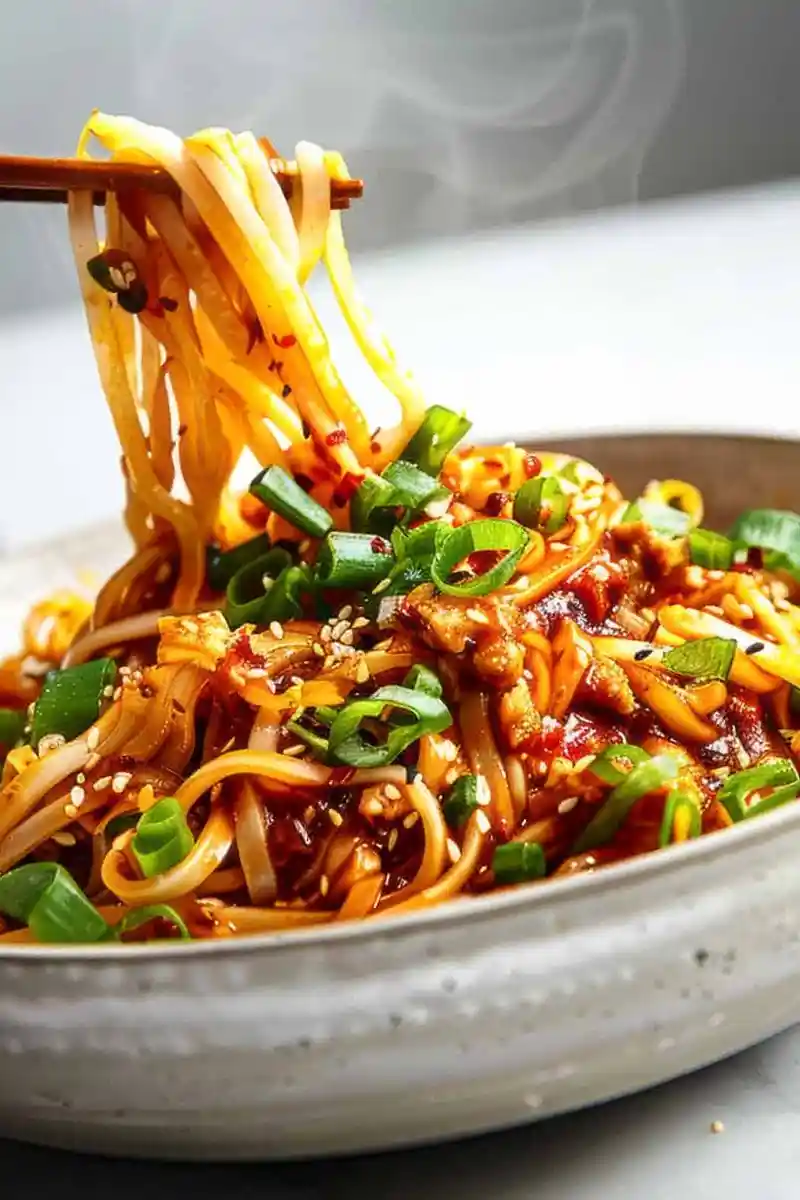
List of ingredients
- 8 oz dried noodles (spaghetti or Chinese wheat noodles) – provides the main hearty base.
- 2 tbsp vegetable oil – used for sautéing aromatics.
- 1 tbsp ginger, minced – adds a fresh, zesty punch.
- 3 garlic cloves, minced – provides a pungent, savory aroma.
- 1/2 cup green onions, chopped – used for both flavor and fresh garnish.
- 1/4 cup soy sauce – delivers saltiness and rich umami.
- 2 tbsp rice vinegar – balances the heat with tangy acidity.
- 2 tbsp Szechuan chili paste or sauce – the primary source of heat and authentic spice.
- 1 tbsp hoisin sauce – adds a thick sweetness and depth.
- 1 tsp sugar – rounds out the spicy and acidic notes.
- 1/2 cup chicken or vegetable broth – creates a cohesive sauce consistency.
- 1/2 cup snow peas, trimmed – adds a crisp texture and freshness.
- Crushed peanuts or sesame seeds – optional garnishes for added crunch.
step-by-step instructions
- Cook the noodles: Bring a large pot of water to a boil and cook the noodles according to the package instructions. Drain them and set them aside.
- Prepare the sauce: In a small bowl, whisk together the soy sauce, rice vinegar, Szechuan chili paste, hoisin sauce, sugar, and chicken broth. Set this mixture aside for later use.
- Sauté aromatics: In a large pan or wok, heat the vegetable oil over medium-high heat. Add the minced ginger and garlic, and sauté for about 1-2 minutes until they become fragrant.
- Cook the vegetables: Add the snow peas to the pan. Stir-fry for about 2-3 minutes until the vegetables are tender but still retain a crisp bite.
- Combine noodles and sauce: Add the cooked noodles to the pan, pour in the prepared sauce mixture, and toss everything together. Continue cooking for 2-3 minutes until the noodles are well-coated and heated through.
- Finish and serve: Remove the pan from the heat. Sprinkle with chopped green onions and garnish with crushed peanuts or sesame seeds if desired. Serve immediately.
Professional Cooking Techniques
Achieving the Perfect Al Dente Texture
Cook your noodles for one minute less than the package instructions suggest. After draining, rinse them quickly under cold water to stop the cooking process and prevent them from becoming mushy during the final sauté.
Using Fresh Aromatics for Maximum Flavor
Always use fresh ginger and garlic rather than powdered versions. Freshly minced aromatics release essential oils when hitting the hot oil, which creates a much more vibrant and authentic flavor base for the sauce.
Thickening the Sauce for Better Coating
If you prefer a glossier sauce that clings tightly to the noodles, create a small cornstarch slurry. Mix one teaspoon of cornstarch with a tablespoon of cold water and whisk it into the sauce mixture before adding it to the pan.
Protein Additions for a Heartier Meal
Incorporating Sautéed Chicken
Dice boneless, skinless chicken breasts into small, bite-sized pieces. Sear them in the wok with a bit of oil before adding the ginger and garlic, then remove them and stir them back in at the end.
Adding Firm Tofu for a Plant-Based Option
Press extra-firm tofu to remove excess water and cut it into small cubes. Pan-fry the cubes until golden brown on all sides, then toss them with the noodles and sauce for a satisfying texture.
Adding Shrimp for a Seafood Twist
Use peeled and deveined shrimp for a quick protein boost. Sauté the shrimp for about 2 minutes per side until pink, then set them aside and add them back during the final toss to avoid overcooking.
Vegetable Variations and Substitutions
Using Baby Bok Choy
Substitute the snow peas with halved baby bok choy. Sauté the stems first for a couple of minutes before adding the leaves, ensuring the greens stay vibrant and the stems remain crunchy.
Adding Sliced Mushrooms
Shiitake or button mushrooms add a deep earthy flavor and a meaty texture. Sauté them along with the garlic and ginger until they release their moisture and turn golden brown.
Substituting with Broccoli Florets
Small broccoli florets are a great alternative to snow peas. Since they take longer to cook, consider blanching them in the noodle water for 60 seconds before draining them and adding them to the pan.
Alternative Noodle Choices
Using Rice Noodles
For a gluten-free option, use wide rice noodles. Be careful not to over-soak them, as they can break easily; simply rinse them in hot water and toss them in the pan very gently.
Gluten-Free Wheat Alternatives
Brown rice noodles or chickpea pasta can be used as a substitute. These often require a slightly longer cooking time and may absorb more sauce, so you might need an extra splash of broth.
Whole Wheat Pasta Options
Whole wheat spaghetti is a nutrient-dense alternative that works well with this bold sauce. The nuttier flavor of the wheat complements the Szechuan chili paste and toasted sesame seeds.
Customizing the Flavor Profile
Managing the Spice Level
The heat comes primarily from the Szechuan chili paste. To make the dish milder, reduce the paste to one tablespoon or swap it for a mild chili garlic sauce.
Increasing the Sweetness
If the dish feels too acidic, add an extra teaspoon of brown sugar or a drizzle of honey. This helps balance the rice vinegar and enhances the depth of the hoisin sauce.
Enhancing the Tanginess
For a more bright and acidic profile, add a small squeeze of fresh lime juice right before serving. This cuts through the richness of the oil and peanuts, refreshing the overall palate.
Plating and Serving Suggestions
Adding Crunch with Toasted Seeds
Toast your sesame seeds in a dry pan over medium heat for 1-2 minutes until they are fragrant. This simple step significantly elevates the nutty aroma of the final dish.
Pairing with Fresh Side Dishes
Serve these noodles alongside a chilled cucumber salad with rice vinegar and sesame oil. The cool, crisp cucumber provides a refreshing contrast to the heat of the Szechuan sauce.
Family-Style Presentation
Transfer the noodles to a large platter and garnish with a generous amount of sliced green onions. Place the crushed peanuts in a small side bowl so guests can customize their own level of crunch.
Proper Storage Methods
Refrigeration Guidelines
Store any leftover noodles in an airtight container in the refrigerator for up to two days. Keep the garnish separate to ensure the peanuts and onions stay crisp.
Using Airtight Containers
Glass containers with locking lids are best for preserving the flavor and preventing the noodles from absorbing other smells in the fridge. Ensure the noodles are completely cooled before sealing.
Best Reheating Practices
Stovetop Reheating Method
Reheating on the stove is the best way to maintain the noodle texture. Heat a pan over medium heat, add a splash of vegetable broth to loosen the sauce, and toss until heated through.
Microwave Instructions
Place noodles in a microwave-safe dish and sprinkle with a teaspoon of water. Heat on medium power in one-minute intervals, stirring in between to ensure even heating.
Restoring Sauce Consistency
Noodles tend to absorb sauce while sitting in the fridge. Always add a small amount of broth or water during reheating to bring back the silky, creamy consistency of the Szechuan sauce.
Make-Ahead Preparation Tips
Batch Preparing the Sauce
You can whisk the sauce ingredients together and store them in a jar for up to a week. When ready to cook, simply pour the pre-made mixture into the pan.
Pre-Cutting Aromatics
Mince the garlic, ginger, and green onions in advance and store them in small containers. This reduces the prep time on a busy weeknight to just a few minutes.
Pre-Cooking the Noodles
Cook and drain your noodles a few hours before dinner. Toss them with a teaspoon of oil to prevent sticking, then store them in the fridge until you are ready to sauté.
Troubleshooting Common Problems
Fixing a Watery Sauce
If the sauce appears too thin after adding the noodles, increase the heat to medium-high and stir constantly for another minute. The reduction process will concentrate the flavors and thicken the liquid.
Preventing Noodle Clumping
If your noodles stick together after draining, toss them immediately with a small amount of vegetable oil. This creates a barrier that prevents them from forming a dense mass.
Avoiding Overcooked Vegetables
To keep snow peas bright green and crisp, avoid cooking them for more than three minutes. Add them late in the process so they only soften slightly while retaining their snap.
Frequently Asked Questions
Can I use a different oil?
Yes, peanut oil or avocado oil are excellent choices because they have high smoke points. Avoid using extra virgin olive oil as its distinct flavor can clash with the Asian aromatics.
What is the best chili paste to use?
Lao Gan Ma Chili Crisp is highly recommended for its authentic flavor and texture. If unavailable, any Szechuan-style chili paste or a mixture of sriracha and red pepper flakes can work.
Can I use coconut aminos instead of soy sauce?
Yes, coconut aminos are a great soy-free alternative. Since they are slightly sweeter and less salty, you may want to reduce the amount of sugar in the recipe slightly.
What if I don’t have hoisin sauce?
You can substitute hoisin with a mixture of soy sauce, honey, and a pinch of five-spice powder. This mimics the sweet and savory profile of the original sauce.
How do I make this dish vegan?
Simply use vegetable broth instead of chicken broth and ensure your hoisin sauce does not contain any animal-derived additives. The rest of the ingredients are naturally plant-based.
Print
Quick and Spicy Szechuan Noodles
- Total Time: 30 minutes
- Yield: 4 servings 1x
- Diet: General
Description
Enjoy a quick and flavorful meal with this easy Szechuan Noodles recipe. Perfect for a busy weeknight, this dish combines simple ingredients to deliver a spicy, savory, and satisfying noodle dish that will delight your taste buds. Ready in just 30 minutes, it’s a great way to bring a taste of Szechuan cuisine to your home.
Ingredients
- 8 oz dried noodles (spaghetti or Chinese wheat noodles)
- 2 tbsp vegetable oil
- 1 tbsp ginger, minced
- 3 garlic cloves, minced
- 1/2 cup green onions, chopped
- 1/4 cup soy sauce
- 2 tbsp rice vinegar
- 2 tbsp Szechuan chili paste or sauce
- 1 tbsp hoisin sauce
- 1 tsp sugar
- 1/2 cup vegetable broth
- 1/2 cup snow peas, trimmed
- Crushed peanuts or sesame seeds for garnish
Instructions
- Cook the noodles: Bring a large pot of water to a boil and cook the noodles according to the package instructions. Drain and set aside.
- Prepare the sauce: In a small bowl, whisk together soy sauce, rice vinegar, Szechuan chili paste, hoisin sauce, sugar, and vegetable broth. Set aside.
- Sauté aromatics: In a large pan or wok, heat the vegetable oil over medium-high heat. Add minced ginger and garlic, and sauté for about 1-2 minutes until fragrant.
- Cook the vegetables: Add the snow peas to the pan. Stir-fry for about 2-3 minutes until the vegetables are tender but still crisp.
- Combine noodles and sauce: Add the cooked noodles to the pan, pour in the sauce mixture, and toss everything together until well-coated and heated through, about 2-3 minutes.
- Finish and serve: Remove from heat, sprinkle with chopped green onions, and garnish with crushed peanuts or sesame seeds if desired. Serve immediately.
Notes
Adjust spice level: If you prefer a milder dish, reduce the amount of Szechuan chili paste or sauce. Protein addition: For a heartier meal, add cooked chicken, shrimp, or tofu. Vegetable variations: Feel free to swap or add other vegetables like broccoli, mushrooms, or bok choy. Leftovers: Store any leftovers in an airtight container in the refrigerator for up to 2 days. Reheat gently on the stovetop or microwave.
- Prep Time: 10 minutes
- Cook Time: 20 minutes
- Category: Dinner
- Method: Stir-fry
- Cuisine: Chinese
Nutrition
- Serving Size: 1 serving
- Calories: 244 kcal
- Sugar: 5 g
- Sodium: 867 mg
- Fat: 13 g
- Saturated Fat: 2 g
- Unsaturated Fat: 11 g
- Trans Fat: 0 g
- Carbohydrates: 28 g
- Fiber: 3 g
- Protein: 7 g
- Cholesterol: 0 mg