
This creamy pesto chicken pasta is a fast and satisfying meal perfect for busy weeknights. It combines tender protein with a rich, herbaceous sauce for a balanced dinner.
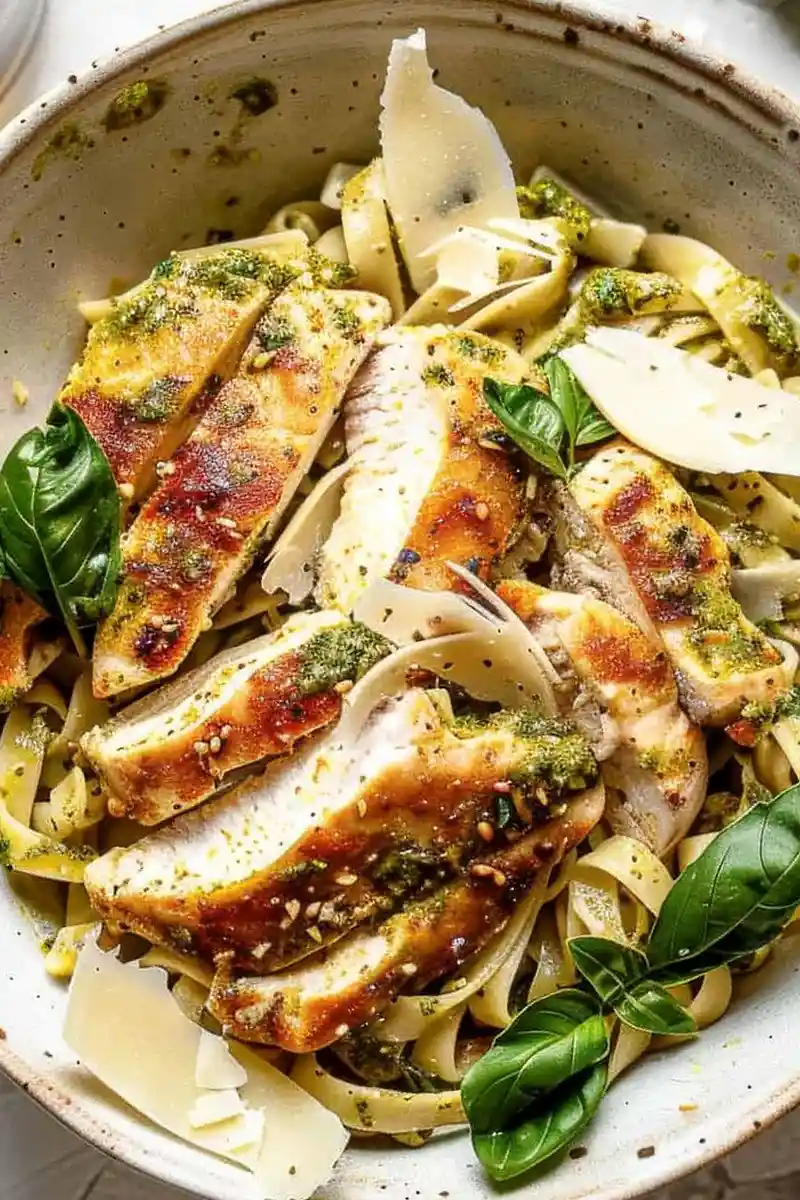
List of ingredients
- 500 g pasta (any type) – provides the hearty base of the meal.
- 2 large boneless, skinless chicken breasts – used for lean, high-quality protein.
- 2 tablespoons olive oil – used for searing the chicken and sautéing garlic.
- 3 cloves garlic (minced) – adds a sharp, aromatic depth to the sauce.
- 80 g basil pesto (approximately 1/2 jar) – the primary source of herbaceous flavor.
- 100 ml single cream – creates a smooth and velvety texture.
- 100 ml vegetable stock (made with a stock cube) – thins the sauce while adding savoriness.
- 2 tablespoons walnuts (chopped) – provides a nutty crunch and contrast.
- 1 ball mozzarella (torn) – adds a creamy, stretchy element to the finish.
- 1 bunch basil (chopped) – adds a fresh, bright herbal note.
- 50 g parmesan cheese (grated) – contributes a salty, umami finish.
- Salt and pepper (to taste) – essential for balancing and enhancing flavors.
step-by-step instructions
- Cook the Pasta: Boil the pasta according to the package instructions, then drain and set aside.
- Prepare the Chicken: Place the chicken breasts between two sheets of non-stick greaseproof paper and pound with a rolling pin until they are evenly thin; season both sides with salt and pepper.
- Cook the Chicken: Heat olive oil in a nonstick frying pan over medium heat; fry the chicken for about 5-7 minutes per side until cooked through and juices run clear, then remove and set aside.
- Make the Sauce: In the same frying pan, sauté the minced garlic for about 3 minutes until fragrant and slightly browned, then stir in the pesto, pour in the cream and vegetable stock, and bring the mixture to a simmer.
- Combine Pasta and Sauce: Add the cooked pasta to the pan and toss thoroughly to ensure the noodles are evenly coated with the creamy pesto sauce.
- Serve: Slice the cooked chicken and arrange the pieces on top of the pasta, then sprinkle with torn mozzarella, chopped walnuts, grated parmesan, and extra black pepper.
Optimizing Your Pasta Selection
Using Penne or Fusilli for Better Sauce Adhesion
Penne and fusilli are excellent choices because their shapes, such as the ridges and spirals, trap the thick pesto sauce. This ensures that every bite contains a balanced ratio of pasta to cream. Avoid very thin noodles if you want a heartier, more cohesive dish.
Choosing Fettuccine for a Classic Texture
Fettuccine provides a wider surface area that allows the cream and pesto to coat the noodles smoothly. This is a great option for those who prefer a traditional Italian-style pasta feel. Ensure you cook it al dente to prevent the noodles from becoming mushy when tossed in the sauce.
Substituting with Whole Wheat or Gluten-Free Options
Whole wheat pasta adds a nuttier flavor and increased fiber, which complements the earthiness of the walnuts. For gluten-free alternatives, use brown rice or chickpea pasta. Be mindful that gluten-free pastas can overcook quickly, so check them frequently during the boiling process.
Advanced Chicken Preparation Techniques
The Benefit of Pounding the Meat
Pounding chicken breasts to an even thickness ensures that the meat cooks uniformly. This prevents the thinner edges from overcooking and drying out while the center remains raw. Using greaseproof paper prevents the meat from tearing or sticking to the rolling pin.
Dry Brining for Increased Juiciness
Seasoning the chicken with salt at least 30 minutes before cooking creates a dry brine. This process breaks down muscle proteins and allows the meat to retain more moisture during the searing process. It results in a more tender texture and deeper flavor profile.
Searing for Maximum Flavor Development
Wait until the olive oil shimmers before adding the chicken to the pan to achieve a proper sear. A golden-brown crust, known as the Maillard reaction, adds complex flavors that a gentle simmer cannot provide. Avoid crowding the pan to keep the temperature high and prevent the meat from steaming.
Customizing the Pesto Sauce
Using Red Pesto for a Tangy Twist
Substituting basil pesto with red pesto made from sun-dried tomatoes changes the flavor profile from fresh and herbal to rich and tangy. Red pesto pairs exceptionally well with the cream and mozzarella. The overall color of the dish will shift to a deep orange-red.
Adjusting the Creaminess Level
If you prefer a lighter sauce, reduce the amount of single cream and increase the vegetable stock. Conversely, for a more indulgent meal, you can use heavy cream or a tablespoon of mascarpone. This allows you to control the richness based on your dietary preference.
Adding Acidity to Balance the Richness
Adding a squeeze of fresh lemon juice or a teaspoon of balsamic vinegar to the sauce helps cut through the fat of the cream and cheese. This brightness enhances the basil flavor and prevents the dish from tasting too heavy. Stir in the acid at the very end of the sauce preparation.
Integrating Fresh Vegetables
Adding Spinach or Kale for Nutrition
Stir in two handfuls of fresh baby spinach or chopped kale during the final minute of simmering the sauce. The residual heat will wilt the greens without overcooking them. This adds a boost of iron and a vibrant green color to the meal.
Incorporating Roasted Cherry Tomatoes
Halved cherry tomatoes can be roasted in the oven or sautéed in the pan before adding the garlic. The bursting juices add a sweet and acidic contrast to the savory pesto. This variation adds visual appeal and a fresh, juicy texture to the pasta.
Using Sautéed Mushrooms for Earthiness
Sauté sliced cremini or button mushrooms in the pan before cooking the chicken. Mushrooms provide a meaty texture and an umami depth that complements the parmesan cheese. Ensure the mushrooms are browned well to remove excess moisture.
Adding Sliced Bell Peppers for Color
Thinly sliced red or yellow bell peppers can be sautéed along with the garlic for a sweet crunch. The sweetness of the peppers balances the saltiness of the pesto and parmesan. They provide a bright pop of color that makes the dish more appealing.
Nut and Seed Substitutions
Substituting Walnuts with Pine Nuts
Pine nuts are the traditional choice for pesto and provide a softer, buttery texture compared to walnuts. Toast them lightly in a dry pan for two minutes to intensify their flavor. This creates a more authentic Italian taste profile.
Using Pistachios for a Unique Flavor
Chopped pistachios offer a distinct saltiness and a vibrant green color that blends well with the basil. They provide a firmer crunch than pine nuts and a slightly sweeter taste than walnuts. This is an excellent choice for a more gourmet presentation.
Seed-Based Alternatives for Nut-Free Diets
Sunflower seeds or pumpkin seeds are great substitutes for those with nut allergies. To mimic the richness of nuts, toast the seeds in a small amount of olive oil until golden. They provide the necessary texture without compromising safety for nut-allergic diners.
Exploring Cheese Variations
Using Burrata for Extra Indulgence
Instead of torn mozzarella, place a whole burrata ball in the center of the serving platter. When broken open, the creamy interior flows into the pasta, creating an instant, rich sauce. This elevates the dish from a simple weeknight meal to a specialty dinner.
Substituting with Fontina or Provolone
Fontina and provolone are excellent melting cheeses that offer a slightly sharper taste than mozzarella. They blend seamlessly into the pesto sauce and provide a similar stretch. These options add a more complex dairy flavor to the finished dish.
Managing the Saltiness of Parmesan
Depending on the brand of parmesan used, the salt levels can vary significantly. Taste the sauce after adding the parmesan before adding any additional salt. If the sauce is too salty, a splash of extra cream or lemon juice can help neutralize the taste.
Cooking and Storage Advice
Preventing Pasta from Sticking Together
If you are not mixing the pasta with the sauce immediately, toss the drained noodles with a small amount of olive oil. This creates a thin barrier that prevents the starch from bonding the noodles together. This is particularly helpful when preparing the chicken and sauce in batches.
Utilizing Starchy Pasta Water
Before draining the pasta, reserve about 100 ml of the cooking water. If the pesto sauce becomes too thick or separates, stirring in a small amount of this starchy water will emulsify the sauce. This ensures the sauce clings perfectly to the pasta instead of pooling at the bottom.
Refrigeration and Shelf Life
Store leftover pasta in an airtight container in the refrigerator for up to three days. Ensure the pasta is completely cooled before sealing the lid to prevent condensation, which can make the noodles mushy. Keep it in the main body of the fridge, away from the door.
Best Methods for Reheating
The best way to reheat this dish is in a skillet over medium heat. Add a splash of water, vegetable stock, or olive oil to loosen the sauce as it warms. Avoid microwaving for long periods, as this can overcook the chicken and cause the cream to separate.
Make-Ahead Preparation Tips
You can prepare the chicken and the pesto sauce base a day in advance. Store them separately in the fridge and combine them with freshly cooked pasta when ready to serve. This reduces the active cooking time to just the boiling of the pasta and the final assembly.
Troubleshooting Common Issues
Fixing a Sauce That Is Too Thick
If the sauce becomes too dense after adding the pesto and cream, stir in a tablespoon of vegetable stock at a time. Continue adding liquid until the sauce reaches a pourable consistency that still coats the back of a spoon. This prevents the pasta from feeling dry.
Preventing the Pesto from Breaking
To prevent the oil in the pesto from separating from the cream, keep the heat at a gentle simmer rather than a rolling boil. High heat can cause the emulsion to break, leaving oily streaks on the pasta. Stir constantly to maintain a smooth, integrated texture.
Ensuring the Chicken is Cooked Through
Use a meat thermometer to check that the thickest part of the chicken breast has reached an internal temperature of 75 degrees Celsius. If you don’t have a thermometer, ensure the juices run clear when the meat is pierced. Resting the meat for five minutes after cooking helps redistribute the juices.
Frequently Asked Questions
Can I use a different protein?
Yes, shrimp or firm tofu are excellent alternatives. Shrimp should be sautéed for only 2-3 minutes per side to avoid toughness, while tofu should be pressed and browned thoroughly before adding the sauce.
How do I store this dish?
Place the leftovers in an airtight container and keep them refrigerated for up to three days. To maintain the best quality, store the chicken and pasta together but add fresh basil only after reheating.
Can I make this dairy-free?
Substitute the single cream with coconut cream or a cashew-based cream and use vegan parmesan and mozzarella alternatives. Ensure the pesto is made without cheese to keep the entire dish plant-based.
What is the best way to slice the chicken?
Slice the chicken breasts diagonally across the grain into strips of about 1 cm thickness. This creates a more elegant presentation and makes the meat easier to eat alongside the pasta noodles.
Print
Quick Creamy Chicken and Pesto Pasta
- Total Time: 35 minutes
- Yield: 4 servings 1x
- Diet: General
Description
This Pesto Chicken Pasta is a delicious combination of tender chicken, creamy pesto sauce, and perfectly cooked pasta. It’s a quick and easy dish that’s perfect for a weeknight dinner with fresh basil, parmesan, and mozzarella.
Ingredients
- 500 g pasta
- 2 large boneless, skinless chicken breasts
- 2 tablespoons olive oil
- 3 cloves garlic, minced
- 80 g basil pesto
- 100 ml single cream
- 100 ml vegetable stock
- 2 tablespoons walnuts, chopped
- 1 ball mozzarella, torn
- 1 bunch basil, chopped
- 50 g parmesan cheese, grated
- Salt and pepper, to taste
Instructions
- Cook the Pasta: Cook the pasta according to the package instructions. Drain and set aside.
- Prepare the Chicken: Place the chicken breasts between two sheets of non-stick greaseproof paper. Pound with a rolling pin until evenly thin. Season with salt and pepper.
- Cook the Chicken: Heat the olive oil in a nonstick frying pan over medium heat. Once the oil shimmers, add the chicken breasts. Fry until cooked through and juices run clear, about 5-7 minutes per side. Remove from the pan and set aside.
- Make the Sauce: In the same pan, add the minced garlic and sauté until fragrant and slightly browned, about 3 minutes. Add the pesto and stir. Pour in the cream and vegetable stock, mixing well with the pesto. Bring to a simmer.
- Combine Pasta and Sauce: Add the cooked pasta to the pan, tossing to coat the noodles evenly with the sauce.
- Serve: Slice the chicken and arrange on top of the pasta. Sprinkle with torn mozzarella, chopped walnuts, grated parmesan cheese, and extra black pepper.
Notes
Pesto Variation: You can use red pesto from sun-dried tomatoes as an alternative to basil pesto. Nut Substitution: Chopped pistachios can be used instead of walnuts for a different flavour. Storage: Store any leftovers in an airtight container in the refrigerator for up to 3 days.
- Prep Time: 15 minutes
- Cook Time: 20 minutes
- Category: pasta
- Method: stovetop
- Cuisine: Italian
Nutrition
- Serving Size: 1 serving
- Calories: 680 kcal
- Sugar: 5 g
- Sodium: 956 mg
- Fat: 30 g
- Saturated Fat: 9 g
- Unsaturated Fat: 13 g
- Trans Fat: 1 g
- Carbohydrates: 82 g
- Fiber: 2 g
- Protein: 29 g
- Cholesterol: 104 mg