
This fast shrimp scampi pasta delivers a rich, garlicky lemon butter sauce in just 30 minutes. It is an ideal meal for busy weeknights when you want a restaurant-quality dish at home.
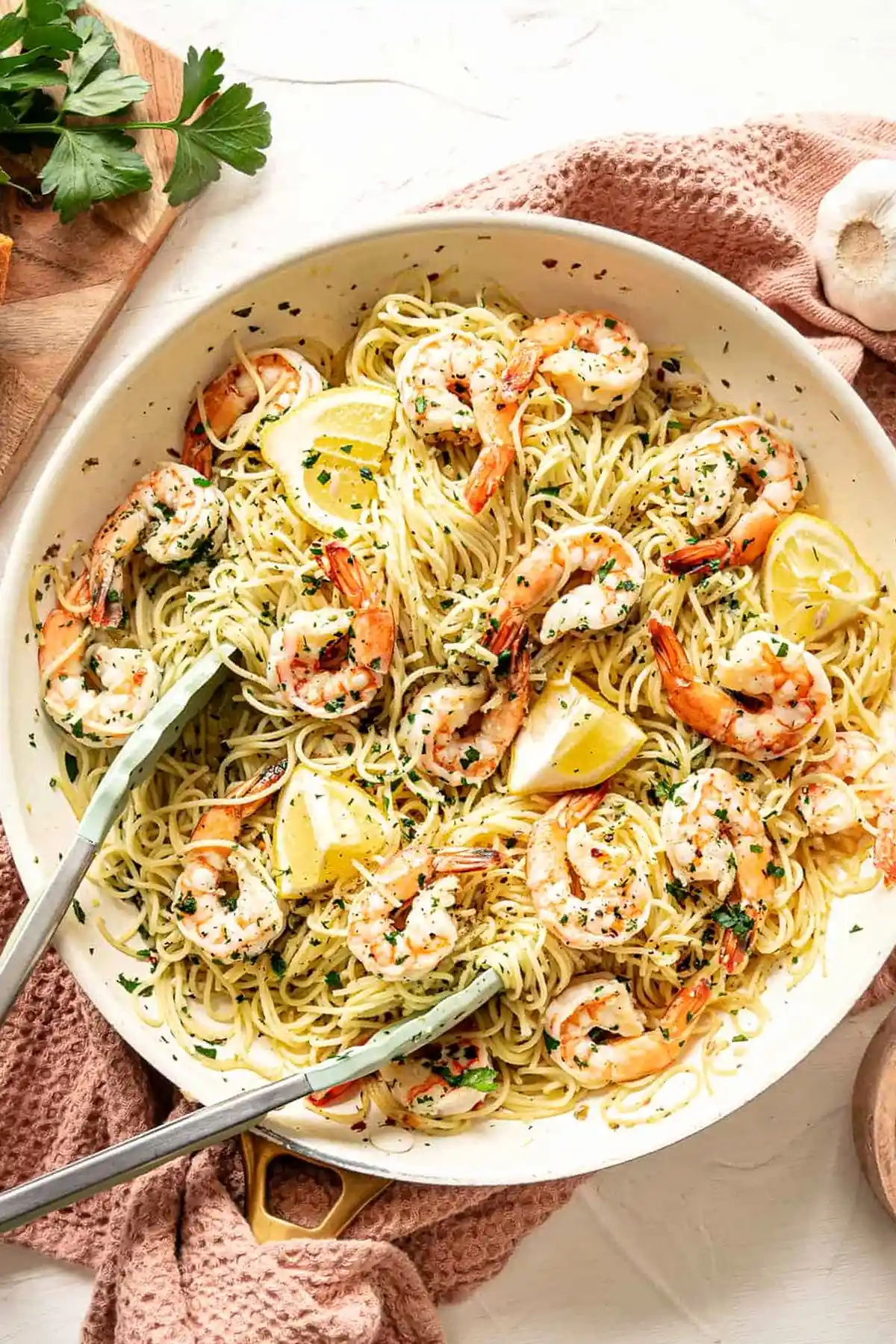
List of ingredients
- 12 ounces linguine (substitute with spaghetti or angel hair pasta) – providing the base for the sauce.
- salt – for seasoning the pasta water and shrimp.
- 1 cup reserved pasta water – essential for emulsifying the sauce.
- 4 tablespoons salted butter – divided into two portions for sautéing and finishing.
- 2 tablespoons olive oil – prevents the butter from browning too quickly.
- 1 tablespoon minced garlic – adds a pungent, aromatic flavor.
- 1 pound raw shrimp (peeled, deveined, and tails off) – ideally 31-40 count for bite-sized pieces.
- 1/2 teaspoon crushed red pepper flakes – introduces a subtle heat.
- 1/2 cup chicken broth – used as a flavorful, non-alcoholic base for the sauce.
- 1/4 cup fresh lemon juice – provides the signature citrus brightness.
- 1 teaspoon Italian seasoning (substitute with half-dried oregano and half-dried basil) – adds herbal depth.
- 1/4 cup grated Parmesan cheese – adds saltiness and thickness.
- 1/4 cup chopped fresh parsley – adds color and a fresh finish.
- lemon wedges – optional for serving as an extra garnish.
step-by-step instructions
- Boil Pasta: Cook the linguine in lightly salted water according to the package directions. Before draining, carefully scoop out and reserve about 1 cup of the salted pasta water. Drain the pasta and set it aside.
- Prep Shrimp: While the pasta is cooking, use paper towels to pat the raw shrimp completely dry. This ensures they sear properly rather than steaming in the pan.
- Cook Shrimp: Heat 2 tablespoons of butter and 2 tablespoons of olive oil in a large skillet over medium-high heat until the butter is bubbly. Add the minced garlic and shrimp to the pan. Season with 1/2 teaspoon salt and 1/2 teaspoon red pepper flakes. Stir continuously for 2-3 minutes until the shrimp just turns pink. Use a slotted spoon to transfer the shrimp to a plate and set them aside.
- Make Sauce: Return the skillet to the heat source. Pour in the chicken broth, fresh lemon juice, and Italian seasoning. Simmer the mixture for 3 to 4 minutes until the liquid reduces slightly. Remove the skillet from the heat and swirl in the remaining 2 tablespoons of butter until melted.
- Combine and Serve: Add the cooked shrimp, including any juices on the plate, and the drained pasta into the skillet. Toss everything together to combine. Stir in the grated Parmesan cheese and chopped fresh parsley. Add about 1/3 to 1/2 cup of the reserved pasta water and toss again until the sauce is glossy and adheres to the pasta. Taste and add more salt if needed. Serve immediately with lemon wedges on the side.
Pro Cooking Advice for Perfect Shrimp
Choosing the Right Shrimp Size
For the best eating experience, use shrimp with a count of 31-40 per pound. This size is ideal because each shrimp is a perfect single bite, ensuring a consistent ratio of seafood to pasta in every forkful. Larger shrimp may require more cooking time and can feel bulky in a delicate scampi sauce.
Properly Thawing Frozen Shrimp
If using frozen shrimp, thaw them quickly by placing them in a colander under cold running water for several minutes. Avoid thawing shrimp in warm water or on the counter, as this can compromise the texture and safety of the seafood. Ensure they are fully thawed before they hit the pan for even cooking.
Drying Shrimp for a Better Sear
Always pat your shrimp dry with paper towels before adding them to the skillet. Excess moisture creates steam, which prevents the shrimp from developing a golden color and can water down the butter sauce. A dry surface allows the shrimp to sear quickly and lock in flavor.
Pasta Selection and Preparation
Best Pasta Shapes for Scampi
Linguine is the traditional choice because its flat surface area holds the lemon butter sauce efficiently. Spaghetti or angel hair are excellent alternatives if you prefer a lighter feel or a faster cooking time. If you want a more hearty version, penne or fettuccine also work well with this sauce.
The Importance of Reserved Pasta Water
Never discard all of your pasta water, as the starch released during cooking acts as a natural thickener. Adding a splash of this water to the final sauce helps emulsify the fats from the butter and oil, creating a glossy coating that sticks to the noodles. Using plain water instead will fail to provide this binding effect.
Cooking Pasta Al Dente
Cook your pasta for one to two minutes less than the package instructions suggest. Since the pasta will be tossed in a hot skillet with the sauce at the end, it will continue to cook slightly. Cooking it al dente prevents the noodles from becoming mushy or overcooked during the final combining stage.
Customizing Your Flavor Profile
Using Fresh Herbs Instead of Dried
While Italian seasoning is convenient, using a mix of fresh oregano and basil can elevate the dish. Fresh herbs provide a brighter, more aromatic profile that complements the lemon juice. Chop them finely and add them during the final toss to preserve their vibrant color.
Adding Vegetables for Extra Nutrition
You can easily add greens to this recipe by sautéing chopped asparagus or halved cherry tomatoes along with the shrimp. These vegetables add a pop of color and a nutritional boost without overwhelming the garlic butter flavor. Cook the vegetables just until tender-crisp before adding the liquid ingredients.
Adjusting the Heat with Red Pepper Flakes
The amount of crushed red pepper flakes can be adjusted based on your heat preference. If you prefer a very mild dish, reduce the amount to 1/4 teaspoon or omit it entirely. For those who enjoy a spicy kick, increasing the flakes to a full teaspoon adds a pleasant warmth that balances the richness of the butter.
Dietary Modifications
Making the Recipe Gluten-Free
To make this dish gluten-free, simply replace the linguine with a high-quality gluten-free pasta. Chickpea-based or brown rice pasta options work exceptionally well and maintain a similar texture. Ensure the pasta is cooked according to its specific gluten-free instructions, as cooking times often vary.
Dairy-Free Alternatives
For a dairy-free version, substitute the salted butter with a plant-based butter alternative. Omit the Parmesan cheese entirely or replace it with nutritional yeast to maintain a salty, cheesy flavor. These swaps keep the sauce creamy and rich while remaining completely plant-based.
Substituting Protein for Chicken
If you prefer chicken over shrimp, use diced chicken breasts or thighs. Sauté the chicken in the butter and oil until fully cooked through and no longer pink in the middle, which will take longer than the 2-3 minutes required for shrimp. Follow the rest of the sauce and assembly steps as written.
Serving and Presentation Suggestions
Pairing with Fresh Side Salads
A light, acidic side salad helps cut through the richness of the butter sauce. A spinach salad with strawberries and a lemon-honey vinaigrette is a refreshing complement. Alternatively, a simple arugula salad with shaved Parmesan and olive oil balances the garlic flavors.
Serving with Garlic Bread
Warm, toasted garlic bread is the perfect accompaniment for mopping up any extra lemon butter sauce left on the plate. Use a crusty baguette topped with melted butter and garlic powder, toasted until golden brown. This adds a satisfying crunch to the meal.
Using Lemon Wedges for Freshness
Always serve the pasta with fresh lemon wedges on the side. Squeezing a bit of fresh juice over the dish just before eating awakens the flavors and adds a burst of acidity. This final touch makes the dish taste lighter and more professional.
Storage and Reheating Guidelines
Refrigerator Storage Times
Store any leftover shrimp scampi pasta in an airtight container in the refrigerator for up to 3 to 4 days. Keep the pasta and shrimp tightly sealed to prevent them from drying out. Ensure the food is cooled slightly before sealing to avoid excess condensation inside the container.
Best Ways to Reheat Pasta
The best way to reheat this dish is in a skillet over low heat with a small splash of water or chicken broth. This helps loosen the sauce and prevents the pasta from sticking together. If using a microwave, heat in short intervals and stir in between to ensure even warming.
Preventing Shrimp from Overcooking During Reheating
Shrimp can quickly become rubbery if overheated. When reheating, focus on warming the pasta and sauce first, then gently folding in the shrimp at the very end. Stop heating as soon as the shrimp are warm to the touch to maintain their succulent texture.
Common Troubleshooting Solutions
Fixing a Sauce That is Too Thin
If your sauce seems too watery, simmer it for an additional minute or two before adding the butter. You can also stir in an extra tablespoon of grated Parmesan cheese, which helps thicken the emulsion. The addition of reserved pasta water usually helps the sauce cling better, so use it judiciously.
Preventing Butter from Burning
Butter has a lower smoke point than oil, which is why the recipe uses a combination of both. The olive oil stabilizes the butter, allowing you to sauté the garlic and shrimp at a higher temperature without the butter turning brown or burning. Always keep the ingredients moving in the pan to ensure even heat distribution.
Balancing Too Much Lemon Acid
If the sauce tastes overly tart or acidic, you can balance it by adding another small pat of butter or a pinch of salt. A tiny pinch of sugar can also neutralize excessive acidity without making the dish sweet. Always taste the sauce before adding the pasta to make these adjustments.
Frequently Asked Questions
Can I use pre-cooked shrimp for shrimp scampi?
Yes, you can use pre-cooked shrimp, though they are more prone to becoming rubbery. If using them, add the shrimp to the sauce at the very end and heat them only until they are warmed through. Do not sauté them at the beginning as you would with raw shrimp.
Which brand of gluten-free pasta works best?
Many users find that chickpea-based pastas, such as those from the Banza brand, hold up best in scampi sauce. They provide a sturdy texture and a protein boost that mimics traditional wheat pasta. Be sure to rinse them well if you find they release too much starch.
How do I stop the shrimp from getting rubbery?
The key to tender shrimp is avoiding overcooking. Remove them from the pan as soon as they turn opaque and pink, which usually happens within 2 to 3 minutes. Overcooking by even a minute can lead to a tough, rubbery texture that is difficult to fix.
Print
Quick Garlic Lemon Shrimp Scampi Pasta
- Total Time: 30 minutes
- Yield: 4 servings 1x
- Diet: General
Description
A quick and addictive Shrimp Scampi Pasta featuring succulent shrimp, comforting pasta, and an Italian-inspired lemon garlic butter sauce.
Ingredients
- 12 ounces linguine
- salt
- 1 cup reserved pasta water
- 4 tablespoons salted butter
- 2 tablespoons olive oil
- 1 tablespoon minced garlic
- 1 pound raw shrimp (peeled, deveined, & tails off)
- 1/2 teaspoon crushed red pepper flakes
- 1/2 cup chicken broth
- 1/4 cup fresh lemon juice
- 1 teaspoon Italian seasoning
- 1/4 cup grated Parmesan cheese
- 1/4 cup chopped fresh parsley
- lemon wedges (optional)
Instructions
- Boil Pasta: Cook the pasta in lightly salted water according to package directions, reserving about a cup of salted pasta water before draining.
- Prep Shrimp: Pat the shrimp dry with paper towels.
- Cook Shrimp: Heat 2 tablespoons butter and 2 tablespoons oil in a large skillet over medium-high heat; add garlic and shrimp, season with 1/2 teaspoon salt and 1/2 teaspoon red pepper flakes, stir until pink (2-3 minutes), then remove shrimp to a plate.
- Make Sauce: Simmer chicken broth, lemon juice, and Italian seasoning in the skillet for 3 to 4 minutes until reduced slightly, then remove from heat and swirl in the remaining 2 tablespoons butter.
- Combine & Serve: Toss shrimp and cooked pasta into the skillet with Parmesan cheese and chopped parsley, adding reserved pasta water to help the sauce adhere, then season with salt if needed and serve with lemon wedges.
Notes
Use 31-40 count shrimp for best results. For a gluten-free version, use chickpea pasta. For a dairy-free version, use plant-based butter and omit Parmesan.
- Prep Time: 10 minutes
- Cook Time: 20 minutes
- Category: Seafood
- Method: Stovetop
- Cuisine: Mediterranean
Nutrition
- Serving Size: 1 serving
- Calories: 619 kcal
- Sugar: 3 g
- Sodium: 858 mg
- Fat: 23 g
- Saturated Fat: 10 g
- Unsaturated Fat: 13 g
- Trans Fat: 0 g
- Carbohydrates: 69 g
- Fiber: 3 g
- Protein: 29 g
- Cholesterol: 178 mg