
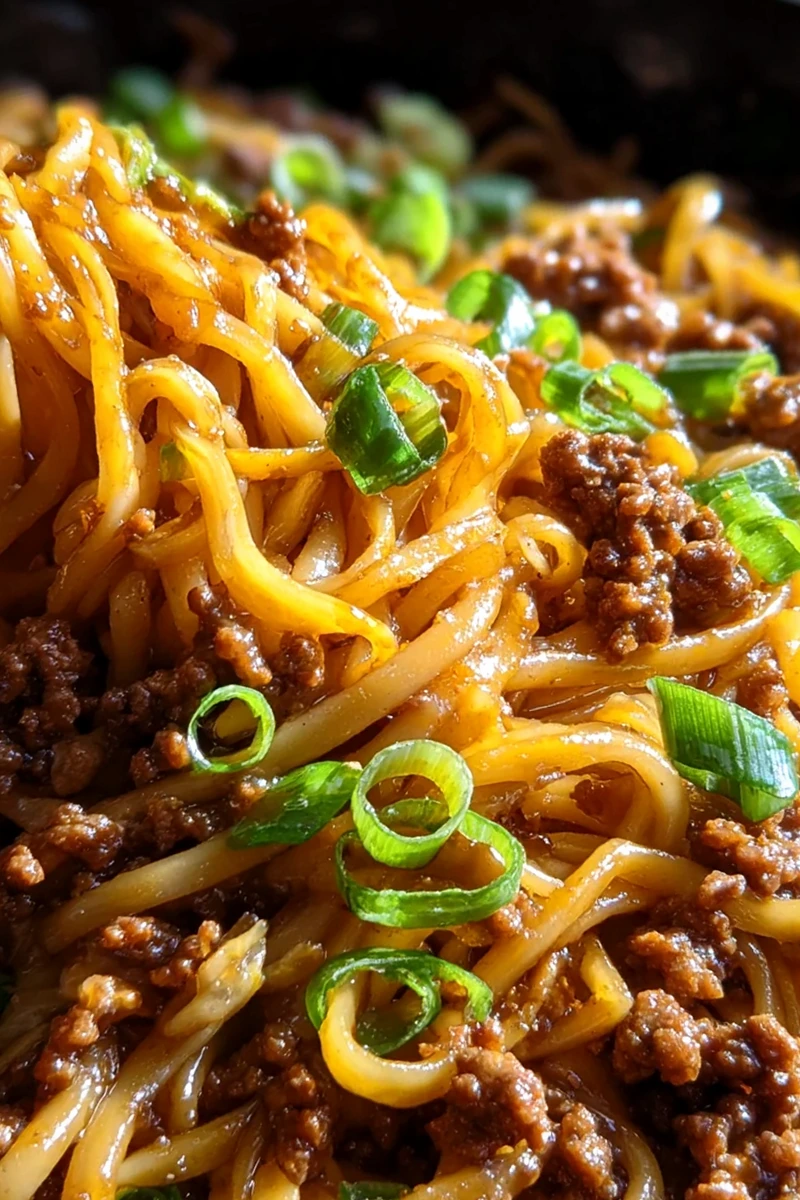
This ground beef Mongolian noodle dish is a fast, savory meal perfect for busy weeknights. It blends a sweet and salty sauce with tender beef and hearty noodles in just 30 minutes.
List of ingredients
- 1 lb lean ground beef – ensures a rich meat base without too much grease.
- 4 tsp fresh grated ginger – provides a fresh, zesty aromatic flavor.
- 6 cloves garlic, minced – adds a pungent, savory depth.
- 1/2 cup brown sugar – balances the salty components with sweetness.
- 1/2 cup low-sodium beef broth – builds a savory liquid base for the sauce.
- 1/2 cup low-sodium soy sauce – delivers the essential salty Asian profile.
- 1/4 cup hoisin sauce – adds thickness and complex sweet-savory notes.
- 8 oz linguine or fettuccine noodles – serves as the filling heart of the dish.
- 1/2 tsp black pepper – adds a subtle, warm spice.
- 1/4 tsp red pepper flakes (optional) – provides a mild kick of heat.
- 2 tbsp cornstarch – thickens the sauce into a glossy glaze.
- 1/4 cup water – used to create a smooth cornstarch slurry.
- Sliced green onions – used for a fresh, colorful garnish.
step-by-step instructions
- Brown the Beef: Cook the ground beef in a skillet over medium-high heat for 5 minutes. Stir in the ginger and garlic during the last 2 minutes to prevent burning.
- Boil the Pasta: Cook linguine or fettuccine according to the package directions until al dente. Drain well to avoid watering down the sauce.
- Mix the Sauce Base: Drain any excess fat from the pan. Stir in the brown sugar, beef broth, soy sauce, hoisin sauce, black pepper, and red pepper flakes.
- Thicken the Glaze: Whisk cornstarch and water until smooth, then pour into the skillet. Simmer for 2-3 minutes until the sauce reaches a thick consistency.
- Combine and Simmer: Add the cooked noodles to the skillet and toss to coat. Let them sit for 2-3 minutes to absorb the savory flavors.
- Garnish and Serve: Plate the noodles immediately and top with fresh sliced green onions for a crisp finish.
Expert Cooking Advice
Use Lean Ground Beef to Limit Excess Grease
Selecting a lean ground beef option, such as 90% lean, helps prevent the final dish from becoming too oily. This ensures the savory sauce clings to the noodles and beef rather than pooling at the bottom of the pan. If you use a fattier blend, be sure to drain the skillet thoroughly after browning.
Grate Ginger Fresh for Maximum Pungency
Using fresh ginger root provides a bright, zesty flavor that cannot be replicated by dried powders. Use a microplane or a fine grater to create a paste that integrates seamlessly into the beef. This aromatic quality is key to the authentic Mongolian-inspired flavor profile.
Cook Noodles to a Firm Al Dente Texture
Avoid overcooking your linguine or fettuccine in the boiling water. Since the noodles will simmer in the pan with the sauce for a few more minutes, cooking them slightly under-done ensures they stay firm. This prevents them from becoming mushy or breaking apart during the final toss.
Maintain Medium-High Heat for Searing
Keeping the heat at a medium-high level allows the beef to brown properly through the Maillard reaction. This creates a deeper, more complex flavor than simmering the meat on low heat. Just be mindful of the garlic and ginger, as they can burn quickly if the pan is too hot.
Allow the Noodles to Simmer in Sauce
After tossing the noodles into the skillet, letting them sit for 2-3 minutes is a critical step. This time allows the pasta to absorb the liquid and flavors of the hoisin and soy sauce. It transforms the noodles from being simply coated to being fully infused with the sauce.
Ingredient Substitutions
Swap Pasta for Rice Noodles
If you prefer a gluten-free option or a different texture, wide rice noodles work excellently. Ensure you follow the specific soaking or boiling instructions for rice noodles to avoid overcooking. They provide a softer, more traditional Asian noodle experience.
Use Honey Instead of Brown Sugar
Honey can be used as a direct replacement for brown sugar to achieve a similar sweetness. Honey often provides a slightly more floral note and a thicker consistency to the sauce. Use an equal measurement, but taste as you go to adjust the sweetness level.
Substitute Tamari for Soy Sauce
For those avoiding wheat, tamari is a great alternative to traditional soy sauce. It offers a similar salty, umami flavor while remaining gluten-free. Most people cannot tell the difference in a complex sauce containing hoisin and beef broth.
Use Dried Garlic Powder if Fresh is Unavailable
While fresh garlic is preferred, garlic powder can be used in a pinch. Use approximately 1/4 teaspoon of powder for every clove of fresh garlic required. Add the powder during the sauce-mixing stage rather than during the initial beef browning to avoid burning.
Use Ground Turkey for a Leaner Protein
Ground turkey or ground chicken can replace the beef for a lighter version of this meal. Turkey provides a mild flavor that allows the ginger and hoisin sauce to stand out. You may need to add a pinch more salt or soy sauce to compensate for the lighter meat.
Substitute Beef Broth with Vegetable Broth
Vegetable broth is a suitable replacement for beef broth if you have it on hand. It maintains the liquid volume needed for the cornstarch slurry to work. The depth of flavor remains high due to the presence of the soy and hoisin sauces.
Flavor Variations
Incorporate Sliced Bell Peppers
Adding red or green bell peppers introduces a sweet crunch and vibrant color to the dish. Sauté the sliced peppers along with the ground beef during the first few minutes of cooking. This adds nutritional value and a fresh garden taste to the savory sauce.
Add Fresh Broccoli Florets
Small broccoli florets pair perfectly with the Mongolian sauce and add a healthy element. You can steam them separately or toss them into the skillet during the sauce-simmering phase. Broccoli absorbs the sauce well, making every bite flavorful.
Boost the Heat with Sriracha
For those who enjoy a spicier kick, a tablespoon of Sriracha or chili garlic sauce can be stirred into the sauce base. This adds a vinegary heat that cuts through the sweetness of the brown sugar. Adjust the amount based on your personal heat tolerance.
Add Sliced Carrots for Texture
Thinly sliced or julienned carrots add a lovely sweetness and a slight crunch to the noodles. Add them to the skillet at the same time as the ginger and garlic. This ensures they are tender-crisp when the dish is served.
Toss in Frozen Peas at the End
Frozen peas can be added during the final 2 minutes of simmering. They require very little cook time and add a pop of bright green and sweetness. This is an easy way to increase the vegetable count for children.
Include Sliced Mushrooms for Umami
Shiitake or cremini mushrooms add a rich, earthy umami flavor that complements the beef. Brown the sliced mushrooms with the beef until they release their moisture and turn golden. This creates a more gourmet, layered taste profile.
Serving and Pairing Ideas
Serve with Steamed Bok Choy
Steamed baby bok choy provides a fresh, watery crunch that balances the richness of the beef sauce. Lightly season the greens with a drop of sesame oil and salt. Place the noodles on top of a bed of bok choy for a professional presentation.
Pair with a Crisp Cucumber Salad
A chilled cucumber salad dressed in rice vinegar and sesame seeds offers a refreshing contrast. The acidity of the vinegar helps cleanse the palate between bites of the savory noodles. It is a classic pairing in Asian-inspired dining.
Add Toasted Sesame Seeds for Crunch
Sprinkle toasted sesame seeds over the finished dish along with the green onions. These seeds add a subtle nuttiness and a visually appealing finish. Toasting them in a dry pan for one minute maximizes their aromatic potential.
Serve in Individual Ramen Bowls
Using deep, wide bowls makes the meal feel more comforting and authentic. This style of serving keeps the noodles warm for longer and provides plenty of room for extra garnishes. It is an ideal way to present the meal for a family dinner.
Accompanied by Pan-Fried Dumplings
For a more substantial feast, serve the noodles alongside vegetable or meat dumplings. The crispy bottom of a pan-fried dumpling adds a textural contrast to the soft noodles. This combination makes the meal feel like a complete restaurant experience.
Storage and Preservation
Airtight Container Refrigeration
Store any leftover noodles in a glass or plastic airtight container to maintain freshness. This prevents the noodles from absorbing other fridge odors and keeps the sauce from drying out. The dish will remain safe and tasty for up to 3 days.
Freezing for Long-Term Storage
While noodles can lose some texture when frozen, this dish can be kept in the freezer for up to 3 months. Use freezer-safe bags and squeeze out as much air as possible to prevent freezer burn. Thaw completely in the refrigerator before reheating.
Preventing Noodle Clumping After Cooling
Noodles tend to stick together as the starch sets in the refrigerator. To prevent a giant clump, toss the leftovers with a tiny bit of oil before storing. This creates a barrier that keeps the strands separate for easier reheating.
Safe Thawing Methods
If you have frozen the noodles, avoid thawing them on the counter at room temperature. Instead, place the container in the fridge overnight. This slow thaw preserves the integrity of the beef and prevents the sauce from separating.
Effective Reheating Methods
Restore Moisture on the Stovetop
The best way to reheat these noodles is in a skillet over medium heat. Add a splash of beef broth or water to loosen the sauce and restore its glossy texture. Stir gently until heated through to avoid breaking the noodles.
Quick Microwave Heating Tips
For a faster option, place the noodles in a microwave-safe dish and cover it with a damp paper towel. Heat in 1-minute intervals, stirring in between each session. The damp towel creates steam, which prevents the noodles from becoming rubbery.
Slow Warming in the Oven
To reheat a larger portion, place the noodles in an oven-safe dish and cover tightly with foil. Heat at 350°F (175°C) for about 20 minutes. This method ensures even heating without overcooking the exterior of the noodles.
Common Cooking Troubleshooting
Fixing a Sauce that is Too Thin
If your sauce hasn’t thickened enough, whisk together one additional teaspoon of cornstarch with a tablespoon of water. Stir this slurry into the simmering sauce and cook for another 60 seconds. The sauce should quickly transform into a thick glaze.
Reducing Excessive Saltiness
If the soy sauce makes the dish too salty, add a small amount of brown sugar or a splash of water. A squeeze of fresh lime juice can also help balance the salt with acidity. Always taste the sauce before adding the noodles to make these adjustments.
Preventing Burnt Garlic and Ginger
Garlic and ginger burn quickly and can turn bitter if exposed to high heat for too long. Always add them during the final 2 minutes of browning the beef rather than at the start. If the pan seems too hot, lower the heat slightly before adding these aromatics.
Handling Mushy Noodles
If your noodles come out too soft, it is usually due to overboiling. To fix this in the future, set a timer for 2 minutes less than the package suggests. For current mushy noodles, avoid over-stirring them in the pan to prevent further breakage.
Frequently Asked Questions
What are Ground Beef Mongolian Noodles?
This is a simplified, fusion-style dish that uses ground beef instead of flank steak to create a faster version of Mongolian beef. It features a savory, sweet glaze made from soy sauce, hoisin, and ginger, tossed with long pasta noodles.
How long does the preparation take?
The entire process takes approximately 30 minutes from start to finish. Ten minutes are spent on preparation, and twenty minutes are used for cooking the beef, boiling the noodles, and simmering the sauce.
Can this be made with whole grain pasta?
Yes, whole grain linguine or spaghetti can be used for a heartier, nuttier flavor. Keep in mind that whole grain pasta often requires a slightly longer boiling time. It also adds more fiber to the dish without altering the sauce flavor.
Is this dish suitable for meal prep?
Absolutely, as the flavors often meld and improve after a day in the refrigerator. It is an excellent option for office lunches since it reheats well in a microwave. Just remember to add fresh green onions after reheating for the best taste.
Print
Quick Ground Beef Mongolian Noodles
- Total Time: 30 minutes
- Yield: 4 servings 1x
- Diet: General
Description
Ground Beef Mongolian Noodles is a flavorful and satisfying dish that combines tender ground beef, savory sauces, and perfectly cooked noodles. Ready in just 30 minutes, this recipe is perfect for busy weeknights or a cozy dinner with family and friends.
Ingredients
- 1 lb lean ground beef
- 4 tsp fresh grated ginger
- 6 cloves garlic (minced)
- 1/2 cup brown sugar
- 1/2 cup low-sodium beef broth
- 1/2 cup low-sodium soy sauce
- 1/4 cup hoisin sauce
- 8 oz linguine or fettuccine noodles
- 1/2 tsp black pepper
- 1/4 tsp red pepper flakes (optional)
- 2 tbsp cornstarch
- 1/4 cup water
- 4 green onions (sliced)
Instructions
- Step: In a skillet over medium-high heat, cook the ground beef until browned (about 5 minutes). Add ginger and garlic during the last 2 minutes.
- Step: Cook linguine or fettuccine noodles according to package instructions until al dente; drain.
- Step: Drain excess fat from the skillet, then add brown sugar, beef broth, soy sauce, hoisin sauce, black pepper, and optional red pepper flakes. Stir well.
- Step: Mix cornstarch with water until smooth; add to the skillet and simmer until thickened (about 2–3 minutes).
- Step: Toss cooked noodles in the skillet with the beef mixture; allow to sit for an additional 2–3 minutes.
- Step: Serve hot, garnished with sliced green onions.
Notes
For the best flavor, use fresh garlic and ginger. If the sauce becomes too thick, add a splash more beef broth to reach your desired consistency.
- Prep Time: 10 minutes
- Cook Time: 20 minutes
- Category: Main
- Method: Skillet
- Cuisine: Asian
Nutrition
- Serving Size: 1 cup (200g)
- Calories: 420 kcal
- Sugar: 12 g
- Sodium: 780 mg
- Fat: 20 g
- Saturated Fat: 8 g
- Unsaturated Fat: 10 g
- Trans Fat: 0 g
- Carbohydrates: 36 g
- Fiber: 2 g
- Protein: 26 g
- Cholesterol: 75 mg