
This fast, flavor-packed dinner mimics takeout using ground beef and spicy Korean chili paste. This 30-minute meal is perfect for busy weeknights or efficient meal prepping.
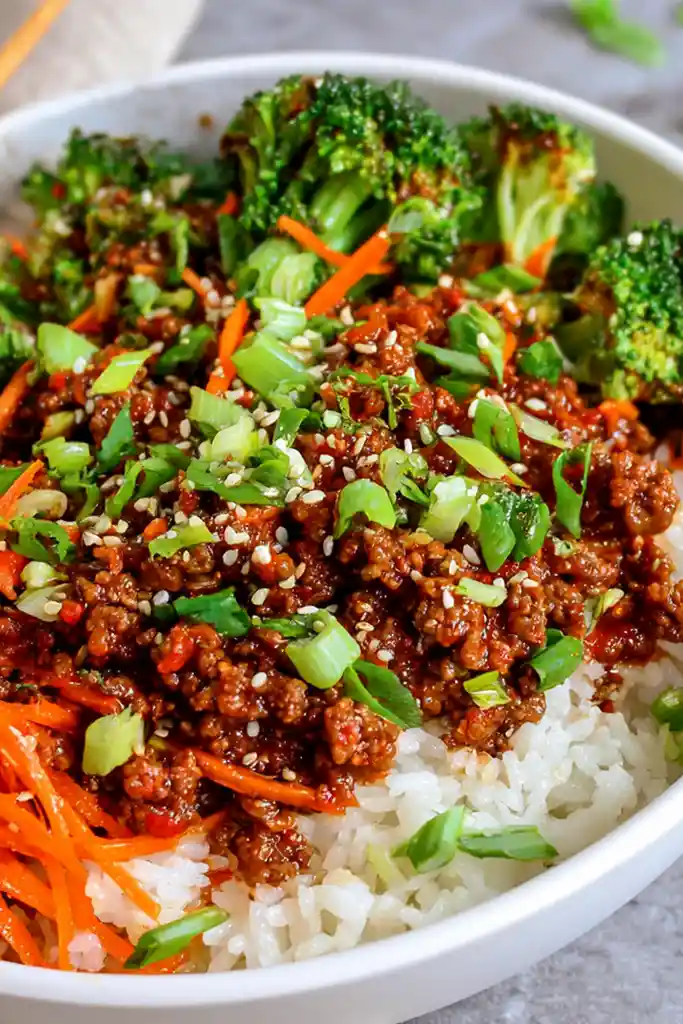
List of ingredients
- 1/2 cup low sodium soy sauce – provides the primary salty base.
- 3 tablespoons honey – balances the heat with sweetness.
- 1 tablespoon cornstarch – used to thicken the sauce into a glaze.
- 1 tablespoon rice vinegar – adds a necessary acidic brightness.
- 1 teaspoon sesame oil – contributes a toasted, nutty aroma.
- 1 tablespoon fresh grated ginger – adds a zesty, aromatic punch.
- 2 minced garlic cloves – provides a pungent flavor base.
- 1 tablespoon Gochujang – Korean fermented chili paste for smoky heat and umami.
- 1 tablespoon olive oil – used for searing the beef.
- 1 pound lean ground beef (90/10 or 93/7) – keeps the dish from becoming too greasy.
- 2 cups finely chopped broccoli florets – adds texture and nutrition.
- 1 cup shredded carrots – adds a natural sweetness and color.
- 3 cups cooked brown or white rice – serves as the hearty base.
- 2 green onions chopped – used for a fresh, sharp garnish.
- 1 teaspoon sesame seeds – adds a final crunch and nutty finish.
step-by-step instructions
- Prepare the Sauce: In a small bowl or liquid measuring cup, whisk together the soy sauce, honey, cornstarch, rice vinegar, sesame oil, fresh ginger, minced garlic, and Gochujang until smooth. Set this mixture aside for later use.
- Brown the Ground Beef: Heat the olive oil in a large skillet or wok over medium-high heat. Add the ground beef and break it apart with a spoon, cooking for 8 to 10 minutes until deeply browned and no pink remains. Carefully drain any excess grease from the pan to keep the sauce clean.
- Add Veggies and Sauce: Stir in the finely chopped broccoli florets and shredded carrots. Pour the prepared Gochujang sauce over the beef and vegetables, stirring well to ensure everything is evenly coated.
- Simmer to Thicken: Bring the mixture to a simmer over medium heat and let it bubble gently for 3 to 5 minutes. Stir often to activate the cornstarch, which will transform the liquid into a glossy glaze that clings to the ingredients.
- Assemble and Serve: Spoon the saucy beef and vegetable mixture over warm beds of white or brown rice. Garnish each bowl generously with chopped green onions and a sprinkle of sesame seeds.
Alternative Protein Options
Using Flank Steak
Flank steak is a lean, flavorful alternative to ground beef. Slice it very thinly against the grain to ensure the meat remains tender after a quick sear.
Using Sirloin Tips
Sirloin tips provide a rich beefy flavor and hold up well to high-heat stir-frying. Cut them into small, uniform cubes for consistent cooking times.
Cooking Sliced Beef Techniques
When using steak, sear the meat in batches over high heat for 1-2 minutes per side. Remove the meat from the pan and add it back only at the end to avoid overcooking.
Customizing the Vegetable Mix
Incorporating Red Bell Peppers
Thinly sliced red bell peppers add a sweet crunch and vibrant color. Add them at the same time as the broccoli for a balanced texture.
Adding Fresh Snap Peas
Snap peas provide a crisp contrast to the tender beef. Add them during the last 2 minutes of simmering to prevent them from becoming mushy.
Adding Baby Spinach
Fresh baby spinach wilts quickly and adds a nutritional boost. Stir in a handful of leaves right after you turn off the heat to keep them bright green.
Using Water Chestnuts
Sliced water chestnuts add a unique, watery crunch to the bowl. These are pre-cooked, so they only need to be heated through with the sauce.
Sauce Adjustments and Variations
Adjusting the Heat Level
For a spicier bowl, increase the Gochujang to two tablespoons. If you prefer a milder flavor, reduce it to two teaspoons and add a pinch of paprika for color.
Making the Recipe Gluten-Free
Replace the low sodium soy sauce with an equal amount of tamari or coconut aminos. These alternatives provide the same salty depth without the wheat.
Honey Substitutions
If you do not have honey, maple syrup or brown sugar work well. Maple syrup adds a slight woody note, while brown sugar creates a deeper caramel flavor.
Increasing Umami Depth
Add a teaspoon of oyster sauce or a dash of Worcestershire sauce to the mixture. This enhances the savory qualities of the beef and the fermented paste.
Grain and Base Alternatives
Using Quinoa for Extra Protein
Cooked quinoa is a nutrient-dense alternative to white rice. Its nutty flavor complements the Gochujang sauce and provides more plant-based protein.
Cauliflower Rice for Low Carb
Sauté riced cauliflower in a separate pan with a touch of oil until tender. This drastically reduces the calorie count while maintaining the bowl structure.
Choosing the Right Rice Variety
Jasmine rice offers a floral aroma and sticky texture, while Basmati is more aromatic and separate. Brown rice provides more fiber and a chewier consistency.
Essential Kitchen Tools
The Advantages of a Wok
A wok is ideal for this recipe because its high sides prevent splashing and distribute heat quickly. This allows the beef to brown and the sauce to reduce efficiently.
Using a Cast Iron Skillet
Cast iron retains heat exceptionally well, which helps in achieving a deep sear on the ground beef. Ensure the pan is well-seasoned to prevent the honey in the sauce from sticking.
Efficient Ginger Preparation
Use a microplane or a fine grater to process the fresh ginger. This creates a paste-like consistency that blends seamlessly into the sauce without leaving large chunks.
Storage and Preservation
Refrigerator Storage Guidelines
Place leftovers in an airtight container and store them in the fridge for up to 4 days. Keep the rice in a separate container to prevent it from absorbing all the sauce.
Freezing the Beef Mixture
The cooked beef and vegetable mixture freezes well for up to 3 months. Let it cool completely before transferring it to a freezer-safe bag to avoid ice crystals.
Best Thawing Methods
Thaw frozen portions overnight in the refrigerator for the safest results. Alternatively, use the defrost setting on your microwave before reheating in a pan.
Reheating Guidelines
Stovetop Reheating Method
Place the beef mixture in a skillet over medium heat. Add a tablespoon of water or beef broth to loosen the sauce as it warms through.
Microwave Reheating Tips
Heat in short 30-second intervals, stirring in between. This ensures the beef is heated evenly without overcooking the vegetables.
Maintaining Vegetable Texture
Avoid overheating the broccoli and carrots during the reheating process. Stop heating as soon as the beef is hot to keep the vegetables from becoming soft.
Troubleshooting Common Issues
Fixing a Thin Sauce
If the sauce is too liquid, simmer it for another 2-3 minutes. If it still won’t thicken, mix 1 teaspoon of cornstarch with a bit of cold water and stir it in.
Correcting an Overly Thick Sauce
Whisk in a tablespoon of water or rice vinegar at a time. Stir constantly over low heat until the desired glossy consistency is achieved.
Preventing Greasy Beef
Always use lean ground beef and drain the fat thoroughly after browning. If you use a higher-fat beef, pat the meat with paper towels before adding the sauce.
Avoiding Tough Sliced Steak
Ensure you slice against the grain of the meat. Cook the steak quickly over very high heat to avoid boiling the meat in its own juices.
Frequently Asked Questions
What is Gochujang?
Gochujang is a savory, sweet, and spicy fermented condiment made from chili powder, glutinous rice, fermented soybeans, and salt.
Can I use ground turkey?
Yes, lean ground turkey is a great substitute. Follow the same browning process, but be mindful that turkey can dry out faster than beef.
How do I store the sauce separately?
Whisk the sauce ingredients and store them in a glass jar in the fridge for up to one week. Just shake well before adding to the pan.
Is this dish very spicy?
It has a moderate heat level. The sweetness of the honey and the starchiness of the rice help neutralize the spice of the Gochujang.
Print
Quick Korean-Style Gochujang Beef Bowls
- Total Time: 30 minutes
- Yield: 4 servings 1x
- Diet: General
Description
Satisfy your takeout cravings with these quick and easy Gochujang Beef Bowls. Featuring lean ground beef, fresh veggies, and an umami-packed sauce, this 30-minute recipe is perfect for a delicious weeknight meal or convenient meal prep.
Ingredients
- 1/2 cup low sodium soy sauce
- 3 tablespoons honey
- 1 tablespoon cornstarch
- 1 tablespoon rice vinegar
- 1 teaspoon sesame oil
- 1 tablespoon fresh grated ginger
- 2 minced garlic cloves
- 1 tablespoon Gochujang
- 1 tablespoon olive oil
- 1 pound lean ground beef (90/10 or 93/7)
- 2 cups finely chopped broccoli florets
- 1 cup shredded carrots
- 3 cups cooked brown or white rice
- 2 green onions chopped
- 1 teaspoon sesame seeds
Instructions
- Step 1: In a small bowl or liquid measuring cup, whisk together all the sauce ingredients: soy sauce, honey, cornstarch, rice vinegar, sesame oil, fresh ginger, minced garlic, and Gochujang.
- Step 2: Heat the olive oil in a large skillet or wok over medium-high heat. Add the ground beef and use a spoon to break it apart as it cooks. Cook until deeply browned and no pink remains, about 8 to 10 minutes. Carefully drain any excess grease from the pan.
- Step 3: Add the finely chopped broccoli florets and shredded carrots to the skillet with the browned beef. Pour the prepared sauce over everything and stir to combine.
- Step 4: Bring the mixture to a simmer over medium heat. Let it bubble gently for 3 to 5 minutes, stirring often, until the sauce thickens into a glossy coating.
- Step 5: Spoon the saucy beef and vegetable mixture over a bed of warm white or brown rice. Garnish generously with chopped green onions and a sprinkle of sesame seeds before serving immediately.
Notes
For best results, chop vegetables uniformly and don’t skip garnishes like green onions and toasted sesame seeds. If your sauce is too thin, simmer longer; if too thick, add water. Store leftovers in an airtight container for up to 4 days, or freeze the beef mixture for up to 3 months. Store rice separately for best texture.
- Prep Time: 15 minutes
- Cook Time: 15 minutes
- Category: Main Dish
- Method: Stir-fry
- Cuisine: Korean
Nutrition
- Serving Size: 1 bowl
- Calories: 550 kcal
- Sugar: 15 g
- Sodium: 700 mg
- Fat: 22 g
- Saturated Fat: 8 g
- Unsaturated Fat: 14 g
- Trans Fat: 0 g
- Carbohydrates: 52 g
- Fiber: 5 g
- Protein: 30 g
- Cholesterol: 75 mg