
Prepare a nutritious, one-pan meal in just 30 minutes using a high-heat searing technique. This dish combines tender steak strips with a colorful medley of crisp vegetables in a savory-sweet brown sauce.
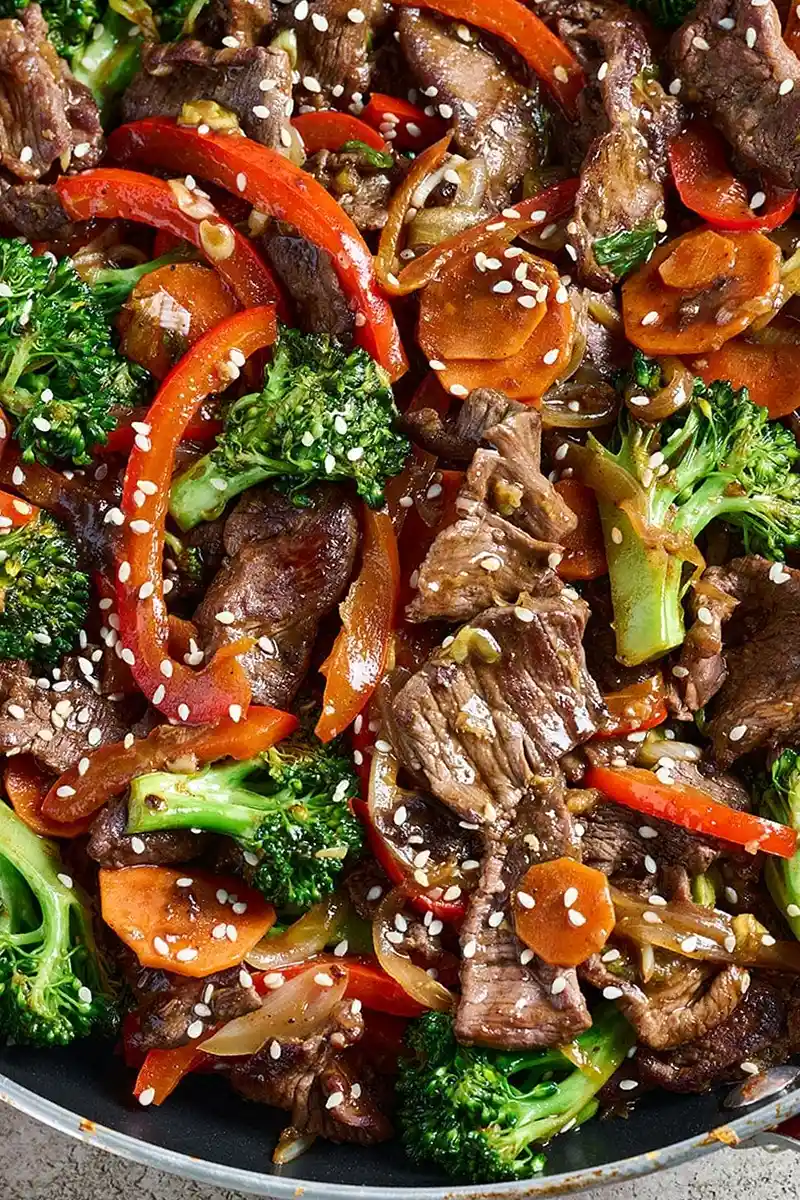
List of ingredients
- 1 pound flank steak, skirt steak or top sirloin – cut against the grain into bite-sized pieces
- 1 tablespoon soy sauce or tamari – regular, light or low-sodium
- 1 tablespoon cornstarch or arrowroot – for velveting the meat
- 1/4 teaspoon ground black pepper – for seasoning the beef
- 4 tablespoons soy sauce or tamari – low-sodium, regular or light
- 2 tablespoons chicken broth, veggie broth or water – for sauce base
- 2 teaspoons rice wine vinegar – providing a tangy acidity
- 2 teaspoons honey or brown sugar – for a touch of sweetness
- 2 teaspoons toasted sesame oil – for nutty aroma
- 3 cloves garlic – minced or grated
- 2 teaspoons fresh ginger – peeled, minced or grated
- 1 teaspoon cornstarch – to thicken the sauce
- 2 tablespoons vegetable oil – divided; avocado, grapeseed or canola oil are recommended
- 1 small to medium onion – sliced
- 1 small to medium red bell pepper – cored, seeded and cut into thin slices
- 1 carrot – peeled and sliced thinly
- 1 1/2 cups broccoli florets – cut into bite-sized pieces
- 2 scallions – sliced thinly
- Sesame seeds – optional garnish
- Steamed rice – optional serving base
step-by-step instructions
- Marinate the beef: In a medium bowl or resealable plastic bag, toss together the beef, 1 tablespoon soy sauce, ground black pepper and 1 tablespoon cornstarch. Set the mixture aside for 15 to 30 minutes, or refrigerate for up to 4 hours.
- Prepare the sauce: In a small bowl, whisk together the 4 tablespoons soy sauce, broth or water, honey or brown sugar, sesame oil, garlic, ginger and 1 teaspoon cornstarch. Set this mixture aside until needed.
- Sear the meat: Heat 1 tablespoon of oil in a large wok or skillet over high or medium-high heat. Cook the beef in two separate batches to avoid overcrowding the pan.
- Brown the beef: Spread half of the marinated beef in a single layer and sauté for 2-3 minutes until lightly golden brown on one side. Toss and cook for another 1-2 minutes, then transfer the meat to a bowl and repeat with the second batch.
- Sauté the hardy vegetables: Heat the remaining oil in the pan. Stir in the sliced onions, red bell pepper and carrots, cooking for 3-4 minutes until the onions are translucent and carrots are crisp.
- Cook the broccoli: Stir in the broccoli florets and toss frequently for about 2 minutes until they are crisp-tender.
- Combine ingredients: Add the seared steak and any collected juices back into the wok or skillet. Toss everything together to combine.
- Thicken the sauce: Pour in the prepared stir fry sauce and cook for approximately 2 minutes, stirring frequently.
- Final touch: Stir in the sliced scallions and continue cooking until the sauce slightly thickens. Remove from heat, garnish with sesame seeds, and serve immediately over steamed rice if desired.
Optimal Beef Selection
Using Flank Steak for Lean Texture
Flank steak is a lean, flavorful cut that works well in stir fries. Because it has long muscle fibers, it is essential to slice it thinly to ensure tenderness.
Choosing Skirt Steak for Rapid Marination
Skirt steak has a looser fiber structure than flank steak. This allows the soy sauce and cornstarch marinade to penetrate the meat more quickly, enhancing the overall flavor.
Opting for Top Sirloin for Budget-Friendly Meals
Top sirloin is an affordable yet tender lean cut. It provides a balanced texture and requires minimal marinating compared to tougher cuts.
Preparing Rib-Eye or Strip Steak
These premium cuts are naturally tender and cook very rapidly. Be careful not to overcook them, as they can become tough if left in the pan too long.
Cutting Beef Against the Grain
Identify the direction of the muscle fibers and slice perpendicular to them. This shortens the fibers, making the meat much easier to chew.
Freezing Meat for Precision Slicing
Place the beef in the freezer for about 30 minutes before cutting. Firming up the meat allows you to achieve thinner, more uniform strips.
Vegetable Customizations
Incorporating Shiitake or White Mushrooms
Mushrooms add an earthy depth and a meaty texture to the dish. Sauté them along with the onions and carrots for the best results.
Adding Snow Peas or Sugar Snap Peas
These peas provide a bright green color and a fresh crunch. Add them at the same time as the broccoli to avoid overcooking them.
Using Water Chestnuts for Extra Crunch
Canned water chestnuts maintain their crispness even after cooking. Stir them in during the final two minutes of vegetable sautéing.
Adding Baby Corn or Baby Bok Choy
Baby corn adds a subtle sweetness, while baby bok choy provides a leafy texture. Slice bok choy stems thinly and keep leaves whole.
Integrating Asparagus or Zucchini
Asparagus tips and sliced zucchini coins work well in this flavor profile. Cook them briefly over high heat to keep them from becoming mushy.
Managing Cooking Order for Different Veggies
Always cook harder vegetables like carrots and onions first. Add quicker-cooking vegetables like broccoli and peas later to ensure everything finishes at the same time.
Properly Preparing Frozen Vegetables
If using frozen vegetables, thaw them completely and pat them dry with paper towels. This prevents excess water from steaming the beef instead of searing it.
Sauce Modifications and Substitutes
Replacing Honey with Brown Sugar
Light or dark brown sugar can be used as a one-to-one replacement for honey. This creates a slightly deeper, caramelized flavor profile.
Using Tamari for Gluten-Free Requirements
Tamari is a traditional Japanese soy sauce that is naturally gluten-free. It provides a similar salty, savory taste to regular soy sauce.
Substituting Fresh Ginger with Ginger Paste
Ginger paste in a tube is a convenient alternative when fresh root is unavailable. Use the same measurement as called for in the recipe.
Using Garlic Paste for Speed
Freshly minced garlic is preferred, but garlic paste works well for quick preparation. Ensure the paste is well-incorporated into the sauce whisk.
Swapping Rice Wine for Apple Cider Vinegar
Rice wine vinegar is the best substitute for rice wine to maintain the authentic tang. Apple cider vinegar is another viable option for a similar acidic balance.
Adjusting Sauce Thickness with Cornstarch
Cornstarch is the primary thickening agent. If you prefer a thicker glaze, add an extra half teaspoon of cornstarch to the sauce whisk.
Professional Stir Fry Techniques
The Purpose of Velveting Beef
Velveting is the process of coating meat in cornstarch and soy sauce. This creates a protective barrier that seals in juices and prevents the meat from drying out over high heat.
Maintaining High Heat in the Wok
High heat allows the beef to sear and the vegetables to soften without losing their snap. If the pan cools down, the ingredients will release water and steam.
Preventing Overcrowding the Pan
Cooking beef in batches ensures there is enough surface area for searing. Overcrowding drops the pan temperature, resulting in gray, boiled-looking meat.
Achieving the Perfect Sear on Steak
Let the beef sit undisturbed for a few minutes to develop a golden-brown crust. This Maillard reaction is responsible for the deep, savory flavor of the dish.
Constant Tossing to Prevent Burning
Stir frying requires continuous movement. Use a spatula or toss the wok frequently to ensure all sides of the food are cooked evenly.
Using a High Smoke Point Oil
Vegetable, canola, or avocado oils are ideal because they do not smoke at high temperatures. Avoid extra virgin olive oil, as it burns too quickly for this method.
Serving and Pairing Suggestions
Serving with Steamed Jasmine Rice
Fragrant jasmine rice is the traditional pairing for this dish. It absorbs the savory-sweet sauce and balances the saltiness of the soy.
Using Brown Rice or Quinoa for Nutrition
Brown rice or quinoa adds more fiber and a nuttier taste to the meal. These options provide a heartier texture than white rice.
Pairing with Rice Noodles
Toss the stir fry with cooked rice noodles for a complete one-pan noodle dish. Ensure the noodles are drained well before adding them to the sauce.
Low-Carb Cauliflower Rice Option
Sautéed cauliflower rice is an excellent low-carb alternative. It mimics the texture of rice while adding an extra serving of vegetables.
Storage and Reheating Guidelines
Refrigerating Leftovers Safely
Store leftover stir fry in an airtight container in the refrigerator. It will remain fresh and safe to eat for up to three days.
Avoiding the Freezer for Vegetable Texture
Freezing this dish is not recommended because the vegetables release moisture during thawing. This leads to a mushy texture and overcooked beef.
Reheating in a Skillet for Texture
Reheat leftovers in a pan over medium heat for the best results. Add a splash of beef broth or water if the sauce has become too thick.
Microwave Reheating Tips
When using a microwave, cover the dish with a damp paper towel. Heat in short intervals and stir in between to avoid rubbery meat.
Advanced Meal Prep Advice
Pre-Slicing Beef and Vegetables
Slice your steak and chop your vegetables a day in advance. Store the vegetables in a container with a damp paper towel to maintain crispness.
Preparing the Sauce in Advance
Whisk the sauce ingredients together and store them in a sealed jar. Shake the jar well before using to redistribute the cornstarch.
Marinating Meat Overnight
While 15 minutes is sufficient, marinating the beef overnight in the fridge deepens the flavor. Bring the meat to room temperature for 20 minutes before cooking.
Troubleshooting Common Problems
Fixing a Sauce That Is Too Salty
If the sauce tastes overly salty, stir in a tablespoon of water or unsalted broth. A small pinch of sugar or honey can also balance the saltiness.
Adding Moisture to Dry Stir Fry
If the final dish seems dry, add a tablespoon of water or chicken broth during the final heating stage. This loosens the sauce and coats the ingredients.
Preventing Mushy Vegetables
Ensure the pan is hot before adding vegetables and avoid overcooking. Remove the pan from the heat the moment the broccoli reaches a crisp-tender state.
Correcting Overcooked Beef
If the beef becomes tough, it is likely due to overcooking. To prevent this, ensure you remove the meat from the pan as soon as it is browned.
Frequently Asked Questions
Can I use a different oil?
Yes, any oil with a high smoke point works. Grapeseed, avocado, and peanut oils are all excellent substitutes for vegetable oil.
How long can I marinate the beef?
The beef can be marinated for a minimum of 15 minutes and up to 4 hours in the refrigerator. Overnight marination is also acceptable for extra flavor.
What if I don’t have a wok?
A large cast-iron skillet or a wide stainless steel frying pan works perfectly. The key is to use a pan that allows the ingredients to spread out.
Can I add tofu to this recipe?
Yes, firm tofu can be added. Press the tofu to remove excess water, cube it, and sear it in the same way as the beef before adding the vegetables.
Print
Quick Savory Beef and Vegetable Stir Fry
- Total Time: 30 minutes
- Yield: 4 servings 1x
- Diet: General
Description
This Chinese-style Beef Stir Fry combines tender beef steak with an array of colorful, crunchy fresh veggies coated in a savory-sweet beef stir fry sauce. This nutritious meal is made in one-skillet or wok and comes together in 30-minutes.
Ingredients
- 1 pound flank steak, skirt steak or top sirloin, cut against the grain, bite-sized pieces
- 1 tablespoon soy sauce or tamari
- 1 tablespoon cornstarch or arrowroot
- 1/4 teaspoon ground black pepper
- 4 tablespoons soy sauce or tamari
- 2 tablespoons veggie broth or water
- 2 teaspoons rice wine vinegar
- 2 teaspoons honey or brown sugar
- 2 teaspoons toasted sesame oil
- 3 cloves garlic, minced or grated
- 2 teaspoons fresh ginger, peeled, minced or grated
- 1 teaspoon cornstarch
- 2 tablespoons vegetable oil
- 1 small to medium onion, sliced
- 1 small to medium red bell pepper, cored, seeded and cut into thin slices
- 1 carrot, peeled and sliced thinly
- 1 1/2 cups broccoli florets
- 2 scallions, sliced thinly
- Sesame seeds for garnishing (optional)
- Steamed rice (optional)
Instructions
- Marinate: In a medium bowl or a resealable plastic bag toss together the beef, soy sauce, ground black pepper and cornstarch. Set the marinated meat aside for 15 -30 minutes.
- Prepare Sauce: In a small bowl whisk together the stir fry sauce ingredients: soy sauce, broth or water, honey or brown sugar, sesame oil, garlic, ginger and cornstarch. Set aside.
- Sear Beef: In a large wok or large skillet heat 1 tablespoon of oil over high heat. Cook the beef in 2 batches.
- Brown Beef: Sauté for about 2-3 minutes or until lightly golden brown on one side. Toss and continue cooking, stirring frequently for about 1-2 minutes. Transfer the steak to a bowl.
- Sauté Veggies: Heat the remaining oil. Stir in the onions, red bell pepper and carrots and sauté, stirring often for about 3-4 minutes.
- Add Broccoli: Stir in the broccoli and cook, tossing frequently for about 2 minutes or until crisp tender.
- Combine: Add the steak back into the wok or skillet with any collected juices. Toss to combine.
- Finish: Pour in the prepared stir fry sauce, and cook for about 2 minutes tossing and stirring frequently. Stir in the scallions and cook until the sauce slightly thickens. Garnish with sesame seeds.
Notes
To slice the steak into thin strips easily, freeze the meat for about 30 minutes before slicing. You can substitute fresh garlic or ginger with pastes. Marinate the steak overnight for deeper flavor.
- Prep Time: 15 minutes
- Cook Time: 15 minutes
- Category: Main Course
- Method: Stir Fry
- Cuisine: Chinese
Nutrition
- Serving Size: 1 serving
- Calories: 301 kcal
- Sugar: 6 g
- Sodium: 1147 mg
- Fat: 15 g
- Saturated Fat: 4 g
- Unsaturated Fat: 11 g
- Trans Fat: 0.04 g
- Carbohydrates: 14 g
- Fiber: 2 g
- Protein: 28 g
- Cholesterol: 68 mg