
This efficient meal combines pantry staples to create a savory dish in about 20 minutes. It is an ideal solution for busy weeknights when protein and flavor are required quickly.
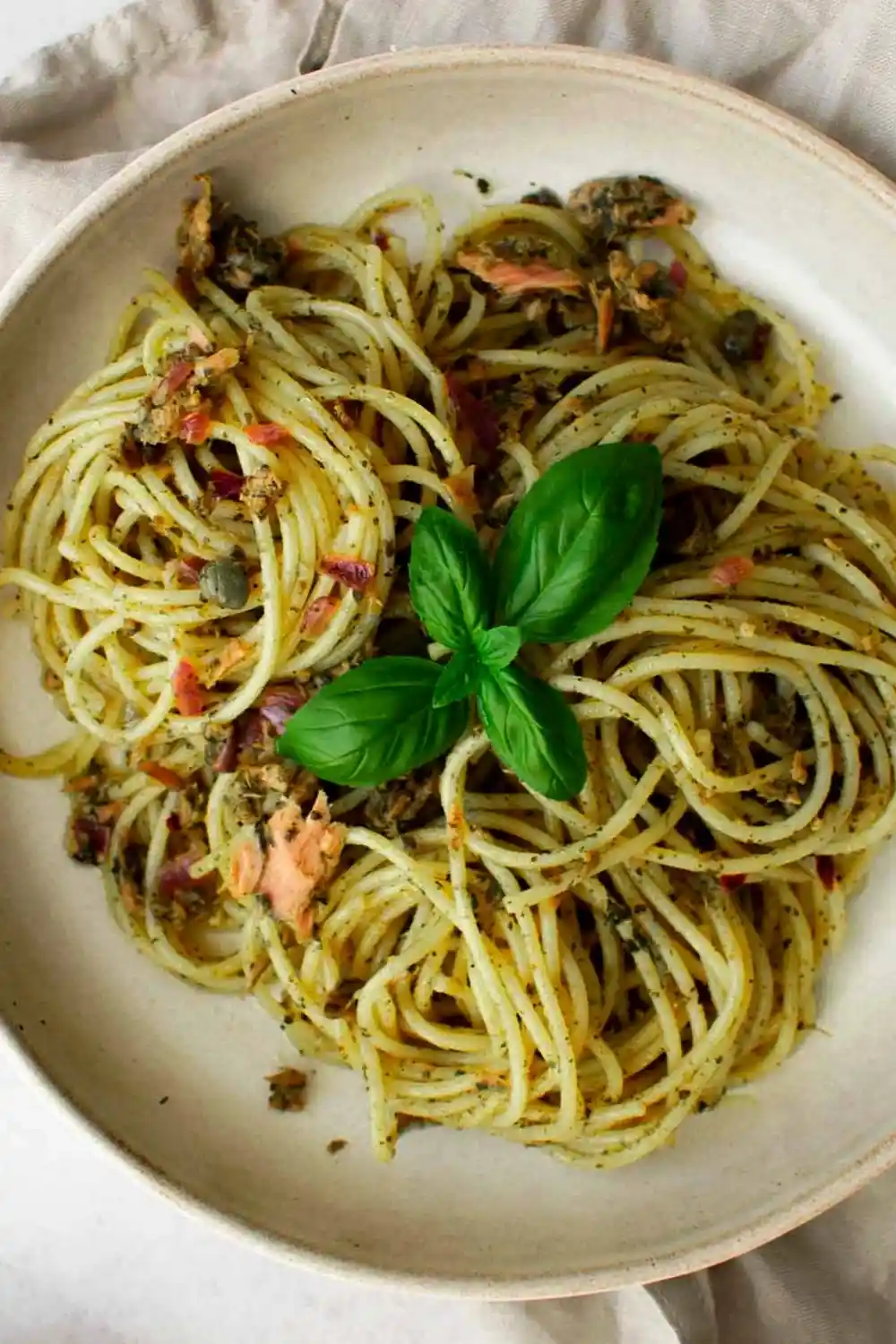
List of ingredients
- 8 oz. Spaghetti – the primary base of the meal.
- 7 oz. Canned Tuna Chunks – provides the main protein source.
- 1/2 cup Basil Pesto – adds a rich, herbal flavor profile.
- 1 tbsp. Capers – brings a tangy, salty element to the sauce.
- 1/4 cup Red Onions, chopped – provides a mild, sweet aromatic base.
- 2 tsp. Garlic, minced or chopped – used for essential aromatic depth.
- 1 tbsp. Olive Oil – used for sautéing the vegetables.
- 2 tsp. Red Pepper Flakes – adds a controlled level of heat.
- 1 tbsp Salt – for seasoning the pasta water.
- 1 tsp. Black Pepper – for fundamental seasoning.
step-by-step instructions
- Boil the Pasta: Bring a large pot of water to a boil. Add the salt and spaghetti, cooking until the pasta is tender but firm (al dente), or follow the specific package directions.
- Sauté Aromatics: Place a skillet over medium-high heat and add olive oil. Add the chopped onions and minced garlic, stir-frying for approximately 1.5 minutes.
- Add Seasoning: Incorporate the red pepper flakes, black pepper, and capers into the skillet. Stir-fry these ingredients for another 30 seconds to release their flavors.
- Incorporate Tuna: Lower the heat to low and add the tuna chunks. Use a cooking spoon to flake the tuna into your preferred size, then stir to combine with the aromatics.
- Combine and Thicken: Stir in the basil pesto, cooked spaghetti, and 1/4 cup of reserved pasta water. Turn off the heat and let the sauce thicken for one minute before serving.
Optimizing Pasta Selection
Using Fusilli or Rotini
Spiral-shaped pastas like fusilli or rotini are excellent choices for pesto dishes. The twists in the pasta capture and hold more of the thick pesto and tuna pieces in every bite.
Substituting with Angel Hair
Angel hair pasta is a faster-cooking alternative that works well for light meals. Because the strands are so thin, be careful not to overcook them, as they can become mushy quickly.
Utilizing Farfalle or Bowties
Farfalle provides a firmer texture and a larger surface area for the sauce. This shape is particularly effective if you prefer larger tuna chunks and capers to cling to the pasta.
Trying Bucatini or Linguine
Bucatini and linguine offer a heartier experience than spaghetti. Their thickness complements the chunky nature of the tuna, making the dish feel more substantial.
Canned Tuna Selection Tips
Choosing Tuna Chunks Over Flakes
Tuna chunks are preferred over flaked tuna for this recipe. Chunks allow you to control the texture and generally contain less excess oil than pre-flaked versions.
Selecting Tuna in Oil
Tuna packed in olive oil often provides a richer flavor that complements the pesto. If using oil-packed tuna, you may reduce the initial sautéing oil slightly to balance the fat content.
Evaluating Albacore and Skipjack
Albacore tuna is typically firmer and whiter, which is great for distinct chunks. Skipjack or light tuna offers a milder flavor that allows the basil pesto to remain the dominant taste.
Managing Oil Drainage
Drain the tuna thoroughly before adding it to the skillet. This prevents the final sauce from becoming greasy and ensures the pesto emulsifies properly with the pasta water.
Pesto Customization and Quality
Using Store-Bought Pesto
High-quality store-bought pesto is a convenient time-saver for this 20-minute meal. Look for brands that list extra virgin olive oil and parmesan cheese as primary ingredients.
Making Fresh Homemade Pesto
For a brighter flavor, blend fresh basil, pine nuts, garlic, olive oil, and microbial-rennet parmesan. Fresh pesto has a more vibrant green color and a sharper herbal taste.
Adjusting Salt Levels
Since both pesto and capers are naturally salty, taste the sauce before adding extra salt. You can balance the saltiness by adding a splash more pasta water or a squeeze of lemon.
Adding Fresh Basil Garnish
Tearing fresh basil leaves over the finished dish adds a layer of aromatic freshness. This simple addition enhances the visual appeal and reinforces the pesto flavor.
Enhancing the Flavor Profile
The Role of Capers
Capers provide a briny, acidic contrast to the richness of the olive oil and pesto. They act as a flavor highlighter, cutting through the fat and brightening the overall dish.
Incorporating Kalamata Olives
Adding chopped Kalamata olives is a great way to add a Mediterranean twist. Their deep, salty flavor pairs naturally with tuna and the tanginess of the capers.
Using Shallots Instead of Red Onions
Shallots offer a more delicate and sophisticated flavor than red onions. They provide a similar sweetness but with a softer profile that doesn’t overpower the basil.
Controlling Heat with Red Pepper Flakes
Adjust the red pepper flakes based on your tolerance for spice. A small amount provides a warm background heat, while more flakes create a spicy kick that complements the tuna.
Essential Cooking Techniques
Achieving the Perfect Al Dente Texture
Cooking pasta al dente ensures it maintains a slight chew and doesn’t break apart when stirred into the sauce. This is crucial for maintaining the structural integrity of the dish.
The Purpose of Starchy Pasta Water
Reserving a small amount of pasta water is key to a smooth sauce. The starch in the water helps the oil-based pesto bind to the pasta strands, creating a creamy emulsion.
Managing Pan Temperature
Reducing the heat to low before adding the tuna prevents the fish from overcooking and becoming dry. This keeps the tuna moist and tender within the sauce.
Preventing Pesto Oxidation
Avoid boiling the pesto in the pan for an extended period. Turning off the heat before stirring in the pesto preserves the bright green color and the delicate flavor of the basil.
Serving and Pairing Ideas
Pairing with a Greek Salad
A fresh Greek salad with cucumbers, tomatoes, and feta provides a cool contrast. The acidity of the salad dressing cleanses the palate between bites of the rich pesto pasta.
Using a Simple Garden Salad
A light garden salad with a lemon vinaigrette keeps the meal healthy. Avoid heavy cream-based dressings to ensure the tuna and basil flavors remain prominent.
Adding a Kale Beetroot Salad
The earthiness of beets and the bitterness of kale pair well with the savory tuna. This combination adds a variety of nutrients and colors to the dinner table.
Finishing with Lemon Zest
Adding a pinch of fresh lemon zest just before serving adds a citrusy brightness. This enhances the tuna’s flavor and makes the pesto taste fresher.
Storage and Preservation
Using Airtight Containers
Store leftovers in airtight containers to prevent the pasta from drying out. This keeps the moisture locked in and prevents the pesto from absorbing fridge odors.
Benefits of Glass Storage
Glass containers are preferable to plastic for preserving the taste of pesto. They are non-reactive and make it easier to reheat the pasta without leaching chemicals.
Refrigeration Timelines
Tuna pesto pasta can be stored in the refrigerator for up to three days. Beyond this time, the basil in the pesto may begin to darken and lose its potency.
Reheating Instructions
Microwave Reheating Method
Heat the pasta in short intervals, stirring in between to ensure even warming. Adding a teaspoon of water before microwaving helps restore the sauce’s consistency.
Stovetop Reheating Method
Gently warm the pasta in a skillet over low heat. Add a small splash of water or olive oil to loosen the sauce and prevent the pasta from sticking.
Handling Flavor Changes
Note that pesto can change flavor slightly after reheating. To refresh the taste, stir in a small amount of fresh parmesan or a drizzle of olive oil after warming.
Make-Ahead Advice
Prepping Aromatics
You can chop the red onions and mince the garlic hours in advance. Store them in a small container in the fridge to speed up the cooking process during the weeknight.
Creating a Cold Pasta Salad
This recipe can be served cold by allowing the cooked pasta to cool before mixing. This transforms the dish into a hearty tuna pesto pasta salad perfect for lunches.
Batch Cooking for Meal Prep
Cook a double portion of pasta and sauce to have meals ready for several days. Portion them into separate containers immediately after the sauce has thickened.
Troubleshooting Common Issues
Fixing a Sauce That Is Too Thick
If the pasta seems dry, stir in an additional tablespoon of pasta water or a drizzle of olive oil. This will loosen the sauce and create a smoother coating on the noodles.
Correcting an Overly Oily Dish
If the dish feels too greasy, add a squeeze of fresh lemon juice. The acidity helps break down the perception of oil and balances the richness of the pesto.
Balancing Excess Saltiness
If the capers and pesto make the dish too salty, add a handful of fresh baby spinach. The greens will wilt into the sauce and absorb some of the excess salt.
Frequently Asked Questions
Can I use frozen pesto?
Yes, you can use frozen pesto. Ensure it is completely thawed before adding it to the pan to ensure an even distribution of flavor and temperature.
Is this recipe suitable for gluten-free diets?
Yes, you can replace the spaghetti with your favorite gluten-free pasta alternative. Follow the specific boiling instructions for the gluten-free brand to avoid overcooking.
Can I add vegetables to this pasta?
Absolutely. Adding sautéed spinach, frozen peas, or roasted cherry tomatoes provides extra nutrition and texture without altering the core flavor profile.
Do I need to drain the tuna?
Yes, draining the tuna is recommended. This prevents the dish from becoming too oily, as the pesto already contains a significant amount of olive oil.
Print
Quick Tuna Pesto Pasta
- Total Time: 25 minutes
- Yield: 3 servings 1x
- Diet: General
Description
There’s nothing better than this delicious Tuna Pesto Pasta Recipe for tuna lovers who also love basil pesto! Despite its simplicity, this dish is quite tasty and perfect for busy weeknights It’s incredibly easy to make with pantry staples and ready within 20 minutes.
Ingredients
- 8 oz. Spaghetti
- 7 oz. Canned Tuna Chunks
- 1/2 cup Basil Pesto (made with microbial-rennet cheese)
- 1 tbsp. Capers
- 1/4 cup Red Onions, chopped
- 2 tsp. Garlic, minced or chopped
- 1 tbsp. Olive Oil
- 2 tsp. Red Pepper Flakes
- 1 tbsp Salt
- 1 tsp. Black Pepper
Instructions
- Step: Bring water to a boil in a large pot. Once it gets bubbly hot, add salt and spaghetti and cook till done but firm. Or follow package instructions if you are unsure.
- Step: Place a skillet over medium-high heat and then add some olive oil, followed by the chopped onions and minced garlic. Stir fry for 1 and a half minutes. Add pepper flakes, black pepper, and capers and stir-fry everything for another 30 seconds.
- Step: Reduce the heat under the skillet to low. Add tuna chunks into the pan. Carefully use the cooking spoon to flake the tuna chunks into smaller pieces. You can make them as small or as large as you like. Stir everything together to mix well.
- Step: Add the basil pesto and the cooked spaghetti to the sauce along with 1/4 cup of pasta water and stir to combine. Turn off the heat and allow the sauce to thicken up for a minute before serving.
- Step: Serve.
Notes
Other types of pasta like angel hair, spirals, and bowtie can be used. Save pasta water to loosen the sauce if needed. Canned tuna chunks are preferred over flaked tuna to avoid excess oil.
- Prep Time: 5 minutes
- Cook Time: 20 minutes
- Category: Pasta
- Method: Stovetop
- Cuisine: American
Nutrition
- Serving Size: 1 serving
- Calories: 353 kcal
- Sugar: 2 g
- Sodium: 2143 mg
- Fat: 21 g
- Saturated Fat: 4 g
- Unsaturated Fat: 16 g
- Trans Fat: 0 g
- Carbohydrates: 22 g
- Fiber: 2 g
- Protein: 19 g
- Cholesterol: 28 mg