
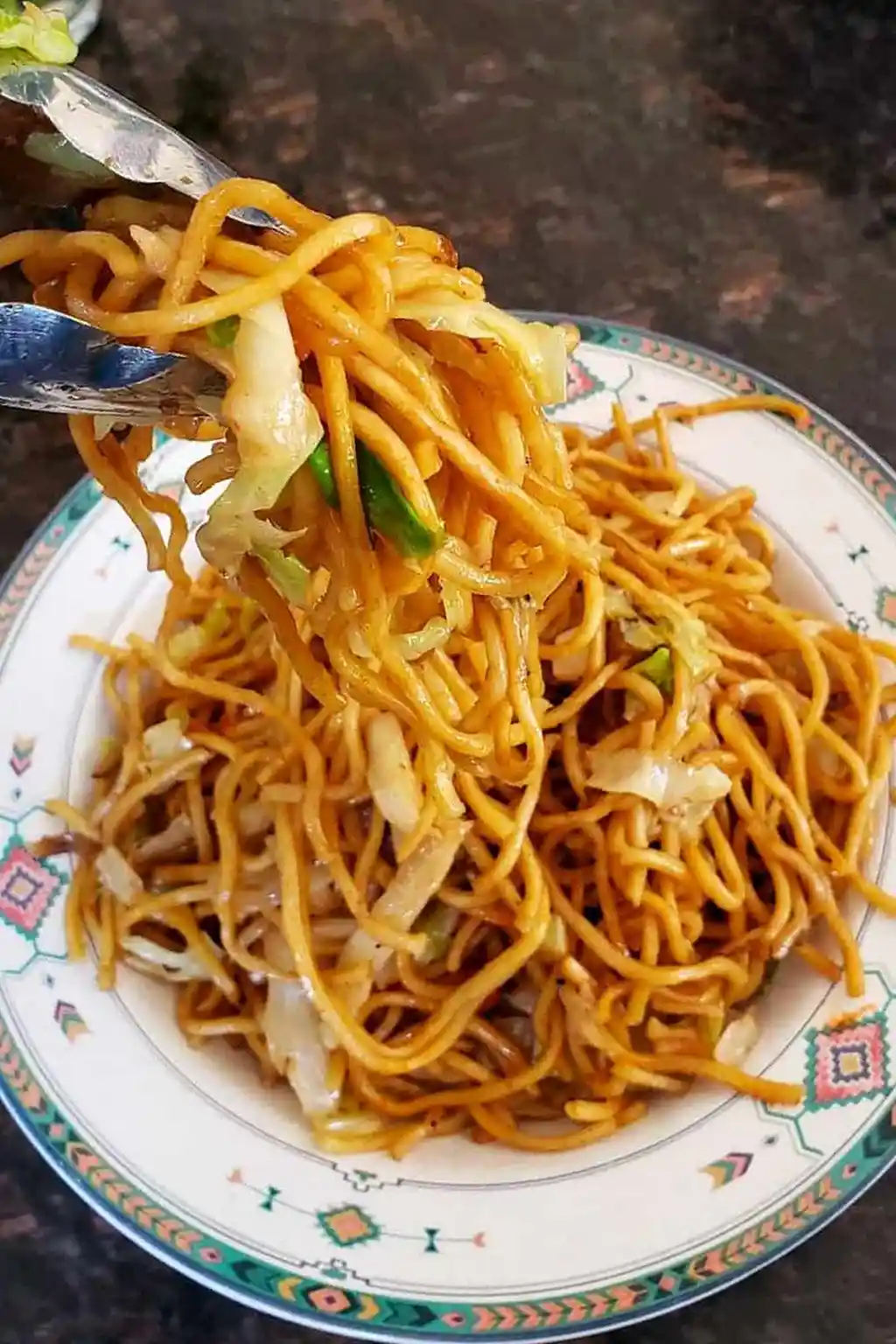
This recipe delivers a restaurant-style vegetable lo mein in just 20 minutes using an Instant Pot or stovetop. It is a balanced meal featuring crisp vegetables and a savory, sweet sauce.
List of ingredients
- 1 (8 oz box) Asian noodles or spaghetti – the base of the dish.
- 1 ½ cups water or low sodium broth – used for cooking the noodles.
- 1 teaspoon sesame oil – for the initial vegetable sauté.
- 1 cup cabbage – thinly cut lengthwise for quick cooking.
- 1 cup broccoli florets – cut into small, bite-sized pieces.
- 2 carrots – peeled and sliced into thin matchsticks.
- 1 teaspoon grated ginger – provides a fresh, pungent heat.
- 1 teaspoon garlic minced – adds depth and aroma.
- Pinch of salt – used during the sautéing process.
- 1 tablespoon sesame oil – added to the sauce mixture.
- 2 tablespoons low sodium soy sauce or liquid coconut amino – for saltiness and color.
- 1 tablespoon hoisin sauce – adds a thick, sweet, and savory flavor.
- 1 tablespoon rice vinegar – provides necessary acidity to balance the sweetness.
- 1 tablespoon sweetener (such as sugar in the raw) – enhances the sauce glaze.
- 1 tablespoon sesame seeds – for garnish and texture.
- ¼ cup green onions – sliced for a fresh finish.
- Salt and pepper – added to taste.
- 1 teaspoon sriracha or Chinese chili hot sauce – for a touch of spice.
step-by-step instructions
- Sauté the Aromatics and Veggies: Press the SAUTE button on the Instant Pot. Add 1 teaspoon of sesame oil, then stir in the grated ginger, minced garlic, cabbage, broccoli, and carrots. Sprinkle with a pinch of salt and cook for a few minutes until the vegetables are tender but still retain some bite.
- Prep the Pot: Cancel the SAUTE mode. Carefully remove the sautéed vegetables from the pot and set them aside. Pour in the water or low sodium broth, then deglaze the bottom of the pot by scraping off any browned bits to avoid burn notices.
- Combine Noodles and Sauce: Spread the noodles evenly across the bottom of the pot. Stir in the 1 tablespoon of sesame oil, soy sauce (or coconut aminos), hoisin sauce, rice vinegar, and sweetener. Give the mixture a thorough stir to ensure the sauce is distributed.
- Pressure Cook: Close the lid and set the valve to the sealing position. Select MANUAL high pressure and set the timer for 4 minutes.
- Release and Mix: Once the timer expires, perform a quick release by moving the valve to the venting position. Open the lid once the silver pin drops. Stir the noodles to break up any clumps.
- Final Integration: Stir the previously sautéed vegetables back into the noodles. Continue stirring until the noodles absorb the remaining liquid and the sauce coats everything evenly.
- Garnish and Serve: Check the seasoning with salt and pepper. Scoop the noodles into bowls and garnish with sliced green onions, sesame seeds, and sriracha.
- Stovetop Alternative: If using a stove, cook noodles according to package directions. Heat oil in a wok, sauté vegetables with salt for 5 minutes, then add garlic and ginger for one more minute. Stir in the sauce ingredients and the cooked noodles, tossing until well combined.
Advanced Vegetable Customizations
Adding Snap Peas for Crunch
Snap peas provide a fresh, sweet snap that complements the softer noodles. Add them during the last two minutes of sautéing to ensure they stay vibrant green and crisp.
Incorporating Sliced Bok Choy
Bok choy adds an authentic Chinese cabbage flavor and a satisfying stem crunch. Slice the stems thinly and keep the leaves whole or roughly chopped for varied textures.
Using Sliced Red Bell Peppers
Red bell peppers introduce a bright color and a mild sweetness to the dish. Slice them into thin strips similar to the carrots to ensure they cook at the same rate.
Adding Water Chestnuts for Texture
Canned water chestnuts provide a unique, crisp texture that does not soften during cooking. Stir them in at the very end of the process to maintain their firmness.
Protein Addition Guide
Preparing Firm Tofu Cubes
Press firm tofu to remove excess water, then cube and pan-fry until golden. Toss the tofu into the noodles during the final stirring stage to prevent the cubes from breaking.
Using Sliced Chicken Breast
Thinly slice chicken breast across the grain for maximum tenderness. Sauté the chicken in the Instant Pot before the vegetables, remove it, and add it back at the end.
Integrating Sautéed Shrimp
Peeled and deveined shrimp cook very quickly and only need 2-3 minutes of heat. Add them to the pot during the final stir-in phase so they remain plump and juicy.
Incorporating Seitan Strips
Seitan provides a chewy, meat-like texture that absorbs the lo mein sauce exceptionally well. Brown the seitan strips in sesame oil before adding the other vegetables.
Sauce Variations and Substitutions
Substituting Coconut Aminos for Soy Sauce
For a soy-free or lower-sodium alternative, use liquid coconut aminos. It has a slightly sweeter profile than soy sauce, so you may want to reduce the added sweetener slightly.
Replacing Rice Vinegar with Lemon Juice
If rice vinegar is unavailable, fresh lemon juice provides a similar acidic brightness. Use an equal 1:1 ratio to maintain the flavor balance of the sauce.
Adjusting the Heat Level
Increase the sriracha or add red pepper flakes during the sauté phase for a spicier dish. For a mild version, omit the chili sauce entirely and use a pinch of white pepper.
Using Honey Instead of Raw Sugar
Honey provides a richer sweetness and helps the sauce glaze the noodles more effectively. Substitute the tablespoon of sweetener with honey for a glossy finish.
Pro Cooking Techniques
Mastering the Matchstick Cut
To get perfect carrot matchsticks, slice the carrot into thin planks first. Stack the planks and slice them lengthwise into thin strips, ensuring uniform size for even cooking.
Preventing Noodle Clumping
When adding noodles to the Instant Pot, avoid packing them down. Spreading them in a crisscross pattern allows the liquid and sauce to circulate more freely.
Effective Deglazing for Better Flavor
Deglazing involves using liquid to lift the fond, or browned bits, from the bottom of the pot. This prevents the ‘Burn’ error in the Instant Pot and incorporates deep flavor into the sauce.
Controlling Noodle Texture
If the noodles appear too wet after the quick release, use the SAUTE function for 1-2 minutes. Stir constantly until the sauce thickens and clings to the noodles.
Storage and Reheating Instructions
Refrigerating Lo Mein
Store leftover noodles in an airtight container in the refrigerator for up to four days. Ensure the container is sealed tightly to prevent the noodles from drying out.
Microwave Reheating Method
Place a portion of noodles in a microwave-safe bowl and add a teaspoon of water or broth. Cover and heat in 30-second intervals, stirring in between to redistribute the sauce.
Stovetop Reheating for Best Texture
Heat a small amount of sesame oil in a skillet over medium heat. Add the noodles and a splash of water, tossing frequently until heated through and the sauce is glossy again.
Freezing Considerations
Lo mein is not recommended for freezing as the noodles can become mushy upon thawing. The vegetables also lose their structural integrity and crunch during the freezing process.
Troubleshooting Common Issues
Handling Overcooked Noodles
Overcooked noodles happen if the pressure is maintained too long or if you use a natural release. Always use the quick release method immediately after the timer ends.
Fixing a Watery Sauce
If the sauce is too thin, mix a small amount of cornstarch with water to create a slurry. Stir this into the noodles while using the SAUTE function to thicken the glaze.
Correcting Overly Salty Sauce
If the sauce is too salty, add a teaspoon of sugar or a squeeze of fresh lime juice. The sweetness and acidity help neutralize the intensity of the sodium.
Preventing Burnt Garlic
Garlic burns quickly at high temperatures, which creates a bitter taste. Add the minced garlic toward the end of the vegetable sauté process rather than at the beginning.
Frequently Asked Questions
What is the difference between Lo Mein and Chow Mein?
The primary difference is the cooking method. Lo mein noodles are boiled and tossed in sauce, resulting in a soft texture, while chow mein noodles are stir-fried until crispy.
Can I use spaghetti instead of Asian noodles?
Yes, spaghetti is an excellent substitute. It holds up well to the pressure cooking process and mimics the texture of traditional wheat-based Asian noodles.
How do I make this recipe gluten-free?
Replace the Asian noodles with gluten-free brown rice noodles and swap the soy sauce for tamari or liquid coconut aminos. Ensure your hoisin sauce is certified gluten-free.
Why do my noodles stick together?
Noodles stick when they are overcooked or when there is not enough oil in the sauce. Ensure you use the specified amount of sesame oil and perform a quick pressure release.
Print
Quick Vegetable Lo Mein Noodles
- Total Time: 20 minutes
- Yield: 6 cups 1x
- Diet: Vegan
Description
Instant pot Vegetable Lo Mein noodles are easy to make at home. This 20 minute Chinese noodles recipe is ideal for weeknight dinners and tastes better than take outs.
Ingredients
- 1 (8 oz box) Asian noodles (or spaghetti)
- 1 ½ cups water or low sodium vegetable broth
- 1 teaspoon sesame oil
- 1 cup cabbage (thinly cut lengthwise)
- 1 cup broccoli florets
- 2 carrots (peeled and sliced into matchsticks)
- 1 Teaspoon grated Ginger
- 1 Teaspoon Garlic minced
- Pinch of salt
- 1 Tablespoon sesame oil
- 2 Tablespoon low sodium soy sauce or liquid coconut amino
- 1 Tablespoon Hoisin sauce
- 1 Tablespoon rice vinegar
- 1 Tablespoon sweetener
- 1 Tablespoon sesame seeds
- ¼ cup green onions (sliced)
- Salt and pepper (per taste)
- 1 teaspoon Sriracha (or Chinese chili hot sauce)
Instructions
- Step 1: Press SAUTE button on the InstantPot, add sesame oil and swirl to coat the bottom.
- Step 2: Add ginger, garlic, and all the veggies with a pinch of salt; stir and cook for few minutes till veggies are softened and tender.
- Step 3: Cancel SAUTE, remove the veggies and set aside.
- Step 4: Add water or broth to the inner steel insert and deglaze the pot by scraping the bottom.
- Step 5: Spread noodles across the bottom of the pot and add all the listed sauce ingredients, then stir well.
- Step 6: Close the lid, set the valve to the sealing position, and choose MANUAL high pressure for 4 minutes.
- Step 7: Perform a quick release by moving the valve from sealing to venting and carefully open the lid.
- Step 8: Stir the noodles to break up clumps and add back the earlier sautéed veggies.
- Step 9: Stir well until noodles absorb the water, then garnish with chopped green onions and sesame seeds.
Notes
If the noodles look wet after cooked, turn the sauté mode and cook for few minutes so water evaporates. Take the steel insert out of the instant pot once cooked so the noodles don’t overcook. Do not do the natural release as it will cause your food to overcook.
- Prep Time: 5 minutes
- Cook Time: 15 minutes
- Category: dinner
- Method: Pressure Cooking
- Cuisine: Chinese
Nutrition
- Serving Size: 1 cup
- Calories: 236 kcal
- Sugar: 7 g
- Sodium: 736 mg
- Fat: 10 g
- Saturated Fat: 2 g
- Unsaturated Fat: 8 g
- Trans Fat: 0 g
- Carbohydrates: 27 g
- Fiber: 3 g
- Protein: 11 g
- Cholesterol: 18 mg