
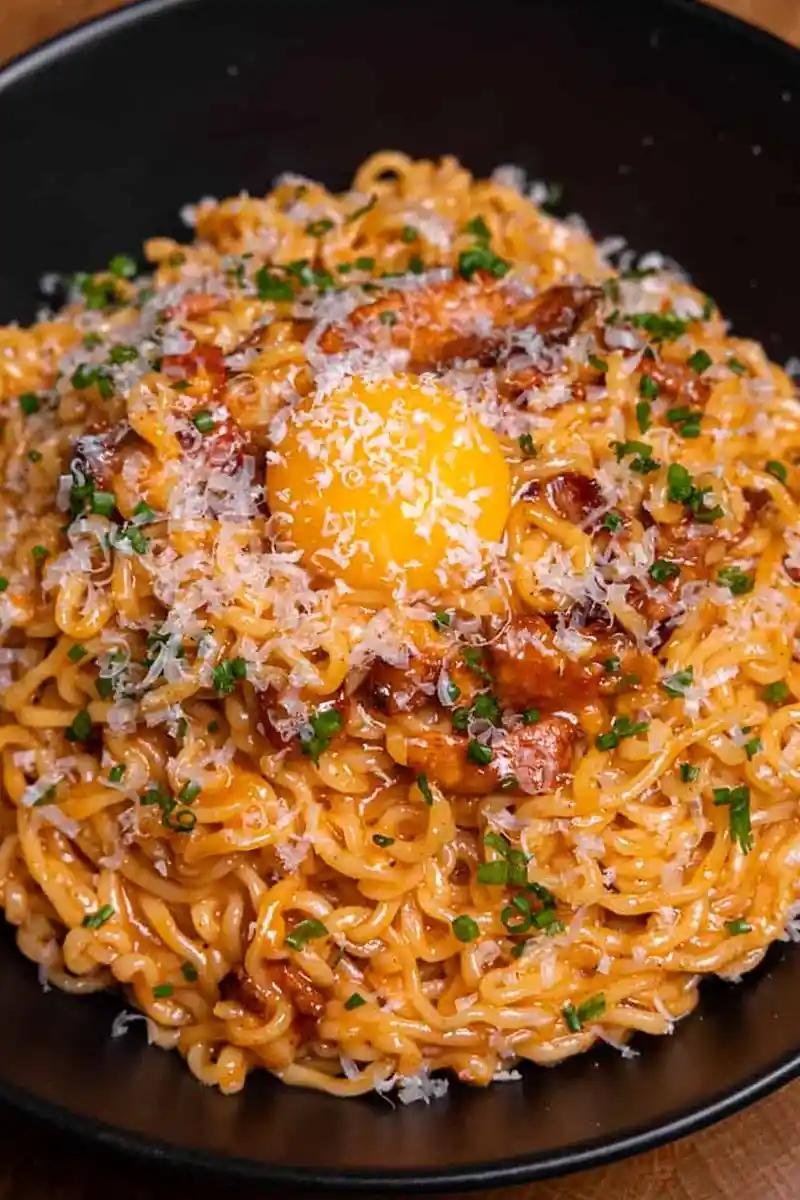
This ramen carbonara serves as a brilliant fusion dish, blending the springy texture of classic ramen noodles with the luxurious, velvety sauce of traditional Italian carbonara. By incorporating bold umami notes like Korean chili paste and savory parmesan, this meal transforms simple pantry staples into a restaurant-quality experience in under twenty minutes. It is the ideal choice for those nights when you want a comforting, indulgent, and deeply satisfying dinner without spending hours in the kitchen.
List of ingredients
- 2 packs of ramen noodles
- 1 pack of ramen seasoning
- 4 cloves of garlic, minced
- 4 strips of plant-based smoky strips, thinly sliced
- 1 whole egg
- 2 egg yolks
- 60g of parmesan cheese
- 1.5 tbsp of Gochujang or Korean Chili Paste
- ½ tsp of black pepper
- Chives for garnish
- Egg yolk (optional) for garnish
- Sesame seeds for garnish
step-by-step instructions
- Prep: Finely grate your parmesan cheese and thinly slice your plant-based smoky strips. Set aside.
- Make Sauce: In a bowl, combine 1 whole egg, 2 egg yolks, parmesan cheese, Gochujang and black pepper to form a paste.
- Cook Noodles: Cook your ramen according to the package instructions.
- Sauté: In a pan, fry your plant-based smoky strips for 5 minutes over medium-high heat until they have a crispy exterior. Add the garlic and stir fry for 30 seconds.
- Combine: Add the ramen followed by the paste and ramen seasoning. Turn off the heat.
- Emulsify: Stir vigorously until the sauce is emulsified and creamy. Add ramen water 1 tablespoon at a time until the right consistency is achieved.
- Serve: Serve on a plate, grate more parmesan cheese, and garnish with chives and egg yolk.
Refining Your Technique
Achieving the Perfect Sauce Consistency
The secret to a successful carbonara is the emulsification process, which relies on the starch in the cooking water. If your sauce appears too thick or clumpy, add an extra tablespoon of warm noodle water and stir rapidly. This adjustment balances the fat from the eggs and the proteins in the cheese, ensuring a silky finish that clings perfectly to the noodles.
Managing Heat to Avoid Scrambling
Eggs begin to solidify at specific temperatures, so heat control is paramount. Always remove your skillet from the stove entirely before introducing the egg mixture to the noodles. The residual heat trapped in the pan and the hot noodles is more than sufficient to cook the eggs safely into a custard-like sauce without creating unwanted bits of cooked egg.
Selecting the Right Noodles
While the recipe specifies ramen, the type of ramen used significantly impacts the final result. Opt for high-quality, air-dried, or fresh ramen noodles rather than lower-grade instant versions that may become soggy when mixed with the sauce. Noodles with a higher protein content hold their shape better, providing that essential chewy resistance that contrasts with the softness of the carbonara sauce.
Customizing Your Bowl
Substitutions for Dietary Needs
If you prefer to keep the dish meat-free, consider substituting the meat strips with thinly sliced sautéed shiitake mushrooms or king oyster mushrooms. These mimic the savory, earthy profile of the original meat and provide a wonderful texture. For those who find parmesan too strong, a mixture of pecorino and mild mozzarella can provide a slightly creamier melt with a less pungent flavor profile.
Adding Extra Heat
For those who love extra spice, you can incorporate a small amount of chili oil or finely diced bird’s eye chilies along with the garlic. Alternatively, increasing the Gochujang by an extra teaspoon adds depth and a deeper red hue to the finished dish. Ensure you adjust the black pepper quantity if you are significantly increasing other sources of heat to keep the palate balanced.
Incorporating Vegetables
To add nutritional volume to this dish, toss in a handful of fresh baby spinach or blanched bok choy during the final minute of tossing. These greens wilt quickly into the hot sauce and add a vibrant color without overwhelming the dish. Shredded carrots or thinly sliced scallions can also be folded in at the end for added crunch and freshness.
Serving and Presentation
Enhancing the Visual Appeal
Presentation is key for a fusion dish that feels gourmet. Using a shallow, wide-rimmed bowl allows you to spread the noodles out, making it easier to achieve a consistent coating of sauce. Carefully placing a fresh egg yolk in the center of the bowl just before serving not only looks impressive but adds a final layer of richness when mixed into the noodles by the diner.
Complementary Beverage Pairings
Because the dish is rich and savory, it pairs beautifully with drinks that cut through the fat. A chilled glass of sparkling water with a squeeze of fresh lime acts as a palate cleanser, while a light, floral iced green tea complements the Asian-inspired elements of the Gochujang. Avoid heavy, tannic drinks which may clash with the creamy notes of the cheese and egg.
Storage and Maintenance
Keeping Leftovers Fresh
While this dish is best enjoyed immediately, any leftovers should be cooled quickly to room temperature before being moved to the refrigerator. Place them in an airtight container to prevent the noodles from absorbing fridge odors and to keep the sauce from drying out. Properly stored, the dish can be kept for up to two days, though the texture of the noodles may soften over time.
Reviving the Sauce When Reheating
Reheating carbonara requires care to ensure the sauce doesn’t split or become oily. The best method is to reheat the noodles in a pan over low heat with a small splash of water or broth. Stir continuously until the sauce liquefies again; avoid the microwave if possible, as it tends to heat unevenly and can turn the egg sauce into an unappealing, rubbery texture.
Frequently Asked Questions
Can I prepare the sauce in advance?
You can whisk the egg, cheese, and seasoning mixture together up to an hour before cooking, but it is best to keep it at room temperature or slightly chilled. Do not add the seasoning or salt until you are ready to combine, as the salt can pull moisture out of the cheese and change the texture if left sitting for too long.
Why does the sauce sometimes look broken or grainy?
A grainy sauce is usually caused by the heat being too high when the egg mixture is added, causing the proteins to separate. To prevent this, ensure your noodles are not boiling when you add the sauce and always remove the pan from the burner. Using a whisk to incorporate the noodle water slowly helps create a more stable emulsion.
Is it necessary to use the ramen seasoning packet?
The seasoning packet provides a concentrated hit of umami that is difficult to replicate with simple pantry salt. However, if you are concerned about sodium levels, you can use half of the packet and compensate with a pinch of garlic powder or mushroom powder. This ensures you maintain the depth of flavor without over-salting the final dish.
How can I make the dish more filling?
To turn this into a heartier meal, serve it alongside a side of crusty bread or a light salad with a vinaigrette dressing. Adding a portion of steamed edamame or a side of quickly pan-seared tofu can also round out the meal without taking away from the focus of the carbonara. These additions provide fiber and protein that make the dinner feel more substantial.
Is this dish suitable for serving to guests?
Absolutely, especially because the final assembly takes so little time. You can prep all the ingredients beforehand and keep them organized on your counter, allowing you to finish the cooking process in under five minutes while your guests are already at the table. It is an impressive dish that highlights your ability to balance complex flavors in a short amount of time.
Print
Ramen Carbonara You’ll Crave Again and Again
- Total Time: 20 minutes
- Yield: 2 servings 1x
- Diet: Vegetarian-friendly
Description
Indulge in the ultimate fusion: creamy Ramen Carbonara, where East meets West in a bowl! This easy weeknight meal combines savory noodles with a rich, silky egg and cheese sauce and a smoky, crispy plant-based protein twist.
Ingredients
- 2 packs of ramen noodles
- 1 pack of ramen seasoning
- 4 cloves of garlic, minced
- 4 strips of plant-based smoky strips, thinly sliced
- 1 whole egg
- 2 egg yolks
- 60g of parmesan cheese
- 1.5 tbsp of Gochujang or Korean Chili Paste
- ½ tsp of black pepper
- Chives for garnish
- Egg yolk (optional) for garnish
- Sesame seeds for garnish
Instructions
- Prep: Finely grate your parmesan cheese and thinly slice your plant-based smoky strips. Set aside.
- Make Sauce: In a bowl, combine 1 whole egg, 2 egg yolks, parmesan cheese, Gochujang and black pepper to form a paste.
- Cook Noodles: Cook your ramen according to the package instructions.
- Sauté: In a pan, fry your plant-based smoky strips for 5 minutes over medium-high heat until they have a crispy exterior. Add the garlic and stir fry for 30 seconds.
- Combine: Add the ramen followed by the paste and ramen seasoning. Turn off the heat.
- Emulsify: Stir vigorously until the sauce is emulsified and creamy. Add ramen water 1 tablespoon at a time until the right consistency is achieved.
- Serve: Serve on a plate, grate more parmesan cheese, and garnish with chives and egg yolk.
Notes
Ensure you turn off the heat before adding the egg mixture to the noodles to prevent scrambling. Using ramen water is key to achieving a smooth, glossy sauce consistency.
- Prep Time: 10 minutes
- Cook Time: 10 minutes
- Category: Noodles
- Method: Stovetop
- Cuisine: Asian Fusion
Nutrition
- Serving Size: 1 bowl
- Calories: 480 kcal
- Sugar: 3 g
- Sodium: 950 mg
- Fat: 18 g
- Saturated Fat: 7 g
- Unsaturated Fat: 9 g
- Trans Fat: 0 g
- Carbohydrates: 58 g
- Fiber: 2 g
- Protein: 16 g
- Cholesterol: 145 mg