
This roasted red pepper pantry pasta is a comforting, vibrant meal that relies on shelf-stable ingredients you likely already have in your kitchen. By combining the sweetness of jarred peppers with the briny bite of capers and a bright citrus finish, this dish delivers a restaurant-quality experience in under thirty minutes. It is the perfect solution for busy weeknights when you want something satisfying, flavorful, and effortless to prepare.
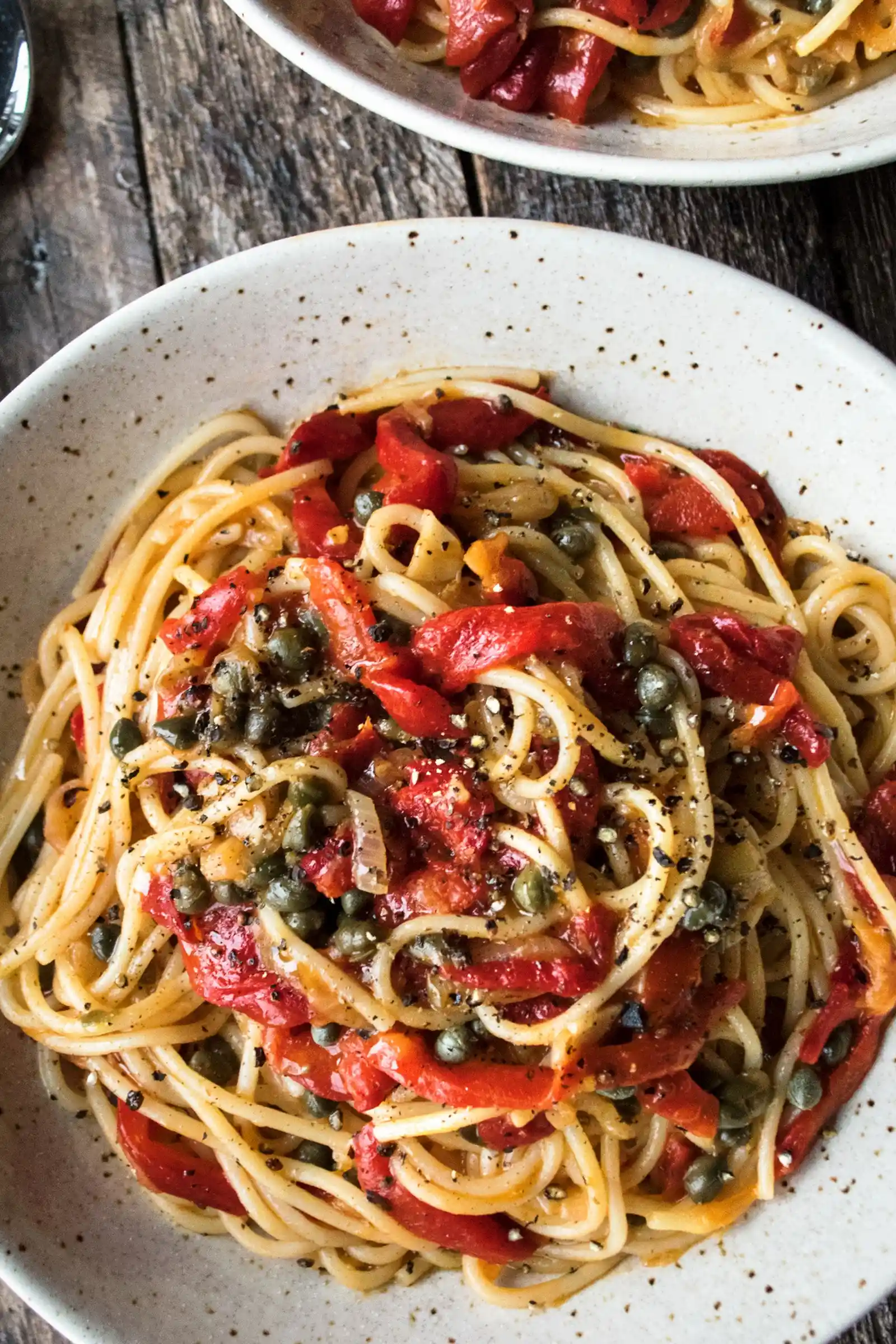
List of ingredients
- ½ lb dry pasta
- 4 tbsp butter
- 1 large shallot, thinly sliced
- kosher salt
- 2 cloves garlic, thinly shaved
- 1 lemon, zested and juiced
- 1 tbsp tomato paste
- ½ cup vegetable broth
- 1 cup sliced roasted red peppers
- ½ cup capers
- freshly cracked black pepper
step-by-step instructions
- Boil: Bring a large pot of water to a boil. Add a heaping palmful of salt. Drop the pasta and cook for 1 minute less than the package’s instructions, stirring often. Right before draining, reserve 1 cup of pasta water.
- Sauté: Meanwhile, heat a large skillet over medium heat. Add 2 tablespoons of the butter. Add the sliced shallot and a pinch of salt. Saute for a few minutes until tender and caramelized, stirring often.
- Simmer: Stir in the shaved garlic and lemon zest. Let cook for another minute. Add the tomato paste. Stir well to incorporate. Pour in the vegetable broth. Bring to a simmer and cook for a minute or so before stirring in the roasted red peppers and capers.
- Combine: Add the reserved pasta water to the sauce. Allow to simmer for a couple minutes more. Stir in the drained pasta, the remaining 2 tablespoons of butter, and lemon juice. Mix well until the butter melts and the sauce thickens enough to coat the pasta.
- Serve: Taste and season with more salt if needed. Serve the pasta with freshly cracked black pepper over top.
Practical Preparation Techniques
Achieving the Perfect Sauce Consistency
The secret to a restaurant-style pasta sauce is the proper emulsification of pasta water, fat, and acidity. By reserving starchy cooking water, you introduce natural thickening agents that bind the butter and vegetable broth into a cohesive, silky sauce. Always add your pasta to the pan while it is still slightly undercooked so that it can finish absorbing the flavors directly in the sauce.
Preparing Aromatics for Balanced Flavor
Thinly shaving the garlic rather than mincing it coarsely ensures that every bite contains a mellow, distributed essence rather than sharp, intense pockets of garlic. Similarly, ensure your shallot slices are uniform in thickness to prevent some pieces from burning while others remain raw. Patience during the caramelization phase of the shallots is vital, as this provides the backbone of sweetness that offsets the acidity of the lemon and capers.
Managing Ingredient Moisture Levels
Jarred roasted red peppers and capers often come packed in liquids that can dilute your sauce if not managed correctly. Always drain your peppers thoroughly in a colander and pat them dry if they feel excessively oily before adding them to the skillet. Likewise, rinsing your capers under cold running water removes excess salinity, allowing you to control the final seasoning profile of the dish more effectively.
Customization and Adaptations
Exploring Alternative Vegetable Additions
While roasted red peppers are the star of this dish, you can easily incorporate other pantry staples to customize the flavor. Sun-dried tomatoes offer a chewy, concentrated sweetness that pairs beautifully with the tomato paste base. Alternatively, marinated artichoke hearts can be added alongside the peppers for an extra layer of Mediterranean-inspired tanginess.
Protein Boosting Variations
For those looking to turn this pantry meal into a more substantial protein-rich dinner, you can fold in cooked chickpeas or cannellini beans at the same time as the red peppers. These legumes provide a creamy texture and extra fiber without overpowering the delicate balance of the lemon and butter. If you prefer a meat-free protein, toasted walnuts or sliced almonds can be sprinkled over the top before serving to add a pleasant crunch.
Serving and Storage Advice
Creating an Elegant Presentation
To elevate this simple pasta for a dinner guest, serve the dish in wide, shallow bowls to showcase the vibrant colors of the peppers and herbs. A final drizzle of high-quality extra virgin olive oil just before serving adds a luxurious sheen and an extra layer of grassy flavor. If you have fresh herbs available, a dusting of chopped parsley or basil adds a pop of color that makes the plate feel fresh and inviting.
Managing Leftovers Safely
Store any leftover pasta in an airtight container in the refrigerator for up to three days. Keep in mind that the noodles will continue to absorb the sauce as they sit, which may result in a slightly drier texture when you go to reheat it. To mitigate this, add a splash of water or a tiny bit of vegetable broth to the container before heating to help bring the sauce back to its original consistency.
Gentle Reheating Methods
The best way to reheat this pasta is on the stovetop over low heat, rather than in the microwave, to prevent the butter from breaking and the pasta from becoming mushy. Add a tablespoon of water to the pan and toss the pasta gently until it is warmed through and the sauce has returned to a glossy state. If you must use a microwave, use a low power setting and stir every thirty seconds to ensure even heating throughout the dish.
Frequently Asked Questions
Can I use different types of pasta for this recipe?
Absolutely, any shape of pasta will work perfectly well with this sauce base. Ridged varieties like penne, rigatoni, or fusilli are excellent for trapping the sauce, while longer noodles like spaghetti or linguine work well for a lighter, more elegant presentation.
What should I do if the sauce looks too thin?
If you find that your sauce is not thickening as expected, continue to simmer the mixture on medium-high heat for an extra minute or two before adding the final dollop of butter. The starch in the pasta water and the reduction of the liquid will naturally thicken the sauce as the water evaporates.
Is it possible to make this dish dairy-free?
Yes, you can easily substitute the butter with a high-quality vegan butter or a few tablespoons of extra virgin olive oil. If using oil, add it at the very end of the cooking process to maintain its flavor and help create a glossy emulsion with the pasta water.
How can I make the flavor profile more intense?
To enhance the flavor, increase the amount of lemon zest or add a pinch of red pepper flakes during the sautéing process. Crushed red pepper flakes provide a gentle, lingering heat that complements the sweetness of the peppers and the brightness of the citrus.
Are there any specific types of roasted red peppers recommended?
You can use any brand of jarred roasted red peppers, but those packed in water generally provide a cleaner flavor than those packed in heavy oil. If your peppers are packed in oil, simply rinse them under cold water before slicing to remove excess grease before adding them to your skillet.
Print
Roasted Red Pepper Pantry Pasta
- Total Time: 25 minutes
- Yield: 2–4 servings 1x
- Diet: Vegetarian
Description
A simple pantry pasta full of roasted red peppers, capers, shallots, garlic, lemon, vegetable-based cooking liquid, and butter.
Ingredients
- ½ lb dry pasta
- 4 tbsp butter
- 1 large shallot, thinly sliced
- kosher salt
- 2 cloves garlic, thinly shaved
- 1 lemon, zested and juiced
- 1 tbsp tomato paste
- ½ cup vegetable broth
- 1 cup sliced roasted red peppers
- ½ cup capers
- freshly cracked black pepper
Instructions
- Boil: Bring a large pot of water to a boil. Add a heaping palmful of salt. Drop the pasta and cook for 1 minute less than the package’s instructions, stirring often. Right before draining, reserve 1 cup of pasta water.
- Sauté: Meanwhile, heat a large skillet over medium heat. Add 2 tablespoons of the butter. Add the sliced shallot and a pinch of salt. Saute for a few minutes until tender and caramelized, stirring often.
- Simmer: Stir in the shaved garlic and lemon zest. Let cook for another minute. Add the tomato paste. Stir well to incorporate. Pour in the vegetable broth. Bring to a simmer and cook for a minute or so before stirring in the roasted red peppers and capers.
- Combine: Add the reserved pasta water to the sauce. Allow to simmer for a couple minutes more. Stir in the drained pasta, the remaining 2 tablespoons of butter, and lemon juice. Mix well until the butter melts and the sauce thickens enough to coat the pasta.
- Serve: Taste and season with more salt if needed. Serve the pasta with freshly cracked black pepper over top.
Notes
You can use a mandolin to shave the garlic or a very sharp knife. If it’s easier for you, you can just chop it finely or even pass it through a garlic press.
- Prep Time: 10 minutes
- Cook Time: 15 minutes
- Category: Main Course
- Method: Stovetop
- Cuisine: Mediterranean
Nutrition
- Serving Size: 1 serving
- Calories: 380 kcal
- Sugar: 4 g
- Sodium: 750 mg
- Fat: 16 g
- Saturated Fat: 9 g
- Unsaturated Fat: 6 g
- Trans Fat: 0 g
- Carbohydrates: 52 g
- Fiber: 3 g
- Protein: 8 g
- Cholesterol: 35 mg