
This roasted red pepper pasta offers a sophisticated, vibrant alternative to traditional tomato-based sauces. By combining the natural sweetness of charred peppers with rich cream and salty parmesan, this dish achieves a velvety texture that clings perfectly to every strand of spaghetti. It is an ideal solution for busy weeknights when you desire a restaurant-quality meal in under half an hour.
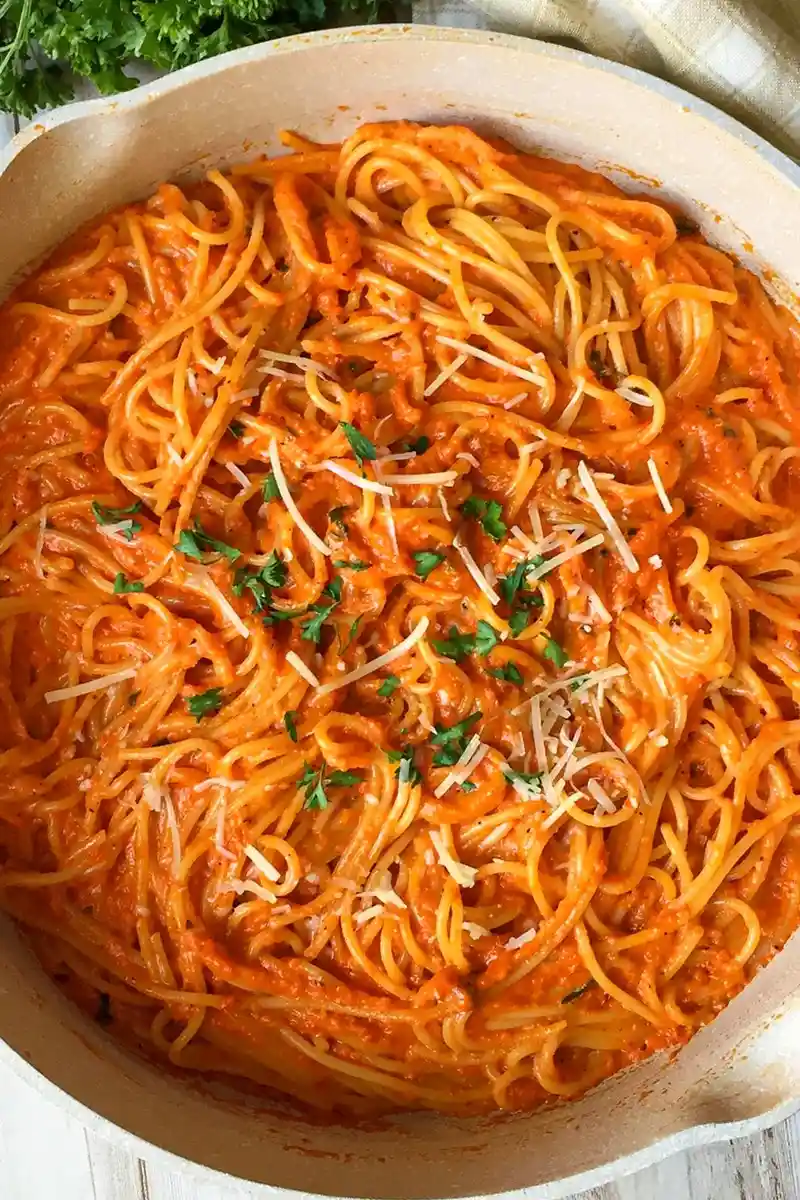
List of ingredients
- 1 medium yellow onion, chopped
- 1 Tbsp. butter
- 2 tsp. garlic, minced
- 16 oz. jar roasted red peppers, drained
- 1 1/4 cup heavy cream
- 3/4 cup grated parmesan cheese
- 2 Tbsp. fresh parsley, chopped
- 1/2 tsp. paprika
- 1/2 tsp. pepper
- 1/2 tsp. salt
- 1/2 tsp. red pepper flakes
- 1 1/2 Tbsp. sugar
- 3 tsp. lemon juice
- 12 oz. spaghetti noodles
step-by-step instructions
- Step: Bring a large pot of water to a boil and cook spaghetti noodles until they are al dente.
- Step: Meanwhile, add butter, chopped onion, and minced garlic to a large skillet and cook over medium-high heat until onions are soft.
- Step: Add cooked onions and drained roasted red peppers to a food processor or blender and pulse until smooth.
- Step: Pour back into your skillet and keep it at a simmer. Add in heavy cream and stir to combine.
- Step: Stir in parmesan cheese, paprika, salt, pepper, red pepper flakes, sugar, and lemon juice and continue to simmer, stirring occasionally.
- Step: Drain pasta noodles and add them to your pasta sauce. Toss until all noodles are coated. Serve immediately with fresh parsley and parmesan cheese for garnish.
Practical cooking tips
Achieving the Perfect Sauce Consistency
The texture of your sauce is largely dependent on the quality of your blend. Ensure the roasted red peppers are drained well before hitting the blender; excess liquid from the jar can turn the sauce thin and watery. If you find your sauce is too thick after simmering, stir in a splash of the pasta cooking water, which contains starch that helps the sauce cling to the noodles.
Balancing the Flavor Profile
Roasted peppers carry a natural acidity that can sometimes be quite sharp depending on the brand used. The sugar in this recipe is crucial for neutralizing that tang and highlighting the natural sweetness of the peppers. Always perform a taste test after the initial simmer; if you find the sauce still lacks a roundness, a tiny pinch more salt or a teaspoon of butter can often bridge the gap.
Substitutions and Variations
Alternative Pasta Shapes
While spaghetti is traditional for its ability to twirl, this creamy sauce is incredibly versatile. It works exceptionally well with shorter shapes like penne, rigatoni, or fusilli, as these options feature ridges and hollow centers that capture more of the sauce in every bite. If using a tubular pasta, ensure it is cooked just to al dente so it holds up well during the final tossing phase.
Adding Lean Proteins
To turn this pasta into a more substantial main course, consider adding a protein to the dish. Grilled chicken breast sliced into thin strips is a classic pairing that complements the sweetness of the peppers. Alternatively, sautéed shrimp or pan-seared scallops provide a delightful contrast in texture and flavor that works beautifully with the creamy base.
Enhancing the Vegetable Element
For those looking to increase the nutritional content of the dish, adding vegetables is a straightforward process. Wilted baby spinach, sautéed mushrooms, or fire-roasted zucchini can be stirred into the sauce during the final minutes of simmering. Ensure any additional vegetables are cooked through separately before adding them to avoid releasing excess moisture into your sauce.
Serving Suggestions
Pairing for a Complete Meal
Because this pasta is rich and creamy, it is best balanced by sides that offer crunch or acidity. A fresh arugula salad tossed with a simple lemon-olive oil vinaigrette provides a peppery bite that cuts through the creaminess of the dish. Crusty sourdough bread or garlic bread is also an excellent addition for mopping up any remaining sauce left on the plate.
Presentation Tips
To elevate the visual appeal of your plate, garnish the dish at the very last second. A dusting of finely grated parmesan, a small pile of fresh parsley, and a final light grind of fresh black pepper create a professional appearance. If you want a more colorful finish, a pinch of thinly sliced chives or microgreens adds a delicate aesthetic touch without overpowering the core flavors.
Storage and Reheating Guidelines
Keeping Leftovers Fresh
Store any leftover pasta in an airtight container in the refrigerator for up to three days. Because the sauce contains cream and cheese, it may thicken significantly as it cools. When preparing to store the dish, ensure it has come to room temperature before covering it to prevent condensation from altering the texture of the sauce.
Reheating for Best Texture
When reheating, it is best to use a skillet over low heat rather than a microwave. Adding a small amount of water or a splash of milk to the pan while heating will help revive the silkiness of the sauce. If you must use a microwave, do so in short thirty-second intervals, stirring in between to ensure the heat is distributed evenly and the sauce does not separate.
Frequently Asked Questions
Can I make the sauce in advance?
Yes, you can prepare the blended pepper and onion mixture ahead of time. Keep the base refrigerated in an airtight container for up to two days before combining it with the cream and cheese during the final cooking stage. This strategy is excellent for saving time on busy evenings.
Why did my sauce separate?
Sauce separation often occurs if the mixture is allowed to boil too vigorously after adding the cream or cheese. To avoid this, keep the heat on a low, steady simmer and add the parmesan cheese only once the heat has been turned down. Constant stirring during the final phase of assembly is the best way to maintain a smooth emulsion.
Can I use fresh roasted peppers instead of jarred?
Absolutely, roasting your own peppers will result in a more complex, smoky flavor profile. Follow standard roasting techniques until the skins are charred and the flesh is tender, then peel and seed them thoroughly before blending. The weight of the final roasted pepper flesh should be roughly equivalent to the drained weight of a 16-ounce jar for the best flavor balance.
Print
Roasted Red Pepper Pasta
- Total Time: 25 minutes
- Yield: 4 servings 1x
- Diet: Vegetarian
Description
Roasted Red Pepper Pasta is a quick and easy Italian pasta dinner that comes together in only 25 minutes. This creamy, rich, and comforting sauce is a nice change from the classic marinara spaghetti sauce and will be a repeat on your dinner table.
Ingredients
- 1 medium yellow onion, chopped
- 1 Tbsp. butter
- 2 tsp. garlic, minced
- 16 oz. jar roasted red peppers, drained
- 1 1/4 cup heavy cream
- 3/4 cup grated parmesan cheese
- 2 Tbsp. fresh parsley, chopped
- 1/2 tsp. paprika
- 1/2 tsp. pepper
- 1/2 tsp. salt
- 1/2 tsp. red pepper flakes
- 1 1/2 Tbsp. sugar
- 3 tsp. lemon juice
- 12 oz. spaghetti noodles
Instructions
- Step: Bring a large pot of water to a boil and cook spaghetti noodles until they are al dente.
- Step: Meanwhile, add butter, chopped onion, and minced garlic to a large skillet and cook over medium-high heat until onions are soft.
- Step: Add cooked onions and drained roasted red peppers to a food processor or blender and pulse until smooth.
- Step: Pour back into your skillet and keep it at a simmer. Add in heavy cream and stir to combine.
- Step: Stir in parmesan cheese, paprika, salt, pepper, red pepper flakes, sugar, and lemon juice and continue to simmer, stirring occasionally.
- Step: Drain pasta noodles and add them to your pasta sauce. Toss until all noodles are coated. Serve immediately with fresh parsley and parmesan cheese for garnish.
Notes
Nutrition facts are an estimate and provided for informational purposes as a general guideline.
- Prep Time: 10 minutes
- Cook Time: 15 minutes
- Category: Main Course
- Method: Stovetop
- Cuisine: Italian
Nutrition
- Serving Size: 1 serving
- Calories: 476 kcal
- Sugar: 6.6 g
- Sodium: 883 mg
- Fat: 38.6 g
- Saturated Fat: 22.2 g
- Unsaturated Fat: 2.6 g
- Trans Fat: 0.2 g
- Carbohydrates: 30.4 g
- Fiber: 2 g
- Protein: 9.2 g
- Cholesterol: 123.7 mg