
This quick Mongolian Beef recipe delivers tender strips of steak coated in a glossy, sweet-savory glaze. It is a fast weeknight meal that brings restaurant-quality flavors to your home kitchen in under 20 minutes.
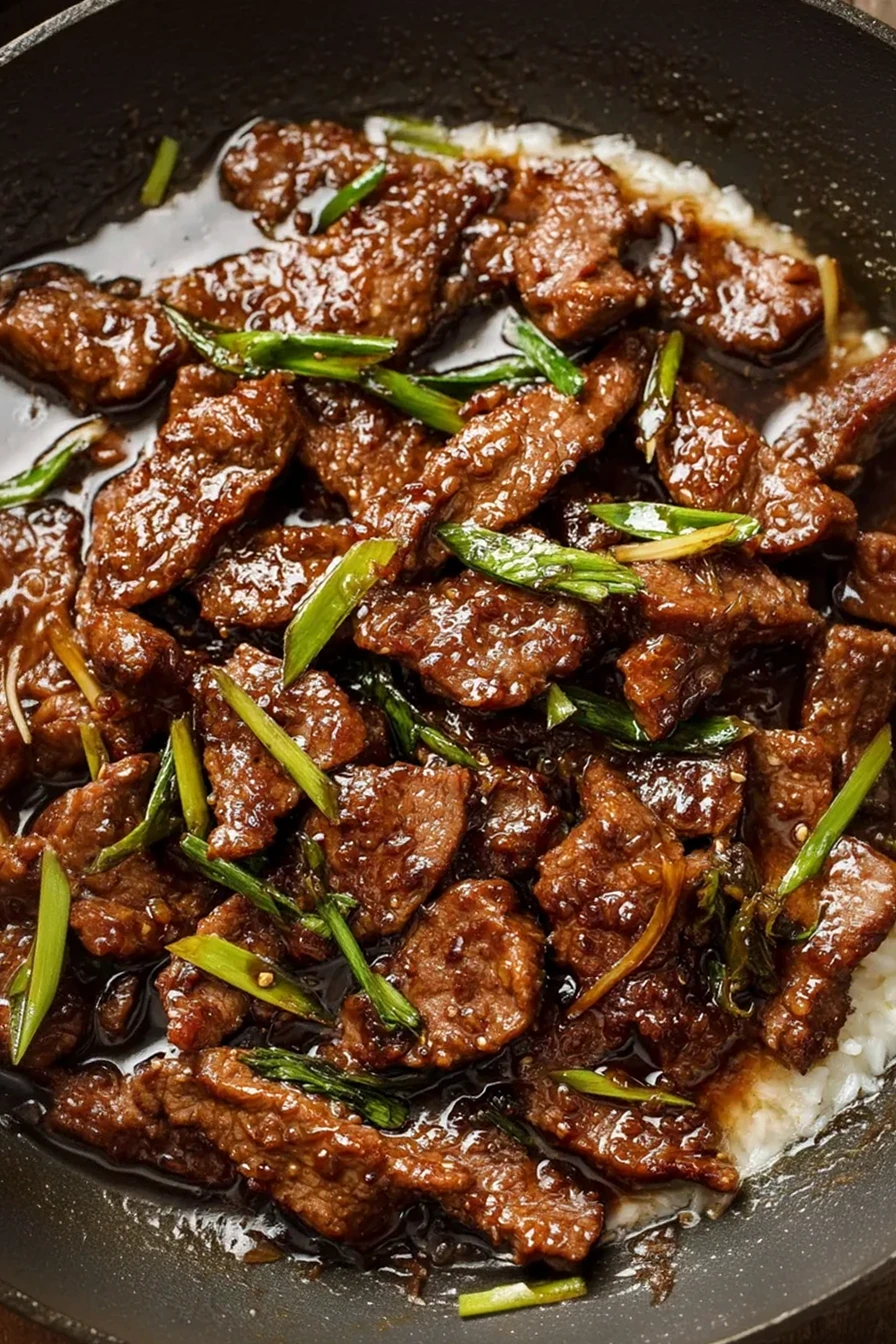
List of ingredients
- 1 ½ pounds flank steak – sliced thinly against the grain for maximum tenderness.
- ¼ cup cornstarch – used to coat the beef for browning and to thicken the sauce.
- ½ cup low-sodium soy sauce – provides the base savory flavor without excessive salt.
- ½ cup water – balances the intensity of the soy sauce and sugar.
- ½ cup packed brown sugar – adds sweetness and helps the sauce caramelize.
- ¼ teaspoon red pepper flakes (optional) – adds a subtle hint of heat.
- 3 tablespoons vegetable oil (divided) – essential for searing the meat at high temperatures.
- 1 tablespoon minced fresh ginger – provides a bright, aromatic zing.
- 4 cloves garlic (minced) – adds depth and pungent savory notes.
- 4 green onions – cut into 2-inch pieces for fresh color and crunch.
- 1 tablespoon sesame seeds (optional) – used for a professional garnished finish.
step-by-step instructions
- Prepare the beef: Slice the flank steak thinly against the grain into ¼-inch pieces. Place the slices in a large bowl, sprinkle with cornstarch, and toss until evenly coated. Set aside to let the cornstarch adhere to the meat.
- Create the sauce: In a separate small bowl, whisk together the low-sodium soy sauce, water, brown sugar, and red pepper flakes if you prefer some spice. Stir until the sugar is mostly dissolved.
- Cook the beef: Heat 2 tablespoons of vegetable oil in a large skillet or wok over high heat. Add the beef in a single layer, working in batches to avoid overcrowding the pan. Brown for about 1 minute per side, then transfer the beef to a plate.
- Prepare the aromatics: Add the remaining tablespoon of oil to the same skillet. Sauté the minced ginger and garlic for 30 to 60 seconds until fragrant, ensuring they do not burn.
- Combine the sauce and beef: Pour the prepared soy sauce mixture into the skillet. Allow the liquid to simmer for 2 to 3 minutes until it begins to bubble and thicken slightly.
- Finish the dish: Return the browned beef and the green onion pieces to the skillet. Toss everything together for 1 to 2 minutes until the beef is thoroughly coated in the glossy sauce.
- Garnish and serve: Sprinkle with sesame seeds if desired. Serve immediately over steamed rice or your favorite side dish.
Advanced Searing Techniques
Slice Beef Against the Grain for Tenderness
Identify the long muscle fibers running through the flank steak. Cut perpendicular to these lines to shorten the fibers, which prevents the meat from becoming chewy. This ensures every bite is tender and easy to eat.
Utilize Batch Cooking to Prevent Steaming
Adding too much meat to the pan at once drops the temperature and releases excess moisture. This causes the beef to steam in its own juices rather than sear. Cook in small batches to maintain high heat and achieve crispy, browned edges.
Optimize Pan Temperature
Wait until the vegetable oil is shimmering or nearly smoking before adding the beef. High heat is necessary to quickly sear the cornstarch coating. This creates a barrier that keeps the meat juicy while providing a golden exterior.
Time Your Aromatics Precisely
Garlic and ginger burn quickly at high temperatures, which can make the dish taste bitter. Add them only after the beef has been removed and the pan temperature has stabilized slightly. Sauté them just until they smell fragrant before adding the liquid sauce.
Ingredient Substitutions and Alternatives
Using Tamari for Gluten-Free Requirements
If you need a gluten-free version, replace the low-sodium soy sauce with tamari. Tamari offers a similar salty, umami profile but is traditionally brewed without wheat. Ensure your cornstarch brand is also certified gluten-free.
Substituting Different Beef Cuts
While flank steak is ideal, skirt steak is an excellent alternative. If using sirloin, slice it even thinner to ensure it cooks quickly. Avoid using very lean cuts that may dry out during the high-heat searing process.
Alternative Sweeteners for the Glaze
Honey or maple syrup can be used instead of brown sugar for a different sweetness profile. Honey will result in a thicker, stickier glaze, while maple syrup adds a slight woody note. Adjust the quantity based on the intensity of the sweetener.
Selecting the Best Cooking Oil
Use oils with a high smoke point, such as canola, grapeseed, or peanut oil. Avoid extra virgin olive oil or butter for the searing phase as they burn at lower temperatures. High-smoke point oils keep the beef crisp without leaving a burnt taste.
Recipe Variations and Customizations
Incorporating Fresh Vegetables
Add broccoli florets, sliced bell peppers, or snap peas to the dish for extra nutrition. Sauté the vegetables after the aromatics but before adding the sauce. Cook them until tender-crisp before tossing in the beef.
Adjusting the Heat Levels
For a spicier dish, increase the red pepper flakes or add a teaspoon of sriracha or chili garlic sauce. If you prefer a mild flavor, omit the red pepper flakes entirely. The brown sugar helps balance higher levels of heat.
Experimenting with Different Proteins
This sauce works well with thinly sliced chicken breast or shrimp. For chicken, follow the same cornstarch coating process. For shrimp, sear them quickly for 2 minutes per side and add them back at the very end to avoid overcooking.
Creating a Lower-Sugar Version
Reduce the brown sugar by half to create a more savory, less sweet profile. You can add a splash of rice vinegar to provide acidity and balance the remaining sweetness. This creates a more traditional stir-fry taste.
Serving and Pairing Recommendations
Choosing the Ideal Rice Base
Steamed jasmine rice is the classic pairing due to its floral aroma and ability to absorb the sauce. Brown rice provides a nuttier flavor and more fiber. For a fluffier texture, try basmati rice.
Serving with Asian-Style Noodles
Toss the Mongolian beef with cooked udon or rice noodles for a heartier meal. The thick noodles pair perfectly with the glossy sauce. Stir-fry the noodles in the pan for a minute before adding the beef.
Complementary Side Dishes
Serve this dish with a side of steamed bok choy or sautéed spinach. A cold cucumber salad with rice vinegar and sesame oil provides a refreshing contrast to the rich, sweet beef. This balances the overall meal.
Garnish Ideas for Presentation
Beyond sesame seeds, try adding thinly sliced red chilies for a pop of color and heat. A sprinkle of fresh cilantro or microgreens adds a bright, herbal finish. These additions make the dish look professional.
Storage and Long-Term Preservation
Refrigeration Guidelines
Store leftover beef in an airtight glass or plastic container in the refrigerator. It will remain fresh and flavorful for up to 3 days. Ensure the beef is cooled slightly before sealing to prevent excess condensation.
Freezing Instructions
This dish can be frozen for up to 2 months. Place it in a freezer-safe bag and squeeze out as much air as possible. Note that the texture of the beef may change slightly upon thawing.
Proper Thawing Methods
Thaw frozen Mongolian beef in the refrigerator overnight for the best results. Avoid thawing at room temperature to maintain food safety. This preserves the integrity of the sauce and the tenderness of the meat.
Container Selection for Freshness
Use airtight containers to prevent the beef from absorbing other odors in the fridge. Glass containers are preferable as they do not stain from the soy sauce. This keeps the flavor clean and the beef moist.
Reheating and Refreshing the Dish
Stovetop Reheating Method
Place the beef in a skillet over medium heat. Add a tablespoon of water or beef broth to loosen the thickened sauce. Heat until the beef is warmed through and the sauce becomes glossy again.
Microwave Reheating Tips
Heat the beef in short intervals, stirring in between to ensure even warming. Add a splash of water to prevent the meat from drying out. Cover the dish with a damp paper towel to trap steam.
Preventing Overcooking During Reheating
Stop heating as soon as the beef is warm to avoid making the meat tough. Overheating can cause the sugars in the sauce to burn. Use a lower temperature for a slower, more gentle warm-up.
Refreshing the Flavor
After reheating, add a fresh sprinkle of green onions or a squeeze of lime juice. This restores the brightness that can be lost during storage. It makes the leftovers taste as fresh as the original batch.
Meal Planning and Make-Ahead Advice
Prepping the Beef in Advance
Slice the flank steak and store it in a sealed bag in the fridge up to 24 hours before cooking. Do not add the cornstarch until just before you are ready to sear. Adding cornstarch too early can make the coating gummy.
Preparing the Sauce Ahead of Time
Mix the soy sauce, water, brown sugar, and pepper flakes in a jar and keep it refrigerated. Shake well before using to redistribute the sugar. This saves significant time during the actual cooking process.
Organizing Your Mise en Place
Because stir-frying happens very quickly, have all ingredients chopped and measured before turning on the stove. Place the minced garlic, ginger, and sliced onions in small bowls. This prevents you from rushing and burning the aromatics.
Batch Prepping for the Week
Cook a double batch of beef and store portions separately for easy lunches. Since it is a high-protein meal, it keeps you full throughout the day. Pair each portion with a fresh scoop of rice.
Common Troubleshooting Solutions
Solving a Sauce That Is Too Thin
If the sauce does not thicken enough, mix one teaspoon of cornstarch with a tablespoon of water to create a slurry. Stir the slurry into the simmering sauce and cook for another minute. This will quickly create a thick, glossy glaze.
Preventing Tough or Chewy Meat
Tough meat usually results from slicing with the grain or overcooking. Ensure you cut across the muscle fibers and sear the meat quickly over high heat. Avoid cooking the beef for too long once it returns to the sauce.
Adjusting Overly Salty Sauce
If the sauce tastes too salty, add a teaspoon of brown sugar or a tablespoon of water. A squeeze of fresh lemon or lime juice can also cut through the saltiness. This rebalances the flavor profile.
Dealing with Burnt Garlic
If the garlic burns, it is best to wipe out the pan and start the aromatic step over. Burnt garlic imparts a bitter taste that cannot be masked by the sauce. Always keep the garlic moving in the pan.
Frequently Asked Questions
Can I use a different cut of meat?
Yes, skirt steak or sirloin are good alternatives. Just ensure you slice them very thinly against the grain to maintain the desired tenderness.
How do I make the beef spicier?
You can increase the amount of red pepper flakes or add a drizzle of chili oil at the end. Adding fresh sliced jalapeños during the aromatic phase also works well.
Is this dish freezer-friendly?
Yes, it can be frozen for up to 2 months in an airtight container. Reheat it on the stovetop with a splash of water for the best texture.
What is the best way to slice flank steak?
Look for the lines (grain) running through the meat and cut across them. Slicing perpendicular to these lines ensures the meat is tender and not chewy.
Can I substitute the cornstarch?
Arrowroot powder is a great substitute for cornstarch. It provides a similar thickening effect and helps the beef brown beautifully.
Print
Savory and Sweet Mongolian Beef
- Total Time: 20 minutes
- Yield: 4 servings 1x
- Diet: General
Description
Tender flank steak coated in a glossy, sweet-savory sauce enhanced with soy, ginger, and garlic. This Mongolian Beef Recipe delivers restaurant-quality results right at home.
Ingredients
- 1 ½ pounds flank steak
- ¼ cup cornstarch
- ½ cup low-sodium soy sauce
- ½ cup water
- ½ cup packed brown sugar
- ¼ teaspoon red pepper flakes (optional)
- 3 tablespoons vegetable oil (divided)
- 1 tablespoon minced fresh ginger
- 4 cloves garlic (minced)
- 4 green onions (cut into 2-inch pieces)
- 1 tablespoon sesame seeds (optional, for garnish)
Instructions
- Prepare the beef: Begin by slicing the flank steak thinly against the grain into ¼-inch pieces. Place the slices in a large bowl and sprinkle with cornstarch. Toss until the beef is evenly coated. Set aside to allow the cornstarch to adhere.
- Create the sauce: In a separate small bowl, combine the soy sauce, water, brown sugar, and red pepper flakes (if using). Stir thoroughly and set aside.
- Cook the beef: Heat 2 tablespoons of vegetable oil in a large skillet or wok over high heat. Add the coated beef in a single layer, ensuring the pan is not overcrowded. Cook for approximately 1 minute per side until each piece is browned. Transfer the cooked beef to a plate. If necessary, cook in batches to achieve proper browning.
- Prepare the aromatics: In the same skillet, add the remaining tablespoon of oil. Introduce the minced ginger and garlic. Sauté briefly until aromatic, about 30 seconds to 1 minute, being cautious not to burn the garlic.
- Combine the sauce and beef: Pour the reserved soy sauce mixture into the skillet. Stir and allow the sauce to simmer gently for 2 to 3 minutes until slightly thickened.
- Finish the dish: Return the cooked beef to the skillet, followed by the green onions. Toss to ensure the beef is thoroughly coated with the sauce and heated through, approximately 1 to 2 minutes.
- Garnish and serve: If desired, sprinkle the finished dish with sesame seeds. Serve immediately over steamed rice or your preferred side.
Notes
To prepare this dish as gluten-free, substitute the soy sauce with tamari or a certified gluten-free soy sauce alternative. Verify all other ingredients, such as cornstarch and sesame seeds, to ensure they are free from gluten contamination.
- Prep Time: 10 minutes
- Cook Time: 10 minutes
- Category: Main Course
- Method: Stir-frying
- Cuisine: Asian-inspired
Nutrition
- Serving Size: 1 serving
- Calories: 450 kcal
- Sugar: 30 g
- Sodium: 1100 mg
- Fat: 15 g
- Saturated Fat: 4 g
- Unsaturated Fat: 11 g
- Trans Fat: 0 g
- Carbohydrates: 35 g
- Fiber: 2 g
- Protein: 35 g
- Cholesterol: 70 mg