
This protein-dense bake combines seasoned ground beef and seared mushrooms with a creamy cheese base. It is a practical weeknight dinner that delivers steakhouse flavors in a simple casserole format.
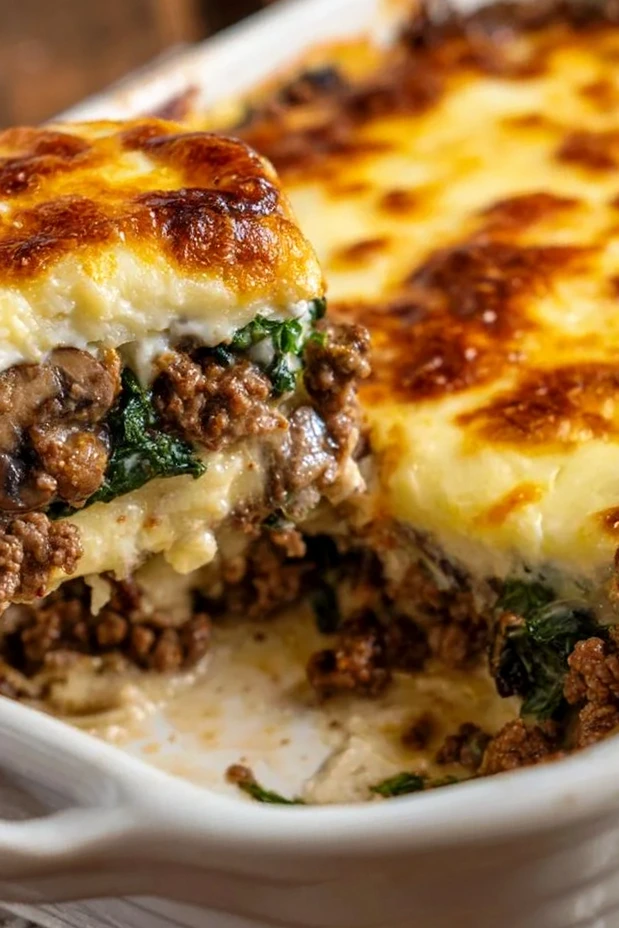
List of ingredients
- 1 lb ground beef – browned and thoroughly drained of all fat.
- 2 cups cremini mushrooms – sliced and dry-seared until golden brown.
- 1 cup cottage cheese – blended until completely smooth.
- 1 cup shredded Swiss cheese – freshly grated for the best melt.
- 1 tsp black pepper – freshly cracked for maximum flavor.
step-by-step instructions
- Brown the beef: Cook ground beef in a skillet over medium heat until fully browned, then drain every drop of excess fat to prevent a soggy base.
- Sear the mushrooms: Place sliced cremini mushrooms in a hot, dry pan without oil and sauté until they shrink and turn brown.
- Mix the filling: In a large mixing bowl, combine the drained beef, dry-seared mushrooms, smooth blended cottage cheese, and black pepper.
- Assemble the dish: Transfer the meat mixture into a baking dish and spread it evenly, then top with the shredded Swiss cheese.
- Bake: Place in a preheated oven at 375°F for 15 minutes or until the cheese is melted and bubbling.
Mastering the Searing Process
Use High Heat for Dry-Searing Mushrooms
Dry-searing involves cooking mushrooms in a pan without any oil or butter. Start with a very hot pan so the mushrooms release their moisture quickly through evaporation. Once the water is gone, the mushrooms will brown in their own natural sugars, concentrating the earthy flavor.
Manage Beef Fat for Optimal Texture
Excess grease can pool at the bottom of the casserole, creating an oily texture. After browning the beef, tilt the pan and use a spoon to push the meat to one side, draining the fat into a container. For the cleanest result, let the beef rest on paper towels for a few minutes before mixing.
Achieve a Smooth Cottage Cheese Base
To remove the characteristic curds of cottage cheese, use a blender or food processor. Pulse the cheese until it reaches a consistency similar to ricotta or heavy cream. This creates a seamless sauce that binds the beef and mushrooms without leaving lumps in the dish.
Select the Right Pan for Browning
A cast iron skillet is ideal for both browning beef and searing mushrooms because it retains high heat. If you do not have cast iron, a stainless steel pan works well for creating a deep sear. Avoid non-stick pans if you want maximum browning, as they often don’t reach the same searing temperatures.
Ingredient Variations and Substitutions
Swap Beef for Ground Turkey or Chicken
For a leaner version of this meal, replace the ground beef with ground turkey or chicken. Since these meats are lower in fat, you may need to add a teaspoon of olive oil to the pan to prevent sticking. Add an extra pinch of black pepper to enhance the milder flavor of the poultry.
Replace Cremini with Baby Bella or Portobello
Baby bella mushrooms are nearly identical to creminis and can be used interchangeably. For a bolder, meatier taste, use chopped portobello mushrooms. Portobellos have a larger structure, so ensure they are diced into smaller pieces to match the size of the ground beef.
Use Gruyere instead of Swiss Cheese
Gruyere is a fantastic substitute for Swiss cheese if you prefer a nuttier, richer flavor profile. It melts exceptionally well and adds a sophisticated depth to the casserole. Because Gruyere is saltier than Swiss, you may want to taste the mixture before adding extra seasoning.
Ricotta as an Alternative to Cottage Cheese
If cottage cheese is unavailable, whole-milk ricotta is the best substitute. Ricotta is naturally smoother, so blending is optional, though it may result in a slightly denser casserole. The flavor is milder, which allows the Swiss cheese and mushrooms to stand out more.
Add Fresh Herbs for Extra Flavor
Stirring in fresh herbs can elevate the savory profile of the beef mixture. Freshly chopped parsley, thyme, or rosemary pair well with the earthiness of the mushrooms. Add these herbs during the mixing stage just before the casserole goes into the oven.
Serving and Pairing Suggestions
Complement with Roasted Asparagus
The richness of the cheese and beef pairs perfectly with the brightness of roasted asparagus. Toss asparagus spears in olive oil, minced garlic, and a pinch of salt. Roast them at 400°F for 10 to 12 minutes while the casserole is finishing in the oven.
Pair with a Zesty Arugula Salad
A fresh green salad helps cut through the density of the casserole. Use baby arugula tossed with a simple lemon vinaigrette made of fresh lemon juice, olive oil, and a touch of Dijon mustard. The acidity of the lemon balances the creaminess of the blended cottage cheese.
Serve with Toasted Garlic Baguette
Warm garlic bread is ideal for scooping up the melted Swiss cheese. Slice a French baguette, spread with a mixture of softened butter and crushed garlic, and toast until golden. This adds a crunchy textural contrast to the soft casserole.
Add a Side of Steamed Broccoli
For a nutrient-dense meal, serve the casserole alongside steamed broccoli florets. Steam them for 5 to 7 minutes until tender-crisp. A light squeeze of lemon juice over the broccoli enhances the overall freshness of the dinner plate.
Storage and Preservation Guide
Proper Refrigeration for Freshness
Allow the casserole to cool completely to room temperature before storing it to prevent excess condensation. Place the portions in airtight glass containers to maintain the quality of the cheese. The dish will remain fresh and safe to eat for up to 3 days in the refrigerator.
Freezer-Safe Assembly Method
This recipe is excellent for meal prep if you assemble it without baking. Mix the cooked beef, mushrooms, and cottage cheese, then transfer to a freezer-safe dish. Wrap tightly in foil and freeze for up to 2 months, thawing in the fridge overnight before adding fresh cheese and baking.
Prevent Condensation During Storage
When storing leftovers, avoid closing the lid while the food is still warm. Trapped steam turns into water droplets, which can make the cheese rubbery and the meat soggy. Let the dish sit uncovered for about 30 minutes before sealing the container.
Reheating and Texture Recovery
Restore Cheese Melt in the Oven
To get the cheese bubbling again, reheat individual portions in a 350°F oven. Cover the dish with foil for the first 5 minutes to heat the interior, then remove the foil for 5 more minutes to crisp the top. This method preserves the original texture better than any other.
Use an Air Fryer for Crisp Edges
An air fryer is an efficient way to reheat a slice of casserole while keeping the edges crisp. Heat at 320°F for about 3 to 5 minutes. This quickly melts the Swiss cheese and prevents the beef from drying out.
Avoid Microwave Overheating
Microwaving this casserole can lead to rubbery Swiss cheese and uneven heating. If you must use a microwave, use a medium power setting and heat in 30-second intervals. Stirring the center gently can help distribute the heat more evenly.
Troubleshooting the Casserole
Resolve Watery Consistency
If your casserole appears watery, it is usually due to insufficient draining of the beef or mushrooms. Ensure you use a dry pan for the mushrooms to evaporate all moisture. In future batches, you can add a tablespoon of breadcrumbs to the mix to absorb extra liquid.
Fix Under-Browned Cheese
If the Swiss cheese has melted but lacks a golden color, use the broiler setting. Turn your oven to broil for the last 60 to 90 seconds of cooking. Watch the cheese closely, as it can go from golden to burnt very quickly under direct heat.
Adjust Salt and Pepper Balance
Since Swiss cheese and cottage cheese both contain sodium, be careful with added salt. Always taste the meat and cheese mixture before adding it to the baking dish. If the dish tastes flat, a small amount of extra black pepper or a dash of Worcestershire sauce can deepen the flavor.
Frequently Asked Questions
Can I freeze this casserole?
Yes, you can freeze it. Assemble the components without baking, wrap the dish tightly in aluminum foil, and store in the freezer for up to 2 months. Thaw it completely in the refrigerator before baking as directed.
What is the best mushroom substitute?
If you do not like mushrooms, diced zucchini is a great alternative. Be sure to salt the zucchini and drain the excess water before sautéing. Caramelized onions also provide a similar savory depth and sweetness.
Can I use ricotta instead of cottage cheese?
You can use ricotta, but be aware that the texture will be denser and heavier. To mimic the lightness of cottage cheese, you can whisk the ricotta with a splash of milk or cream before mixing it with the beef.
Why dry-sear the mushrooms?
Dry-searing removes the water content from the mushrooms and prevents them from steaming. This ensures the casserole remains thick and creamy rather than becoming watery or soggy during the baking process.
Print
Savory Cottage Cheese Mushroom Swiss Burger Casserole
- Total Time: 35 minutes
- Yield: 4 servings 1x
- Diet: Low Lactose
Description
A hearty casserole combining ground beef, mushrooms, and Swiss cheese for a comforting meal.
Ingredients
- 1 lb ground beef
- 2 cups cremini mushrooms
- 1 cup cottage cheese
- 1 cup shredded Swiss cheese
- 1 tsp black pepper
Instructions
- Step 1: In a skillet, brown the ground beef over medium heat until fully cooked, then drain every drop of fat.
- Step 2: In another skillet, add the cremini mushrooms and sauté them in a hot, dry pan until they shrink and brown.
- Step 3: In a large mixing bowl, combine the browned beef, dry-seared mushrooms, blended cottage cheese, and black pepper.
- Step 4: Transfer the mixture to a baking dish and top it evenly with shredded Swiss cheese.
- Step 5: Bake in a preheated oven at 375°F for 15 minutes, or until the cheese is melted and bubbling.
Notes
Dry-searing mushrooms prevents a soggy casserole. Serve warm for best flavor.
- Prep Time: 10 minutes
- Cook Time: 25 minutes
- Category: Casserole
- Method: Baked
- Cuisine: American
Nutrition
- Serving Size: 1 serving
- Calories: 350 kcal
- Sugar: 2 g
- Sodium: 400 mg
- Fat: 20 g
- Saturated Fat: 9 g
- Unsaturated Fat: 8 g
- Trans Fat: 1 g
- Carbohydrates: 5 g
- Fiber: 1 g
- Protein: 30 g
- Cholesterol: 80 mg