
This quick garlic butter pasta comes together in under 30 minutes. It is a simple yet flavorful dish that works perfectly as a side or a light main course for any night of the week.
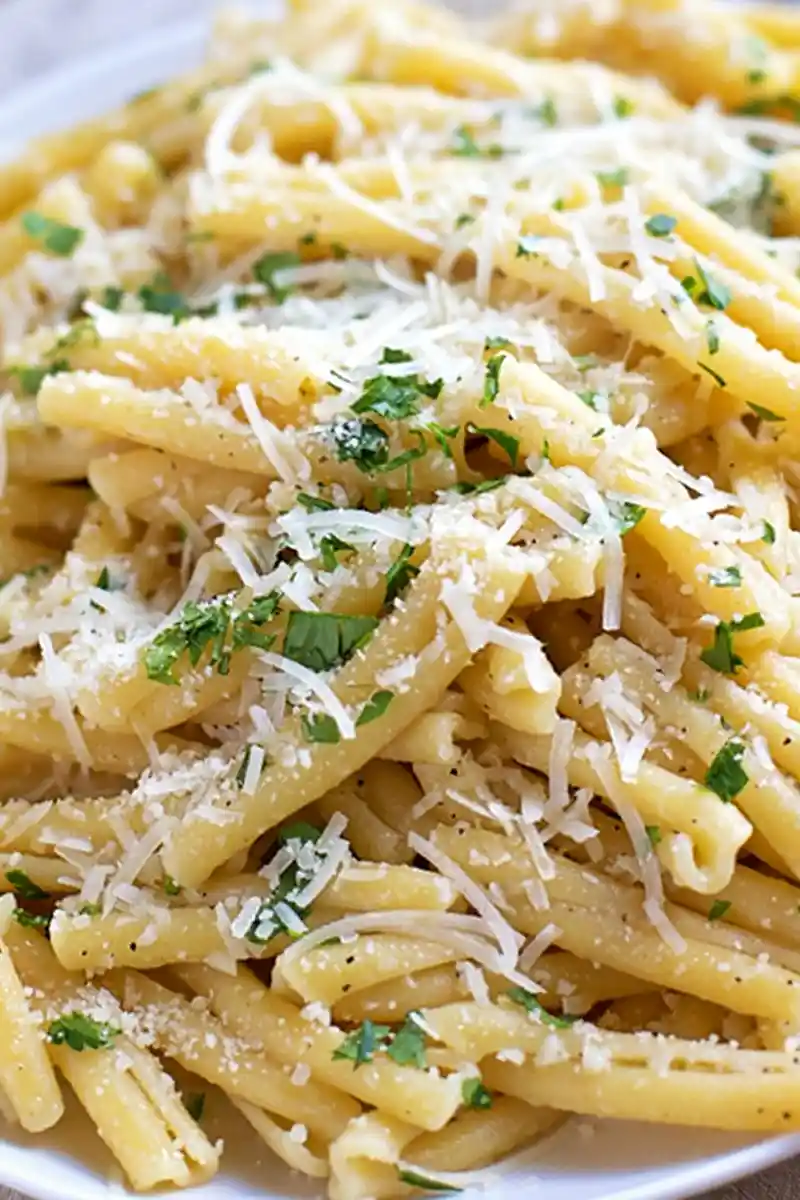
List of ingredients
- 1 lb pasta (whole wheat or regular) – the base of the dish.
- 6 tbsp unsalted butter (OR 1/3 c. olive oil) – for a rich, silky sauce.
- 8 cloves garlic (minced) – provides the primary aromatic flavor.
- 2 teaspoon salt – to season the sauce and pasta water.
- 1 tsp ground black pepper – adds a subtle spicy depth.
- 2 tbsp parmesan cheese (grated) – for a mild salty finish.
- 1/4 cup Parmigiano Reggiano cheese (grated) – adds a sharp, nutty richness.
- 1-2 tbsp fresh parsley (chopped (optional)) – for a touch of color and freshness.
step-by-step instructions
- Cook the pasta: In a large stockpot full of salted water, cook pasta according to package instructions.
- Prepare the garlic butter: Meanwhile, in a small saucepan set over medium-low heat, melt the butter. Once the butter has melted, add the minced garlic and sauté for about 5 minutes or until translucent and fragrant. Do not brown the garlic! Add the salt and pepper and remove from the heat.
- Combine and serve: Drain the pasta, and return to the large stockpot. Pour the garlic-butter sauce over top, and stir to combine. Allow the pasta to rest for 3-4 minutes so that it can absorb some of the sauce. Serve and garnish with cheese and parsley (if desired).
Optimal Pasta Selections
Whole Wheat Pasta
Whole wheat pasta provides a nuttier flavor and a denser texture than white pasta. It increases the fiber content of the meal, making it more filling. Ensure you cook it slightly longer if you prefer a softer bite.
Traditional Semolina Pasta
Standard white pasta made from durum wheat semolina offers a classic, neutral taste. It absorbs the butter sauce efficiently and maintains a smooth texture. This is the best choice for those who want the garlic flavor to be the star.
Egg Noodles
Egg noodles add a rich, velvety quality to the dish due to the fat in the eggs. They tend to be softer and more porous, which allows them to soak up the garlic butter quickly. These are excellent for a more comforting, home-style feel.
Brown Rice Pasta
For a gluten-free alternative, brown rice pasta is a reliable choice. It has a similar structure to wheat pasta but requires careful timing to avoid becoming mushy. Always rinse the pasta after cooking to remove excess starch.
Chickpea Pasta
Chickpea pasta significantly boosts the protein content of this dish. It has a slightly grainier texture and a distinct legume flavor. It pairs well with the sharpness of Parmigiano Reggiano cheese.
Spaghetti and Linguine
Long, thin noodles like spaghetti or linguine provide a large surface area for the sauce to cling to. These shapes are traditional for butter-based sauces. They allow for a consistent distribution of garlic in every bite.
Garlic Preparation and Cooking Techniques
The Flat-Knife Mincing Method
Place a garlic clove on a cutting board and press down firmly with the flat side of a chef’s knife. This action cracks the skin and crushes the clove, making it easy to peel. Once peeled, you can mince the garlic into fine, uniform pieces.
Utilizing a Garlic Press
A garlic press is ideal for those who prefer a more intense garlic flavor. Pressing the clove releases more oils and creates a paste-like consistency. This allows the garlic to integrate more seamlessly into the melted butter.
Maintaining Medium-Low Heat
Keeping the heat at medium-low prevents the butter from burning and the garlic from scorching. High heat can make garlic bitter and ruin the sauce. Slow sautéing allows the aromatic compounds to develop fully.
Identifying Translucent Garlic
Sauté the garlic until it becomes translucent, meaning it looks slightly clear and soft. This indicates that the raw bite has vanished and the flavor has mellowed. This process typically takes about 5 minutes.
Avoiding Bitter Burnt Garlic
Garlic turns brown very quickly once it reaches a certain temperature. If the garlic develops brown edges, it often takes on a bitter, acrid taste. Remove the pan from the heat immediately once the fragrance is strong.
Fresh vs. Pre-minced Garlic
Freshly minced garlic provides a pungent, bright flavor that cannot be matched by jarred versions. Jarred garlic often contains preservatives that alter the taste and smell. For the best result, always peel and chop fresh cloves.
Selecting the Right Cheeses
The Role of Parmigiano Reggiano
Parmigiano Reggiano is a protected designation of origin cheese with a sharp, salty, and nutty profile. It provides a sophisticated depth to the noodles. Use a fine grater to ensure it melts evenly into the butter.
Using Standard Parmesan
Common Parmesan is usually milder and slightly creamier than the Reggiano variety. It serves as a great base for adding saltiness without overpowering other ingredients. It is often more accessible and budget-friendly.
Adding Pecorino Romano
Pecorino Romano is a sheep’s milk cheese that is significantly saltier than cow’s milk cheeses. If you use Pecorino, consider reducing the added salt in the recipe. It adds a tangy, bold punch to the garlic sauce.
Incorporating Ricotta Salata
Ricotta Salata is a pressed, salted cheese that does not melt as completely as Parmesan. It can be crumbled on top for added texture and salty bursts. This is a great option for those who prefer a chunky garnish.
Vegan Parmesan Substitutes
For a plant-based version, use a blend of nutritional yeast, ground cashews, and salt. This mixture mimics the umami and saltiness of traditional hard cheeses. It blends well with the olive oil alternative mentioned in the ingredients.
Grating Your Own Cheese
Always grate cheese from a block rather than using pre-shredded options. Pre-shredded cheeses are coated in cornstarch or cellulose to prevent clumping. Freshly grated cheese melts much more smoothly into the hot pasta.
Vegetable Pairing Suggestions
Steamed Broccoli Florets
Steamed broccoli adds a fresh, earthy contrast to the rich butter sauce. Toss the florets in at the very end so they remain vibrant green. The gaps in the broccoli head capture the garlic butter perfectly.
Sautéed Baby Spinach
Baby spinach wilts quickly and can be stirred directly into the hot pasta. It adds a mild sweetness and a boost of iron to the meal. Spinach blends seamlessly with the garlic and parmesan flavors.
Roasted Cauliflower
Small roasted cauliflower pieces provide a caramelized flavor that complements the sautéed garlic. Roast them separately and fold them in before serving. This adds a hearty, meaty texture to the dish.
Sautéed Mushrooms
Mushrooms like cremini or shiitake add a deep, savory umami quality. Sauté them in a bit of butter before adding the garlic. They make the pasta feel like a more substantial main course.
Sliced Zucchini
Thinly sliced zucchini rounds can be sautéed until golden brown. They add a light, summery feel to the noodles. Zucchini works well if you are looking to increase the volume of the meal without adding many calories.
Frozen Peas
Frozen peas can be added to the boiling pasta water during the last two minutes of cooking. They provide a pop of sweetness and color. This is the fastest way to add a vegetable to the dish.
Protein Addition Ideas
Pan-Seared Chicken Breast
Sliced grilled chicken breast is a classic pairing for garlic butter pasta. Season the chicken with salt and pepper to match the sauce. Lay the slices on top of the plated noodles for a professional presentation.
Garlic Butter Shrimp
Sauté shrimp in a separate pan with a bit of the garlic butter mixture. Shrimp cook quickly and their natural sweetness balances the salty cheese. This elevates the dish to a restaurant-style meal.
Grilled Tofu Cubes
Firm tofu cubes, pressed and pan-fried until crispy, are a great plant-based protein. The porous nature of tofu allows it to soak up the garlic butter. Season the tofu with a pinch of paprika for extra color.
Flaked Salmon
Roasted or pan-seared salmon fillets can be flaked into the pasta. The richness of the fish pairs exceptionally well with the lemon-like notes of fresh parsley. Ensure the salmon is cooked just until tender.
Sautéed Scallops
Sea scallops provide a luxurious addition to this simple pasta. Sear them on high heat for two minutes per side until a golden crust forms. Place them on top of the noodles to keep them from overcooking.
Hard-boiled Eggs
For a budget-friendly protein, sliced hard-boiled eggs add a creamy texture. The yolk blends with the butter sauce to create a thicker consistency. This is a common addition in some European pasta variations.
Mastering the Sauce Consistency
Saving Pasta Water
Before draining the pasta, reserve about a cup of the starchy cooking water. If the sauce seems too thick or isn’t clinging to the noodles, stir in a tablespoon of this water. The starch helps emulsify the butter and cheese.
Creating an Emulsion
Tossing the pasta vigorously with the butter sauce helps create a creamy emulsion. This process binds the fat from the butter with the moisture from the pasta. It results in a glossy coating rather than a greasy puddle.
Timing the Resting Period
Allowing the pasta to rest for 3-4 minutes is crucial for flavor absorption. During this time, the noodles soak up the garlic butter and salt. This ensures the flavor is inside the pasta, not just on the surface.
Balancing Butter and Oil
Using a mix of butter and olive oil can provide both flavor and a higher smoke point. Butter gives the rich taste, while olive oil helps the sauce remain stable. This prevents the butter from separating under high heat.
Preventing Sauce Separation
Avoid boiling the butter sauce once the garlic is added. Excessive heat can cause the butter to break into oil and milk solids. Keep the temperature low and remove from heat as soon as the garlic is fragrant.
Storage and Preservation
Air-Tight Container Storage
Store leftovers in a glass or plastic container with a tight-fitting lid. This prevents the pasta from absorbing odors from the refrigerator. It also keeps the butter sauce from drying out too quickly.
Refrigeration Timeline
Garlic butter noodles stay fresh in the refrigerator for up to three days. Beyond this point, the pasta may become too soft or the garlic flavor may fade. Always cool the pasta slightly before sealing the container.
Why Freezing is Discouraged
Freezing butter-based pasta often leads to a grainy texture upon thawing. The emulsion of the sauce breaks down, and the pasta can become mushy. It is better to make fresh batches or store them in the fridge.
Preventing Pasta Clumping
When storing, the noodles may stick together as the butter cools. Adding a tiny drizzle of olive oil before refrigerating can help keep them separate. This makes the reheating process much easier.
Proper Cooling Procedures
Do not leave the pasta at room temperature for more than two hours. Rapidly cool the dish by spreading it in a shallow container before refrigerating. This ensures food safety and maintains the quality of the butter.
Reheating Methods
The Skillet Method
Place the noodles in a large skillet over medium heat. Stir occasionally to distribute the heat evenly. This method allows you to evaporate any excess moisture and refresh the butter’s texture.
The Microwave Technique
Heat the pasta in a microwave-safe bowl covered with a damp paper towel. The towel traps steam, which prevents the noodles from drying out. Heat in 30-second intervals, stirring in between.
Adding Fresh Moisture
When reheating, add a splash of water, milk, or an extra knob of butter. This restores the creaminess of the sauce that was lost during refrigeration. It prevents the pasta from tasting dry or rubbery.
Monitoring Heat Levels
Avoid overheating the pasta during the reheating process. Overcooking already-cooked pasta makes it mushy and destroys the structure. Stop heating as soon as the center of the dish is warm.
Refreshing the Garnish
Add fresh parsley and a sprinkle of cheese after reheating. The heat of the microwave or skillet can dull the color of the herbs. Fresh garnishes bring back the visual appeal and bright flavor.
Common Troubleshooting
Fixing Dry Noodles
If the pasta looks dry after mixing, stir in a teaspoon of butter or pasta water. This restores the silky texture of the sauce. Do this while the pasta is still hot for the best integration.
Reducing Excess Salt
If the dish is too salty, add a splash of unsalted butter or more pasta. You can also add a squeeze of lemon juice to cut through the salt. The acidity balances the sodium and brightens the overall taste.
Correcting Bland Flavor
If the sauce lacks punch, add a pinch more salt or a grating of fresh Parmigiano Reggiano. A small amount of cracked black pepper can also wake up the flavors. Ensure the garlic was sautéed long enough to be fragrant.
Handling Overcooked Pasta
If the pasta is overcooked, avoid stirring it too vigorously. Rough handling will break the noodles into small pieces. Serve it immediately, as overcooked pasta continues to soften rapidly.
Fixing Garlic Clumps
If the garlic didn’t distribute evenly, stir the sauce more thoroughly before adding the pasta. You can also use a whisk to blend the melted butter and garlic. This ensures every noodle gets a bit of garlic.
Adjusting Sauce Thickness
To thicken the sauce, add more grated cheese and stir over low heat. The cheese acts as a thickener and creates a more cohesive coating. To thin it, use a small amount of warm water.
Frequently Asked Questions
Can I use garlic powder?
You can use garlic powder, but the flavor will be less intense and lack the aromatic depth of fresh garlic. Use about 1/2 teaspoon of powder for every 2 cloves of fresh garlic.
Which pasta shape is best?
Long noodles like spaghetti, linguine, or fettuccine are best for this sauce. However, shapes like penne or rotini also work well as they trap the butter in their ridges.
Is this recipe vegan?
The original recipe is not vegan, but you can make it vegan by using olive oil instead of butter and nutritional yeast instead of cheese. Use a plant-based pasta to complete the swap.
How do I prevent sticking?
Ensure you use plenty of salted water and stir the pasta occasionally during the first few minutes of boiling. Rinsing is not necessary unless you are using gluten-free pasta.
Can I use salted butter?
Yes, you can use salted butter, but you should reduce the added salt in the recipe. Taste the sauce before adding the 2 teaspoons of salt to avoid over-seasoning.
What are the best fresh herbs?
Parsley is the classic choice, but fresh basil or chives also work beautifully. Basil adds a peppery sweetness, while chives provide a mild onion-like flavor.
How do I store leftovers?
Store them in an airtight container in the fridge for up to 3 days. Do not freeze them, as the texture of the butter and pasta will degrade.
Can I add cream?
Adding a splash of heavy cream will turn this into a creamy garlic sauce. This makes the dish richer and more filling, similar to an Alfredo sauce.
Print
Savory Garlic Butter Pasta
- Total Time: 25 minutes
- Yield: 6 servings 1x
- Diet: Vegetarian
Description
You are going to fall in love with these quick and easy Garlic Butter Noodles! They are packed with flavor and come together in less than 30 minutes.
Ingredients
- 1 lb pasta (whole wheat or regular)
- 6 tbsp unsalted butter (OR 1/3 c. olive oil)
- 8 cloves garlic (minced)
- 2 teaspoon salt
- 1 tsp ground black pepper
- 2 tbsp microbial-rennet parmesan cheese (grated)
- 1/4 cup microbial-rennet Parmigiano Reggiano cheese (grated)
- 1–2 tbsp fresh parsley (chopped (optional))
Instructions
- Step: In a large stockpot full of salted water, cook pasta according to package instructions.
- Step: Meanwhile, in a small saucepan set over medium-low heat, melt the butter. Once the butter has melted, add the minced garlic and sauté for about 5 minutes or until translucent and fragrant. Do not brown the garlic! Add the salt and pepper and remove from the heat.
- Step: Drain the pasta, and return to the large stockpot. Pour the garlic-butter sauce over top, and stir to combine. Allow the pasta to rest for 3-4 minutes so that it can absorb some of the sauce. Serve and garnish with cheese and parsley (if desired).
Notes
Store in an airtight container in the refrigerator for up to 3 days. To reheat, place the noodles in a large skillet over medium heat, adding a small amount of water or extra butter to prevent them from drying out. Stir occasionally until heated through.
- Prep Time: 10 minutes
- Cook Time: 15 minutes
- Category: Main Course
- Method: Stovetop
- Cuisine: American
Nutrition
- Serving Size: 1 serving
- Calories: 411 kcal
- Sugar: 2 g
- Sodium: 876 mg
- Fat: 14 g
- Saturated Fat: 8 g
- Unsaturated Fat: 5 g
- Trans Fat: 0.5 g
- Carbohydrates: 58 g
- Fiber: 3 g
- Protein: 12 g
- Cholesterol: 34 mg