
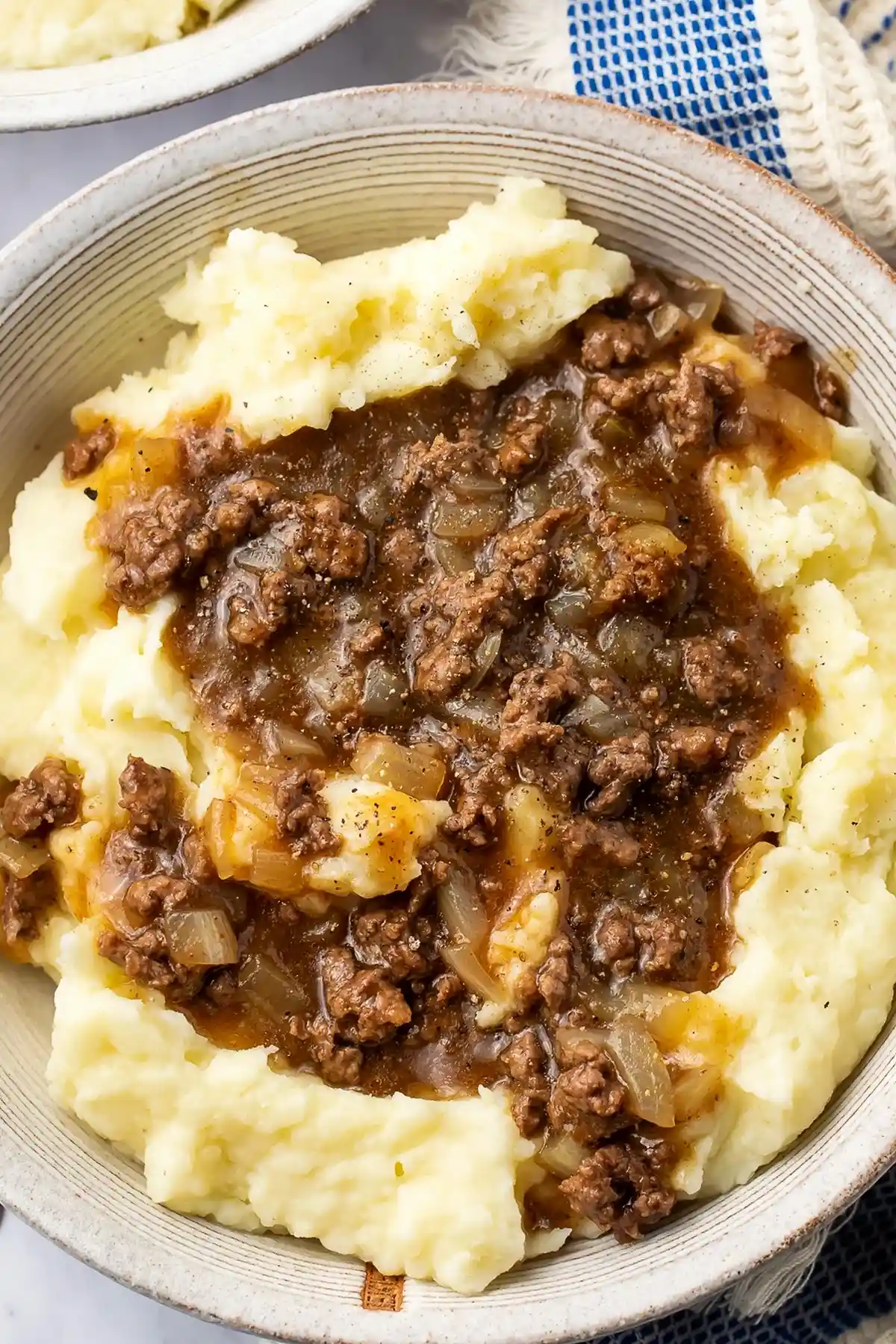
This hearty meal combines tender ground beef in a rich brown gravy served over a bed of fluffy mashed potatoes. It is a budget-friendly dinner that provides a filling and comforting experience for the whole family.
List of ingredients
- water – for boiling potatoes
- 1 tablespoon salt – for the potato boiling water, adjust to taste
- 2 pounds russet potatoes – peeled and cut into 1-inch pieces (Yukon gold also work well)
- 3 tablespoons butter – room temperature for smoother mixing
- ½ cup whole milk – room temperature to maintain potato heat
- ½ teaspoon garlic powder – for seasoning the potatoes
- salt – to taste for potatoes
- freshly cracked black pepper – to taste for potatoes
- 2 tablespoons cornstarch – for the gravy thickening slurry
- ¼ cup beef broth – for the cornstarch slurry, low-sodium optional
- 1 pound ground beef – standard lean or extra lean
- 1 ½ cups beef broth – for the main sauce, low-sodium optional
- ½ cup chopped white onion – approximately one small onion
- 1 teaspoon garlic powder – for seasoning the beef
- 1 teaspoon salt – for seasoning the beef, adjust to taste
- ¼-½ teaspoon freshly cracked black pepper – for the beef mixture
step-by-step instructions
- Prepare the potato water: Fill a medium pot with water, stir in 1 tablespoon of salt, and add the peeled, cubed potatoes. Place the pot over medium-high heat and bring to a rapid boil.
- Boil the potatoes: Once boiling, cook for 5 to 8 minutes. The potatoes are ready when they can be easily pierced with the tines of a fork.
- Warm the dairy: While the potatoes are boiling, combine 3 tablespoons of butter and ½ cup of whole milk in a small saucepan. Heat over medium heat, whisking occasionally, until the butter is completely melted.
- Mash the potatoes: Drain the potatoes thoroughly and place the pot on a cool burner. Use a potato masher or fork to mash to your preferred consistency, then gradually stir in the warm butter-milk mixture.
- Season the mash: Stir in ½ teaspoon of garlic powder, salt, and freshly cracked black pepper. Taste and adjust seasonings before setting the potatoes aside.
- Create the slurry: In a small bowl, whisk together 2 tablespoons of cornstarch and ¼ cup of beef broth until the mixture is smooth. Set this aside for later.
- Brown the beef: Heat a large skillet over medium heat and add 1 pound of ground beef. Cook and crumble the meat until it is no longer pink, then drain off any excess liquid or grease.
- Simmer the sauce: Stir 1 ½ cups of beef broth, ½ cup of chopped white onion, 1 teaspoon of garlic powder, 1 teaspoon of salt, and ¼-½ teaspoon of black pepper into the skillet. Simmer uncovered for 5 to 10 minutes until the onions become tender.
- Thicken the gravy: Slowly pour the cornstarch slurry into the skillet, whisking gently to incorporate. Increase the heat and bring the mixture to a boil, stirring constantly for 2 minutes until the gravy thickens.
- Assemble the dish: Scoop equal portions of mashed potatoes into serving bowls. Ladle the ground beef and gravy over the top and serve warm.
Mastering the Mashed Potatoes
Choosing the Right Potato Variety
Russet potatoes are the best choice for those who prefer a fluffy, light texture due to their high starch content. Yukon Gold potatoes offer a naturally buttery flavor and a creamier, smoother consistency. Red potatoes are waxier and hold their shape better, which may result in a denser mash.
Utilizing the Correct Mashing Tools
A standard potato masher is ideal for a rustic texture with some small lumps. For a completely smooth, professional result, use a potato ricer or a food mill to break down the potatoes. Avoid using a food processor or blender, as this overworks the starch and creates a gluey texture.
Importance of Ingredient Temperature
Using room temperature butter and milk prevents the mashed potatoes from cooling down too rapidly during the mixing process. Warming the dairy in a saucepan ensures the fat incorporates evenly into the potato starch. This technique results in a more cohesive and airy consistency.
Avoiding Overmixing
Stir the butter-milk mixture into the potatoes only until they are combined and smooth. Overworking the potatoes breaks down the starch molecules, which releases too much amylose. This leads to a sticky, gummy texture rather than a fluffy one.
Refining the Beef Gravy
Managing Ground Beef Fat
The amount of grease produced depends on the lean-to-fat ratio of your beef. If using 80/20 ground beef, it is essential to drain the skillet thoroughly after browning. This prevents the gravy from having an oily film on the surface.
Perfecting the Cornstarch Slurry
Always mix cornstarch with a cold or room temperature liquid before adding it to the hot skillet. Adding dry cornstarch directly to hot liquid often creates stubborn lumps that are difficult to whisk out. A smooth slurry ensures a glossy and uniform gravy.
Controlling Gravy Thickness
If the gravy is too thick after boiling, whisk in an additional tablespoon of beef broth at a time until the desired consistency is reached. If it remains too thin, simmer it uncovered for a few more minutes. You can also add a small amount of extra slurry if more thickening is needed.
Selecting the Best Beef Broth
Low-sodium beef broth allows you to control the salt levels more precisely, preventing the dish from becoming overly salty. For a deeper flavor, you can use a high-quality beef base dissolved in water. Homemade bone broth adds extra richness and nutrients to the sauce.
Flavor Variations and Substitutions
Alternative Protein Choices
Lean ground turkey or ground chicken can be used as a lighter substitute for beef. Since these meats are milder, consider adding an extra pinch of salt or a beef bouillon cube to the broth. This maintains the savory depth associated with the original recipe.
Adding Vegetable Components
Diced mushrooms can be added to the skillet along with the onions to create a flavor profile similar to beef stroganoff. Sliced carrots or frozen peas can also be stirred in during the simmering stage. These additions increase the nutritional value and add visual color to the dish.
Low Carb Base Alternatives
For those avoiding potatoes, mashed cauliflower is an excellent low-carb substitute. Steam cauliflower florets until tender, then blend with butter, garlic powder, and a splash of cream. The beef gravy pairs equally well with this vegetable-based alternative.
Using Pre-Made Gravy
If you are short on time, you can replace the homemade gravy components with two cans of store-bought beef gravy. Simply brown the beef and onions, then stir in the canned gravy and simmer until heated through. This significantly reduces the preparation time.
Serving and Pairing Ideas
Complementary Green Vegetables
Steamed broccoli or roasted asparagus provides a fresh, crisp contrast to the rich gravy and potatoes. Sautéed green beans with garlic or roasted Brussels sprouts are also excellent pairings. These vegetables help balance the heaviness of the meal.
Alternative Grain Bases
While mashed potatoes are traditional, this beef gravy is versatile and works well over other bases. Egg noodles or white rice are great options for soaking up the sauce. Some prefer serving the mixture over toasted thick-cut bread for an open-faced sandwich style.
Suggested Garnishes
A sprinkle of freshly chopped parsley or chives adds a pop of color and a mild onion flavor. A pinch of smoked paprika can be dusted on top for a subtle smoky note. For extra richness, a small dollop of sour cream on the potatoes works well.
Storage and Make-Ahead Strategies
Refrigerator Storage Guidelines
Store the mashed potatoes and the beef gravy in separate airtight containers in the refrigerator. This prevents the potatoes from absorbing too much liquid from the gravy and becoming watery. Both components stay fresh for up to 3 to 4 days.
Freezing the Beef Gravy
The ground beef and gravy freeze exceptionally well for up to 3 months. Allow the mixture to cool completely before transferring it to a freezer-safe container or freezer bag. Be sure to leave a small amount of space at the top for expansion.
Handling Mashed Potatoes for Storage
Mashed potatoes do not freeze as well as the gravy, as they often become grainy or watery upon thawing. It is best to make the potatoes fresh. However, you can make them a few hours early and keep them warm in a slow cooker on the low setting.
Reheating Best Practices
Stovetop Reheating Method
Reheat the beef gravy in a skillet over medium-low heat, adding a splash of broth if the sauce has thickened too much in the fridge. Warm the potatoes in a small pot with a tablespoon of milk or butter. Stir gently to avoid overworking the starch.
Microwave Reheating Tips
Place the potatoes and gravy in microwave-safe bowls and cover them with a damp paper towel to retain moisture. Heat in 1-minute intervals, stirring in between. This ensures even heating and prevents the edges from drying out.
Oven Reheating for Large Batches
For family-style serving, place the mashed potatoes in a baking dish and top with the beef gravy. Cover the dish with foil and bake at 325 degrees F until heated through. This method is ideal for keeping the meal warm while preparing side dishes.
Troubleshooting Common Issues
Fixing Lumpy Gravy
If the gravy has lumps, you can pass it through a fine-mesh strainer before serving. Alternatively, use an immersion blender for a few seconds to emulsify the sauce. To prevent this in the future, ensure the cornstarch slurry is completely smooth before adding it to the pan.
Resolving Gluey Potatoes
If your potatoes have become gummy, it is likely due to overmixing. While you cannot fully reverse this, stirring in a small amount of warm cream or butter can help improve the mouthfeel. In the future, use a ricer and fold in liquids gently.
Adjusting Bland Flavor
If the dish tastes flat, add a small amount of Worcestershire sauce or a pinch of sugar to the gravy. These ingredients enhance the savory notes of the beef. For the potatoes, a small amount of extra salt or a dash of white pepper can brighten the flavor.
Correcting Watery Gravy
Watery gravy usually results from not boiling the mixture long enough after adding the slurry. Bring the skillet back to a boil and stir constantly for another 2 minutes. If it remains thin, whisk in a tiny bit more cornstarch mixed with cold water.
Frequently Asked Questions
Can I use frozen ground beef?
Yes, you can use frozen ground beef by placing it directly in the skillet. Flip the meat periodically and break it apart as it thaws and browns. The cooking time may increase slightly, but the final result is the same.
What is the best way to peel potatoes quickly?
Using a Y-shaped vegetable peeler is generally the fastest and most efficient method. For very thin skins, you can boil the potatoes with the skins on and then slip the skins off under cold water after draining.
Can I replace the milk with a non-dairy option?
Yes, unsweetened almond milk, soy milk, or cashew milk can be used as substitutes. For a creamier texture, use full-fat coconut milk or a dairy-free heavy cream. Ensure the substitute is unsweetened to avoid altering the savory flavor.
How do I know when the onions are tender?
Onions are tender when they become translucent and slightly soft. They should not be browned or caramelized for this specific recipe, as the goal is a soft texture that blends into the gravy.
Print
Savory Ground Beef and Gravy over Creamy Mashed Potatoes
- Total Time: 45 minutes
- Yield: 4 servings 1x
- Diet: General
Description
Quick, easy, and super budget-friendly, this satisfying recipe has been passed down through generations of my family. It’s the epitome of comfort food!
Ingredients
- water
- 1 tablespoon salt
- 2 pounds russet potatoes
- 3 tablespoons butter
- ½ cup whole milk
- ½ teaspoon garlic powder
- salt to taste
- freshly cracked black pepper to taste
- 2 tablespoons cornstarch
- ¼ cup beef broth
- 1 pound ground beef
- 1 ½ cups beef broth
- ½ cup chopped white onion
- 1 teaspoon garlic powder
- 1 teaspoon salt
- ¼–½ teaspoon freshly cracked black pepper
Instructions
- Potatoes: Fill medium pot with water, add 1 tablespoon salt, and stir.
- Potatoes: Add 2 pounds russet potatoes and boil over medium-high heat for 5 to 8 minutes until fork-tender.
- Potatoes: Heat 3 tablespoons butter and ½ cup whole milk in a small saucepan over medium heat until butter is melted.
- Potatoes: Drain potatoes, mash to desired consistency, and gradually stir in the butter-milk mixture.
- Potatoes: Season with ½ teaspoon garlic powder, salt, and freshly cracked black pepper.
- Gravy Base: Whisk 2 tablespoons cornstarch and ¼ cup beef broth in a small bowl until smooth.
- Beef: Heat large skillet over medium heat and cook 1 pound ground beef until no longer pink, then drain.
- Beef: Add 1 ½ cups beef broth, ½ cup chopped white onion, 1 teaspoon garlic powder, 1 teaspoon salt, and ¼-½ teaspoon freshly cracked black pepper.
- Beef: Simmer uncovered 5 to 10 minutes or until onion is tender.
- Gravy: Slowly whisk in cornstarch mixture and increase heat to bring to a boil.
- Gravy: Cook, stirring constantly, for 2 minutes until the liquid has thickened.
- Serve: Divide mashed potatoes between bowls and top with ground beef and gravy.
Notes
For a lighter version, use lean ground beef or ground turkey. For convenience, instant mashed potatoes or canned beef gravy can be used.
- Prep Time: 15 minutes
- Cook Time: 30 minutes
- Category: Main Course
- Method: Stovetop
- Cuisine: American
Nutrition
- Serving Size: 1 serving
- Calories: 507 kcal
- Sugar: 4 g
- Sodium: 2883 mg
- Fat: 21 g
- Saturated Fat: 11 g
- Unsaturated Fat: 10 g
- Trans Fat: 1 g
- Carbohydrates: 49 g
- Fiber: 3 g
- Protein: 30 g
- Cholesterol: 100 mg