
This Mongolian Ground Beef Noodles recipe is a fast and flavorful dinner option for busy weeknights. It combines savory beef and tender noodles in a rich, sweet-and-salty sauce that mimics takeout flavors.
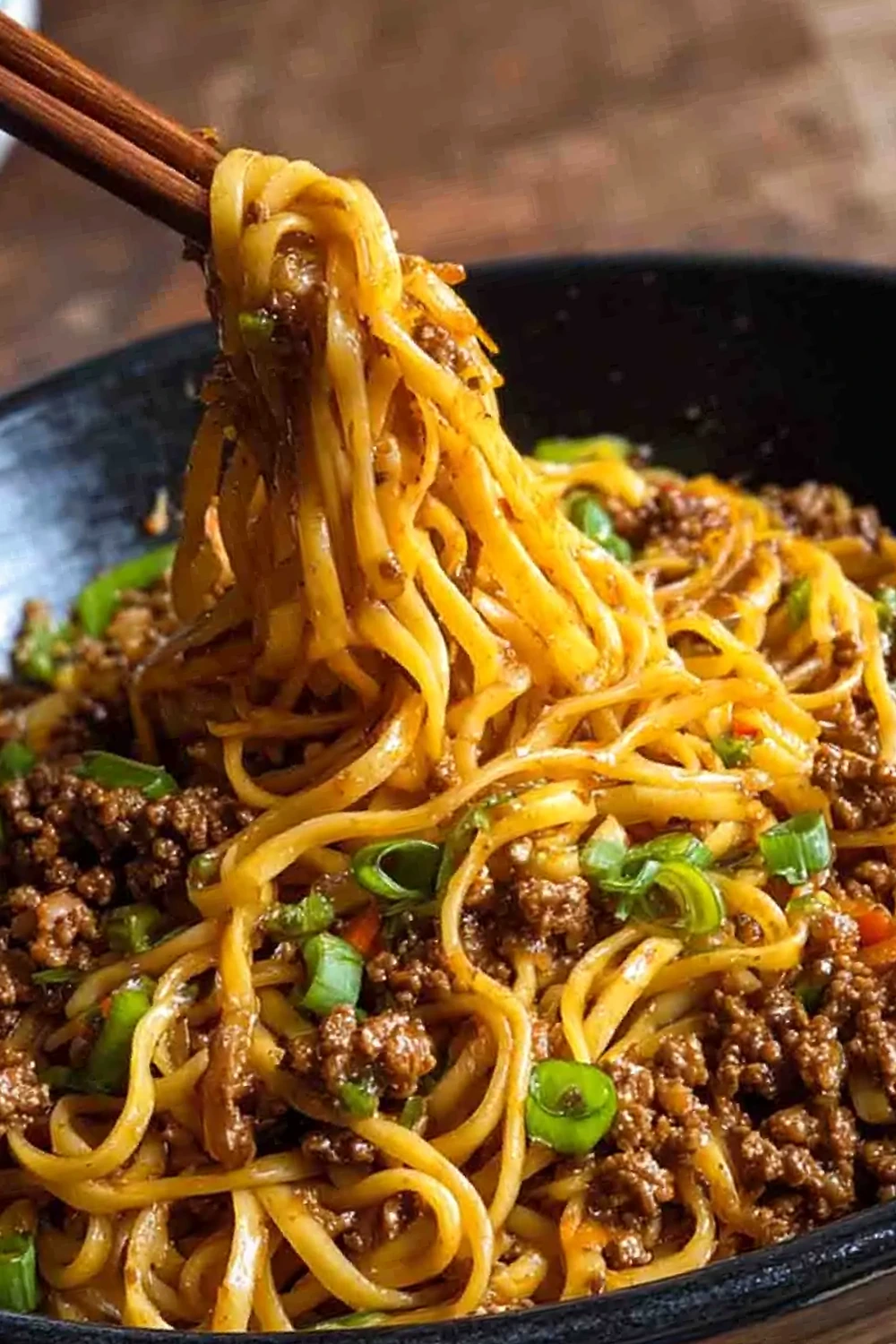
List of ingredients
- 8 oz lo mein noodles – provides the base texture.
- 1 lb lean ground beef – the primary protein source.
- 3 cloves garlic, minced – for aromatic depth.
- 1 tablespoon fresh ginger, grated – adds a zesty punch.
- 1/3 cup low sodium soy sauce – provides saltiness and color.
- 1/4 cup brown sugar – balances the salt with sweetness.
- 2 tablespoons hoisin sauce – adds thick, umami flavor.
- 1 tablespoon sesame oil – provides a toasted, nutty aroma.
- 1/2 cup water – used to thin the initial sauce.
- 1 tablespoon cornstarch – the thickening agent.
- 2 tablespoons water – used specifically for the cornstarch slurry.
- 1/2 teaspoon red pepper flakes – optional, for a hint of heat.
- 1/2 cup sliced green onions – used for garnish and freshness.
- 1 cup broccoli florets – optional vegetable addition.
- 1/2 cup shredded carrots – optional vegetable addition.
- 1 bell pepper, sliced – optional vegetable addition.
- Salt – for seasoning the noodle boiling water.
step-by-step instructions
- Boil the noodles: Bring a large pot of salted water to a boil. Cook the lo mein noodles according to the package instructions, then drain and set them aside.
- Brown the beef: Heat a large skillet over medium-high heat. Add the ground beef and cook until browned, breaking it into small pieces with a spoon. Drain any excess grease from the pan if necessary.
- Sauté aromatics: Add the minced garlic and grated ginger to the beef. Cook for 1 to 2 minutes, stirring constantly to ensure the garlic does not burn.
- Whisk the sauce: In a medium bowl, combine the soy sauce, brown sugar, hoisin sauce, sesame oil, and 1/2 cup of water. Whisk until the sugar is mostly dissolved.
- Simmer the sauce: Pour the prepared sauce mixture into the skillet with the beef. Bring the liquid to a gentle simmer over medium heat.
- Thicken the glaze: Mix the cornstarch with 2 tablespoons of water in a small bowl to create a slurry. Stir the slurry into the simmering sauce and cook until it thickens and appears glossy.
- Add vegetables: If using broccoli, carrots, or bell pepper, add them to the skillet now. Cook for 2 to 3 minutes until they are just tender but still have a slight crunch.
- Combine noodles: Add the cooked noodles to the skillet. Toss thoroughly until every strand is fully coated in the savory sauce.
- Final cook: Continue to cook for 1 to 2 more minutes. This allows the noodles to absorb some of the sauce for deeper flavor.
- Garnish and serve: Top the dish with sliced green onions and serve immediately while hot.
Choosing the Right Noodle Base
Lo Mein Noodles for Authentic Texture
Lo mein noodles are the ideal choice for this recipe because they are thick and slightly chewy. Their surface area allows the thick Mongolian sauce to cling to each strand effectively. You can find these in the refrigerated or frozen section of most Asian grocery stores.
Spaghetti as a Convenient Pantry Alternative
If you cannot find lo mein, standard spaghetti is a reliable substitute. It has a similar thickness and holds up well under the weight of the ground beef. Be sure to cook it al dente so it does not become mushy during the final tossing stage.
Ramen Noodles for a Faster Version
Ramen noodles offer a springy texture and cook much faster than other varieties. If using these, discard the flavor packet and boil them for only 2 minutes. This prevents them from overcooking when they hit the hot skillet.
Rice Noodles for Gluten-Free Requirements
Wide rice noodles are an excellent option for those avoiding gluten. Because they are more delicate, you should soak them according to the package and add them to the pan at the very last second. This ensures they maintain their integrity without breaking.
Zucchini Noodles for Low-Carb Diets
Zucchini noodles, or zoodles, significantly reduce the calorie count of the meal. Since they release a lot of water, sauté them separately first or add them to the pan for only 60 seconds. Overcooking zoodles will result in a watery sauce.
Shirataki Noodles for Keto Options
Shirataki noodles are virtually calorie-free and very firm. Rinse them thoroughly under cold water to remove the natural scent before adding them to the beef. They do not absorb sauce as well, so let them simmer in the glaze for an extra minute.
Pro Techniques for Superior Results
Use a Large Skillet for Maximum Browning
A wide skillet provides more surface area, which allows the ground beef to brown rather than steam in its own juices. This browning, known as the Maillard reaction, creates a deeper, more savory flavor. Avoid overcrowding the pan to keep the heat consistent.
Boil Noodles Al Dente to Prevent Mushiness
Always undercook your noodles by one or two minutes relative to the package directions. The noodles will continue to cook and soften as they simmer in the sauce at the end. This technique ensures a firm, pleasant bite in the final dish.
Sauté Aromatics Quickly to Avoid Burning
Garlic and ginger can turn bitter if they are overheated or burnt. Add them only after the beef is fully browned and cook them for a very short window. Constant stirring is essential to distribute the flavor without scorching the garlic.
Incorporate the Slurry Slowly for a Glossy Finish
Adding the cornstarch slurry gradually prevents clumps from forming in the sauce. Stir continuously as the mixture bubbles to ensure a smooth, professional-looking glaze. The glossy finish is a hallmark of high-quality stir-fry dishes.
Flavor and Ingredient Variations
Adding Heat with Spicy Additions
To increase the spice level, add 1-2 teaspoons of sriracha or chili garlic sauce to the sauce whisking stage. You can also increase the red pepper flakes or drizzle chili oil over the finished dish. This adds a sharp contrast to the sweetness of the brown sugar.
Swapping Beef for Leaner Proteins
Ground turkey or ground chicken are excellent substitutes for those seeking a leaner meal. These proteins have a milder taste, so you may want to add an extra teaspoon of soy sauce. Follow the same browning process as you would with beef.
Creating a Plant-Based Version
Replace the ground beef with firm crumbled tofu or plant-based meat alternatives. Mushrooms, specifically shiitake or cremini, also provide a meaty texture and rich umami flavor. Sauté the mushrooms until all moisture has evaporated before adding the sauce.
Balancing Sweetness and Saltiness
If the sauce feels too sweet, stir in a teaspoon of rice vinegar or a squeeze of lime juice. The acidity cuts through the brown sugar and hoisin, creating a more balanced profile. Conversely, add a splash more soy sauce if you prefer a saltier taste.
Optimal Vegetable Pairings
Including Broccoli for Crunch
Broccoli florets add a necessary crunch and nutritional value to the meal. Cut them into small, bite-sized pieces so they cook through quickly in the pan. They absorb the Mongolian sauce beautifully, especially in the crevices of the florets.
Adding Sliced Bell Peppers for Color
Red and yellow bell peppers provide a vibrant look and a mild sweetness. Slice them into thin strips to ensure they cook in the same amount of time as the other vegetables. They add a fresh, crisp element that lightens the richness of the beef.
Shredded Carrots for Natural Sweetness
Carrots add a subtle sweetness and a bright orange hue to the dish. Shredded carrots cook almost instantly, so they can be added along with the noodles. They provide a textural contrast to the soft noodles and tender beef.
Snap Peas and Bok Choy for Freshness
Sugar snap peas and baby bok choy are traditional stir-fry ingredients that pair well with this sauce. Add them during the last 3 minutes of cooking to keep them vibrant green. These vegetables add a refreshing, watery snap to the hearty beef.
Comprehensive Storage and Reheating Guide
Proper Refrigeration Techniques
Store the leftovers in an airtight container to prevent the noodles from drying out. The beef and sauce will keep well in the refrigerator for up to 3 to 4 days. Allow the dish to cool slightly before sealing the lid to avoid excessive condensation.
Effective Freezer Storage Methods
If freezing, it is best to undercook the noodles even further than usual. Divide the meal into individual portions and freeze for up to 2 months. Thaw the portions in the fridge overnight before reheating to maintain the best possible texture.
Restoring Texture in a Skillet
The best way to reheat these noodles is in a skillet over medium heat. Add a small splash of water or soy sauce to loosen the thickened glaze. Stir frequently until the beef is heated through and the sauce becomes glossy again.
Quick Microwave Reheating Tips
When using a microwave, place the noodles in a bowl and sprinkle a tablespoon of water over the top. Cover the bowl with a damp paper towel to trap steam. Stir the noodles halfway through the heating process to ensure there are no cold spots.
Common Cooking Troubleshooting
Fixing a Sauce That Is Too Thin
If the sauce has not thickened enough, mix an additional teaspoon of cornstarch with a teaspoon of water. Stir this second slurry into the boiling sauce and let it simmer for one minute. This will quickly tighten the glaze and help it coat the noodles.
Balancing a Sauce That Is Too Sweet
An overpowering sweetness usually comes from too much brown sugar or hoisin. To fix this, add a small amount of low-sodium soy sauce or a pinch of salt. A teaspoon of apple cider vinegar can also neutralize the sugar without altering the flavor too much.
Preventing Noodles from Sticking Together
Once the noodles are drained, toss them with a teaspoon of sesame oil or vegetable oil. This creates a barrier that prevents them from clumping while you prepare the beef. This step is especially important if you are prepping the noodles in advance.
Managing Excess Grease from Beef
Depending on the fat content of your beef, there may be a lot of oil in the pan after browning. Use a spoon to remove the excess fat or pat the beef with paper towels. Removing the grease ensures the sauce emulsifies properly and doesn’t become oily.
Frequently Asked Questions
Can I use a different soy sauce?
Yes, you can use tamari for a gluten-free option or coconut aminos for a lower-sodium, soy-free alternative. Tamari is slightly richer, while coconut aminos are sweeter, so you may need to reduce the brown sugar slightly.
What is the best substitute for hoisin sauce?
A mixture of equal parts soy sauce, honey, and a pinch of five-spice powder can mimic hoisin. Alternatively, a small amount of plum sauce mixed with soy sauce provides a similar sweet-and-savory profile.
How can I make the beef more tender?
Since this recipe uses ground beef, tenderness is usually high. However, ensuring you do not overcook the beef beyond the browning stage prevents it from becoming grainy or tough. Use a medium-high heat and move the meat quickly.
Can I cook the vegetables separately?
Yes, you can steam or sauté the vegetables in a separate pan and stir them in at the end. This is a great method if you prefer your vegetables to have a very specific level of crispness or if you are adding a large volume of greens.
Print
Savory Mongolian Ground Beef Noodles
- Total Time: 30 minutes
- Yield: 4 servings 1x
- Diet: General
Description
Mongolian Ground Beef Noodles is a quick and flavorful dinner made with tender noodles, savory ground beef, garlic, ginger, and a rich sweet-and-savory Mongolian-style sauce. It is perfect for busy weeknights and tastes even better than takeout.
Ingredients
- 8 oz lo mein noodles
- 1 lb lean ground beef
- 3 cloves garlic, minced
- 1 tablespoon fresh ginger, grated
- 1/3 cup low sodium soy sauce
- 1/4 cup brown sugar
- 2 tablespoons hoisin sauce
- 1 tablespoon sesame oil
- 1/2 cup water
- 1 tablespoon cornstarch
- 2 tablespoons water (for cornstarch slurry)
- 1/2 teaspoon red pepper flakes (optional)
- 1/2 cup sliced green onions
- 1 cup broccoli florets (optional)
- 1/2 cup shredded carrots (optional)
- 1 bell pepper, sliced (optional)
- Salt, for boiling noodles
Instructions
- Step 1: Bring a large pot of salted water to a boil. Cook the lo mein noodles according to the package instructions, then drain and set aside.
- Step 2: Heat a large skillet over medium-high heat. Add the ground beef and cook until browned, breaking it into small pieces as it cooks. Drain excess grease if needed.
- Step 3: Add the minced garlic and grated ginger to the skillet. Cook for 1 to 2 minutes, stirring constantly, until fragrant.
- Step 4: In a medium bowl, whisk together the soy sauce, brown sugar, hoisin sauce, sesame oil, and 1/2 cup water.
- Step 5: Pour the sauce into the skillet with the beef and bring it to a gentle simmer.
- Step 6: In a small bowl, mix the cornstarch with 2 tablespoons water to make a slurry. Stir it into the skillet and cook until the sauce thickens and becomes glossy.
- Step 7: If using broccoli, carrots, or bell pepper, add them to the skillet and cook for 2 to 3 minutes until just tender.
- Step 8: Add the cooked noodles to the skillet and toss until they are fully coated in the sauce.
- Step 9: Cook for 1 to 2 more minutes so the noodles absorb the sauce.
- Step 10: Top with sliced green onions and serve warm.
Notes
Lo mein noodles work best, but spaghetti or ramen noodles can be used as substitutes. Use fresh garlic and ginger for the best flavor. Reduce the brown sugar slightly if you prefer a less sweet sauce. Add a splash of soy sauce or water when reheating to loosen the sauce. This recipe stores well in the refrigerator for up to 4 days. For a spicy version, add sriracha or extra red pepper flakes.
- Prep Time: 10 minutes
- Cook Time: 20 minutes
- Category: Dinner
- Method: Stovetop
- Cuisine: Chinese-American
Nutrition
- Serving Size: 1 serving
- Calories: 510 kcal
- Sugar: 14 g
- Sodium: 980 mg
- Fat: 21 g
- Saturated Fat: 7 g
- Unsaturated Fat: 12 g
- Trans Fat: 0.5 g
- Carbohydrates: 52 g
- Fiber: 3 g
- Protein: 27 g
- Cholesterol: 70 mg