
This quick meal utilizes common pantry staples to create a rich and zesty sauce. It is an ideal choice for a fast weekday dinner that delivers a sophisticated flavor profile without extensive preparation.
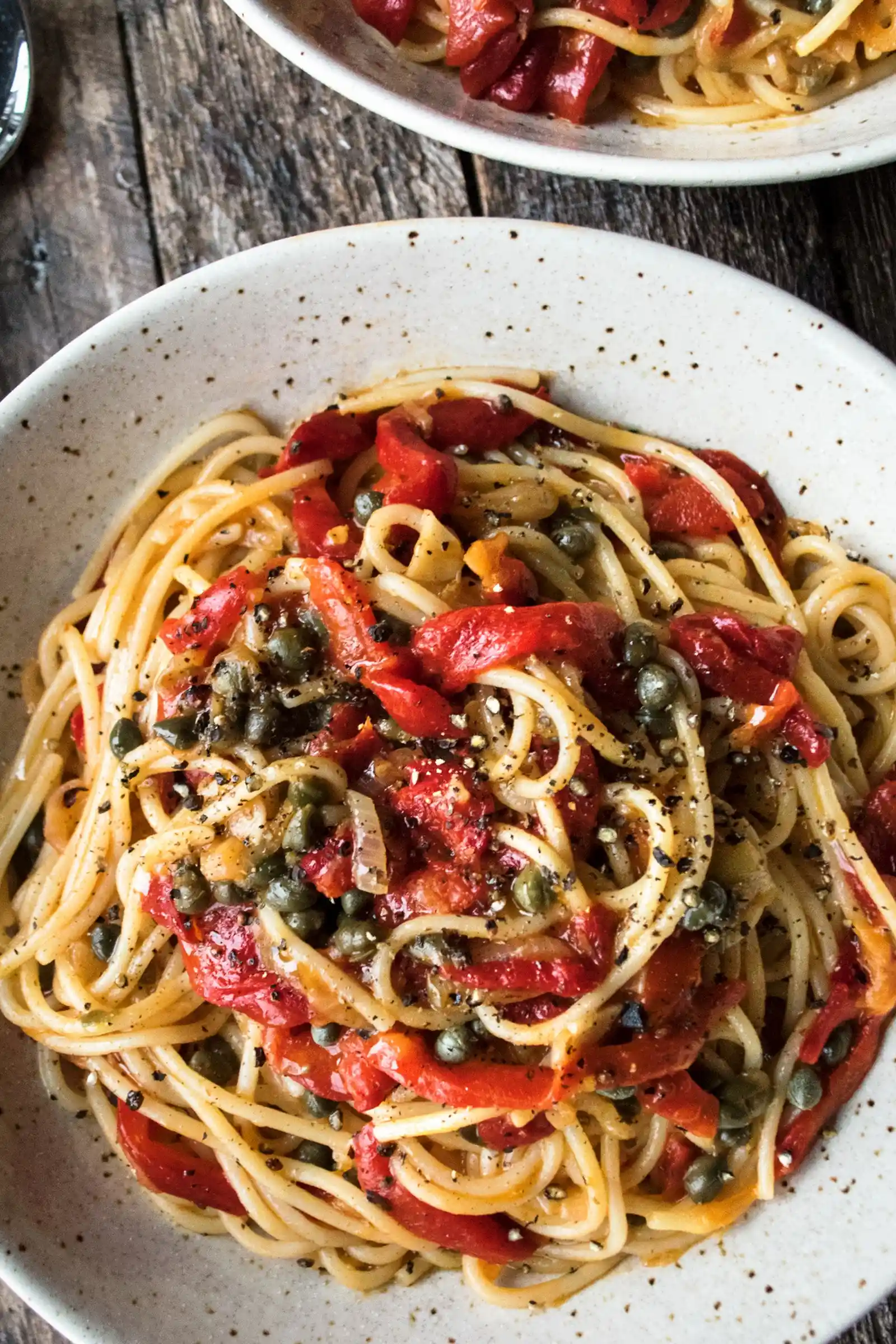
List of ingredients
- 1/2 lb dry pasta – any shape works, but penne or rigatoni are recommended for chunky sauces.
- 4 tbsp butter – divided into two portions for sautéing and finishing.
- 1 large shallot, thinly sliced – provides a mild, sweet onion base.
- Kosher salt – used for seasoning the pasta water and the final sauce.
- 2 cloves garlic, thinly shaved – adds a delicate, aromatic pungency.
- 1 lemon, zested and juiced – provides brightness and essential acidity.
- 1 tbsp tomato paste – adds depth, color, and a concentrated savory flavor.
- 1/2 cup vegetable broth – a savory, non-alcoholic base for the sauce.
- 1 cup sliced roasted red peppers – the primary flavor component of the dish.
- 1/2 cup capers – contributes a salty, briny contrast.
- Freshly cracked black pepper – used for the final seasoning.
step-by-step instructions
- Boil the Pasta: Bring a large pot of water to a boil and add a generous amount of salt. Cook the pasta for one minute less than the package instructions to maintain an al dente texture, then reserve 1 cup of the starchy pasta water before draining.
- Sauté the Aromatics: Heat a large skillet or a heavy-bottomed pot over medium heat and add 2 tablespoons of butter. Sauté the thinly sliced shallots with a pinch of salt until they become tender and caramelized.
- Build the Sauce Base: Stir in the shaved garlic and lemon zest, cooking for about one minute. Mix in the tomato paste until well incorporated, then pour in the vegetable broth and simmer for one minute before stirring in the roasted red peppers and capers.
- Combine and Emulsify: Pour the reserved pasta water into the skillet and simmer for a few minutes to thicken. Add the drained pasta, the remaining 2 tablespoons of butter, and the lemon juice, stirring constantly until the butter melts and the sauce coats the pasta.
- Final Seasoning: Taste the pasta and add additional salt if needed. Serve immediately with a generous amount of freshly cracked black pepper on top.
Pro Techniques for Sauce Development
Understanding Sauce Emulsification
The key to a silky sauce is the interaction between the fats and the starchy pasta water. When you stir the reserved water into the butter and broth, the starches act as an emulsifier, binding the lipids to the liquid. This prevents the sauce from separating and ensures it clings to the pasta.
Executing the Maillard Reaction
Caramelizing the shallots is not just about softening them; it is about creating a Maillard reaction. Cooking them slowly over medium heat allows the natural sugars to brown, adding a complex sweetness that balances the salty capers. Avoid high heat to prevent the shallots from burning, which introduces a bitter taste.
Precision Garlic Preparation
Shaving the garlic thinly rather than mincing it allows the garlic to soften and infuse the butter without burning. Thin slices distribute flavor more evenly throughout the sauce and provide a softer texture. If you do not have a mandoline, a very sharp knife or a garlic press can achieve a similar result.
Timing the Pasta Cook
Cooking the pasta for one minute less than the package suggests is critical. Since the pasta continues to cook as it simmers in the sauce, undercooking it slightly in the water prevents it from becoming mushy. This ensures the noodles maintain their structure and a pleasant chew.
Versatile Ingredient Substitutions
Alternative Pasta Selection
While short tubular pastas like rigatoni or penne are excellent for catching the roasted pepper pieces, long noodles like linguine or spaghetti also work well. For a gluten-free version, use a high-quality brown rice or chickpea pasta. Be aware that gluten-free pasta water is less starchy, so you may need more butter for emulsification.
Replacing Roasted Red Peppers
If you do not have jarred roasted red peppers, sun-dried tomatoes are a great substitute. They provide a more concentrated, sweet-tart flavor that pairs well with capers. Alternatively, you can roast fresh red bell peppers under a broiler until charred, peel them, and slice them for a fresher taste.
Briny Component Alternatives
Capers provide a distinct saltiness and acidity, but sliced kalamata olives or green olives can be used instead. Olives offer a fruitier, deeper brine that changes the profile slightly but maintains the salty contrast. Use a 1:1 ratio of olives to capers for a balanced flavor.
Onion and Garlic Swaps
If shallots are unavailable, a finely diced yellow or white onion serves as a suitable replacement. Red onions can also be used, though they may impart a more pungent flavor. For the garlic, garlic powder can be used in a pinch, though fresh cloves provide a superior aromatic quality.
Liquid Base Options
Vegetable broth is the standard non-alcoholic base for this sauce, providing a savory depth. For a lighter version, you can use water or a light chicken stock. If you prefer a richer sauce, a small amount of dry white grape juice mixed with a splash of apple cider vinegar can mimic the acidity of wine.
Creative Flavor Variations
Incorporating Fresh Herbs
Adding freshly chopped parsley or basil at the very end of the process introduces a burst of freshness. Sage or thyme can be sautéed with the shallots for a more earthy, autumnal flavor. Always add soft herbs after the heat is turned off to preserve their color and volatile oils.
Adding Protein Components
This pasta pairs exceptionally well with grilled shrimp, sautéed scallops, or sliced chicken breast. To incorporate these, cook the protein separately and stir it in during the final emulsification step. This ensures the protein remains tender and does not overcook.
Creating a Creamier Texture
For a richer, more indulgent sauce, stir in a tablespoon of mascarpone or a splash of heavy cream during the final step. This mellows the sharpness of the lemon and capers, resulting in a velvety finish. Ensure the cream is at room temperature to avoid breaking the sauce.
Adjusting the Spice Level
To add heat, stir in a pinch of crushed red pepper flakes along with the garlic. For a more integrated heat, a small amount of cayenne pepper or a dash of hot sauce can be mixed into the broth. Adjust the quantity carefully, as the saltiness of the capers can amplify the perception of heat.
Serving and Presentation Ideas
Optimal Garnish Choices
Freshly cracked black pepper is essential, but a sprinkle of nutritional yeast or microbial-rennet parmesan adds a salty, nutty finish. Freshly chopped chives or sliced scallions can add a mild onion brightness and a pop of green color to the red sauce.
Complementary Side Dishes
A simple side of steamed asparagus or sautéed spinach balances the richness of the butter sauce. A crisp green salad with a light vinaigrette also works well, as the acidity of the salad cleanses the palate between bites of the creamy pasta.
Plating for Texture
Use a pasta fork to twirl long noodles into a tight nest in the center of the bowl. For short pasta, toss the noodles thoroughly in the skillet before plating to ensure every piece is coated. Serve in warmed bowls to keep the butter-based sauce from thickening too quickly.
Storage and Preservation Guide
Refrigeration Methods
Store leftover pasta in an airtight container in the refrigerator for up to four days. Because the pasta will continue to absorb the sauce over time, the dish may appear drier when cold. To prevent this, you can store a small amount of extra vegetable broth in a separate container.
Reheating for Quality
Avoid reheating the pasta in the microwave on high heat, as this can cause the butter to separate. Instead, heat the pasta in a pan over low heat with a splash of water or broth. Stir gently until the sauce becomes creamy and the pasta is heated through.
Freezing Considerations
It is not recommended to freeze cooked pasta, as the texture often becomes grainy or mushy upon thawing. However, you can freeze the sauce separately. Simply omit the final butter and lemon juice, freeze the base, and finish the sauce fresh when you boil a new batch of pasta.
Common Troubleshooting Solutions
Fixing a Thin Sauce
If the sauce is too thin and does not coat the pasta, simmer it for an additional two to three minutes before adding the noodles. The evaporation process concentrates the flavors and thickens the liquid. Alternatively, stir in a small amount of grated hard cheese to act as a thickening agent.
Correcting Over-Salting
Since capers and pasta water are both salty, it is easy to overseason the dish. To balance excess salt, add an extra squeeze of fresh lemon juice or a pinch of granulated sugar. The acidity and sweetness help neutralize the saltiness without altering the overall flavor profile.
Preventing Burnt Garlic
Garlic burns much faster than shallots and develops a bitter taste when scorched. To avoid this, lower the heat before adding the shaved garlic. If the pan is too hot, remove it from the burner for 30 seconds before stirring in the aromatics.
Avoiding Mushy Pasta
Mushy pasta usually results from overcooking in the water or over-stirring during the final phase. Follow the al dente timing strictly and use a gentle folding motion when combining the pasta with the sauce. This preserves the integrity of the noodle.
Detailed Recipe FAQs
Can I use fresh red peppers instead of jarred?
Yes, you can use fresh peppers by roasting them under a broiler until the skins are charred. Once cooled, peel away the skins and slice the flesh. This method provides a smokier, fresher flavor than the jarred version but requires more preparation time.
Is this recipe suitable for meal prep?
This recipe is excellent for meal prep if handled correctly. To maintain the best texture, store the cooked pasta and the sauce in separate containers. Combine and reheat them just before eating to avoid the pasta absorbing all the sauce.
What is the best way to shave garlic thinly?
A mandoline slicer is the most efficient tool for achieving paper-thin garlic slices. If you do not have one, use a very sharp chef’s knife and slice as thinly as possible. A garlic press is an acceptable alternative, though it changes the texture of the sauce.
Can I use an alternative to butter?
For a dairy-free version, you can replace the butter with an equal amount of olive oil or a plant-based butter substitute. Note that olive oil will not emulsify the sauce as effectively as butter, so you may need to rely more heavily on the starchy pasta water for thickness.
Print
Savory Roasted Red Pepper Pantry Pasta
- Total Time: 25 minutes
- Yield: 2–4 servings 1x
- Diet: Vegetarian
Description
A simple pantry pasta full of roasted red peppers, capers, shallots, garlic, lemon, and butter.
Ingredients
- ½ lb dry pasta
- 4 tbsp butter
- 1 large shallot, thinly sliced
- kosher salt
- 2 cloves garlic, thinly shaved
- 1 lemon, zested and juiced
- 1 tbsp tomato paste
- ½ cup vegetable broth
- 1 cup sliced roasted red peppers
- ½ cup capers
- freshly cracked black pepper
Instructions
- Step: Bring a large pot of water to a boil. Add a heaping palmful of salt. Drop the pasta and cook for 1 minute less than the package’s instructions, stirring often. Right before draining, reserve 1 cup of pasta water.
- Step: Meanwhile, heat a large skillet (or small, heavy-bottomed pot) over medium heat. Add 2 tablespoons of the butter. Add the sliced shallot and a pinch of salt. Saute for a few minutes until tender and caramelized, stirring often.
- Step: Stir in the shaved garlic and lemon zest. Let cook for another minute. Add the tomato paste. Stir well to incorporate. Pour in the vegetable broth. Bring to a simmer and cook for a minute or so before stirring in the roasted red peppers and capers.
- Step: Add the reserved pasta water to the sauce. Allow to simmer for a couple minutes more. Stir in the drained pasta, the remaining 2 tablespoons of butter, and lemon juice. Mix well until the butter melts and the sauce thickens enough to coat the pasta.
- Step: Taste and season with more salt if needed. Serve the pasta with freshly cracked black pepper over top.
Notes
You can use a mandolin to shave the garlic or a very sharp knife. You just don’t want the pieces thick. If it’s easier for you, you can just chop it finely or even pass it through a garlic press.
- Prep Time: 10 minutes
- Cook Time: 15 minutes
- Category: Main Course
- Method: Sautéing
- Cuisine: Italian-inspired
Nutrition
- Serving Size: 1 serving
- Calories: 450 kcal
- Sugar: 7 g
- Sodium: 920 mg
- Fat: 18 g
- Saturated Fat: 10 g
- Unsaturated Fat: 8 g
- Trans Fat: 0 g
- Carbohydrates: 45 g
- Fiber: 4 g
- Protein: 12 g
- Cholesterol: 45 mg