
This quick stir-fry combines thin rice noodles with a vibrant curry flavor for a satisfying meal. It features a nutrient-rich mix of chicken, shrimp, and crisp vegetables for a balanced dish.
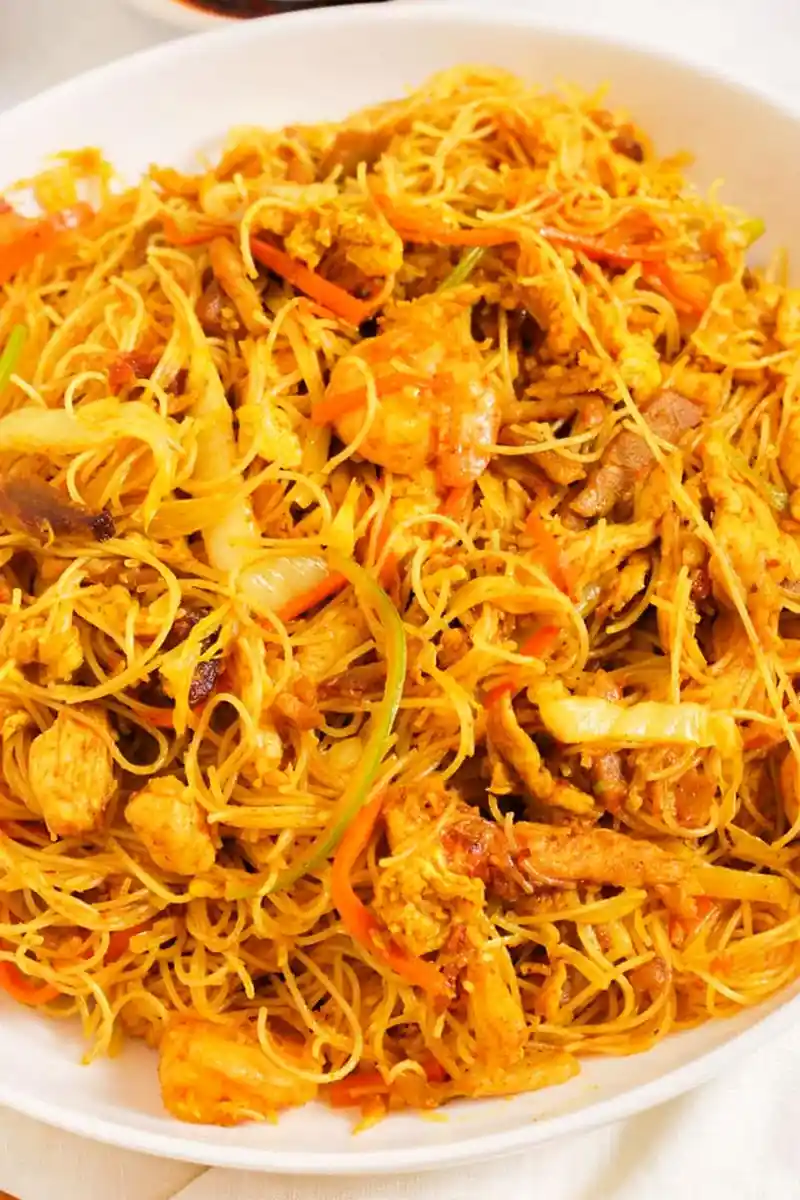
List of ingredients
- 6 ounces thin rice noodles – soaked and drained.
- 2 large eggs – beaten.
- 1.5 tablespoons garlic – minced (about 3-4 cloves).
- 3 ounces smoked firm tofu – cut into thin strips to replace BBQ pork.
- 2 leaves napa cabbage – cut into thin strips width-wise.
- 0.5 large carrot – peeled and cut into matchstick pieces.
- 1 stalk celery – cut into thin matchstick pieces.
- 1 tablespoon vegetable broth – as a substitute for rice wine.
- 1.5 tablespoons curry powder – adjust based on flavor preference.
- 1 teaspoon ground turmeric – optional for a more intense yellow color.
- 1 tablespoon oyster sauce – for savory depth.
- 1.5 teaspoon chicken bouillon powder – for umami flavor.
- 1 teaspoon salt – for seasoning.
- 0.5 teaspoon granulated sugar – to balance the salt.
- 1 tablespoon Chinese chili oil – optional for a spicy kick.
- 2 stalks green onion – green parts only, cut into 2-inch pieces.
- Neutral oil – as needed for frying.
- 3 ounces skinless boneless chicken breast – cut into thin strips.
- 3 ounces small shrimps – peeled and deveined.
- 0.5 tablespoon water – for the marinade.
- 0.5 teaspoon vegetable broth – for the marinade.
- 0.5 teaspoon salt – for the marinade.
- 2 teaspoon cornstarch – for velveting the protein.
- 0.5 teaspoon neutral oil – for the marinade.
step-by-step instructions
- Soak the noodles: Cover rice noodles with room temperature water for 10 to 15 minutes until soft. Drain them well and set aside.
- Marinate the proteins: Combine chicken, shrimp, water, vegetable broth, and salt in a bowl. Mix until liquid is absorbed, then stir in cornstarch and neutral oil. Let this sit while preparing other ingredients.
- Poach the proteins: Bring a pot of water to a boil and add the marinated chicken and shrimp. Stir vigorously to separate the pieces and cook until shrimp are pink and chicken is done. Strain and keep the hot water on the burner.
- Cook the eggs: Heat 2 tablespoons of oil in a wok over medium-high heat. Scramble the beaten eggs until cooked through, then remove them from the pan.
- Sauté the aromatics: Add another 2 tablespoons of oil to the wok over medium-high heat. Sauté minced garlic for about 15 seconds until fragrant.
- Stir fry vegetables and proteins: Add smoked tofu strips and fry for 10 seconds, followed by napa cabbage, carrots, and celery for another 5 seconds. Toss in the cooked chicken, shrimp, and scrambled eggs.
- Deglaze and season: Drizzle in vegetable broth and stir fry for 15 seconds. Mix in curry powder, turmeric, oyster sauce, bouillon powder, salt, sugar, and chili oil until the vegetables wilt.
- Blanch the noodles: Quickly dip the soaked rice noodles into the pot of hot water for a few seconds. Drain immediately to prevent clumping.
- Final toss: Add the blanched noodles and green onions to the wok. Toss everything on high heat until the noodles are evenly coated in the yellow curry sauce.
Practical Cooking Tips
Maintaining High Heat in the Wok
Cooking over medium-high or high heat is essential to achieve the stir-fry texture. High heat ensures the vegetables sear quickly without releasing too much water, which prevents the noodles from becoming soggy. If your stove has a low BTU output, cook in smaller batches to maintain the temperature.
Timing the Noodle Blanching
Blanching the soaked noodles just before they enter the wok is critical. If you blanch them too early, the thin rice noodles will clump together and become difficult to separate. A quick dip in hot water for a few seconds softens the starch enough for a smooth texture.
Using the Velvetting Technique
The combination of cornstarch, oil, and broth in the marinade is called velvetting. This process creates a thin protective barrier around the chicken and shrimp. It prevents the proteins from toughening during the poaching and frying process, resulting in a tender bite.
Ingredient Substitutions
Gluten-Free Oyster Sauce
Standard oyster sauce often contains wheat. For a gluten-free version, look for brands labeled gluten-free or use a mushroom-based vegetarian stir-fry sauce. Ensure the substitute has a similar thick consistency and salty-sweet profile.
Plant-Based Protein Options
While this recipe uses chicken and shrimp, you can make it entirely vegan. Replace the meat with extra-firm tofu, tempeh, or seitan. Use vegetable bouillon powder instead of chicken bouillon to maintain the savory depth.
Alternative Curry Blends
Different brands of curry powder vary in potency and color. If you prefer a milder taste, use a mild yellow curry powder. For a more complex, earthy flavor, a small amount of Madras curry powder can be added, though it may increase the heat.
Flavor Variations
Increasing the Spicy Level
To add more heat, increase the amount of Chinese chili oil or add freshly sliced bird’s eye chilies during the garlic sauté step. You can also add a pinch of cayenne pepper or red pepper flakes to the seasoning mix. This complements the warmth of the curry powder.
Adding Creaminess with Coconut
For a richer, more aromatic version, stir in one tablespoon of thick coconut milk just before adding the noodles. This creates a creamier sauce that clings better to the rice vermicelli. It transforms the dish into something resembling a hybrid between a stir-fry and a dry curry.
Expanding the Vegetable Variety
Beyond cabbage and carrots, you can add sliced red bell peppers, snap peas, or baby corn. These additions provide extra color and a different range of textures. Ensure all vegetables are cut into thin matchsticks to match the shape of the noodles.
Serving Suggestions
Adding Fresh Garnish
Finish the dish with a handful of fresh cilantro leaves or sliced scallions on top. The brightness of fresh herbs cuts through the richness of the curry and oil. A sprinkle of toasted sesame seeds also adds a subtle nuttiness to the finish.
Pairing with Side Dishes
This noodle dish pairs perfectly with light appetizers. Consider serving it alongside vegetable spring rolls or a simple egg drop soup. These sides balance the intense curry flavors with milder, comforting textures.
Using a Citrus Finish
Squeezing a fresh lime wedge over the noodles right before eating enhances the overall flavor. The acidity of the lime brightens the savory notes of the oyster sauce and bouillon. It adds a zesty contrast that is common in Southeast Asian street food.
Storage and Reheating
Refrigeration Guidelines
Store leftover Singapore noodles in an airtight container in the refrigerator for 3 to 4 days. Allow the noodles to cool completely before sealing the lid to prevent excess moisture from building up. This helps maintain the integrity of the thin rice noodles.
Microwave Reheating Method
Place the noodles in a microwave-safe dish and cover loosely with a lid or damp paper towel. Heat in short 30-second intervals, stirring in between to distribute the heat evenly. Adding a teaspoon of water helps steam the noodles back to their original softness.
Stovetop Reheating Method
For the best texture, reheat the noodles in a pan over medium-high heat. Add two tablespoons of water or vegetable broth to the pan to loosen the noodles. Toss and stir fry for 2-3 minutes until heated through and the sauce is re-emulsified.
Make-Ahead Advice
Advance Vegetable Prep
Cut the carrots, celery, and cabbage into matchsticks the day before. Store them in separate containers or a single large bag with a damp paper towel. This significantly reduces the active prep time on the day of cooking.
Overnight Protein Marinating
Marinating the chicken and shrimp for several hours or overnight allows the flavors to penetrate deeper. Keep the marinated proteins in a sealed container in the coldest part of the fridge. This ensures the velvetting process is fully effective.
Pre-mixing the Seasoning
Combine the curry powder, turmeric, bouillon powder, salt, and sugar in a small jar or bowl ahead of time. Having a pre-measured spice mix prevents the garlic or vegetables from burning while you search for individual ingredients during the fast-paced stir-fry process.
Troubleshooting Common Issues
Preventing Noodle Clumping
If the noodles clump together in the wok, do not try to force them apart with a spoon, as they may break. Instead, add a tablespoon of water or broth and toss gently using chopsticks. This creates steam that helps loosen the strands naturally.
Correcting a Dry Sauce
Because thin rice noodles absorb liquid quickly, the dish can sometimes appear dry. If the noodles are not evenly coated, stir in a small amount of vegetable broth one tablespoon at a time. This thins the sauce without diluting the flavor too much.
Fixing Bland Flavor
If the dish tastes under-seasoned, avoid adding only salt, as this can make it taste one-dimensional. Instead, add a small pinch of extra curry powder and a drop more oyster sauce. This restores the complex balance of savory, earthy, and salty notes.
Frequently Asked Questions
What exactly are Singapore Noodles?
Singapore noodles, or Singapore Mei Fun, are thin rice vermicelli noodles stir-fried with a variety of proteins and vegetables. Their most distinguishing feature is the use of curry powder, which provides a unique flavor and a bright yellow color.
How do they differ from Chow Mein?
The primary difference lies in the noodles and the seasoning. Singapore noodles use thin rice noodles and curry powder, whereas Chow Mein typically uses wheat-based egg noodles and is seasoned primarily with soy sauce.
Can I use a different oil for frying?
Any neutral oil with a high smoke point will work, such as canola, vegetable, or grapeseed oil. Avoid using extra virgin olive oil or butter, as they can burn at the high temperatures required for a proper stir-fry.
Print
Savory Singapore Rice Noodles (Singapore Mei Fun)
- Total Time: 30 minutes
- Yield: 3 servings 1x
- Diet: General
Description
Singapore noodles, also known as Singapore mei fun (星洲炒米粉), is a popular Chinese takeout dish made with rice noodles, chicken, shrimps, BBQ beef, veggies, and seasoned with curry powder, which gives it its iconic yellow color.
Ingredients
- 6 ounces thin rice noodle
- 2 large eggs (beaten)
- 1½ tablespoons garlic (minced)
- 3 ounces Chinese BBQ roast beef (cut into thin strips)
- 2 leaves napa cabbage (cut into thin strips width-wise)
- ½ large carrot (peeled and cut into matchstick piece)
- 1 stalk celery (cut into thin matchstick pieces)
- 1 tablespoon water
- 1½ tablespoons curry powder
- 1 teaspoon ground turmeric (optional for color)
- 1 tablespoon oyster sauce
- 1½ teaspoon chicken bouillon powder
- 1 teaspoon salt
- ½ teaspoon granulated sugar
- 1 tablespoon Chinese chili oil (optional)
- 2 stalks green onion (green parts cut into 2 inch pieces)
- Oil (any neutral oil)
- 3 ounces skinless boneless chicken breast (cut into thin strips)
- 3 ounces small shrimps (peeled and deveined)
- ½ tablespoon water
- ½ teaspoon water
- ½ teaspoon salt
- 2 teaspoon cornstarch
- ½ teaspoon oil (any neutral oil)
Instructions
- Soak the noodles: Cover the rice noodles with room temperature water and allow it to soak for 10 to 15 minutes until softened or according to the package instructions. Once the noodles have softened, drain and set aside.
- Marinate the proteins: Into a mixing bowl, combine the chicken, shrimps, water, water, and salt. Mix until most of the liquid is absorbed. Add the cornstarch and mix until no more dry cornstarch is visible. Finish by adding the oil and mix to combine. Set aside to marinade.
- Cook the proteins: Bring a pot of water to a boil. To the boiling water, add the marinated chicken and shrimps all at one time and immediately stir vigorously with a fork or chopsticks to separate the proteins. Allow the proteins to cook for about 30 second to 1 minute, until the shrimps are bright pink-ish orange and the chicken is cooked through. Strain the cooked protein and set it aside. Keep the pot of water hot.
- Scramble the eggs: In a wok or large pan over medium high heat, add about 2 tablespoon of oil. Once the oil is hot, add the beaten egg and scramble until cooked. Remove and set aside.
- Saute the garlic: Into the same wok or pan over medium high heat, add about another 2 tablespoons of oil. Once hot, add the garlic and sauté until fragrant, about 15 seconds.
- Cook the roast beef and veggies: To the wok, add the roast beef and stir fry briefly, about 5 to 10 seconds. Then add the veggies (napa cabbage, carrot, and celery). Stir fry briefly to combine. Add the cooked chicken, shrimps, and egg into the wok and give everything a toss to combine.
- Add the water: Drizzle the water around the wok and stir fry until fragrant, about 15 seconds.
- Season: Season with curry powder, ground turmeric, oyster sauce, chicken bouillon powder, salt, sugar, and chili oil. Stir fry and mix until well combined and the veggies starts to wilt.
- Prepare the rice noodles: Add the soaked rice noodles into the pot of hot water and stir. Then drain the noodles well.
- Enjoy: Add the noodles to the wok/pan, along with the green onions. Place the wok back onto the heat and toss and mix until everything is well combined and the noodles are even in color.
Notes
Keep the heat high to imitate restaurant cooking. If the sauce looks too dry, add a couple tablespoons of water to help thin it out. Avoid blanching the noodles too early to prevent clumping.
- Prep Time: 15 minutes
- Cook Time: 15 minutes
- Category: Dinner
- Method: Stir fry
- Cuisine: Chinese
Nutrition
- Serving Size: 1 serving
- Calories: 456.6 kcal
- Sugar: 5.5 g
- Sodium: 1924.8 mg
- Fat: 11.5 g
- Saturated Fat: 2.5 g
- Unsaturated Fat: 7.3 g
- Trans Fat: 0.02 g
- Carbohydrates: 59.8 g
- Fiber: 3.1 g
- Protein: 26 g
- Cholesterol: 205 mg