
There’s something incredibly comforting about a rich, savory gravy smothering tender chicken. Forget the jarred stuff – this Savory Stovetop Chicken Gravy recipe delivers a depth of flavor you just can’t buy. We’re building layers of taste, starting with beautifully browned chicken thighs and finishing with a glossy, perfectly seasoned gravy. This isn’t just a sauce; it’s an experience. Perfect for a cozy weeknight dinner or a special occasion, this recipe will quickly become a family favorite. Get ready to elevate your chicken game!
What You’ll Need
- 800 g (1.75 lb) bone-in chicken thighs, skin on: The star of the show! Bone-in, skin-on thighs provide the richest flavor and stay incredibly moist during cooking. The bone adds collagen, which contributes to a silky smooth gravy.
- 2 tbsp (30 ml) vegetable oil: We’re using vegetable oil for its high smoke point, essential for achieving a beautiful, golden-brown sear on the chicken skin. You want an oil that can withstand the heat without burning.
- 1 medium onion, finely diced (≈150 g / 5.3 oz): The foundation of our flavor base. Dicing the onion finely ensures it melts into the gravy, adding sweetness and depth.
- 2 cloves garlic, minced (≈6 g / 0.2 oz): Garlic is a must-have for savory dishes! Minced garlic releases its aromatic compounds quickly, infusing the gravy with a delightful fragrance.
- 2 tbsp (16 g / 0.6 oz) all-purpose flour: Our thickening agent. The flour creates a roux with the fat, which is the base for a smooth and creamy gravy.
- 500 ml (2 cups) low-sodium vegetable broth: Provides the liquid base for the gravy. Using low-sodium broth allows us to control the saltiness of the final dish.
- 120 ml (½ cup) water: Used to help deglaze the pan and adjust the gravy’s consistency. Adding water gradually gives you more control over the thickness.
- 1 tsp (5 ml / ¼ tsp) smoked paprika: Adds a subtle smoky depth that complements the chicken beautifully. Smoked paprika isn’t spicy, just wonderfully flavorful.
- ½ tsp (2.5 ml / ¼ tsp) ground cumin: A warm, earthy spice that adds complexity to the gravy. Cumin pairs exceptionally well with paprika and chicken.
- 1 tsp (5 ml / ¼ tsp) fresh thyme leaves: Fresh thyme provides a bright, herbaceous note. If you don’t have fresh, you can substitute with ½ tsp of dried thyme.
- 1 tbsp (15 ml) freshly squeezed orange juice: A surprising but essential ingredient! The orange juice adds a touch of acidity that balances the richness of the gravy and brightens the flavors.
- ½ tsp (2.5 ml) salt: Essential for seasoning and enhancing all the other flavors.
- ¼ tsp (1 ml) freshly ground black pepper: Adds a subtle spice and depth. Freshly ground pepper has a more robust flavor than pre-ground.
- 2 tbsp (30 g) unsalted butter, chilled and cubed: Used in a technique called ‘mounting’ to create a glossy, emulsified gravy. The cold butter adds richness and shine.
- 2 tbsp (≈8 g / 0.3 oz) fresh flat-leaf parsley, chopped: A vibrant garnish that adds freshness and color.
- 1 tsp (≈0.3 g) edible microgreen mix: Adds a delicate peppery flavor and a beautiful visual accent.
Ingredient Substitutions
Don’t have everything on hand? Here are a few simple substitutions:
- Chicken Thighs: While thighs are preferred for their flavor, you can use bone-in, skin-on chicken breasts. Reduce the simmering time to prevent them from drying out.
- Vegetable Broth: Chicken broth can be used for an even richer flavor.
- Fresh Thyme: Substitute with ½ teaspoon of dried thyme.
- Orange Juice: A squeeze of lemon juice can be used in a pinch, but orange juice provides a unique sweetness.
Detailed Instructions for Perfect Savory Stovetop Chicken Gravy
- Prepare the Chicken: Begin by thoroughly patting the chicken thighs dry with paper towels. This is crucial for achieving a beautifully browned and crispy skin. Season generously on both sides with the measured salt and pepper. Don’t be shy with the seasoning – it’s the foundation of the flavor!
- Sear the Chicken: Heat the vegetable oil in a large, heavy-bottomed skillet over medium-high heat. A heavy-bottomed skillet ensures even heat distribution, preventing hot spots. Once the oil is shimmering, carefully add the chicken thighs, skin-side down. Sear for 4-5 minutes, or until the skin is deeply golden brown and wonderfully crisp. This step builds incredible flavor. Flip the thighs and sear the other side for 3 minutes. Transfer the seared chicken to a plate, tent loosely with foil, and let it rest. Resting allows the juices to redistribute, resulting in more tender and flavorful chicken.
- Sauté the Aromatics: Reduce the heat to medium. Add the finely diced onion to the same skillet (don’t discard the flavorful browned bits!). Sauté for 3-4 minutes, stirring occasionally, until the onion becomes translucent and softened. Add the minced garlic and cook for an additional 30 seconds, until fragrant. Be careful not to burn the garlic, as it can become bitter.
- Create the Roux: Sprinkle the all-purpose flour evenly over the sautéed onions and garlic. Immediately begin stirring constantly to create a light roux. Cook for 1 minute, stirring continuously, to eliminate the raw flour taste. The roux is the base of your gravy, and cooking it properly is essential for a smooth, lump-free sauce.
- Deglaze and Build the Gravy: Deglaze the pan with the water, using a wooden spoon or spatula to scrape up all the browned bits (fond) from the bottom of the skillet. These browned bits are packed with flavor! Gradually whisk in the vegetable broth, ensuring there are no lumps. Continue whisking until the gravy is smooth and well combined.
- Season and Simmer: Stir in the smoked paprika, ground cumin, fresh thyme leaves, and freshly squeezed orange juice. The orange juice adds a subtle brightness that balances the savory flavors. Bring the mixture to a gentle simmer, adjusting the burner to maintain a low boil.
- Return Chicken and Simmer: Return the rested chicken thighs to the skillet, skin-side up. Partially cover the skillet with a lid. Simmer for 15-18 minutes, or until the internal temperature of the chicken reaches 74°C (165°F) and the meat is incredibly tender.
- Reduce the Gravy: Remove the chicken thighs from the skillet and keep them warm. Increase the heat to medium-high and reduce the gravy for 5-6 minutes, stirring frequently, until it thickens and coats the back of a spoon. This concentrates the flavors and creates a luscious texture. Taste and adjust the seasoning with salt and pepper as needed.
- Mount with Butter: Remove the skillet from the heat. Whisk in the chilled, cubed butter one cube at a time, until each cube is fully incorporated and the sauce becomes glossy and slightly thickened. This technique, called “mounting,” adds richness and a beautiful sheen to the gravy.
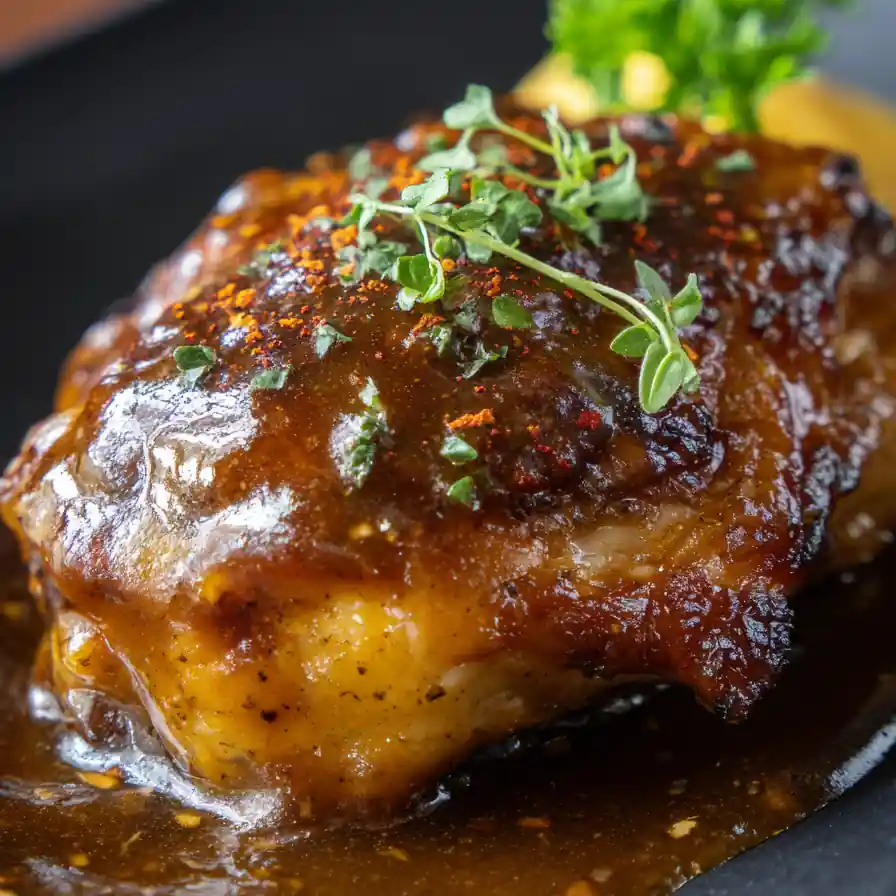
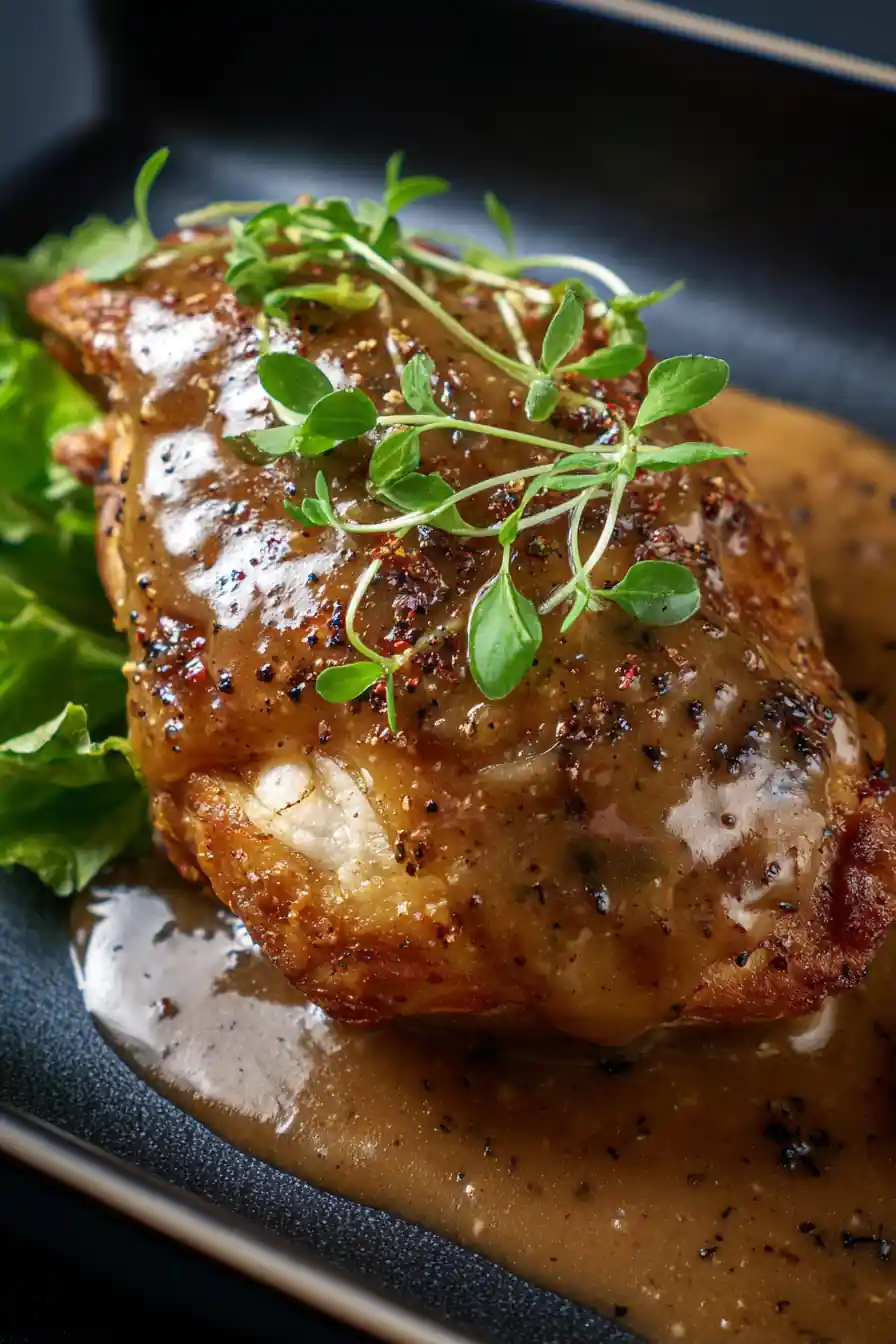
- Plate and Garnish: Plate on a matte black rectangular plate: place one chicken thigh slightly off-center, spoon a river of glossy gravy across the plate, and drizzle a thin swirl around the edge. Scatter chopped parsley over the thigh, dot microgreens beside the gravy river, and finish with a light dusting of smoked paprika powder for visual contrast.
Why Bone-In, Skin-On Chicken Thighs are Best
Using bone-in, skin-on chicken thighs isn’t just about tradition; it’s about maximizing flavor and texture. The bone imparts a deeper, richer flavor to the gravy as it simmers, while the skin renders its fat, contributing to a more luxurious mouthfeel and a beautifully browned, crispy exterior. Chicken thighs are also more forgiving than breasts, remaining tender even with longer cooking times.
The Science of a Roux
The roux – the combination of flour and fat – is the key to a smooth, lump-free gravy. Cooking the flour in fat gelatinizes the starch granules, preventing them from clumping when liquid is added. The length of time you cook the roux affects its color and flavor; a lighter roux (like the one used here) provides a subtle flavor and thickening power, while a darker roux offers a nuttier flavor but less thickening ability.
The Role of Orange Juice
The addition of orange juice might seem unconventional in a savory gravy, but it plays a vital role in balancing the richness of the dish. The acidity of the orange juice cuts through the fat, brightening the flavors and adding a subtle complexity that elevates the gravy to another level. It complements the smoky paprika and warm cumin beautifully.
Tips for a Lump-Free Gravy
Achieving a perfectly smooth gravy requires a little attention to detail. Always whisk the flour into the fat thoroughly before adding any liquid. Add the liquid gradually, whisking constantly to prevent lumps from forming. If lumps do occur, don’t panic! Strain the gravy through a fine-mesh sieve to remove them. And remember, a little patience goes a long way.
Frequently Asked Questions
Can I use chicken stock instead of vegetable broth?
Yes, absolutely! Chicken stock will enhance the chicken flavor even further. However, low-sodium broth is recommended to control the saltiness of the gravy.
Can I make this gravy ahead of time?
Yes, you can make the gravy a day or two in advance. Store it in an airtight container in the refrigerator. Reheat gently on the stovetop, whisking occasionally, and add a splash of broth or water if it becomes too thick.
What if I don’t have smoked paprika?
Regular paprika can be substituted, but you’ll miss out on the subtle smoky flavor. If you don’t have either, a pinch of cayenne pepper can add a touch of warmth.
This Savory Stovetop Chicken Gravy is a comforting and flavorful dish that’s perfect for a cozy night in. Don’t forget to save this recipe to Pinterest so you can easily find it again when you’re craving a delicious homemade gravy!
Print
Savory Stovetop Chicken Gravy
- Total Time: 55 minutes
- Yield: 4 servings 1x
- Diet: General
Description
This recipe creates a rich and savory stovetop chicken gravy, perfect for elevating any chicken dish. It utilizes browned chicken thighs and a flavorful blend of spices for a comforting and delicious experience.
Ingredients
- 800 g (1.75 lb) chicken thighs, bone-in, skin on
- 2 tbsp (30 ml) vegetable oil
- 1 medium onion, finely diced (≈150 g / 5.3 oz)
- 2 cloves garlic, minced (≈6 g / 0.2 oz)
- 2 tbsp (16 g / 0.6 oz) all-purpose flour
- 500 ml (2 cups) low-sodium vegetable broth
- 120 ml (½ cup) water
- 1 tsp (5 ml / ¼ tsp) smoked paprika
- ½ tsp (2.5 ml / ¼ tsp) ground cumin
- 1 tsp (5 ml / ¼ tsp) fresh thyme leaves
- 1 tbsp (15 ml) orange juice
- ½ tsp (2.5 ml) salt
- ¼ tsp (1 ml) black pepper
- 2 tbsp (30 g) unsalted butter, cubed
- 2 tbsp (≈8 g / 0.3 oz) parsley, chopped
- 1 tsp (≈0.3 g) microgreen mix
Instructions
- Prepare Chicken: Pat chicken dry and season with salt and pepper.
- Sear Chicken: Sear chicken skin-side down for 4-5 minutes, then flip and sear for 3 minutes. Rest chicken.
- Sauté Aromatics: Sauté onion until translucent, then add garlic and cook until fragrant.
- Create Roux: Stir in flour and cook for 1 minute.
- Deglaze & Build Gravy: Deglaze with water, then whisk in broth until smooth.
- Season & Simmer: Stir in spices and orange juice; simmer gently.
- Return Chicken: Return chicken to skillet and simmer for 15-18 minutes.
- Reduce Gravy: Remove chicken, reduce gravy until thickened.
- Mount with Butter: Whisk in cold butter until glossy.
- Plate & Garnish: Plate with gravy, parsley, and microgreens.
Notes
For a smoother gravy, whisk constantly while adding the broth. Resting the chicken ensures it remains tender and juicy.
- Prep Time: 15 minutes
- Cook Time: 40 minutes
- Category: Sauce
- Method: Stovetop
- Cuisine: American
Nutrition
- Serving Size: 1 serving
- Calories: 350 kcal
- Sugar: 5 g
- Sodium: 400 mg
- Fat: 25 g
- Saturated Fat: 8 g
- Unsaturated Fat: 15 g
- Trans Fat: 0 g
- Carbohydrates: 15 g
- Fiber: 2 g
- Protein: 20 g
- Cholesterol: 100 mg