
This rich and creamy West African stew combines tender beef with a savory peanut butter base and tangy tomato paste. It is a hearty one-pot meal that provides a balanced blend of protein and flavor.
List of ingredients
- 2 lbs stew beef – cut into bite-sized pieces
- 1/2 cup peanut butter – creamy and unsweetened
- 1 red bell pepper – chopped
- 2 tbsp tomato paste – for richness and color
- 1 onion – finely chopped
- 1 tbsp beef bouillon powder – for deep savory flavor
- 1 tsp cayenne pepper – adjust for heat preference
- 1/4 cup olive oil – for searing the meat
- 1 tsp salt – or to taste
- 1 tsp black pepper – for seasoning
- 1 cup water – for the sauce base
- 2 cups stock/broth – beef or vegetable broth
- pinch of salt – specifically for browning the beef
step-by-step instructions
- Prepare the meat: Wash the beef and cut it into smaller pieces.
- Heat the pan: Pour olive oil into a pan and set it over medium heat.
- Sear the beef: Add the beef, black pepper, and a pinch of salt, then saute for 8-10 minutes until browned.
- Prep vegetables: Chop the onions and the red bell pepper.
- Sauté vegetables: Add the chopped onions and red bell pepper to the pan and saute for 3 minutes.
- Add tomato paste: Stir in the tomato paste and cook for about 5 minutes.
- Simmer the base: Add water, stock, bouillon, cayenne pepper, and salt to taste.
- Boil: Bring the mixture to a boil and cook for 5 more minutes.
- Incorporate peanut butter: Add the peanut butter and stir continuously until it is completely dissolved.
- Thicken: Let the stew cook and simmer until it thickens, which usually takes 2-5 minutes.
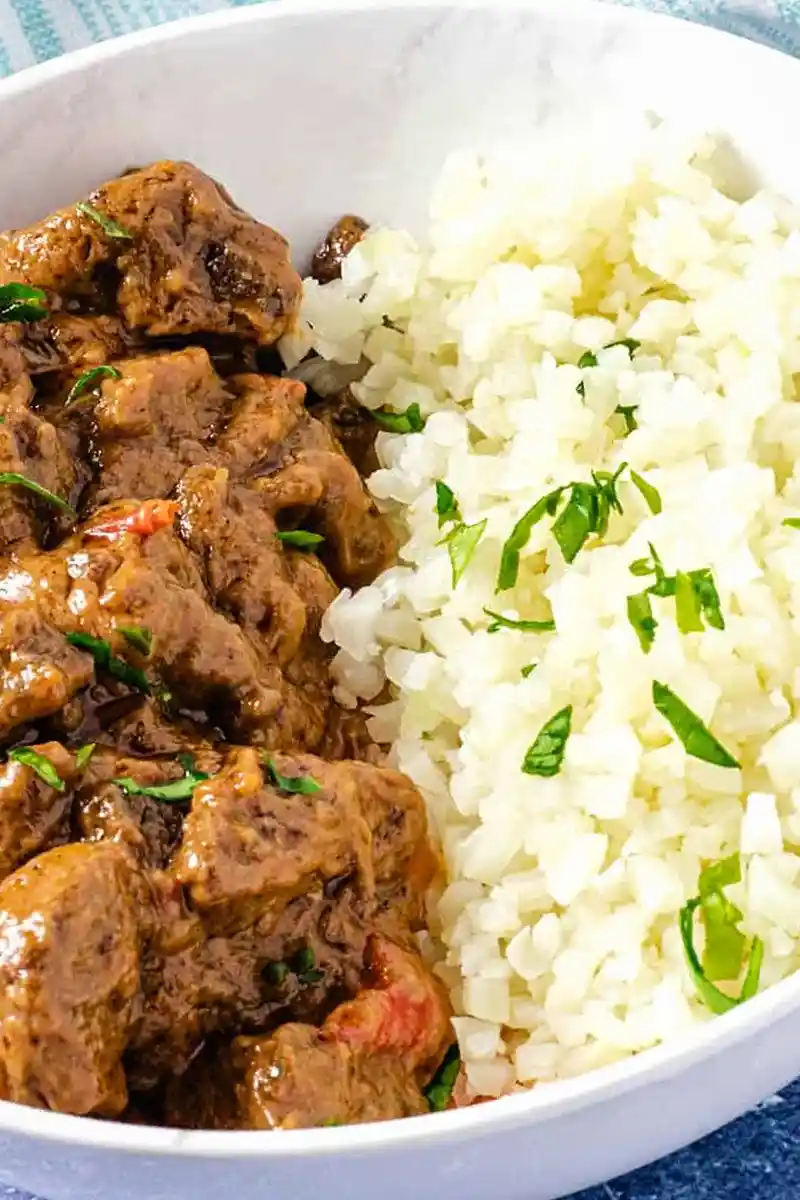
- Serve: Serve the finished stew with cauliflower rice and enjoy!
Optimizing Meat Selection and Preparation
Choosing the Best Cut of Beef
For this stew, use beef chuck or a designated stew meat cut. These cuts contain connective tissue that breaks down during the simmering process, resulting in tender pieces. Avoid lean cuts like sirloin, as they can become tough when cooked in a sauce.
Proper Sizing for Meat Cubes
Cut the beef into consistent 1-inch cubes. Uniform sizing ensures that every piece of meat cooks at the same rate. This prevents smaller pieces from overcooking while larger chunks remain raw in the center.
The Importance of Searing the Meat
Searing the beef on medium-high heat creates a brown crust through the Maillard reaction. This process locks in juices and adds a complex, roasted depth to the final sauce. Do not crowd the pan, or the meat will steam instead of brown.
Selecting the Right Peanut Base
Using Natural Peanut Butter
Select a natural, unsweetened peanut butter to avoid adding unwanted sugar to the dish. Natural varieties often separate, so stir the jar thoroughly before measuring. This ensures the fat and solids are evenly distributed in the stew.
Creamy versus Crunchy Textures
Creamy peanut butter is the standard choice for a velvet-smooth sauce. If you prefer a more rustic texture, you can use crunchy peanut butter. However, the creamy version emulsifies more easily into the tomato and broth base.
Substituting with Ground Roasted Peanuts
For a more authentic West African experience, you can use homemade peanut paste. Roast raw peanuts and grind them in a food processor until they release their oils and form a thick paste. This provides a more intense, roasted nut flavor.
Enhancing the Flavor Profile
Controlling the Level of Heat
Cayenne pepper provides a baseline heat, but you can adjust this to your preference. For a milder version, reduce the cayenne to a half teaspoon. For more intensity, add crushed red pepper flakes or a diced habanero pepper during the stock phase.
Improving the Tomato Base
Sautéing the tomato paste for five minutes is a critical step. This removes the raw, metallic taste and caramelizes the sugars in the paste. It results in a richer, darker red color and a more integrated flavor.
Using High-Quality Beef Bouillon
The bouillon powder provides the salty, savory backbone of the stew. Choose a brand without excessive artificial fillers for a cleaner taste. If you are sensitive to sodium, use a low-sodium bouillon and add salt gradually at the end.
Vegetable Customization and Additions
Adding Root Vegetables
Carrots and sweet potatoes are excellent additions to this recipe. Add them at the same time as the stock so they have enough time to soften. They add a natural sweetness that balances the saltiness of the peanut butter.
Incorporating Leafy Greens
Spinach or kale can be stirred in during the last few minutes of cooking. The residual heat will wilt the greens without overcooking them. This adds color and nutritional value to the meal.
Adjusting the Bell Pepper Ratio
While red bell pepper is traditional for its sweetness, you can use a mix of red and green peppers. Green peppers provide a slightly more bitter, earthy tone. Use about one cup of chopped peppers per two pounds of meat.
Achieving the Perfect Stew Consistency
Managing Sauce Thickness
The stew should be thick enough to coat a spoon but not so thick that it becomes a paste. If the sauce is too thin, simmer it for an additional few minutes without a lid. If it becomes too thick, stir in a small amount of water or broth.
Preventing Peanut Butter Separation
Stir the peanut butter in slowly and continuously over medium-low heat. Adding it too quickly or to a boiling pot can sometimes cause the oils to separate. Constant stirring helps the peanut butter emulsify with the tomato base.
Adjusting Liquid Ratios
The ratio of one cup of water to two cups of stock provides a balanced viscosity. If you are using a very thick peanut butter, you may need an extra half cup of liquid. Always keep a bit of extra broth on hand for adjustments.
Serving and Pairing Suggestions
Preparing Low-Carb Cauliflower Rice
Pulse cauliflower florets in a food processor until they reach a rice-like consistency. Sauté them in a pan with a teaspoon of olive oil for 5-7 minutes. This serves as a light, grain-free alternative to traditional white rice.
Traditional Grain Options
In Senegal, this dish is traditionally served with steamed white rice. You can also use brown rice or fonio for a nuttier flavor and more fiber. Ensure the rice is fluffy and plain to contrast with the rich stew.
Adding Fresh Garnishes
Garnish the finished dish with freshly chopped parsley or cilantro. A squeeze of lime juice right before serving can cut through the richness of the peanut butter. Sliced green onions also add a fresh, sharp contrast.
Storage and Preservation Techniques
Refrigeration Best Practices
Store the stew in an airtight glass container once it has cooled to room temperature. It will keep well in the refrigerator for up to five days. The flavors often deepen and improve after a day of resting.
Freezing the Stew for Long-Term Use
This stew freezes exceptionally well for up to three months. Portion it into freezer-safe bags or containers, leaving a small amount of space for expansion. Ensure the containers are completely sealed to prevent freezer burn.
Proper Thawing Procedures
Thaw the frozen stew in the refrigerator overnight for the safest results. Alternatively, you can defrost it in the microwave on a low setting. Avoid thawing it on the counter at room temperature to prevent bacterial growth.
Reheating Guidelines
Stovetop Reheating Method
Place the stew in a pot over medium-low heat. Add a tablespoon of water or broth to loosen the sauce as it warms. Stir occasionally to ensure the bottom does not burn.
Microwave Heating Tips
Heat the stew in a microwave-safe dish in 1-minute intervals. Stir between each interval to distribute the heat evenly. Cover the dish with a damp paper towel to keep the moisture in.
Restoring the Creamy Texture
Peanut-based sauces can thicken significantly when cold. When reheating, whisk in a small splash of warm water. This restores the creamy, velvet-like consistency of the original sauce.
Troubleshooting Common Issues
Fixing an Overly Salty Stew
If the bouillon and salt make the stew too salty, add a splash of water or more unsweetened peanut butter. A small amount of grated carrot or a potato chunk can also absorb excess salt during simmering.
Resolving Bitterness from Tomato Paste
If the sauce tastes bitter, it is likely because the tomato paste was not cooked long enough. You can balance this by adding a pinch of sugar or a small amount of honey. This neutralizes the acidity and bitterness.
Handling Meat that is Too Tough
If the beef is still tough, continue simmering the stew on low heat for another 20-30 minutes. Ensure there is enough liquid in the pot to prevent burning. Low and slow cooking is the only way to break down tough muscle fibers.
Frequently Asked Questions
What is the traditional name of this dish?
This dish is known as Maafe or Mafe, and it originates from Senegal in West Africa. It is a staple comfort food across the region, though names vary by country.
Can this be made without beef?
Yes, you can substitute beef with chicken drumsticks, lamb, or a variety of hearty vegetables. If using chicken, reduce the simmering time to avoid overcooking the meat.
How long does it take for the flavors to develop?
While it tastes great immediately, the flavors develop and merge more fully after 24 hours. Reheating the stew the next day often produces a richer taste.
Which peanut butter brand works best?
Any brand of creamy, unsweetened peanut butter works well. Look for brands where the only ingredients are peanuts and perhaps a bit of salt.
Print
Senegalese Peanut Stew with Beef (Mafe)
- Total Time: 35 minutes
- Yield: 6 servings 1x
- Diet: Gluten Free
Description
Maafe (also called Mafe) is a thick, creamy West African peanut stew with just the right amount of heat, and it’s one of my all-time favorite comfort foods to make for my family.
Ingredients
- 2 lbs stew beef
- 1/2 cup peanut butter
- 1 red bell pepper
- 2 tbsp tomato paste
- 1 onion
- 1 tbsp beef bouillon powder
- 1 tsp cayenne pepper
- 1/4 cup olive oil
- 1 tsp salt
- 1 tsp black pepper
- 1 cup water
- 2 cups stock/broth
- pinch of salt
Instructions
- Step 1: Wash beef and cut into smaller pieces.
- Step 2: Pour olive oil into a pan on medium heat.
- Step 3: Add beef, black pepper, and a pinch of salt, and saute for 8-10 minutes.
- Step 4: Chop the onions and red bell pepper.
- Step 5: Add onions and red bell pepper and saute for 3 minutes.
- Step 6: Add tomato paste and stir.
- Step 7: Cook for about 5 minutes.
- Step 8: Add water, stock, bouillon, cayenne pepper and salt to taste.
- Step 9: Bring to a boil and cook for 5 more minutes.
- Step 10: Add peanut butter and stir till it is dissolved.
- Step 11: Let it cook till it thickens, roughly 2-5 minutes.
- Step 12: Serve with cauliflower rice and enjoy!
Notes
Cut beef into smaller pieces before sautéing to reduce cooking time. Adjust cayenne pepper to your preference or add a whole habanero pepper after adding the stock for more heat. If the stew is too thick after adding peanut butter, stir in a little water.
- Prep Time: 10 minutes
- Cook Time: 25 minutes
- Category: Main Course
- Method: Stewing
- Cuisine: African
Nutrition
- Serving Size: 1 serving
- Calories: 443 kcal
- Sugar: 3 g
- Sodium: 812 mg
- Fat: 29 g
- Saturated Fat: 4 g
- Unsaturated Fat: 25 g
- Trans Fat: 0 g
- Carbohydrates: 8 g
- Fiber: 2 g
- Protein: 39 g
- Cholesterol: 94 mg