
This slow cooker chicken pot roast provides a hearty and filling meal with minimal active preparation time. It is an efficient way to prepare tender meat and aromatic vegetables in a single pot for easy cleanup.
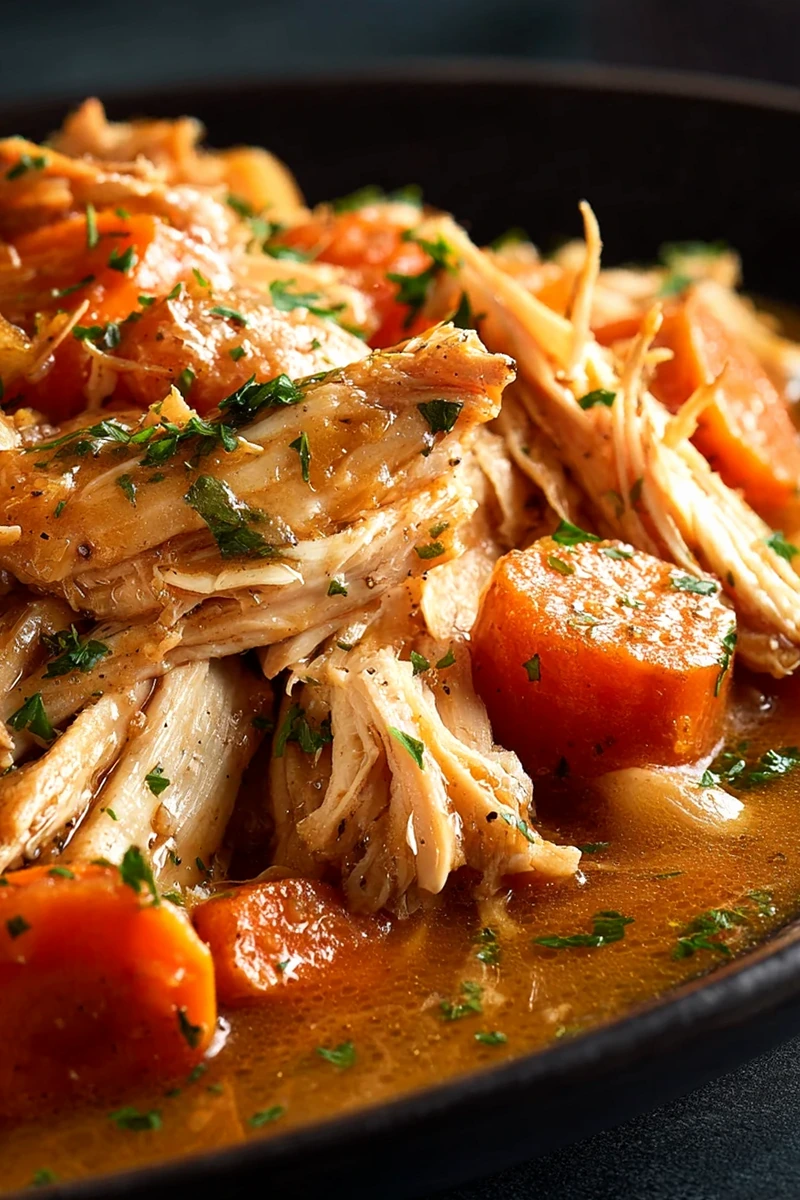
List of ingredients
- 2-3 pounds boneless skinless chicken thighs – provides optimal moisture and tenderness during slow cooking.
- 2 carrots, sliced – adds natural sweetness and a bright color to the dish.
- 2 celery stalks, sliced – contributes an essential aromatic base.
- 1 onion, sliced – provides savory depth and richness to the sauce.
- 1 cup chicken stock – serves as the primary braising liquid.
- 1 (1 ounce) envelope au jus mix – delivers a concentrated savory and salty flavor.
- 1 (1 ounce) envelope chicken gravy mix – acts as the thickening agent for the sauce.
- 1 teaspoon garlic powder – adds a consistent garlic aroma throughout the meat.
- 1 teaspoon onion powder – reinforces the overall savory profile of the roast.
- ½ teaspoon black pepper – provides a subtle heat and seasoning balance.
step-by-step instructions
- Prepare the Base: Place the chicken thighs in the bottom of the crockpot.
- Layer Vegetables: Add the sliced carrots, celery, and onion on top of the chicken pieces.
- Mix the Sauce: In a separate mixing bowl, combine the chicken stock, au jus mix, gravy mix, garlic powder, onion powder, and black pepper.
- Combine Ingredients: Pour the prepared sauce mixture evenly over the chicken and vegetables in the crockpot.
- Slow Cook: Cover with the lid and cook on low for 6-8 hours or on high for 4-5 hours until the chicken is tender and easily pulls apart.
- Final Step: Serve the roast hot directly from the slow cooker.
Meat Selection and Preparation
Advantages of Using Chicken Thighs
Chicken thighs are the preferred cut for slow cooking because they contain more connective tissue and fat than breasts. This allows the meat to remain succulent and tender even after several hours of heat exposure.
Adapting the Recipe for Chicken Breasts
If you choose to use boneless skinless chicken breasts, reduce the cooking time to avoid dryness. Breasts lack the fat of thighs and can become stringy if cooked for the full 8 hours on low.
Incorporating Bone-In Chicken
Using bone-in chicken thighs can add additional depth to the sauce due to the marrow and collagen released during the cooking process. Ensure you adjust the layering to fit the larger pieces of meat.
Trimming Excess Fat
While some fat is necessary for flavor, removing large chunks of excess skin or fat from the thighs can result in a cleaner sauce. This helps prevent an overly oily layer from forming on top of the gravy.
Optimizing Vegetable Texture
Slicing Vegetables for Uniformity
Cut your carrots and celery into consistent sizes to ensure they cook at the same rate. This prevents some pieces from turning to mush while others remain undercooked.
Adding Hearty Root Vegetables
Potatoes or parsnips make excellent additions to this roast. Place them at the bottom or middle of the pot so they are fully submerged in the liquid for thorough cooking.
Integrating Green Vegetables
Avoid adding peas, spinach, or green beans at the beginning of the cooking process. Stir these in during the last 30 minutes of cooking to maintain their color and snap.
Managing Moisture with Frozen Vegetables
If using frozen mixed vegetables, add them toward the end of the cycle. Frozen vegetables release more water than fresh ones, which can thin out the gravy if added too early.
Sauce and Flavor Enhancements
Controlling the Salt Content
Since both au jus and gravy mixes contain salt, use low-sodium chicken stock to avoid an overly salty result. You can taste the sauce at the end and add salt only if necessary.
Creating a Thicker Gravy
If the sauce is too thin after cooking, mix one tablespoon of cornstarch with a tablespoon of cold water. Stir this slurry into the hot liquid during the final 15 minutes of cooking.
Introducing Fresh Herbal Notes
Adding a sprig of fresh thyme or rosemary on top of the vegetables enhances the aromatic profile. Remove the woody stems before serving to ensure a smooth texture.
Boosting Umami Profiles
A small amount of mushroom powder or a dash of soy sauce can deepen the savory notes of the sauce. These additions complement the au jus mix and provide a richer color.
Slow Cooker Management
Choosing Between Low and High Settings
The low setting is ideal for maximum tenderness as it breaks down connective tissues more slowly. The high setting is useful for tighter schedules but may result in slightly firmer meat.
Preventing Pot Overcrowding
Leave about an inch of space at the top of the crockpot to allow for proper steam circulation. Overfilling the pot can lead to uneven cooking and potential boil-overs.
Utilizing Slow Cooker Liners
Using a BPA-free plastic liner makes the cleanup process significantly faster. This is especially helpful when dealing with thick gravies that can stick to the ceramic walls.
The Importance of the Lid Seal
Avoid lifting the lid during the cooking process to keep the internal temperature stable. Every time the lid is opened, a significant amount of heat and moisture escapes, extending the cook time.
Serving and Pairing Ideas
Serving Over Mashed Potatoes
Mashed potatoes are a classic pairing that absorbs the savory gravy perfectly. Ensure the potatoes are well-seasoned with butter and milk to balance the saltiness of the roast.
Pairing with Steamed Rice
White or brown rice provides a neutral base that lets the flavor of the chicken and vegetables shine. The rice grains soak up the sauce, making the meal more filling.
Accompaniment of Crusty Bread
Serve the dish with toasted baguette slices or warm sourdough bread. The bread is ideal for scooping up the remaining sauce and vegetables from the plate.
Adding a Fresh Side Salad
A crisp garden salad with a vinaigrette dressing provides a necessary acidic contrast to the rich, savory flavors of the pot roast. This balances the palate and refreshes the meal.
Storage and Preservation
Safe Cooling Procedures
Allow the roast to cool to room temperature for no more than two hours before refrigerating. This prevents the growth of harmful bacteria in the center of the meat.
Using Airtight Storage Containers
Store the chicken and vegetables in glass or plastic airtight containers to keep the moisture locked in. This prevents the meat from drying out and stops odors from leaking into the fridge.
Freezing for Long-Term Use
This dish freezes well for up to three months when stored in freezer-safe bags. Remove as much air as possible from the bag to prevent freezer burn on the chicken.
Proper Thawing Techniques
Thaw frozen portions slowly in the refrigerator overnight. Avoid thawing at room temperature to ensure food safety and maintain the integrity of the sauce.
Reheating Guidelines
Stovetop Simmering Method
The best way to reheat is in a saucepan over low heat. Add a splash of chicken stock or water to loosen the gravy and keep the chicken moist.
Microwave Reheating Instructions
Place a portion in a microwave-safe dish and cover it with a damp paper towel. Heat in short intervals, stirring in between, to ensure even heating without overcooking the meat.
Oven Reheating for Large Portions
Transfer the roast to an oven-safe dish and cover it tightly with aluminum foil. Heat at 325 degrees Fahrenheit until the center is warmed through.
Maintaining Moisture During Reheat
Always add a small amount of liquid when reheating slow-cooked meals. The sauce tends to thicken in the refrigerator, and extra liquid restores the original consistency.
Troubleshooting Common Issues
Addressing Dry Chicken
Dry chicken is often the result of using breasts or cooking for too long on the high setting. Switch to thighs or reduce the time if you notice the meat becoming stringy.
Preventing Mushy Vegetables
Vegetables can become overcooked if they are placed at the very bottom of the pot. Layer them on top of the meat so they steam and braise more gently.
Fixing a Thin Sauce
A thin sauce usually occurs if too much liquid was added or if the lid was not sealed. Use a cornstarch slurry or simmer the sauce in a pan to reduce it.
Correcting Bland Flavor
If the dish lacks punch, stir in a teaspoon of lemon juice or apple cider vinegar at the end. The acidity brightens the heavy flavors and enhances the savory notes.
Frequently Asked Questions
Can I use a pressure cooker for this recipe?
Yes, you can adapt this for a pressure cooker. Reduce the cooking time to approximately 45-60 minutes under high pressure with a natural release.
Is it possible to use frozen chicken?
You can use frozen chicken, but it is safer to thaw it first. If cooking from frozen, increase the slow cooker time by 2 hours to ensure the internal temperature reaches safety limits.
Can I substitute the chicken stock?
Vegetable broth is a suitable substitute for chicken stock. This will maintain the volume of the sauce while slightly altering the flavor profile.
Can I add potatoes to the roast?
Yes, you can add diced potatoes. Place them under the chicken so they cook thoroughly in the liquid without becoming too soft on top.
Print
Slow Cooker Chicken Pot Roast
- Total Time: 6 hours 15 minutes
- Yield: 6 servings 1x
- Diet: General
Description
A comforting and hearty slow-cooked chicken pot roast with tender chicken and vegetables.
Ingredients
- 2–3 pounds boneless skinless chicken thighs
- 2 carrots, sliced
- 2 celery stalks, sliced
- 1 onion, sliced
- 1 cup chicken stock
- 1 (1 ounce) envelope au jus mix
- 1 (1 ounce) envelope chicken gravy mix
- 1 teaspoon garlic powder
- 1 teaspoon onion powder
- ½ teaspoon black pepper
Instructions
- Step: Place chicken thighs in the crockpot.
- Step: Add sliced carrots, celery, and onion on top of the chicken.
- Step: In a bowl, mix chicken stock, au jus mix, gravy mix, garlic powder, onion powder, and black pepper.
- Step: Pour the sauce over the chicken and vegetables in the crockpot.
- Step: Cover and cook on low for 6-8 hours or high for 4-5 hours until chicken is tender.
- Step: Serve hot.
Notes
For a thicker gravy, you can add a cornstarch slurry towards the end of cooking. Ensure the chicken is fully cooked before serving.
- Prep Time: 15 minutes
- Cook Time: 6 hours
- Category: Main Course
- Method: Slow Cooking
- Cuisine: American
Nutrition
- Serving Size: 1 serving
- Calories: 350 kcal
- Sugar: 6 g
- Sodium: 1200 mg
- Fat: 15 g
- Saturated Fat: 4 g
- Unsaturated Fat: 11 g
- Trans Fat: 0 g
- Carbohydrates: 25 g
- Fiber: 4 g
- Protein: 30 g
- Cholesterol: 110 mg