
This slow cooker pot roast is the ultimate comfort meal, featuring succulent, fork-tender beef and hearty vegetables bathed in a deep, savory gravy. It is a perfect set-it-and-forget-it solution for busy households wanting a restaurant-quality dinner without the stress. Simply sear your beef, toss everything in the slow cooker, and let the magic happen over the course of the day.
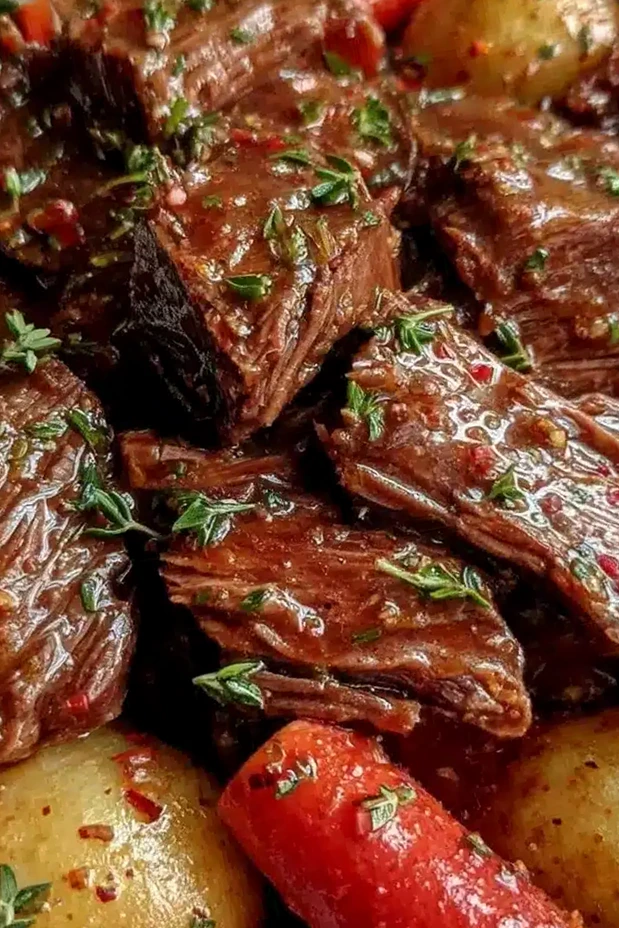
List of ingredients
- 3-4 pounds beef chuck roast
- Salt and freshly cracked black pepper, to taste
- 2 tablespoons olive oil or vegetable oil
- 1 large yellow onion, sliced
- 4 medium carrots, peeled and cut into chunks
- 2 celery stalks, cut into chunks
- 4 garlic cloves, minced
- 3 cups beef broth (low sodium preferred)
- 2 tablespoons tomato paste
- 1 tablespoon Worcestershire sauce
- 2-3 sprigs fresh thyme
- 2-3 sprigs fresh rosemary
- 2 bay leaves
- 2 tablespoons all-purpose flour or cornstarch
step-by-step instructions
- Step: Pat the beef chuck roast dry with paper towels and season all sides generously with salt and freshly cracked black pepper.
- Step: Heat 2 tablespoons of olive oil in a large skillet over medium-high heat. Sear the roast for 4-5 minutes per side until a deep brown crust forms.
- Step: While the roast is searing, slice the onion, peel and chunk the carrots, cut the celery stalks, and mince the garlic.
- Step: Place the onion, carrots, celery, and garlic at the bottom of the slow cooker. Lay the seared roast on top of the vegetables.
- Step: Pour 3 cups beef broth over the roast. Stir in tomato paste and Worcestershire sauce. Add thyme, rosemary, and bay leaves around the roast.
- Step: Cover and cook on low for 8 to 10 hours or on high for 4 to 6 hours until the roast is fork-tender and falls apart easily.
- Step: Remove the roast and vegetables to a serving platter and cover loosely with foil to keep warm. Skim excess fat from the slow cooker liquid.
- Step: In a small bowl, mix flour or cornstarch with cold water to create a slurry. Stir the slurry into the slow cooker liquid and cook on high for 10-15 minutes, whisking occasionally until thickened and glossy.
- Step: Slice or shred the pot roast and spoon the rich gravy over the top. Serve vegetables alongside or under the beef.
Refining the Cooking Process
Managing Temperature for Maximum Tenderness
Using the low setting on your slow cooker is highly recommended for tough cuts like beef chuck. The gentle heat allows the connective tissues to break down slowly into gelatin, which creates that classic melt-in-your-mouth texture. High heat can sometimes cause the muscle fibers to tighten, resulting in a slightly grainier texture.
The Role of Searing in Flavor Development
Never skip the searing step even when you are in a rush. The Maillard reaction occurs on the surface of the meat during searing, which produces hundreds of different flavor compounds. These flavors are then transferred into the liquid as it simmers, resulting in a much more complex gravy than if you simply boiled the raw meat.
Avoiding Common Thickening Pitfalls
Always mix your thickener, such as cornstarch or flour, with cold liquid before adding it to the hot braising liquid. Adding dry powder directly into the pot will cause immediate clumping. Stir the slurry in slowly while the liquid is bubbling to monitor the consistency, and allow it to boil for at least a full minute to remove the raw flour taste.
Practical Substitutions and Additions
Modifying the Vegetable Base
If you prefer a heartier meal, you can easily incorporate waxy potatoes like Yukon Gold or red potatoes into the bottom of the slow cooker. Cut them into two-inch chunks so they remain firm and do not disintegrate during the extended cooking cycle. Root vegetables like parsnips or turnips also make excellent additions if you want to diversify the flavor profile.
Adjusting Herb Profiles
While thyme and rosemary are classic pairings for beef, you can experiment with other aromatics depending on your pantry availability. Dried oregano or sage can be used if you lack fresh options, though you should reduce the quantity significantly because dried herbs are more concentrated. Simply tie the herbs together with kitchen twine to make removing the stems easier at the end of the cooking process.
Serving and Presentation Strategies
Building a Balanced Plate
To balance the savory richness of this pot roast, consider serving it alongside acidic or bright side dishes. A vibrant cucumber salad tossed in vinegar or simple roasted broccoli with a squeeze of lemon juice provides a refreshing contrast. The acidity cuts through the fat of the gravy, cleansing the palate between bites of tender beef.
Creating Texture Contrast
Since the pot roast and the vegetables are naturally soft, adding a crunch factor can significantly improve the dining experience. Serving the dish over a bed of crusty toasted bread or with a side of savory garlic-herb croutons creates a satisfying contrast. Alternatively, crispy fried onions sprinkled over the top before serving adds a pleasant, light texture that complements the dense, slow-cooked meat.
Storage and Reheating Methods
Managing Leftovers for Future Meals
This dish is notorious for tasting even better the next day as the collagen and juices settle back into the meat. Store the beef and vegetables submerged in the gravy within an airtight container to prevent the meat from drying out in the refrigerator. This will stay safe and delicious for up to three full days when properly chilled.
Optimal Reheating Techniques
To reheat, use a saucepan on the stovetop over low heat rather than the microwave. Adding a splash of water or extra beef broth helps loosen the gravy and generates steam, ensuring the meat stays moist. If using a microwave, cover the dish with a damp paper towel and heat in thirty-second intervals to avoid overheating and toughening the fibers.
Frequently Asked Questions
Can I cook this recipe for longer than 10 hours?
If you must leave the house for an extended period, it is safer to use a timed slow cooker that automatically switches to a warm setting. Once the beef reaches the fork-tender stage, leaving it on high or low for too long can eventually cause the meat to dry out or lose its shape, so the warm setting is ideal for preserving quality.
Why does the gravy look oily on top?
Beef chuck roast naturally contains a significant amount of intramuscular fat that renders out during the long cooking process. This is perfectly normal and desired for flavor, but you should skim the excess fat off the top using a large spoon before thickening the gravy. If there is a large amount of fat, you can place a piece of bread on the surface for a few seconds to absorb the excess oil.
Can I add mushrooms for extra flavor?
Mushrooms are a fantastic addition to this pot roast and pair naturally with the earthiness of the thyme and rosemary. Add roughly chopped cremini or button mushrooms when you add the onions and carrots. They will shrink significantly, so do not hesitate to use a generous portion if you enjoy their texture.
Is it necessary to strain the gravy?
Straining is purely a matter of personal preference regarding the final texture of your sauce. If you prefer a completely smooth gravy, you can strain the solids out after the cooking process. However, most people enjoy the rustic texture provided by the softened bits of onion, garlic, and carrot, which add heartiness to the final bowl.
Print
Slow Cooker Pot Roast With Rich Gravy
- Total Time: 560 minutes
- Yield: 6 servings 1x
- Diet: High Protein
Description
A hands-off slow cooker recipe for tender, melt-in-your-mouth beef chuck roast served with a rich, flavorful gravy. Perfect for cozy dinners and family gatherings.
Ingredients
- 3–4 pounds beef chuck roast
- Salt and freshly cracked black pepper, to taste
- 2 tablespoons olive oil or vegetable oil
- 1 large yellow onion, sliced
- 4 medium carrots, peeled and cut into chunks
- 2 celery stalks, cut into chunks
- 4 garlic cloves, minced
- 3 cups beef broth (low sodium preferred)
- 2 tablespoons tomato paste
- 1 tablespoon Worcestershire sauce
- 2–3 sprigs fresh thyme
- 2–3 sprigs fresh rosemary
- 2 bay leaves
- 2 tablespoons all-purpose flour or cornstarch
Instructions
- Step: Pat the beef chuck roast dry with paper towels and season all sides generously with salt and freshly cracked black pepper.
- Step: Heat 2 tablespoons of olive oil in a large skillet over medium-high heat. Sear the roast for 4-5 minutes per side until a deep brown crust forms.
- Step: While the roast is searing, slice the onion, peel and chunk the carrots, cut the celery stalks, and mince the garlic.
- Step: Place the onion, carrots, celery, and garlic at the bottom of the slow cooker. Lay the seared roast on top of the vegetables.
- Step: Pour 3 cups beef broth over the roast. Stir in tomato paste and Worcestershire sauce. Add thyme, rosemary, and bay leaves around the roast.
- Step: Cover and cook on low for 8 to 10 hours or on high for 4 to 6 hours until the roast is fork-tender and falls apart easily.
- Step: Remove the roast and vegetables to a serving platter and cover loosely with foil to keep warm. Skim excess fat from the slow cooker liquid.
- Step: In a small bowl, mix flour or cornstarch with cold water to create a slurry. Stir the slurry into the slow cooker liquid and cook on high for 10-15 minutes, whisking occasionally until thickened and glossy.
- Step: Slice or shred the pot roast and spoon the rich gravy over the top. Serve vegetables alongside or under the beef.
Notes
Searing the roast before slow cooking adds flavor and texture. Use cornstarch instead of flour for a gluten-free gravy. If gravy is too thin, cook uncovered longer; if too thick, add broth. Avoid overcrowding the slow cooker for even cooking. Fresh herbs preferred but dried can be used at one-third the amount.
- Prep Time: 20 minutes
- Cook Time: 540 minutes
- Category: Main Course
- Method: Slow Cooker
- Cuisine: American
Nutrition
- Serving Size: 6-ounce (170 g) serving
- Calories: 350 kcal
- Sugar: 4 g
- Sodium: 450 mg
- Fat: 18 g
- Saturated Fat: 7 g
- Unsaturated Fat: 9 g
- Trans Fat: 0 g
- Carbohydrates: 8 g
- Fiber: 2 g
- Protein: 28 g
- Cholesterol: 95 mg