
These savory noodles come together in under 20 minutes, making them an ideal choice for quick weeknight dinners. They balance spicy, sweet, and salty notes for a restaurant-quality meal at home.
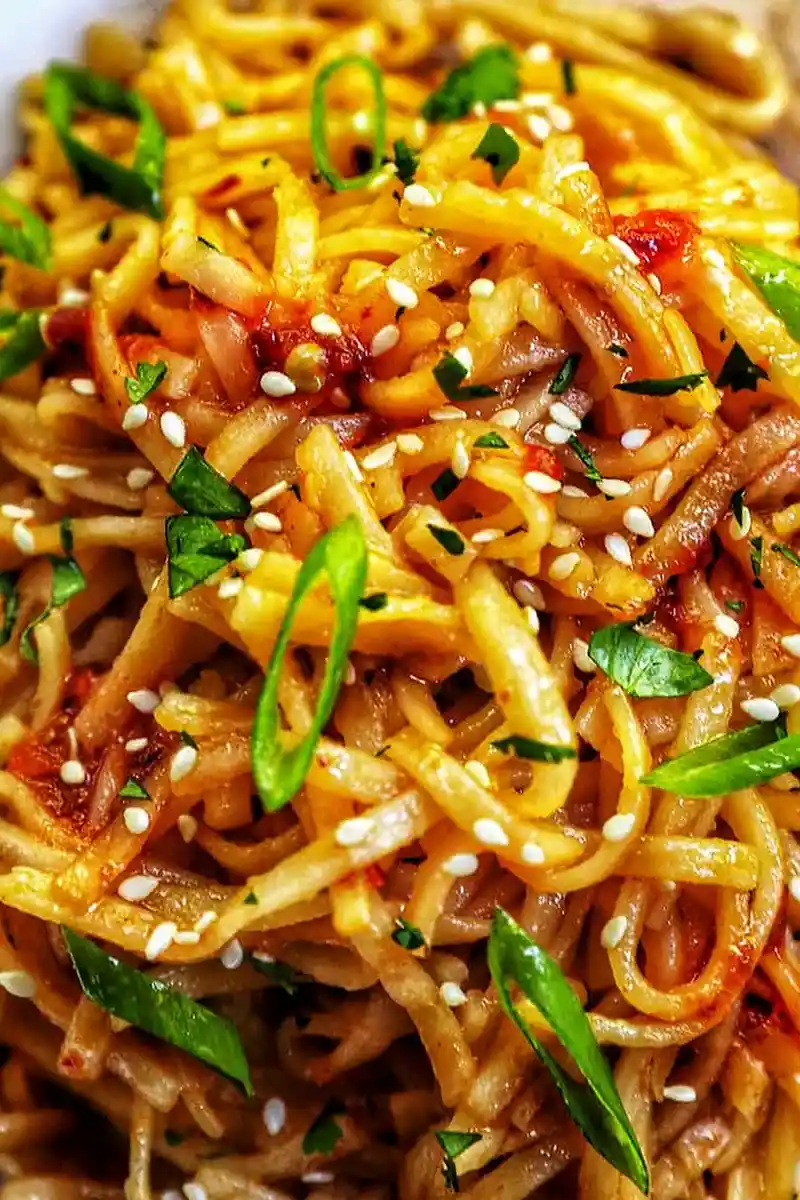
List of ingredients
- 8 ounces rice noodles – the primary base of the dish.
- 1/4 cup Shoyu soy sauce – provides a deep, salty umami flavor.
- 1 Tablespoon Chili Garlic Sauce – adds the signature heat and spice.
- 4 garlic cloves, minced – for a pungent, aromatic foundation.
- 2 teaspoons grated ginger – adds a fresh, zingy warmth.
- 2 Tablespoons light brown sugar – balances the salt with a hint of sweetness.
- 2 teaspoons toasted sesame oil – provides a nutty aroma and richness.
- 2 scallions, sliced thinly – used for a fresh, onion-like garnish.
- 1/4 cup chopped fresh cilantro – adds a bright, herbal finish.
- 1 Tablespoon sesame seeds – provides texture and visual appeal.
- 2 Tbsp peanut oil – used for high-heat stir-frying.
step-by-step instructions
- Prepare the noodles: In a large pot, cook the rice noodles according to the package instructions.
- Mix the sauce: While the noodles are cooking, whisk together the soy sauce, chili garlic sauce, garlic, ginger, brown sugar, and sesame oil in a medium bowl. Set the mixture aside.
- Sauté aromatics: Heat the peanut oil in a large wok or skillet over medium-high heat. Once hot, add the ginger and garlic and stir-fry for 30 seconds to one minute.
- Combine: Drain the noodles and add them along with the prepared sauce to the wok. Toss thoroughly to coat all the noodles in the sauce.
- Stir-fry: Increase the heat to high and stir-fry the mixture, stirring constantly, for approximately 2 minutes.
- Garnish and serve: Remove the pan from the heat and garnish with sliced scallions, chopped cilantro, and sesame seeds.
Guide to the Components
Choosing the Best Rice Noodles
Wide rice noodles are recommended for this recipe as they hold the sauce well and offer a satisfying chew. You can also use thin rice vermicelli for a lighter version, though they cook much faster.
Understanding Shoyu Soy Sauce
Shoyu is a traditionally brewed soy sauce that offers a richer and more complex flavor than standard soy sauce. For a different taste, you can use dark soy sauce for a deeper color or tamari for a gluten-free option.
Adjusting the Chili Garlic Sauce
The heat level of the dish depends entirely on the amount of chili garlic sauce used. If you prefer a milder flavor, reduce the amount to a teaspoon; for extra heat, add an additional tablespoon.
The Role of Brown Sugar
Light brown sugar adds a subtle molasses depth that balances the saltiness of the soy sauce. It helps the sauce caramelize slightly during the stir-fry process, creating a glossy glaze on the noodles.
Fresh vs. Powdered Ginger
Using freshly grated ginger is essential for the authentic, zingy flavor of this dish. Powdered ginger lacks the brightness and aromatic quality required for a proper stir-fry sauce.
Customizations and Add-ins
Adding Protein for a Heartier Meal
You can easily turn this side dish into a main course by adding protein. Sauté cubed tofu, shrimp, or sliced chicken breast in the wok before adding the noodles.
Incorporating Fresh Vegetables
To add nutrition and color, toss in shredded carrots, sliced bell peppers, or broccoli florets. Cook the vegetables for a few minutes before adding the cooked noodles and sauce.
Using Alternative Noodles
If you do not have rice noodles, wheat-based lo mein, udon, or soba noodles are excellent substitutes. Even linguine pasta can work in a pinch if boiled until al dente.
Herbal Substitutions for Cilantro
If you are not a fan of cilantro, fresh Italian parsley is a great alternative for a green garnish. You can also omit the herbs entirely without ruining the flavor of the sauce.
Expanding the Sauce Profile
For a richer, more savory sauce, consider adding a tablespoon of hoisin sauce or vegetarian mushroom sauce. These additions provide a thicker consistency and more complex sweetness.
Preservation and Storage
Refrigerating Leftovers
Store any remaining noodles in an airtight container in the refrigerator. They will stay fresh and safe to eat for up to three or four days.
Preventing Noodle Clumping
To stop the noodles from sticking together during storage, toss them with a tiny bit of extra sesame oil. This creates a barrier that keeps the strands separate until reheating.
Freezing Considerations
Rice noodles generally do not freeze well as they can become mushy upon thawing. It is best to keep this dish refrigerated and consume it within a few days.
How to Reheat Properly
Microwave Reheating Method
Place a portion of noodles in a microwave-safe bowl and sprinkle one to two teaspoons of water over the top. Heat in 30-second increments, stirring between each interval to ensure even warming.
Stovetop Reheating Method
Heat a small skillet over medium heat with a splash of water or a teaspoon of oil. Stir the noodles constantly for two to three minutes until they are heated through and glossy.
Refreshing the Flavor
When reheating, the noodles may absorb some of the sauce. Add a small splash of soy sauce or a squeeze of lime juice to bring back the vibrant flavors.
Refreshing Beverage Pairings
Iced Green Tea
Unsweetened iced green tea is an excellent pairing because it cleanses the palate between spicy bites. The natural tannins in the tea balance the richness of the sesame oil.
Sparkling Water with Lime
Carbonated water with a fresh squeeze of lime helps cut through the saltiness of the soy sauce. This is a refreshing, calorie-free option that complements the ginger notes.
Cucumber Lemonade
A chilled cucumber lemonade provides a cooling contrast to the heat of the chili garlic sauce. The sweetness of the lemonade balances the spicy elements of the dish.
Essential Cooking Tools
Using a Wok for High Heat
A wok is ideal because its shape allows for rapid stir-frying and easy tossing of ingredients. If you do not own one, a large non-stick skillet with high sides is a suitable substitute.
The Benefit of Kitchen Tongs
Tongs are the most efficient tool for tossing noodles in a sauce without breaking them. They allow you to lift and twirl the noodles to ensure every strand is evenly coated.
Wooden Spoons for Aromatics
A wooden spoon is perfect for stirring the garlic and ginger in hot oil. It is heat-resistant and won’t scratch the surface of your wok or skillet.
Troubleshooting and FAQs
Why are my rice noodles mushy?
Mushy noodles usually result from overcooking them in the initial boiling stage. Try cooking them for one minute less than the package instructions so they stay firm during the stir-fry.
How do I stop the garlic from burning?
Garlic burns quickly in hot oil, which can make the dish bitter. Keep the garlic moving constantly and add the noodles and sauce as soon as the garlic becomes fragrant.
Can this recipe be made vegan?
Yes, this recipe is naturally vegan as written. Just ensure that your chosen soy sauce and chili garlic sauce do not contain honey or animal-derived additives.
The sauce is too salty, what should I do?
If the sauce is too salty, add a small amount of brown sugar or a squeeze of lime juice. The acidity and sweetness will help neutralize the saltiness of the soy sauce.
Can I use a different oil for frying?
If you do not have peanut oil, vegetable oil or canola oil are excellent alternatives. These oils have high smoke points, which are necessary for the stir-fry process.
Ways to Serve These Noodles
Serving as a Main Course
To make this a full meal, serve the noodles in a large bowl topped with a jammy soft-boiled egg. Adding a side of steamed bok choy provides a healthy balance of nutrients.
Using Noodles as a Side Dish
These noodles pair perfectly with grilled proteins like teriyaki chicken or garlic shrimp. Their bold flavor makes them a great accompaniment to simpler grilled meats.
Adding a Fresh Contrast
Serve the spicy noodles alongside a chilled cucumber salad with rice vinegar. The cool, acidic nature of the salad cuts through the heat and richness of the noodles.
Print
Spicy Chili Garlic Rice Noodles
- Total Time: 15 minutes
- Yield: 6 servings 1x
- Diet: Vegan
Description
These noodles are easy to make in just 15-20 minutes, and are great as a side dish or the main course.
Ingredients
- 8 ounces rice noodles
- ¼ cup Shoyu soy sauce
- 1 Tablespoon Chili Garlic Sauce
- 4 garlic cloves, minced
- 2 teaspoons grated ginger
- 2 Tablespoons light brown sugar
- 2 teaspoons toasted sesame oil
- 2 scallions, sliced thinly
- ¼ cup chopped fresh cilantro
- 1 Tablespoon sesame seeds
- 2 Tbsp peanut oil
Instructions
- Step 1: In a large pot, cook the rice noodles according to package instructions. While the noodles are cooking, make the sauce.
- Step 2: In a medium bowl, whisk together the soy sauce, chili garlic sauce, garlic, ginger, brown sugar, and sesame oil. Set aside.
- Step 3: Heat the peanut oil in a large wok or skillet. Once hot, add the ginger and garlic and stir to cook for 30 seconds to one minute.
- Step 4: Drain the noodles and add the cooked noodles and the sauce to the wok. Toss to coat the noodles with the sauce.
- Step 5: Increase the heat to high and stir-fry, constantly stirring, for 2 minutes.
- Step 6: Remove from heat and garnish with scallions, cilantro, and sesame seeds.
Notes
Store noodles in an airtight container in the refrigerator for up to 4 days. To reheat, place in a microwave-safe bowl, sprinkle with 1-2 teaspoons of water, and microwave in 30-second increments.
- Prep Time: 5 minutes
- Cook Time: 10 minutes
- Category: Dinner
- Method: Stir-fry
- Cuisine: Asian
Nutrition
- Serving Size: 1 serving
- Calories: 231 kcal
- Sugar: 5 g
- Sodium: 890 mg
- Fat: 7 g
- Saturated Fat: 1 g
- Unsaturated Fat: 6 g
- Trans Fat: 0 g
- Carbohydrates: 39 g
- Fiber: 1 g
- Protein: 3 g
- Cholesterol: 0 mg