
This Pasta Arrabbiata is a fast, fiery Italian meal that comes together in just 30 minutes. It combines a rich tomato base with garlic and chili for a bold, pungent flavor profile.
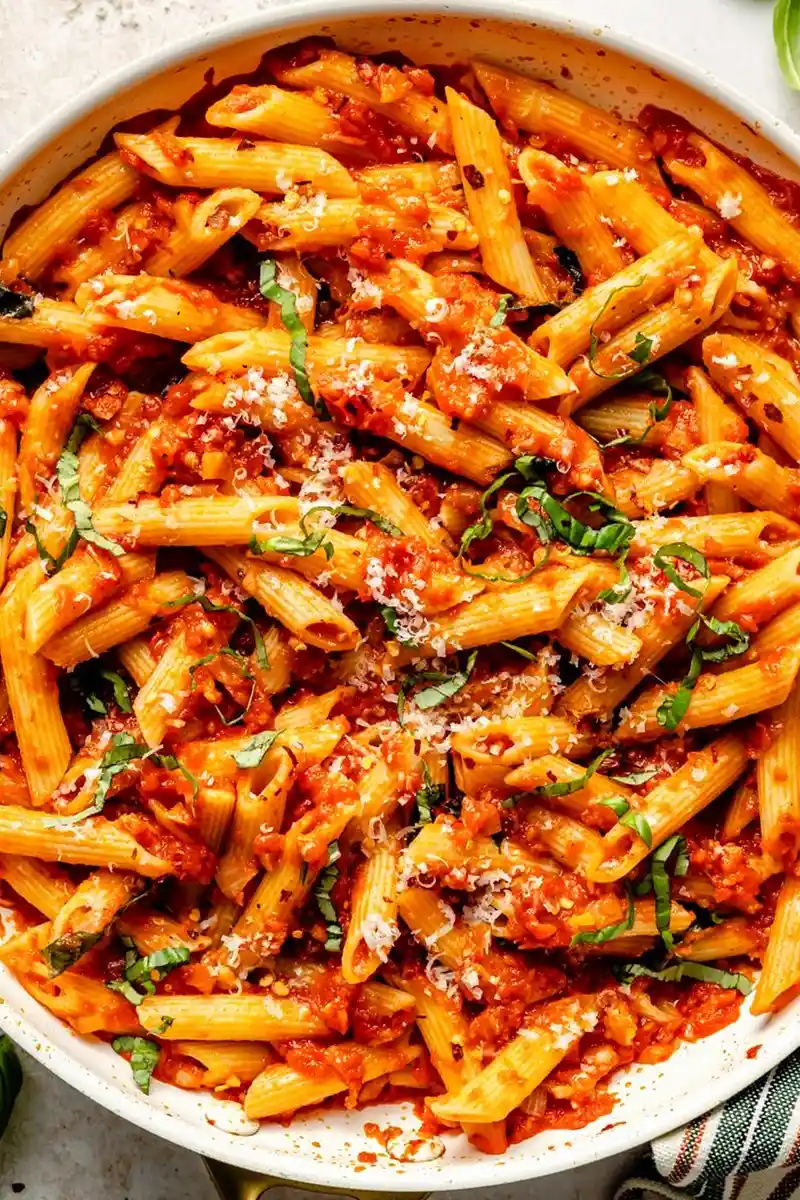
List of ingredients
- 1/2 medium onion, finely chopped – provides a sweet base.
- 1/4 cup extra-virgin olive oil – used for sautéing and richness.
- 4 garlic cloves, crushed or minced – essential for aromatic depth.
- 1 fresh cayenne chili pepper, chopped (remove seeds for less heat) – adds fresh spice.
- 1/2 teaspoon red pepper flakes, or to taste – increases the overall heat level.
- 1 (28-ounce) can crushed tomato – the main body of the sauce.
- 1 teaspoon salt, or to taste – enhances all other flavors.
- 1/4 teaspoon black pepper – adds a subtle woody spice.
- 6-8 basil leaves, chopped – provides a fresh, herbal finish.
- 8-12 ounces pasta of choice – the base for the spicy sauce.
- Freshly grated Parmigiano cheese, optional – adds a salty, nutty top note.
step-by-step instructions
- Prepare the Sauce Base: Heat olive oil in a large heavy-duty skillet over medium-high heat. Add the chopped onion and cook on medium heat for 5-7 minutes until the edges are golden brown.
- Sauté Aromatics: Add the crushed garlic, chopped cayenne pepper, and red pepper flakes to the skillet. Saute for only 30 seconds to avoid burning the garlic before pouring in the crushed tomatoes.
- Simmer the Sauce: Season the tomato mixture with salt and black pepper. Bring the sauce to a boil, then reduce the heat to low, partially cover with a lid, and simmer for 15-20 minutes.
- Boil the Pasta: Fill a large pot 2/3 full with water and add a generous amount of salt. Cook the pasta until al dente, then reserve 1 cup of the starchy pasta water before draining the noodles.
- Combine Ingredients: Toss the drained pasta into the skillet with the sauce and add 1/2 cup of the reserved pasta water. Stir in the chopped basil and increase the heat, mixing for 2-3 minutes until the sauce clings to the pasta.
- Plating: Remove the pan from the heat and divide the pasta into bowls. Garnish with additional fresh basil, parsley, or grated Parmigiano cheese before serving.
Customizing the Heat Level
Reducing the Spice for Mild Palates
To lower the intensity, remove all seeds and membranes from the fresh cayenne pepper before chopping. You can also omit the red pepper flakes entirely or replace them with a small amount of paprika for color without the burn.
Increasing the Heat for Maximum Boldness
For those who prefer a fierier dish, leave the seeds in the cayenne pepper. Adding an extra 1/4 teaspoon of red pepper flakes or a dash of cayenne powder during the sautéing phase will significantly increase the spice level.
Alternative Ingredients and Swaps
Selecting Different Tomato Bases
While crushed tomatoes provide a consistent texture, you can use whole peeled San Marzano tomatoes and crush them by hand for a more rustic feel. Tomato puree can be used for a smoother, thicker sauce, though it may lack the chunky texture of crushed tomatoes.
Choosing the Right Pasta Shape
Penne is the traditional choice because its hollow center and ridges trap the spicy sauce. Rigatoni or fusilli are excellent alternatives that also hold heavy sauces well, while spaghetti works for those who prefer longer noodles.
Oil Alternatives for Sautéing
Extra-virgin olive oil is preferred for its flavor, but light olive oil can be used if you prefer a more neutral taste. Avocado oil is a suitable high-smoke-point alternative if you intend to sauté the onions at a higher temperature.
Replacing Fresh Cayenne Peppers
If fresh cayenne is unavailable, use a fresh serrano or bird’s eye chili for a similar heat profile. In a pinch, increasing the amount of red pepper flakes can replace the fresh pepper, though you will lose some of the fresh pepper’s brightness.
Enhancing the Dish with Proteins and Vegetables
Adding Grilled Chicken or Shrimp
To add protein, sauté bite-sized pieces of chicken breast or shrimp in a separate pan until cooked through. Toss the cooked protein into the sauce at the same time as the pasta to ensure everything is heated evenly.
Incorporating Sautéed Mushrooms
Sliced cremini or button mushrooms add an earthy depth to the spicy sauce. Sauté them in olive oil until browned before adding the onions to the pan to ensure they don’t release too much moisture into the base.
Adding Zucchini or Bell Peppers
Diced zucchini or red bell peppers provide extra nutrients and a pop of color. Add these vegetables to the skillet after the onions have browned but before adding the tomatoes, cooking them for 3-4 minutes until tender.
Advanced Cooking Techniques
Mastering the Onion Sauté
Avoid rushing the onion cooking process to ensure the natural sugars caramelize. Cooking them on medium heat for the full 5-7 minutes removes the raw onion bite and creates a sweeter contrast to the spicy chili.
Managing Garlic to Prevent Burning
Garlic burns quickly and becomes bitter, which can ruin the sauce. Always add garlic after the onions are ready and cook it for no more than 30-60 seconds before introducing the liquid tomato base.
The Importance of Simmering
Simmering the sauce for 15-20 minutes allows the water in the tomatoes to evaporate and the flavors to concentrate. This process mellows the acidity of the canned tomatoes and integrates the heat of the peppers into the liquid.
Emulsifying with Pasta Water
Pasta water contains starch released from the noodles during boiling. Adding this water to the sauce helps it emulsify, creating a glossy coating that clings to the pasta rather than sliding off to the bottom of the bowl.
Serving and Pairing Ideas
Pairing with Garlic Bread
Toasted baguette slices rubbed with raw garlic and topped with butter are ideal for this meal. The buttery bread helps neutralize the heat of the Arrabbiata and allows you to scoop up every bit of remaining sauce.
Balancing with a Fresh Side Salad
A simple green salad with a lemon-based vinaigrette provides a refreshing contrast to the heavy, spicy pasta. Mixed greens, cucumber, and cherry tomatoes offer a crisp texture that cleanses the palate between bites.
Choosing the Right Cheese Garnish
Parmigiano-Reggiano provides a sharp, salty finish that complements the spice. For a creamier profile, you can use Pecorino Romano, which is slightly saltier and made from sheep’s milk.
Storage and Reheating Guidelines
Proper Refrigeration Methods
Store leftover pasta in an airtight container in the refrigerator for up to four days. To prevent the pasta from absorbing all the sauce and becoming dry, drizzle a small amount of olive oil over the top before sealing.
Best Practices for Reheating on a Stove
Reheat the pasta in a skillet over medium heat with a splash of water or vegetable broth. This restores the moisture and prevents the sauce from becoming too thick or gummy during the heating process.
Microwave Reheating Tips
Place the pasta in a microwave-safe dish and add a tablespoon of water. Cover the dish with a damp paper towel to trap the steam, which keeps the noodles tender and the sauce fluid.
Meal Prep Strategy
Prepping the Sauce in Advance
You can make the Arrabbiata sauce up to three days before you plan to serve it. Store the sauce separately in the fridge and simply heat it in a pan before adding freshly cooked pasta.
Storing Pasta and Sauce Separately
If prepping for the week, store the cooked pasta and the sauce in separate containers. This prevents the pasta from overcooking and becoming mushy, as you can combine them and heat them together just before eating.
Common Troubleshooting Solutions
Fixing Sauce That Is Too Thick
If the sauce reduces too much during simmering, stir in an additional 1/4 cup of pasta water or vegetable broth. This will loosen the consistency without diluting the bold flavors of the garlic and chili.
Balancing Excess Acidity in Tomatoes
If the canned tomatoes taste too acidic, add a tiny pinch of sugar or a small pat of unsalted butter. These additions neutralize the sharp acid notes without making the sauce taste sweet.
Correcting Overcooked Pasta
If your pasta is too soft, reduce the time it spends simmering in the sauce. Instead of mixing for 3 minutes, toss the pasta in the sauce just long enough to coat it and serve immediately to prevent further softening.
Frequently Asked Questions
What is the best pasta for Arrabbiata?
Penne is the most traditional choice because its shape allows the spicy sauce to enter the tube and cling to the ridges. However, any short-cut pasta like rigatoni or fusilli works well.
Can I make this recipe vegan?
Yes, this recipe is naturally vegan if you omit the Parmigiano cheese. You can replace the cheese with nutritional yeast or a plant-based parmesan alternative for a similar salty flavor.
How do I store leftover Arrabbiata?
Keep leftovers in an airtight container in the fridge for up to 4 days. Always reheat with a bit of extra water to restore the original sauce consistency.
Why is my sauce too spicy?
Excessive heat usually comes from leaving the seeds in the chili or adding too many pepper flakes. You can temper the heat by stirring in a splash of heavy cream or serving the dish with a side of ricotta cheese.
Print
Spicy Pasta Arrabbiata Recipe
- Total Time: 30 minutes
- Yield: 4 servings 1x
- Diet: Vegetarian
Description
Pasta Arrabbiata is a bold and spicy Italian classic that’s incredibly simple to make. It features a rich tomato sauce infused with onion, garlic, chili pepper and red pepper flakes for the perfect amount of heat and flavor.
Ingredients
- ½ medium onion, finely chopped
- 1/4 cup extra-virgin olive oil
- 4 garlic cloves, crushed or minced
- 1 fresh cayenne chili pepper, chopped
- 1/2 teaspoon red pepper flakes
- 1 (28-ounce) can crushed tomato
- 1 teaspoon salt
- ¼ teaspoon black pepper
- 6–8 basil leaves, chopped
- 8–12 ounces pasta of choice
- freshly grated microbial-rennet Parmigiano cheese (optional)
Instructions
- Make the Arrabbiata Sauce: Heat olive oil in a large heavy-duty skillet over medium-high heat. Add the onion and cook on medium heat for 5-7 minutes or until the onion is golden on the edges. Add the garlic, cayenne pepper, and red pepper flakes. Saute for just 30 seconds or until the edges of the garlic begin to turn golden then pour in the crushed tomato and season generously with salt & pepper. Bring to a boil then lower the heat, partially cover with the lid, and simmer for 15-20 minutes.
- Cook Pasta: Meanwhile, fill a large pot 2/3 full with water and generously season with salt. Add the pasta and cook al dente. Reserve about 1 cup of pasta water aside, then drain the pasta.
- Combine: Add the pasta to the sauce and ½ cup of reserved pasta water. Add in the chopped basil and turn up the heat. Mix the pasta into the sauce for 2-3 minutes or until the flavors come together.
- Serve: Remove from heat and divide into pasta bowls. Garnish with more freshly chopped basil or chopped parsley, and/or freshly grated parmesan cheese if desired.
Notes
Save starchy pasta water to help the sauce cling to the noodles. Cook pasta slightly under al dente before tossing in the sauce for the best texture.
- Prep Time: 5 minutes
- Cook Time: 25 minutes
- Category: Main
- Method: Stovetop
- Cuisine: Italian
Nutrition
- Serving Size: 1 serving
- Calories: 341 kcal
- Sugar: 2 g
- Sodium: 591 mg
- Fat: 14 g
- Saturated Fat: 2 g
- Unsaturated Fat: 12 g
- Trans Fat: 0 g
- Carbohydrates: 45 g
- Fiber: 2 g
- Protein: 8 g
- Cholesterol: 5 mg