
This vibrant Hawaiian-style side dish combines the tropical sweetness of crushed pineapple with the aromatic qualities of jasmine rice. It is a quick, one-pot recipe that delivers a balanced flavor profile, making it an ideal accompaniment to grilled proteins. Prepare this dish in just 30 minutes for a bright addition to any meal.
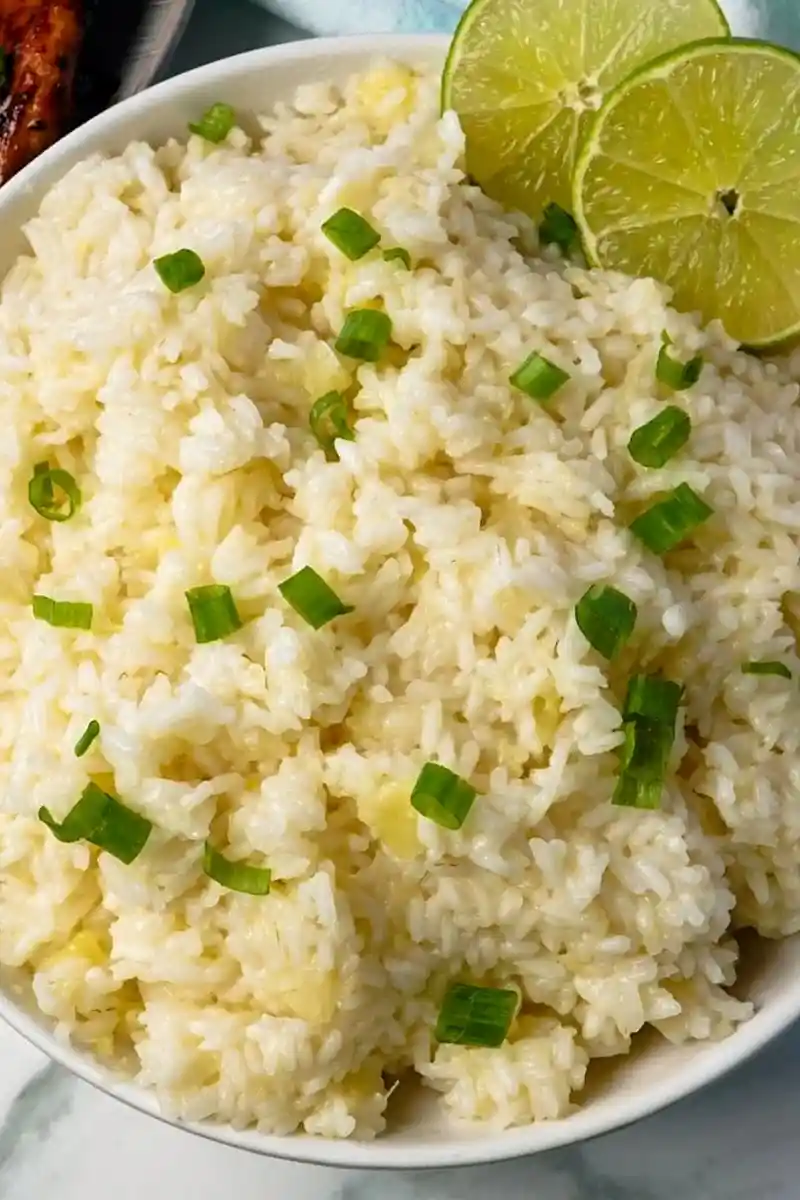
List of ingredients
- 1 Cup jasmine rice (not instant) – provides a fragrant, fluffy base.
- 1½ Cups water – used as the primary cooking liquid.
- 1 Tablespoon unsalted butter – helps prevent clumping and adds a rich finish.
- 1 (8 ounce) can crushed pineapple in juice (don’t drain) – provides both fruit pieces and sweet cooking liquid.
- ½ Teaspoon Kosher Salt – balances the natural sugars.
- 1 Tablespoon granulated sugar – enhances the tropical sweetness.
- 1½ Tablespoon fresh lime juice – adds a bright, acidic contrast.
- 2 Tablespoons green onion (chopped) – used as a fresh, colorful garnish.
step-by-step instructions
- Combine Ingredients: In a medium saucepan, mix together the jasmine rice, water, butter, crushed pineapple with its juice, salt, and sugar. Stir well to ensure the sugar and salt are evenly distributed.
- Boil and Simmer: Place the saucepan over medium-high heat and bring the mixture to a boil. Immediately reduce the heat to a low simmer and cover the pan with a tight-fitting lid.
- Cook: Let the rice simmer for 15 to 20 minutes. Do not lift the lid during this time, as this allows the steam to cook the grains evenly.
- Fluff and Finish: Remove the pan from the heat. Squeeze fresh lime juice over the surface and gently stir with a fork to fluff the rice grains and incorporate the citrus.
- Garnish: Serve the rice while hot and sprinkle the chopped green onions over the top for a fresh finish.
Choosing the Best Rice Grain
Using Fragrant Jasmine Rice
Jasmine rice is the preferred choice for this recipe due to its natural aroma and slightly sticky yet fluffy texture. The grain absorbs the pineapple juice efficiently, ensuring the flavor penetrates the core of the rice. Its delicate scent complements the tropical notes of the fruit and lime.
Substituting with Basmati Rice
Basmati rice is an excellent alternative if you prefer a grain that remains more distinct and separate. Basmati often has a slightly nuttier flavor that pairs well with the sweetness of the pineapple. It is recommended to rinse Basmati rice thoroughly under cold water before cooking to remove excess surface starch.
Why Avoid Instant Rice
Instant or pre-cooked rice should not be used in this specific recipe because it does not absorb liquids in the same way. Since the rice needs to simmer in the pineapple juice and butter, instant rice would likely become mushy or overcooked. The texture would lack the necessary structure to support the fruit pieces.
Flavor Adjustments and Variations
Adding Grilled Chicken Pieces
To turn this side dish into a full meal, fold in diced grilled chicken breast after the rice has finished cooking. The savory nature of the chicken balances the sweetness of the pineapple. Ensure the chicken is fully cooked and warm before stirring it into the fluffed rice.
Incorporating Mixed Garden Vegetables
Adding small pieces of sautéed carrots, frozen peas, or corn adds color and nutritional value. Sauté these vegetables in a separate pan with a small amount of oil before stirring them in at the final step. This preserves the snap and brightness of the vegetables.
Using Alternative Sweeteners
If you prefer a less refined sweetness, you can substitute granulated sugar with cane sugar or turbinado sugar. These options provide a deeper, molasses-like undertone that enhances the tropical flavor. Adjust the quantity slightly based on the sweetness of the canned pineapple juice.
Experimenting with Pineapple Textures
While crushed pineapple is recommended for uniform flavor distribution, you can use pineapple tidbits for larger chunks of fruit. If using tidbits, ensure you still include the juice from the can to maintain the liquid ratio. This variation provides a more substantial fruit texture in every bite.
Professional Cooking Techniques
Optimizing the Simmer Process
The transition from a boil to a simmer is critical for achieving the correct rice consistency. High heat for too long can evaporate the liquid before the rice grains are fully hydrated. Keeping the heat low ensures a gentle steam that cooks the rice evenly from the bottom up.
The Role of Butter in Texture
Adding butter at the beginning of the cooking process serves a functional purpose beyond flavor. The fat coats the individual grains of rice, which prevents the starches from bonding too tightly. This results in a fluffier texture and prevents the rice from becoming a solid mass.
Effective Fluffing Methods
Using a fork rather than a spoon to stir the finished rice is essential. A spoon can mash the tender grains, leading to a gummy consistency. A fork gently separates the grains and lifts them, allowing the lime juice to distribute evenly without damaging the rice structure.
Maintaining Steam Pressure
It is vital to keep the lid tightly sealed throughout the 15 to 20 minute cooking window. Lifting the lid releases the trapped steam and drops the internal temperature of the pot. This can lead to unevenly cooked rice or grains that remain hard in the center.
Ideal Food Pairings
Grilled Huli Huli Chicken
This rice is traditionally paired with Huli Huli chicken, which features a savory-sweet soy and ginger glaze. The acidity of the lime in the rice cuts through the richness of the chicken glaze. Together, they create a balanced Hawaiian-inspired plate.
Garlic-Infused Shrimp
Sautéed shrimp with garlic and lemon provides a savory contrast to the sweet pineapple rice. The brine of the seafood complements the tropical fruit notes perfectly. Serve the shrimp directly on top of a bed of the fluffed rice.
Teriyaki Glazed Salmon
The fatty richness of salmon paired with a teriyaki glaze works well with the light, citrusy notes of this dish. The sweetness of the glaze mirrors the sugar in the rice, creating a cohesive flavor theme. This combination is particularly effective for a healthy, omega-3 rich meal.
Traditional Hawaiian Macaroni Salad
For a full island-style feast, serve this rice alongside a creamy macaroni salad. The cool, creamy texture of the salad provides a temperature and textural contrast to the hot, fluffy rice. This combination offers a comprehensive range of flavors from salty to sweet.
Storage and Food Safety Guidelines
Why Fresh Preparation is Preferred
This dish is best enjoyed immediately after cooking to maintain the light, fluffy texture. When stored, the rice grains tend to dehydrate and clump together, losing their individual structure. The fresh lime juice also loses some of its brightness after several hours of refrigeration.
Understanding Rice-Based Bacteria Risks
Rice can contain spores of Bacillus cereus, a bacterium that can survive the initial boiling process. If cooked rice is left at room temperature for extended periods, these spores can germinate and produce toxins. To prevent foodborne illness, always cool rice quickly and store it properly.
Airtight Storage Solutions
If you have leftovers, place the rice in a shallow, airtight container immediately after it has cooled slightly. This prevents the rice from drying out and protects it from absorbing other odors in the refrigerator. Keep the rice chilled at or below 40 degrees Fahrenheit.
Safe Reheating Practices
When reheating stored rice, add a tablespoon of water or chicken broth to restore moisture. Heat the rice thoroughly in a microwave or on a stovetop until it is steaming hot throughout. Avoid reheating the rice more than once to minimize safety risks.
Troubleshooting Common Issues
Fixing Mushy Rice Textures
Mushy rice usually occurs when too much liquid is used or the rice is overstirred during the simmering phase. To prevent this, strictly follow the liquid measurements and avoid lifting the lid. If the rice is already mushy, you can try to save it by spreading it on a baking sheet and letting it air dry slightly before serving.
Correcting Underdone Grains
If the rice is still hard after the recommended time, it likely means the lid was not tight enough or the heat was too low. Add two tablespoons of water, recover the pan, and simmer for an additional 5 minutes. Check the grains frequently to avoid overcooking them.
Preventing Pan Scorching
Scorching at the bottom of the pan happens when the heat is too high during the simmer phase. Use a heavy-bottomed saucepan to distribute heat more evenly across the base. If you notice a burning smell, immediately move the pan to a cooler burner and gently transfer the top layer of rice to a new dish.
Balancing Overpowering Acidity
If the lime juice makes the dish too tart, you can balance the flavor by adding a small pinch of extra sugar or a tiny pat of butter. Stir these in gently while the rice is still hot. The fat and sweetness will neutralize the sharp acidity of the citrus.
Frequently Asked Questions
Can I use frozen pineapple instead of canned?
Yes, you can use frozen pineapple, but you must add a separate liquid to replace the canned juice. Use a combination of water and a small amount of pineapple concentrate or extra sugar to mimic the flavor of the canned juice. Ensure the frozen fruit is thawed or simmered long enough to soften.
Can this recipe be adapted for brown rice?
Brown rice can be used, but it requires significantly more water and a longer cooking time. You will likely need to increase the water ratio and simmer for 40 to 50 minutes. Because brown rice is heartier, it may not absorb the pineapple flavor as deeply as jasmine rice.
Is this recipe suitable for a gluten-free diet?
This recipe is naturally gluten-free as it uses rice, fruit, and butter. Always check the labels on your canned pineapple and butter to ensure no gluten-containing additives are present. It is a safe option for those with gluten sensitivities.
Can I use a rice cooker for this method?
You can use a rice cooker by adding all ingredients except the lime juice and green onions into the pot. Set the cooker to the standard white rice setting. Once the cycle is complete, stir in the fresh lime juice and garnish with green onions as usual.
Print
Sweet Hawaiian Pineapple Rice
- Total Time: 30 minutes
- Yield: 4 servings 1x
- Diet: General
Description
Pineapple rice is sweet and delicious Hawaiian side dish that everyone will love. Ready in just 20 minutes to be served with your favorite Hawaiian recipes.
Ingredients
- 1 Cup jasmine rice (not instant)
- 1½ Cups water
- 1 Tablespoon unsalted butter
- 1 (8 ounce) can crushed pineapple in juice (don’t drain)
- ½ Teaspoon Kosher Salt
- 1 Tablespoon granulated sugar
- 1½ Tablespoon fresh lime juice
- 2 Tablespoons green onion (chopped)
Instructions
- Step: In a medium saucepan combine jasmine rice, water, butter, crushed pineapple, salt, and sugar. Stir until well combined.
- Step: Heat on medium high until boiling. Reduce heat to a simmer and cover. Cook for 15-20 minutes or until rice is cooked.
- Step: Remove saucepan from heat and squeeze fresh lime juice over the top. Stir in with a fork to fluff up the rice.
- Step: Serve while hot and garnish with fresh chopped green onions.
Notes
Basmati rice can be used as an alternative for a slightly sweeter flavor. It is recommended to serve this dish immediately rather than making it in advance to avoid clumping and ensure food safety.
- Prep Time: 10 minutes
- Cook Time: 20 minutes
- Category: Side Dish
- Method: Stovetop
- Cuisine: Hawaiian
Nutrition
- Serving Size: 1 serving
- Calories: 229 kcal
- Sugar: 9.8 g
- Sodium: 326 mg
- Fat: 2.9 g
- Saturated Fat: 1.8 g
- Unsaturated Fat: 1.1 g
- Trans Fat: 0 g
- Carbohydrates: 46.9 g
- Fiber: 2.5 g
- Protein: 3.1 g
- Cholesterol: 8 mg