
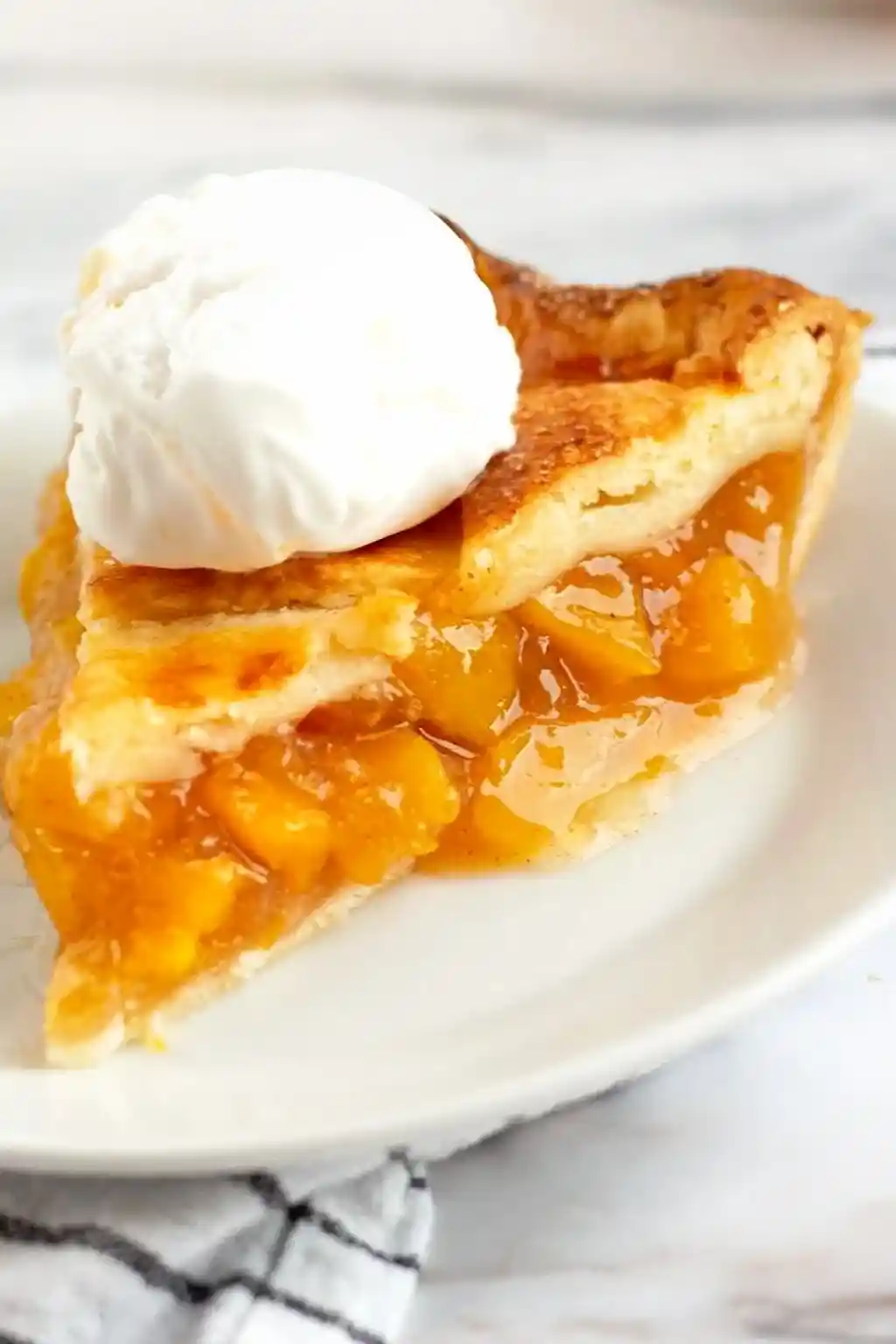
This recipe creates a thick, gooey peach filling encased in a buttery, golden-brown lattice crust. The addition of a secret spice enhances the natural summer sweetness of the peaches without overpowering them.
List of ingredients
- 2 discs pie crust – chilled and ready for rolling.
- 2 lbs (900 g) fresh yellow peaches – peeled and cubed (about 6-7 peaches).
- 2 tbsp (15 ml) lemon juice or lime juice – freshly squeezed for brightness.
- 3/4 cups (150 g) white granulated sugar – for sweetness.
- 1/4 cup + 1 tbsp (50 g) tapioca starch – ensures a gooey, non-runny filling.
- 1 tsp vanilla extract – adds a base layer of aromatic flavor.
- 1 tsp smoked paprika or regular paprika – the secret ingredient for warmth (or use cinnamon).
- 1 tbsp (15 g) unsalted butter – cut into small cubes for the topping.
- 1 tbsp (10 g) white granulated sugar – for sprinkling on the crust.
- 1 egg yolk + 1 tbsp (15 ml) milk – beaten together for the egg wash.
step-by-step instructions
- Prepare the crust: Make your pie crust using a trusted recipe or store-bought discs. This can be completed a day or more in advance to save time.
- Process the fruit: Peel the peaches and cut them into 1-inch (2.5 cm) cubes. Avoid slicing the peaches, as cubing prevents the filling from becoming mushy.
- Mix the filling: In a large mixing bowl, combine the cubed peaches, lemon or lime juice, granulated sugar, tapioca starch, vanilla extract, and paprika (or cinnamon). Stir until the fruit is evenly coated.
- Preheat oven: Set your oven to 400F (200C) to ensure it is fully heated before the pie goes in.
- Set the base: Roll out one chilled dough disc into a 12-inch (30 cm) circle on a floured surface. Fit it into a 9-inch (22 cm) pie dish and pour in the peach filling, including all the liquid.
- Create the lattice: Roll out the second dough disc into a 12-inch circle. Cut six 2-inch wide strips and weave them over and under each other across the filling. Trim the ends and crimp the edges to seal the pie.
- Apply finishing touches: Brush the top crust with the egg yolk and milk mixture and sprinkle with sugar. Place small butter cubes into the open gaps of the lattice.
- Bake and cool: Bake on the middle rack for 40-50 minutes until the filling bubbles. Let it bubble for an additional 3-5 minutes, then remove. Cool at room temperature for 2-3 hours before slicing.
Optimizing the Peach Filling
Selecting the Best Peach Variety
Yellow peaches are the ideal choice for this pie because they offer a softer texture and a more pronounced sweetness than white peaches. Ensure the fruit is ripe but still firm to the touch. Overly soft peaches will break down too much during baking, leading to a jam-like consistency rather than distinct cubes.
The Advantage of Cubing Over Slicing
Cutting peaches into 1-inch cubes provides a structural advantage during the baking process. Sliced peaches have more surface area exposed, which causes them to release more juice and collapse into a mushy layer. Cubes maintain their shape and provide a satisfying bite in every slice.
Why Tapioca Starch is the Best Thickener
Tapioca starch is superior to cornstarch for fruit pies because it creates a clear, glossy finish and a gooey texture. It prevents the filling from becoming soupy or runny without making it taste floury. This starch holds up better under the high acidity of lemon juice and the moisture of the peaches.
Using Paprika as a Flavor Enhancer
Smoked or regular paprika acts as a secret flavor booster that brings out the deep, warm notes of the fruit. It does not make the pie taste savory or spicy; instead, it provides a subtle complexity that mimics the warmth of cinnamon. If you prefer a traditional profile, cinnamon is a direct and effective substitute.
Mastering the Pie Crust
Keeping the Dough Chilled
Temperature control is critical for a flaky crust. Ensure the dough discs remain refrigerated until the moment you are ready to roll them out. Cold butter creates small pockets of steam during baking, which is what produces the distinct layers of a flaky pastry.
Techniques for a Perfect Lattice
When weaving the lattice, gently pull back the strips of dough to create a clean over-under pattern. If the dough becomes too soft and sticks to the filling, place the strips in the freezer for five minutes before weaving. Press the edges firmly into the bottom crust to prevent the filling from leaking.
Creating a Golden Finish with Egg Wash
The mixture of egg yolk and milk provides the protein and fat necessary for a deep golden-brown color. Brushing this on the crust before baking encourages the Maillard reaction. The final sprinkle of sugar adds a professional crystalline crunch to the top layer.
Using Butter to Control Filling Bubbles
Placing small cubes of butter directly on the filling through the lattice holes serves a functional purpose. The fat in the butter disrupts the surface tension of the bubbling fruit juices. This helps prevent the filling from boiling over the edges and making a mess on the oven floor.
Baking and Cooling Guidelines
Identifying the Peak Bake Point
The pie is done when the filling is actively bubbling in the center and the crust is golden. Once the bubbles appear, allow the pie to bake for another 3 to 5 minutes to ensure the tapioca starch has fully activated. This ensures the filling sets properly upon cooling.
Preventing Crust Burn with Foil
Because the oven temperature is high, the edges of the crust can brown faster than the filling cooks. If the edges look dark but the center is not yet bubbling, loosely cover the pie with a layer of aluminum foil. This shields the pastry from direct heat while allowing the interior to continue cooking.
The Necessity of a Long Cooling Period
Allowing the pie to cool for 2-3 hours is not just about temperature; it is about chemistry. The tapioca starch needs time to set as the pie returns to room temperature. Slicing into a hot pie will cause the filling to run, resulting in a soupy presentation.
Alternative Ingredient Adjustments
Using Frozen Peaches
Frozen peaches can be used if fresh ones are out of season. You must thaw them completely and blot them dry with paper towels to remove excess moisture. If you skip the blotting step, the extra water will dilute the thickener and leave the pie runny.
Avoiding Canned Peaches
Canned peaches are not recommended for this specific recipe because they are processed in syrup and are already very soft. They lack the structural integrity needed to stay in cubes during the baking process. Using them typically results in a mushy, overly sweet filling.
Substituting Cinnamon for Paprika
For those who find paprika too unconventional, ground cinnamon is the best alternative. Use a 1:1 ratio of cinnamon to replace the paprika. This will result in a more traditional, warm spice profile that still complements the peaches and vanilla.
Storage and Preservation
Room Temperature Storage
A baked peach pie can be kept on the counter covered with a loose foil tent for 2-3 days. Keeping it at room temperature maintains the best texture for the crust. Ensure the kitchen is not excessively hot or humid to avoid premature spoilage.
Refrigeration for Extended Life
If you need to store the pie longer than three days, move it to the refrigerator in an airtight container. It will remain fresh for 4-5 days when chilled. Note that refrigeration can slightly soften the crust due to moisture absorption.
Freezing a Fully Baked Pie
You can freeze a finished pie for up to 3 months by wrapping it tightly in plastic wrap and foil. To serve, thaw the pie in the refrigerator overnight. Be aware that freezing and thawing can sometimes make the bottom crust slightly more moist than a freshly baked pie.
Make-Ahead Planning
Advanced Dough Preparation
The pie crust can be prepared and shaped into discs up to two days in advance if kept in the refrigerator. For longer storage, the discs can be frozen for up to two months. Always let the dough thaw slightly in the fridge before rolling to avoid cracking.
Baking a Day Early
You can bake the pie a full day before your event. Once it has cooled completely, cover it and store it at room temperature. This often allows the flavors to meld and the filling to set even more firmly, making for cleaner slices.
Reheating Methods
The Oven Method for Best Texture
To reheat the pie while maintaining a crisp crust, use a preheated oven at 300F (150C). Cover the pie with aluminum foil to prevent the crust from over-browning. Heat for 15-20 minutes until the center is warm.
The Microwave Method for Speed
For a quick warm-up, heat individual slices in 30-second intervals. Be cautious, as the microwave can make the pastry chewy or soft. This method is best if you are serving the pie with a large scoop of cold vanilla ice cream.
The Stovetop Method for a Crispy Base
Place a slice in a skillet over medium heat and cover it with a lid. Heat for 4-5 minutes, which allows the bottom crust to crisp up again. This is the best method for those who prefer a toasted bottom crust.
Troubleshooting Common Issues
Fixing a Soggy Bottom Crust
A soggy bottom often occurs if the oven temperature is too low or the pan is not heated enough. To prevent this, ensure the oven is fully preheated to 400F. You can also place the pie dish on a preheated baking sheet to send heat directly into the bottom crust.
Managing Excess Filling Liquid
If you notice too much liquid in the bowl after mixing the peaches, do not drain it. The tapioca starch needs that liquid to create the gooey gel. If the pie is still too runny after baking, it likely didn’t reach the bubbling point or wasn’t cooled long enough.
Frequently Asked Questions
Can I use a different type of starch?
While cornstarch is a common substitute, it produces a more opaque, matte filling and can sometimes have a starchy taste. Tapioca starch is highly recommended for the specific glossy, jello-like consistency described in this recipe.
Do I have to peel the peaches?
Peeling the peaches is recommended for a smoother eating experience. Peach skins can become tough and papery during the baking process, which may distract from the tenderness of the fruit cubes.
What is the best way to serve this pie?
This pie is best served warm or at room temperature with a dollop of vanilla ice cream or a swirl of fresh whipped cream. The cold cream balances the warmth of the paprika and the sweetness of the peaches.
Print
The Best Fresh Peach Pie
- Total Time: 51 minutes
- Yield: 6 servings 1x
- Diet: General
Description
The Best Peach Pie has a deliciously gooey peach filling made with fresh peaches, a buttery pie crust, a dollop of vanilla ice cream on top, and a secret ingredient that brings out all the sweet and warm summery flavor of peaches: paprika!
Ingredients
- 2 discs pie crust
- 2 lbs (900 g) fresh yellow peaches
- 2 tbsp (15 ml) lemon juice or lime juice
- 3/4 cups (150 g) white granulated sugar
- 1/4 cup + 1 tbsp (50 g) tapioca starch
- 1 tsp vanilla extract
- 1 tsp smoked paprika or regular paprika (or 1 tsp cinnamon)
- 1 tbsp (15 g) unsalted butter
- 1 tbsp (10 g) white granulated sugar
- 1 egg yolk + 1 tbsp (15 ml) milk
Instructions
- Step One: Make the pie crust following my Homemade Pie Crust recipe or use your favorite pie crust recipe. This step can be done 1 or more days ahead of time, if desired.
- Step Two: Peel and cut the peaches into 1-inch cubes (2.5 cm) for a textured filling.
- Step Three: Make the peach filling. In a large bowl, add the cubed peaches, lemon or lime juice, sugar, tapioca starch, vanilla extract, and smoked or regular paprika (or cinnamon). Stir until combined.
- Step Four: Preheat the oven to 400F (200C).
- Step Five: Prepare the pie. On a lightly floured surface, roll out one of the chilled discs of pie dough into a 12-inch (30 cm) circle to fit a 9-inch (22 cm) pie dish and place it into the pie plate, then add in the peach filling making sure you pour in all extra liquid that’s in the bowl.
- Step Six: Make the lattice crust for the top layer. Remove the second disc of pie dough from the refrigerator and roll it out into a 12-inch (30 cm) circle. Use a knife to cut out 6 strips about 2-inches wide (about 5 cm) each. Lay the strips of pie dough over and under one another, pulling back strips as needed to weave then cut off any extra dough from the ends of the strips. Press them into the bottom layer of the crust and flute or crimp the edges.
- Step Seven: Make the egg wash. In a small bowl, beat the egg yolk with the milk until combined and smooth then brush the pie crust with your prepared egg wash and sprinkle with sugar. Add the small butter cubes on top of the peach pie filling, right in the holes left by the top crust.
- Step Eight: Bake in the middle rack of your oven for 40-50 minutes or until the pie filling begins to bubble. Usually, once the filling is bubbling you want to let it cook for another 3-5 minutes then remove the pie from the oven. If the crust is browning too quickly, cover the pie with a layer of aluminum foil. Allow the pie cool down to room temperature (about 2-3 hours), serve, and enjoy!
Notes
Storing: Store covered at room temperature for 2-3 days or in the refrigerator for 4-5 days. Make-Ahead: Chill crust in the refrigerator for up to 2 days or freeze for up to 2 months. Alternatively, bake the pie 1 day ahead and store at room temperature. Reheating: Oven (300F/150C) for 15-20 minutes covered with foil; Microwave in 30-second intervals; or Stovetop in a covered skillet for 4-5 minutes.
- Prep Time: 1 minute
- Cook Time: 50 minutes
- Category: Dessert
- Method: Baking
- Cuisine: American
Nutrition
- Serving Size: 1 slice
- Calories: 420 kcal
- Sugar: 28 g
- Sodium: 180 mg
- Fat: 18 g
- Saturated Fat: 8 g
- Unsaturated Fat: 10 g
- Trans Fat: 0 g
- Carbohydrates: 45 g
- Fiber: 3 g
- Protein: 5 g
- Cholesterol: 65 mg