
This slow cooker recipe provides a clean, Paleo-friendly version of the classic Mississippi Pot Roast. It uses simple pantry staples to achieve a rich, tangy flavor without processed seasoning packets.
List of ingredients
- 3-5 lb beef chuck roast – the best cut for slow cooking due to its fat content.
- 2 tbsp olive oil – used for searing the meat.
- 1 cup beef broth – for deglazing the pan and adding moisture.
- 1 tbsp dried chives – adds a mild onion-like flavor.
- 2 tsp garlic powder – provides a deep, savory base.
- 2 tsp onion powder – complements the garlic for a classic savory taste.
- 1 tsp dried dill – adds a characteristic tanginess.
- 1 tsp salt – enhances all the other flavors.
- 1 tsp black pepper – provides a subtle heat.
- 6-8 pepperoncini peppers, whole – provides acidity and mild spice.
- 1-2 tbsp pepperoncini pepper juice (from the jar) – intensifies the tangy flavor profile.
- 4 tbsp ghee – adds richness and a buttery texture.
- salt & pepper – for initial seasoning of the roast.
step-by-step instructions
- Prepare the meat: Take the chuck roast out of the fridge. Remove from packaging and pat dry with a paper towel. Generously season all sides with salt and pepper. Set aside.
- Sear the roast: Heat a couple tbsp of olive oil over medium-high to high heat in a large skillet until hot and shimmering. Once oil is hot, place seasoned chuck roast in the skillet. Sear for about 1-2 minutes per side to a deep golden brown. Transfer chuck roast to the bowl of the slow cooker.
- Deglaze the skillet: After removing the chuck roast, deglaze the pan over medium high heat with 1 cup of beef broth. Bring to a boil, scraping up all the brown bits from the bottom of the pan continue to cook for 2-3 minutes until the liquid has reduced by about half.
- Add liquid: Pour the reduced liquid from the skillet over the chuck roast in the slow cooker.
- Season the roast: Sprinkle chives, garlic powder, onion powder, dill, salt, and pepper over the chuck roast.
- Add finishing touches: Arrange the whole pepperoncini peppers around the meat and add a couple tbsp of juice from the pepper jar. Top the meat with 4 tbsp of ghee.
- Slow cook: Cover with a lid and cook on low for 8-10 hours or on high for 5-6 hours.
- Check tenderness: The meat will be fork tender when it is done. If it still feels a little tough, put the lid back on and cook for an additional hour or two.
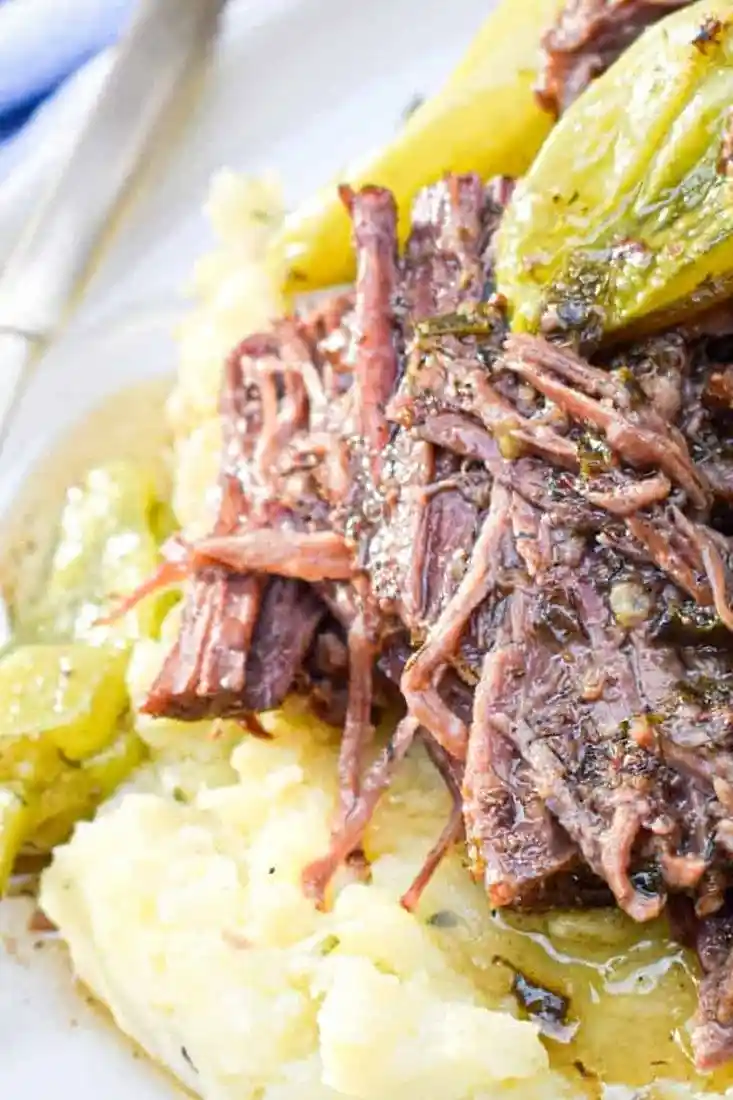
- Serve: Serve over mashed potatoes, polenta, rice, mashed cauliflower or on its own.
Selecting the Ideal Beef Cut
Why Chuck Roast is Recommended
Chuck roast comes from the shoulder area of the cow and contains a high amount of connective tissue. During the slow cooking process, this collagen breaks down into gelatin, which creates a tender, succulent texture. This cut is specifically designed for low-and-slow heat applications.
Using Beef Brisket as an Alternative
Beef brisket can be used if chuck roast is unavailable, though it is generally leaner and tougher. You may need to increase the cooking time slightly to achieve the same shreddable consistency. Ensure you cut the brisket into smaller chunks if the roast is very thick.
Avoiding Leaner Cuts
Avoid using lean cuts like sirloin or tenderloin for this recipe. These cuts lack the necessary fat and connective tissue, meaning they will likely dry out and become tough in a slow cooker. Lean meats are better suited for quick searing or roasting.
Flavor Optimization and Customization
Balancing the Acidity
The pepperoncini peppers and their brine provide the signature tang of this dish. If you prefer a more acidic flavor, increase the amount of pepper juice to three tablespoons. If the dish tastes too sharp, you can balance it by adding a small amount of extra beef broth.
Adjusting the Heat Level
For those who prefer more spice, you can slice a few of the pepperoncini peppers before adding them. This releases more seeds and oils into the sauce, increasing the overall heat. Alternatively, adding a pinch of red pepper flakes can provide a more consistent spice throughout the roast.
Enhancing the Savory Profile
To deepen the savory notes, ensure the searing process is thorough. Creating a dark brown crust on the meat through the Maillard reaction is what provides the complex, beefy foundation for the sauce. Do not rush the searing step or skip the deglazing process.
Substituting Ghee for Other Fats
While ghee provides a rich, buttery flavor without the milk solids, avocado oil can be used for a more neutral taste. Tallow is another excellent choice for adding an authentic, beefy richness. Avoid using coconut oil, as its distinct flavor can clash with the tangy pepperoncini.
Slow Cooker Management
Choosing Between Low and High Settings
Cooking on the low setting for 8-10 hours is generally preferred for the best texture. The slower temperature allows the muscle fibers to relax and the collagen to melt more effectively. High heat is useful for time constraints but can occasionally result in meat that is slightly less tender.
Managing the Liquid Volume
The combination of beef broth, pepper juice, and natural meat drippings creates the sauce. If you find the sauce too thin at the end, you can remove the meat and simmer the liquid in a pan to reduce it. Never add too much extra water, as this will dilute the concentrated flavors.
The Importance of the Lid
Avoid opening the lid of the slow cooker during the cooking process. Every time the lid is lifted, a significant amount of heat and steam escapes, which can add 20-30 minutes to the cooking time. Only open the lid at the very end to check for tenderness.
Evaluating Meat Tenderness
The roast is finished when it can be easily pulled apart with two forks with minimal resistance. If the meat feels springy or tough, it has not cooked long enough. Return the lid and continue cooking in one-hour increments until the desired texture is reached.
Serving and Pairing Suggestions
Low-Carb Vegetable Pairings
Mashed cauliflower is an excellent low-carb alternative to potatoes that absorbs the sauce well. Roasted Brussels sprouts or sautéed kale also pair well with the rich flavor of the roast. These options keep the meal compliant with strict Paleo or Keto diets.
Hearty Starch Options
For a more filling meal, serve the roast over creamy mashed potatoes or a bed of polenta. White or brown rice can also be used to soak up the tangy gravy. The starch helps balance the acidity of the pepperoncini peppers.
Fresh Side Accompaniments
A crisp side salad with a simple vinaigrette provides a refreshing contrast to the heavy, rich meat. Steamed green beans or roasted carrots add a natural sweetness that complements the savory notes. These fresh elements brighten the overall plate.
Storage and Preservation
Proper Refrigeration Methods
Store leftover pot roast in an airtight container in the refrigerator for up to four to five days. Keep the meat submerged in its own juices to prevent it from drying out. This also allows the flavors to continue melding together.
Freezing for Long-Term Use
Shred the meat and place it in a freezer-safe bag or container along with a generous amount of the cooking liquid. Squeeze out as much air as possible to prevent freezer burn. Properly stored, the roast will maintain its quality for up to three months.
Correct Thawing Procedures
Thaw frozen pot roast slowly in the refrigerator overnight to maintain the best texture. Avoid thawing at room temperature to ensure food safety. Once thawed, the meat can be reheated using any of the methods described below.
Effective Reheating Techniques
Stovetop Simmering
Place the roast and its juices in a skillet over medium-low heat. Cover the pan and simmer gently, adding a splash of beef broth if the sauce has thickened too much. This method best preserves the moist texture of the beef.
Oven Warming
Transfer the meat and sauce to an oven-safe dish and cover tightly with foil. Heat at 300 degrees Fahrenheit until the meat is warmed through. The foil prevents the roast from drying out under the dry heat of the oven.
Microwave Heating Tips
Place a portion of the roast in a microwave-safe bowl and add extra sauce. Cover the bowl with a damp paper towel to create steam, which helps keep the meat tender. Heat in short intervals, stirring in between, to avoid overcooking the edges.
Troubleshooting Common Issues
Dealing with Tough Meat
If the meat is still tough after the suggested time, it is usually due to the specific cut of beef or insufficient cooking time. Continue cooking on low for another two hours. If using a very large roast, ensure the heat is penetrating the center effectively.
Fixing a Thin Sauce
If the cooking liquid is too watery, you can thicken it by reducing it on the stovetop. Remove the meat and boil the liquid over high heat for several minutes until it reaches a syrupy consistency. Stir it back into the meat before serving.
Removing Excess Grease
Depending on the fat content of the chuck roast, there may be a layer of oil on top. You can use a spoon to skim the fat off the surface before serving. Alternatively, refrigerate the roast and lift the hardened fat layer off the top the next day.
Frequently Asked Questions
Can I use a pressure cooker instead of a slow cooker?
Yes, you can adapt this recipe for a pressure cooker by following the same steps and cooking on high pressure for one hour. Allow for a natural pressure release to keep the meat tender. While faster, some find the slow cooker version has a deeper flavor profile.
Is the ghee necessary for the recipe?
Ghee is used to provide a rich, buttery flavor while remaining compliant with specific dietary rules. You can substitute it with unsalted butter if you are not following strict Paleo guidelines. If you prefer a dairy-free option, use avocado oil or beef tallow.
Can I start the recipe with frozen meat?
It is highly recommended to thaw the meat completely before searing. Searing frozen meat is impossible and will result in an unevenly cooked roast. If you must use frozen meat, thaw it in the refrigerator for 24 hours first.
What can I use if I cannot find pepperoncini peppers?
You can substitute pepperoncini with pickled banana peppers or mild pickled jalapeños. Banana peppers offer a similar mild heat and tang. Jalapeños will increase the spice level significantly, so use them sparingly.
Print
Whole30 Mississippi Pot Roast
- Total Time: 9 hours 10 minutes
- Yield: 10 servings 1x
- Diet: Paleo, Whole30, Keto
Description
This healthy take on a classic Mississippi Pot Roast combines clean ingredients to make this dish Paleo and Whole30 compliant.
Ingredients
- 3–5 lb beef chuck roast
- 2 tbsp olive oil
- 1 cup beef broth
- 1 tbsp dried chives
- 2 tsp garlic powder
- 2 tsp onion powder
- 1 tsp dried dill
- 1 tsp salt
- 1 tsp black pepper
- 6–8 whole pepperoncini peppers
- 1–2 tbsp pepperoncini pepper juice
- 4 tbsp ghee
- Salt and pepper for seasoning
Instructions
- Step 1: Take the chuck roast out of the fridge, remove from packaging, pat dry with a paper towel, and generously season all sides with salt and pepper.
- Step 2: Heat olive oil over medium-high to high heat in a large skillet until hot and shimmering; sear the roast for 1-2 minutes per side to a deep golden brown, then transfer to the slow cooker.
- Step 3: Deglaze the pan with 1 cup of beef broth, bring to a boil while scraping up brown bits, and cook for 2-3 minutes until liquid reduces by about half, then pour over the roast.
- Step 4: Sprinkle chives, garlic powder, onion powder, dill, salt, and pepper over the roast, arrange peppers around the meat, add pepper juice, and top with ghee.
- Step 5: Cover with a lid and cook on low for 8-10 hours or on high for 5-6 hours until the meat is fork tender.
- Step 6: Serve over mashed potatoes, polenta, rice, mashed cauliflower, or on its own.
Notes
This recipe will last 4-5 days in the fridge and can be frozen for up to 3 months.
- Prep Time: 10 minutes
- Cook Time: 9 hours
- Category: Main Course
- Method: Slow Cooker
- Cuisine: American
Nutrition
- Serving Size: 1 serving
- Calories: 328 kcal
- Sugar: 0 g
- Sodium: 547 mg
- Fat: 19.9 g
- Saturated Fat: 13.6 g
- Unsaturated Fat: 6.3 g
- Trans Fat: 0 g
- Carbohydrates: 1.8 g
- Fiber: 0.2 g
- Protein: 39 g
- Cholesterol: 120 mg