
This rich and vibrant pasta dish combines tender chicken breast with a velvety lemon-infused cream sauce. It is a fast, satisfying meal that can be prepared in just 25 minutes, making it ideal for busy weeknights.
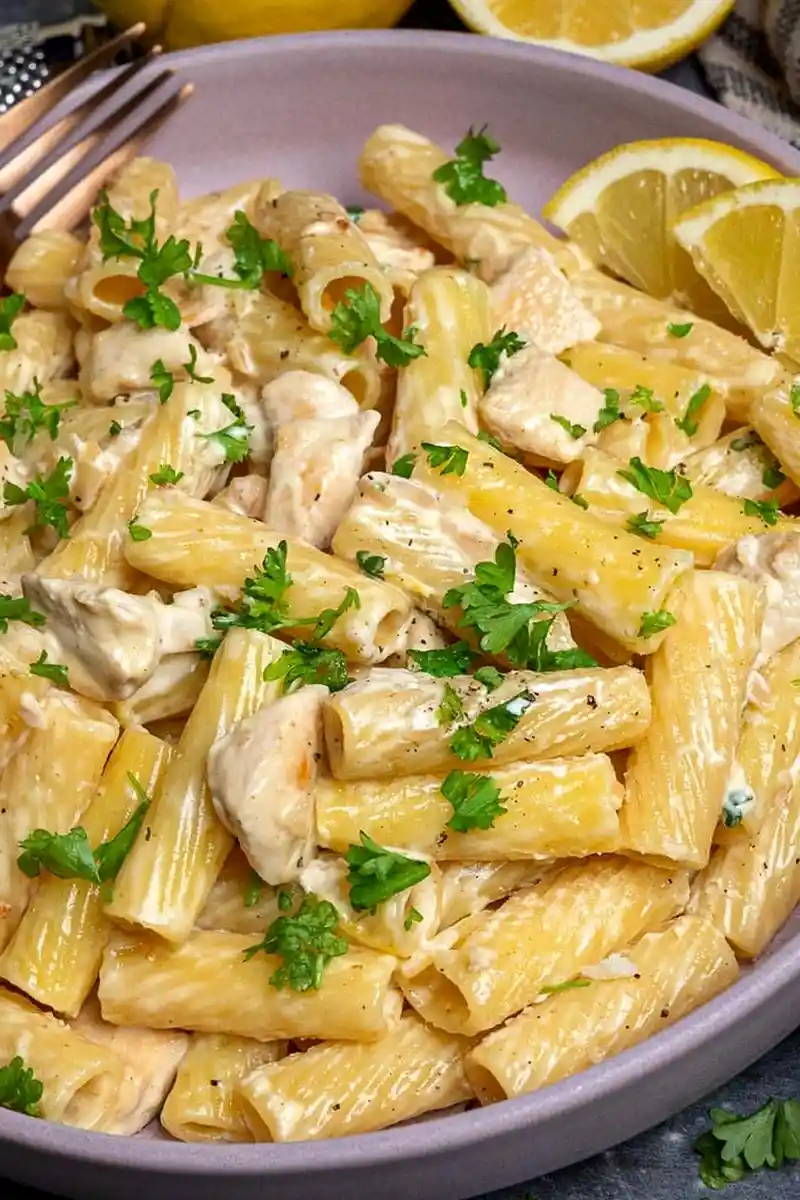
List of ingredients
- 250 g (8.8 oz) rigatoni – or any preferred short pasta shape.
- 1 tablespoon olive oil – for searing the chicken.
- 20 g (1 tablespoon) unsalted butter – adds richness to the sauce base.
- 350 g (3/4 lb) chicken breast fillets – cut into uniform bite-size pieces.
- 1 large shallot – finely chopped for a mild onion flavor.
- 2 large garlic cloves – finely chopped for aromatic depth.
- 75 ml (1/3 cup) chicken stock – used for deglazing the pan.
- Juice of 1 medium lemon – provides a bright, acidic balance.
- Zest of half a medium lemon – enhances the citrus aroma.
- 200 ml (1 cup) double (heavy) cream – creates a thick, creamy texture.
- 30 g (1/3 cup) grated parmesan – adds saltiness and thickness.
- 2 tablespoons fresh parsley – roughly chopped for a fresh finish.
- Salt and pepper – to taste for final seasoning.
step-by-step instructions
- Boil the pasta: Bring a large pot of water to a boil and add a generous amount of salt. Cook the pasta until al dente according to the package directions, reserving 1-2 cups of the cooking water before draining.
- Sear the chicken: Heat olive oil and melt the butter in a large, deep pan over medium heat. Add the chicken pieces and cook for 4-5 minutes until they are slightly golden on all sides.
- Sauté aromatics: Stir in the chopped shallot and garlic. Continue to cook for 1-2 minutes, stirring occasionally to prevent the garlic from burning.
- Deglaze the pan: Pour in the chicken stock and use a spatula to scrape up any browned bits from the bottom of the pan. Simmer for about one minute until the liquid has reduced slightly.
- Add citrus: Stir in the lemon juice and lemon zest. Cook for another minute while stirring frequently to integrate the flavors.
- Simmer the cream: Stir in the double cream and grated parmesan cheese. Allow the mixture to bubble gently for 1-2 minutes until the sauce thickens.
- Combine pasta and sauce: Transfer the cooked pasta into the pan and toss thoroughly to coat every piece. If the sauce appears too thick, stir in a splash of the reserved pasta water.
- Final touch: Stir in the fresh parsley and season with salt and pepper to taste. Serve immediately with an extra sprinkle of parmesan if desired.
Selecting the Right Pasta Shape
Using Rigatoni for Maximum Sauce Retention
Rigatoni is an excellent choice for this recipe because its large hollow center and external ridges trap the creamy sauce. This ensures that every bite is balanced with both pasta and lemon cream. It also holds up well to the weight of the chicken pieces.
Penne as a Versatile Alternative
Penne is another great short pasta option that works similarly to rigatoni. Its angled edges help the sauce cling to the pasta, providing a consistent flavor profile. It is widely available and cooks quickly, fitting the 25-minute timeline of this meal.
Fusilli for Surface Area
Fusilli, or spiral pasta, offers a higher surface area than straight tubes. This allows the sauce to coat the pasta more thoroughly in the grooves of the spirals. It is a particularly good choice if you prefer a more sauce-heavy experience.
Chicken Preparation Techniques
Cutting Uniform Bite-Sized Pieces
Ensure that the chicken breast fillets are cut into consistent 1-inch cubes. Uniform pieces ensure that all the chicken cooks at the same rate, preventing some pieces from drying out while others remain undercooked. This leads to a more tender result across the entire dish.
Searing for Maximum Flavor
Avoid crowding the pan when adding the chicken to the oil and butter. Leaving space between the pieces allows them to sear and brown rather than steam in their own juices. This browning process, known as the Maillard reaction, adds a deeper savory flavor to the final pasta.
Avoiding Overcooked Breast Meat
Chicken breast can become tough if cooked for too long. Stick to the 4-5 minute searing time and rely on the subsequent simmering in the sauce to finish the cooking process gently. This keeps the meat juicy and tender.
Mastering the Creamy Sauce
Preventing the Cream from Curdling
To prevent the cream from separating, avoid boiling the sauce violently. Keep the heat at a gentle simmer after adding the double cream and parmesan. The gradual thickening process ensures a smooth, emulsified texture that clings to the pasta.
Integrating Lemon Zest and Juice
Adding both the zest and the juice provides two different dimensions of citrus flavor. The zest offers a fragrant, aromatic quality, while the juice provides the necessary acidity to cut through the richness of the heavy cream. Adding them before the cream helps the flavors meld.
Using Reserved Pasta Water for Consistency
Pasta water contains starch that acts as a natural binder. If the sauce becomes too thick after adding the parmesan and pasta, a small splash of this water will loosen the sauce without diluting the flavor. It helps create a glossy, restaurant-style finish.
Ingredient Substitutions and Swaps
Using Half and Half for a Lighter Texture
If double cream is too rich, you can substitute it with half and half or single cream. Be aware that the sauce will be thinner and less decadent. You may need to simmer it slightly longer or add a bit more parmesan to achieve the desired thickness.
Substituting Shallots with Red Onion
If shallots are unavailable, a finely diced red onion or yellow onion can be used. While shallots have a milder, sweeter taste, onions provide a robust base. Use slightly less onion than shallot to ensure the lemon flavor remains the star of the dish.
Replacing Parmesan with Other Hard Cheeses
Pecorino Romano is a strong alternative to parmesan, though it is significantly saltier. If using Pecorino, reduce the amount of added salt in the recipe to avoid over-seasoning. Grana Padano is another excellent choice for a slightly milder nuttiness.
Serving and Pairing Ideas
Adding Sautéed Spinach or Kale
To add a nutritional boost, stir in two handfuls of fresh baby spinach or chopped kale just before adding the pasta. The residual heat of the sauce will wilt the greens perfectly. This adds a pop of color and a subtle earthy contrast to the lemon.
Pairing with a Crisp Side Salad
A simple arugula salad with a light balsamic vinaigrette pairs well with this rich pasta. The peppery notes of the arugula and the acidity of the vinegar balance the creamy nature of the lemon sauce. This creates a more complete and balanced meal.
Fresh Garnish Options
Beyond parsley, a sprinkle of fresh chives or basil can add a different aromatic layer to the dish. A final grating of fresh lemon zest over the plated pasta enhances the visual appeal and the immediate scent of the meal.
Storage and Reheating Guidance
Refrigerating Leftovers Properly
Store any remaining pasta in an airtight container in the refrigerator for up to three days. Keep in mind that the pasta will absorb the sauce as it sits, which may make the dish seem drier upon the second day. This is a natural process for cream-based pasta dishes.
Best Methods for Reheating
Reheat the pasta in a pan over low heat or in the microwave. Add a tablespoon of water or chicken stock before heating to restore the creamy consistency. Stir gently to avoid breaking the pasta pieces and to evenly distribute the heat.
Why Freezing is Not Recommended
Freezing is generally not advised for cream and cheese-based sauces. Upon thawing, the emulsion often breaks, resulting in a grainy texture and separated fats. For the best quality, consume the dish fresh or store it only in the fridge.
Common Troubleshooting Steps
Fixing a Sauce That Is Too Tart
If the lemon flavor is too overpowering, you can balance the acidity by adding a small pinch of sugar or a tiny bit more butter. This mellows the sharp edges of the citrus without removing the bright flavor profile of the dish.
Thickening a Runny Sauce
If the sauce remains too thin, allow it to simmer for an additional two minutes before adding the pasta. Alternatively, stir in an extra tablespoon of grated parmesan, as the cheese acts as a natural thickener through its protein and fat content.
Managing Strong Garlic Flavors
If the garlic taste is too intense, increase the amount of cream or add a bit more pasta. Ensure the garlic is finely minced so it distributes evenly, rather than leaving large, pungent chunks in the sauce.
Frequently Asked Questions
Can I use chicken thighs instead of breast?
Yes, boneless skinless chicken thighs can be used and will provide a richer flavor and more moisture. They are more forgiving during the searing process and are less likely to overcook compared to chicken breasts.
What is the best way to zest a lemon?
Use a microplane or a fine grater to remove only the yellow outer layer of the peel. Avoid grating into the white pith, as the pith is bitter and can negatively affect the taste of the sauce.
How long does the cooked pasta stay fresh?
The cooked pasta dish remains fresh in the refrigerator for up to three days. To maintain the best texture, store it in a glass container with a tight-fitting lid to prevent the pasta from absorbing fridge odors.
Print
Zesty Creamy Lemon Chicken Pasta
- Total Time: 25 minutes
- Yield: 4 servings 1x
- Diet: General
Description
Creamy lemon chicken pasta is the perfect treat for those days when only a high dose of carbs will do. Made with chicken, loads of lemon, garlic and cream, this chicken pasta with lemon is ready in just 25 minutes, but it tastes beyond incredible.
Ingredients
- 250 g (8.8 oz) rigatoni (or another short pasta)
- 1 tablespoon olive oil
- 20 g (1 tablespoon) unsalted butter
- 350 g (3/4 lb) chicken breast fillets, cut into bite-size pieces
- 1 large shallot, finely chopped
- 2 large garlic cloves, finely chopped
- 75 ml (1/3 cup) chicken stock
- Juice of 1 medium lemon
- Zest of half a medium lemon
- 200 ml (1 cup) double (heavy) cream
- 30 g (1/3 cup) grated parmesan
- 2 tablespoons fresh parsley, roughly chopped
- Salt and pepper to taste
Instructions
- Step: Bring a large pot of water to a boil, salt it generously, and cook the pasta al dente according to the instructions on the package. Reserve 1-2 cups of water before draining the pasta.
- Step: Meanwhile, heat the olive oil in a large, deep pan and melt the butter in it. Add the chicken breast and cook for 4-5 minutes over medium heat until slighlty golden.
- Step: Stir in the shallot and garlic and continue to cook for 1-2 minutes, stirring occasionally. Next, pour in the chicken stock and use your spoon or spatula to deglaze the pot. Cook for a minute.
- Step: Add the lemon juice and zest and continue to cook for another minute, stirring often. Next, stir in the cream and parmesan and allow the sauce to bubble for 1-2 minutes.
- Step: Transfer the cooked pasta to the pan and toss to cover well in the sauce. Add a dash of pasta water if the sauce looks too thick.
- Step: Stir in the fresh parsley, season to taste, and serve immediately, with extra grated parmesan on top if you like.
Notes
Best served immediately. Leftovers keep in the fridge for up to 3 days in an airtight container. Reheat in the microwave, adding a dash of water or chicken stock if the sauce is too thick.
- Prep Time: 10 minutes
- Cook Time: 15 minutes
- Category: Pasta
- Method: Stovetop
- Cuisine: Italian
Nutrition
- Serving Size: 1 serving
- Calories: 408 kcal
- Sugar: 9 g
- Sodium: 315 mg
- Fat: 13 g
- Saturated Fat: 5 g
- Unsaturated Fat: 7 g
- Trans Fat: 0 g
- Carbohydrates: 34 g
- Fiber: 3 g
- Protein: 34 g
- Cholesterol: 92 mg