
This quick Mediterranean-style pasta combines bright citrus notes with the salty punch of briny capers. It is an ideal choice for a fast weeknight dinner that feels fresh and light. Total preparation and cooking time is approximately 15 minutes.
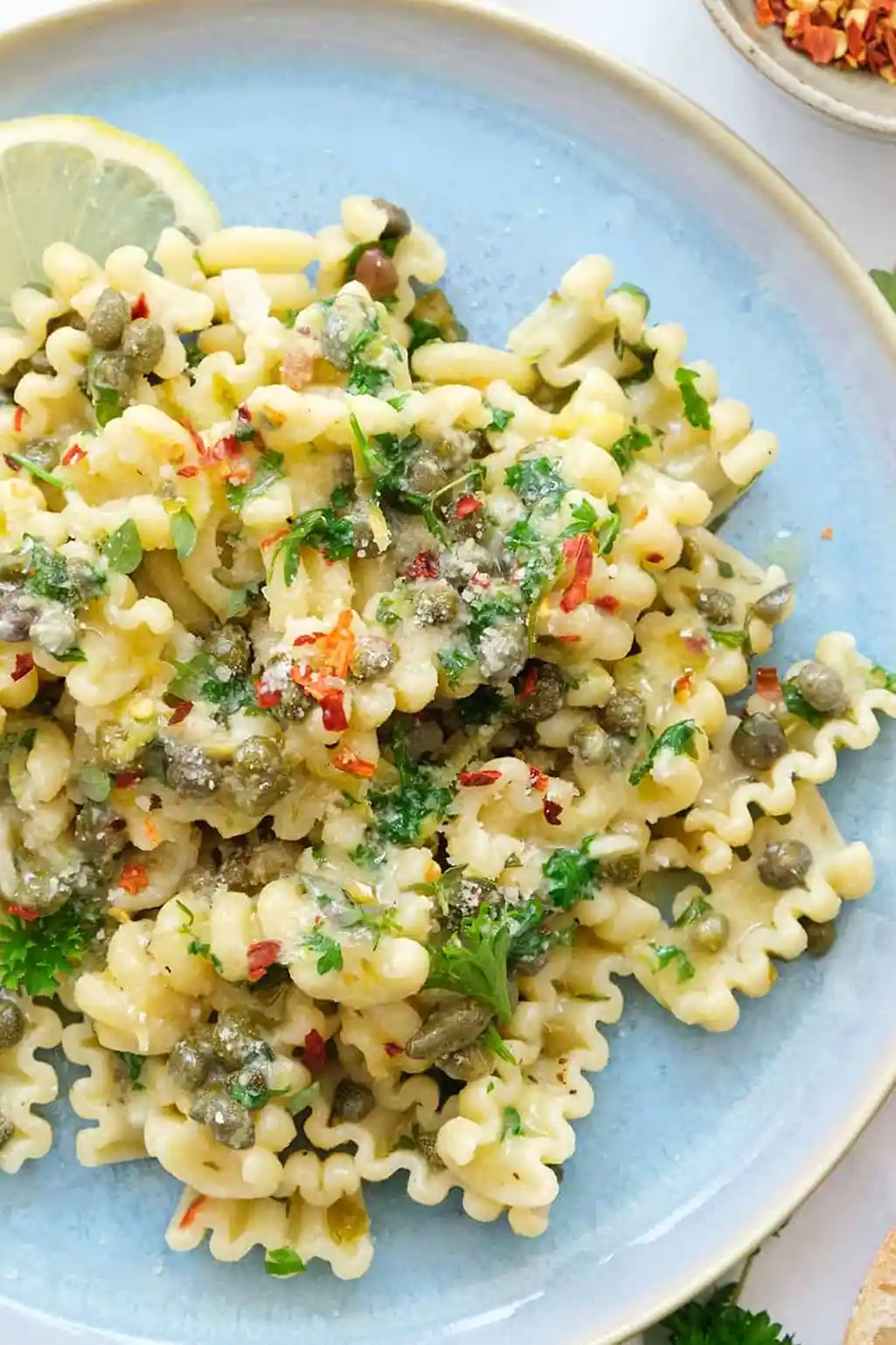
List of ingredients
- 8oz (220 grams) Pasta – use long shapes like spaghetti or short shapes like fusilli.
- 2 tablespoons extra virgin olive oil – provides a fruity base for the sauce.
- 2 garlic cloves, minced – adds essential aromatic depth.
- 1/4 teaspoon red pepper flakes – optional, for a subtle spicy kick.
- 1/4 cup (30-40 grams) capers in brine – adds salty, tangy Mediterranean flavor.
- 1 large lemon – you will need both the fresh zest and the juice.
- 2-3 tablespoons fresh herbs – parsley or thyme are recommended.
- 1/2 cup (120 ml) pasta water – reserved from the pot to emulsify the sauce.
- 1/4 cup (30 grams) grated parmesan cheese – adds a nutty, salty finish.
- 1 tablespoon butter – used at the end to create a creamy texture.
step-by-step instructions
- Cook the Pasta: Boil the pasta in a large pot of salted water according to the package instructions until it reaches an al dente texture. Before draining, carefully scoop out 1/2 cup of the starchy cooking water and set it aside.
- Sauté Aromatics: Heat the extra virgin olive oil in a large skillet over medium heat. Add the minced garlic and red pepper flakes, cooking for about two minutes until the garlic is fragrant but not browned.
- Build the Sauce: Stir in the lemon zest, lemon juice, fresh herbs, and capers. Add the grated parmesan cheese and the reserved pasta water, stirring constantly until the mixture is smooth.
- Emulsify: Bring the sauce to a gentle simmer, then reduce the heat. Stir in the butter and continue whisking until the butter is completely melted and the sauce looks creamy and glossy.
- Combine: Add the drained pasta directly into the skillet. Toss the noodles thoroughly until every strand or piece is evenly coated in the lemon caper sauce.
- Finish and Serve: Taste the pasta and adjust seasoning if needed. Serve immediately with an additional sprinkle of fresh herbs, more parmesan cheese, and an optional drizzle of olive oil.
Pasta Selection Guide
Benefits of Using Bronze-Cut Pasta
Choosing bronze-cut pasta helps the sauce adhere better to the noodles. The rougher surface created by bronze dies traps the lemon and butter emulsion more effectively than smooth, Teflon-cut pasta. This ensures every bite is saturated with flavor.
Selecting Short Pasta Shapes
Shapes like fusilli, rotini, or penne are excellent choices for this recipe. The twists and holes in these shapes capture the small capers and bits of garlic. This results in a more consistent distribution of ingredients in every spoonful.
Selecting Long Pasta Shapes
Spaghetti, linguine, and fettuccine provide a classic Italian presentation. These shapes are ideal if you prefer a smoother eating experience. They work best when the sauce is emulsified properly to create a light coating rather than a thick clumps.
Ingredient Optimization
Choosing the Right Olive Oil
Use a high-quality extra virgin olive oil for this dish. Since the oil is a primary flavor component, a fruity or peppery oil enhances the lemon and garlic. Avoid refined oils which lack the aromatic complexity needed for a light sauce.
Handling Capers Correctly
Capers packed in brine are the most convenient for this recipe. If you only have salted capers, you must rinse them thoroughly under cold running water first. This removes excess salt that could otherwise overpower the delicate lemon flavor.
Selecting Fresh Herbs
Fresh parsley and thyme provide a clean, earthy contrast to the acidity of the lemon. If you prefer a sweeter profile, fresh basil is a great alternative. Always chop the herbs finely to ensure they integrate smoothly into the sauce.
The Role of Parmesan Cheese
Use a high-quality grated parmesan or Parmigiano-Reggiano for the best results. The saltiness of the cheese complements the capers. If the cheese is too dry, the sauce may clump, so ensure it is finely grated for quick melting.
Customizing the Flavor Profile
Increasing the Heat Level
To make the dish spicier, increase the red pepper flakes to 1/2 or 1 teaspoon. You can also add a pinch of cayenne pepper during the sautéing phase. This provides a deeper heat that balances the richness of the butter and cheese.
Enhancing the Citrus Punch
For a more intense lemon flavor, add a teaspoon of fresh lemon zest at the very end of cooking. Adding zest twice—once in the sauce and once as a garnish—keeps the citrus notes vibrant. You can also add a drop of lemon extract for a concentrated aroma.
Adding Savory Elements
To add more complexity, consider stirring in a handful of halved cherry tomatoes or sliced black olives. These ingredients complement the Mediterranean theme. Sauté the tomatoes with the garlic until they just begin to soften.
Adjusting Saltiness
Because capers and parmesan are both salty, be cautious when adding extra salt to the finished dish. Always taste the sauce after the cheese and capers have melted before adding more seasoning. If it is too salty, a squeeze of extra lemon juice can help balance it.
Serving and Pairing Ideas
Pairing with Fresh Salads
A simple arugula salad with a balsamic glaze or a light lemon vinaigrette pairs perfectly. The peppery flavor of arugula cuts through the richness of the butter and cheese. A crisp garden salad with cucumbers also provides a refreshing contrast.
Adding Plant-Based Proteins
To make the meal more filling, serve the pasta alongside a chickpea salad or white bean puree. You can also toss canned cannellini beans directly into the skillet. This adds creaminess and protein without changing the flavor profile significantly.
Complementary Side Vegetables
Roasted asparagus or sautéed spinach are excellent vegetable pairings. The bitterness of the greens balances the acidity of the lemon. Steam the vegetables quickly to keep them vibrant and crisp.
Storage and Reheating Guide
Proper Refrigeration Method
Store any leftovers in an airtight container in the refrigerator for up to three days. To prevent the pasta from drying out, drizzle a small amount of olive oil over the top before sealing the container. Keep the container tightly closed to avoid absorbing fridge odors.
Reheating for Best Texture
Avoid the microwave if possible, as it can make the pasta gummy. Instead, reheat the pasta in a skillet over medium-low heat. Add a tablespoon of water or broth to restore the creamy consistency of the lemon butter sauce.
Preventing Sauce Separation
When reheating, stir the pasta gently and constantly. This helps the emulsified butter and cheese integrate back into the sauce. If the sauce looks broken or oily, whisk in a teaspoon of warm water.
Troubleshooting the Sauce
Fixing a Too-Salty Sauce
If the combination of capers and parmesan makes the sauce too salty, add a small pinch of sugar. The sugar neutralizes the salt without making the dish taste sweet. Alternatively, increase the amount of pasta water or add a splash of unsalted vegetable broth.
Thickening a Runny Sauce
If the sauce is too thin, simmer it for an additional two minutes before adding the pasta. The reduction process concentrates the flavors and thickens the liquid. Ensuring the butter is added at the end also helps create a thicker, glossier emulsion.
Preventing Burnt Garlic
Garlic burns quickly and becomes bitter, which can ruin the delicate lemon flavor. Keep the heat at medium and stir the garlic constantly. If the garlic begins to brown too quickly, immediately add the lemon juice to lower the pan temperature.
Frequently Asked Questions
Can I make this recipe vegan?
Yes, replace the butter with a plant-based butter alternative and use nutritional yeast or a vegan parmesan substitute. Ensure the pasta used is egg-free. The other ingredients, like olive oil and capers, are already vegan.
How do I keep the pasta from sticking?
Always cook the pasta in a generous amount of salted water and stir occasionally during the first few minutes. Once drained, toss it immediately into the sauce. The fats in the olive oil and butter will prevent the noodles from clumping together.
Which lemon is best for zest?
Organic lemons are best for zesting because you are using the outer skin. If using non-organic lemons, scrub the skin thoroughly before zesting. Ensure you only grate the yellow part, as the white pith underneath is bitter.
Can I use dried herbs instead of fresh?
You can use dried herbs, but the flavor will be less vibrant. Use a ratio of one teaspoon of dried herbs for every tablespoon of fresh herbs. Add dried herbs earlier in the sautéing process to allow them to rehydrate in the oil.
What can I use if I don’t have capers?
Chopped green olives are the best substitute for capers as they provide a similar briny and salty taste. You can also use a small amount of chopped pickle or cornichons. Adjust the salt levels accordingly as olives vary in salinity.
Print
Zesty Lemon Caper Pasta
- Total Time: 15 minutes
- Yield: 4 servings 1x
- Diet: Vegetarian
Description
This lemon caper pasta is so good, fresh, and full of Mediterranean flavor. The recipe combines chewy pasta, fresh herbs and garlic, briny capers, lemon juice, olive oil, and nutty parmesan.
Ingredients
- 8oz (220 grams) Pasta (long or short pasta shape)
- 2 tablespoons extra virgin olive oil
- 2 garlic cloves, minced
- ¼ teaspoon red pepper flakes (optional)
- ¼ cup (30–40 grams) capers in brine
- 1 large lemon, juice and zest
- 2–3 tablespoons fresh herbs (parsley, thyme…)
- ½ cup (120 ml) pasta water
- ¼ cup (30 grams) grated parmesan cheese
- 1 tablespoon butter
Instructions
- Pasta: Cook the pasta in a pot of salted water according to package instructions until al dente. Drain, reserving ½ cup of the cooking pasta liquid.
- Sauté: In a large skillet over medium heat, heat the olive oil. Add the garlic, chili and cook for a couple of minutes until it smells good.
- Mix Sauce: Add the lemon zest, lemon juice, herbs, capers, Parmesan cheese, pasta water and stir until smooth.
- Thicken: Bring the sauce to a simmer, reduce the heat, add the butter and stir until melted and the sauce looks creamy and smooth.
- Combine: Add the drained pasta to the skillet and toss until well coated.
- Serve: Serve with an extra sprinkle of fresh herbs, parmesan cheese to finish off and a drizzle of extra virgin olive oil to add extra flavor, if desired.
Notes
This pasta is best eaten right away, but if you have leftovers you can keep in the fridge for 3 days and you can easily warm it up in a skillet.
- Prep Time: 5 minutes
- Cook Time: 10 minutes
- Category: pasta
- Method: Stovetop
- Cuisine: Italian
Nutrition
- Serving Size: 1 serving
- Calories: 335 kcal
- Sugar: 2 g
- Sodium: 436 mg
- Fat: 13 g
- Saturated Fat: 4 g
- Unsaturated Fat: 7 g
- Trans Fat: 0.1 g
- Carbohydrates: 46 g
- Fiber: 3 g
- Protein: 10 g
- Cholesterol: 14 mg