
This hearty soup combines lean chicken breast and rice-shaped pasta in a bright, citrusy broth. It is a quick one-pot meal that provides a comforting balance of savory and tangy flavors.
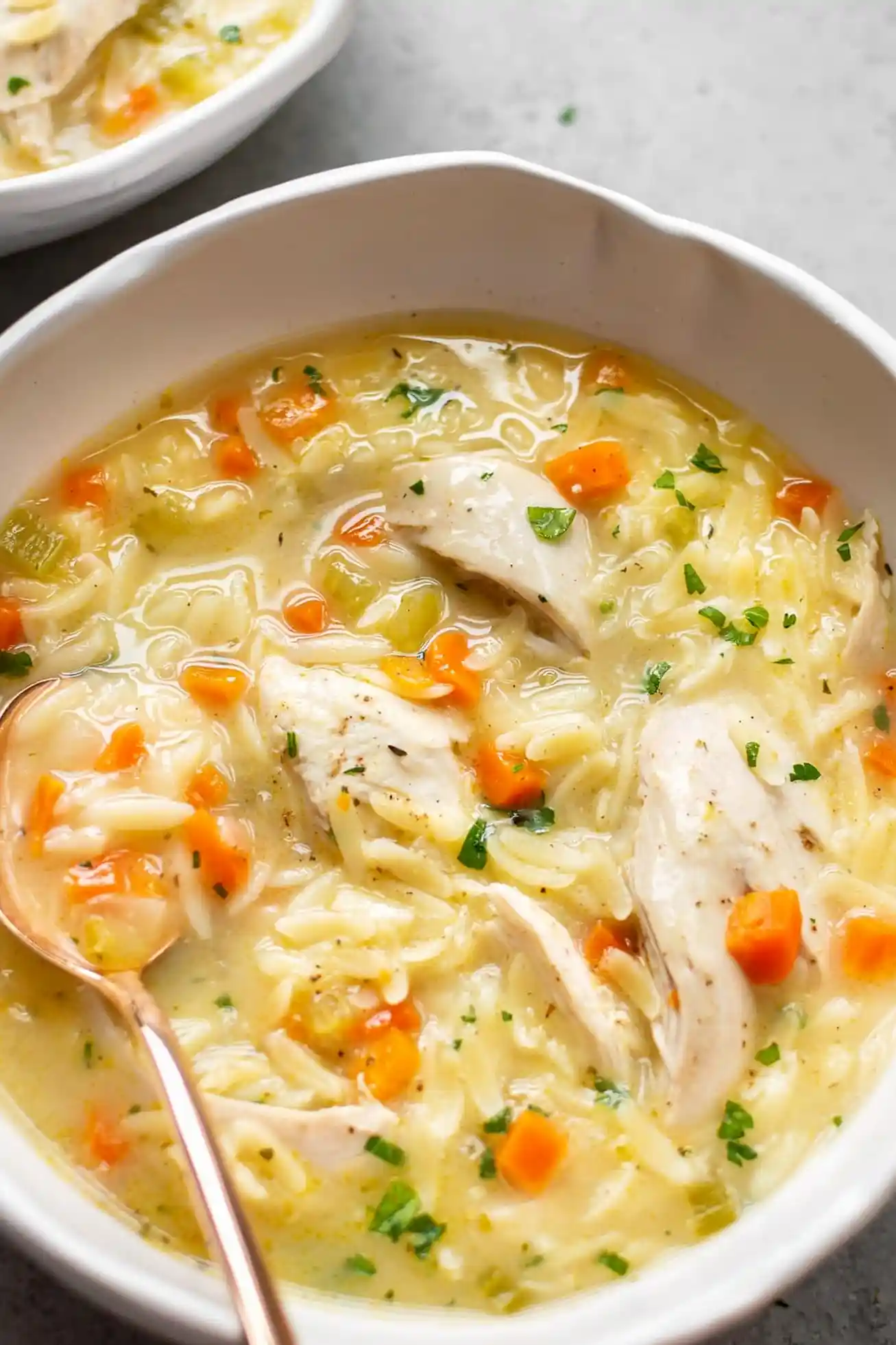
List of ingredients
- 2 sticks celery – chopped finely
- 2 medium carrots – peeled and chopped finely
- 1/2 medium onion – chopped
- 1 tablespoon butter – for sautéing
- 1 tablespoon olive oil – for sautéing
- 3 cloves garlic – minced
- 2 tablespoons flour – used to slightly thicken the broth
- 6 cups chicken broth – provides the savory base
- 1/4 teaspoon Italian seasoning – for aromatic herbs
- 1.5 pounds uncooked chicken breasts – boneless and skinless
- 1 cup uncooked orzo – small rice-shaped pasta
- 1 tablespoon lemon juice – or adjust to taste for acidity
- 1 tablespoon chopped fresh parsley – or adjust to taste for freshness
- Salt & pepper – to taste
step-by-step instructions
- Sauté Aromatics: Heat butter and olive oil in a large soup pot over medium-high heat. Add the chopped celery, carrots, and onions and cook for 5-7 minutes until softened.
- Add Garlic and Flour: Stir in the minced garlic and cook for about 30 seconds. Add the flour and cook for an additional minute to toast the flour.
- Simmer Chicken: Pour in the chicken broth and stir until the flour is fully dissolved. Add the Italian seasoning and the whole chicken breasts, then bring the liquid to a boil.
- Poach Chicken: Cover the pot with the lid slightly open, reduce the heat, and simmer for 15 minutes.
- Cook Orzo: Stir in the uncooked orzo and cook for another 10 minutes or until the pasta is tender. Stir frequently to prevent the orzo from sticking to the bottom of the pot.
- Finish and Season: Remove the chicken from the pot and cut it into bite-sized pieces. Return the chicken to the pot and stir in the lemon juice, fresh parsley, salt, and pepper. Serve immediately.
Professional Cooking Tips
Prevent Orzo from Sticking to the Pot
Orzo contains starch that can settle at the bottom of the pot, leading to burning or sticking. Use a heavy-bottomed Dutch oven to distribute heat evenly and stir the soup every few minutes once the pasta is added. This ensures the grains remain separate and the broth stays smooth.
Ensure Juicy Chicken Breast
Overcooking chicken breast can lead to a rubbery texture. Use an instant-read meat thermometer to ensure the chicken reaches an internal temperature of 165F before removing it from the pot. Cutting the chicken after poaching ensures the pieces remain moist and tender.
Optimize the Citrus Balance
Lemon juice can lose some of its brightness if boiled for too long. Always stir in the lemon juice at the very end of the cooking process to maintain a fresh, zesty flavor profile. Taste the broth and add more juice a teaspoon at a time until the acidity matches your preference.
Create a Silky Broth Texture
The small amount of flour used at the beginning creates a light roux with the butter and oil. Ensure you cook the flour for at least one minute to remove the raw flour taste before adding the broth. Stirring constantly while adding the liquid prevents lumps from forming in the soup.
Ingredient Substitutions
Using Chicken Thighs Instead of Breasts
For a richer flavor and more succulent meat, replace the chicken breasts with boneless, skinless chicken thighs. Thighs are more forgiving during the simmering process and are less likely to dry out. Follow the same cooking times as specified in the recipe.
Incorporating Rotisserie Chicken
If you are using pre-cooked or rotisserie chicken, omit the raw chicken from the poaching step. Add the shredded cooked chicken at the same time you add the orzo to ensure it warms through without becoming overcooked or tough.
Low-Sodium Broth Alternatives
To control the overall salt intake, use a low-sodium chicken broth or a homemade unsalted stock. Since the recipe calls for salt to taste at the end, starting with a low-sodium base allows you to manage the seasoning more precisely.
Gluten-Free Pasta Options
Replace the traditional orzo with a gluten-free orzo alternative made from brown rice or corn. Be mindful that gluten-free pastas often have different absorption rates, so you may need to add an extra cup of broth to maintain the desired consistency.
Flavor Variations
Adding Fresh Lemon Zest
For a more intense citrus punch, grate the zest of one lemon into the pot along with the lemon juice. The zest contains essential oils that provide a deeper aroma than the juice alone. This is especially effective if you prefer a very bright, Mediterranean style of soup.
Adding Leafy Greens for Nutrition
Stir in two cups of fresh baby spinach or chopped kale during the final two minutes of cooking. The residual heat will wilt the greens without overcooking them. This adds a pop of color and increases the vitamin content of the meal.
Experimenting with Dried Herbs
If you do not have Italian seasoning, you can use a blend of dried oregano, thyme, and basil. A ratio of equal parts of these three herbs mimics the standard Italian blend. Alternatively, a pinch of dried dill can give the soup a Scandinavian twist.
Adding Sliced Almonds for Texture
To add a contrasting crunch, garnish each bowl with a few toasted slivered almonds. The nuttiness complements the lemon and chicken flavors well. Toast the almonds in a dry pan for 2-3 minutes until golden brown before serving.
Serving and Pairing Suggestions
Pairing with Crusty Sourdough Bread
A toasted slice of sourdough bread is an ideal accompaniment to this soup. The tanginess of the sourdough mirrors the lemon in the broth. Rub a raw garlic clove on the toasted bread for added savory depth.
Serving with a Fresh Arugula Salad
Balance the heartiness of the orzo with a light arugula salad dressed in a simple lemon-olive oil vinaigrette. The peppery notes of the arugula cut through the richness of the chicken broth. Add shaved parmesan cheese to the salad for extra saltiness.
Garnishing for Presentation
Place a thin slice of fresh lemon in each bowl before serving to signal the flavor profile to guests. A generous sprinkle of freshly chopped parsley or chives adds a professional look. A crack of fresh black pepper on top enhances the visual contrast.
Storage and Reheating Instructions
Refrigerator Storage Limits
Store the leftover soup in an airtight container in the refrigerator for 3 to 4 days. Ensure the soup is cooled slightly before sealing the lid to prevent excess condensation. Keep the container tightly sealed to avoid the soup absorbing other fridge odors.
Managing Pasta Absorption
Orzo continues to absorb liquid even after the soup has cooled, which can result in a thick, porridge-like consistency. When storing, you may want to store the cooked orzo separately from the broth. If storing together, plan to add a splash of chicken broth or water when reheating.
Guidelines for Freezing
The broth and chicken freeze well, but the orzo can become mushy or puffy upon thawing. For best results, freeze the soup base without the pasta. Once thawed and reheated, cook fresh orzo separately and stir it into the hot soup.
Proper Reheating Methods
Reheat the soup in a small saucepan over low to medium heat. Avoid boiling the soup aggressively during reheating, as this can break down the pasta further. Stir occasionally and add a small amount of water or broth to loosen the texture.
Make-Ahead Advice
Prepping Vegetables in Advance
You can chop the celery, carrots, and onions up to two days before cooking. Store them together in a sealed container or bag in the refrigerator. This reduces the active prep time on the day you decide to make the soup.
Cooking Orzo Separately for Meal Prep
If you are preparing this soup for weekly lunches, boil the orzo in a separate pot of salted water. Drain it and toss it with a tiny bit of olive oil to prevent sticking. Add a portion of cooked orzo to each individual serving container and pour the hot soup over it.
Freezing the Flavor Base
You can make a large batch of the vegetable and chicken broth base and freeze it in portions. When you are ready to eat, thaw the base and simmer it with fresh orzo. This allows you to have a fresh-tasting meal in a fraction of the time.
Troubleshooting Common Issues
Soup is Too Thick After Sitting
If the soup has become too thick due to the starch in the orzo, simply stir in a small amount of chicken broth or water. Heat the soup gently while stirring to redistribute the liquid. Do this gradually until you reach your preferred consistency.
Chicken is Too Dry
Dry chicken usually happens when the breasts are simmered for too long or at too high a temperature. Ensure you are using a simmer (gentle bubbles) rather than a rolling boil. Always check the internal temperature with a thermometer to pull the meat at exactly 165F.
Orzo is Overcooked or Mushy
Overcooked pasta occurs if the orzo is left to simmer past its al dente stage. To prevent this, set a timer for exactly 10 minutes once the pasta is added. If you plan to reheat the soup later, undercook the orzo slightly so it finishes cooking during the reheating process.
Frequently Asked Questions
Can I use frozen chicken breasts?
Yes, but you must thaw them completely in the refrigerator before adding them to the pot. Adding frozen chicken directly to the broth will drop the temperature significantly and will likely result in unevenly cooked meat.
How do I stop the soup from becoming too thick?
The best way to prevent a thick consistency is to cook the orzo separately and add it to the bowl just before serving. If cooking in one pot, avoid overcooking the pasta and be ready to thin the soup with extra broth during reheating.
What is the best type of onion to use?
Yellow onions provide a classic, pungent base that is perfect for most soups. However, Vidalia or sweet onions can be used if you prefer a milder, slightly sweeter flavor profile in your broth.
Can I make this in a slow cooker?
Yes, you can adapt this for a slow cooker by simmering the chicken and vegetables on low for 6-8 hours. However, add the orzo and lemon juice during the last 30-60 minutes of cooking to prevent the pasta from disintegrating.
Print
Zesty Lemon Chicken Orzo Soup
- Total Time: 50 minutes
- Yield: 6 servings 1x
- Diet: General
Description
This lemon chicken orzo soup recipe is light, healthy, and cozy. It uses wholesome everyday ingredients and is sure to become a family favorite!
Ingredients
- 2 sticks celery (chopped finely)
- 2 medium carrots (peeled & chopped finely)
- 1/2 medium onion (chopped)
- 1 tablespoon butter
- 1 tablespoon olive oil
- 3 cloves garlic (minced)
- 2 tablespoons flour
- 6 cups chicken broth
- 1/4 teaspoon Italian seasoning
- 1.5 pounds uncooked chicken breasts
- 1 cup uncooked orzo
- 1 tablespoon lemon juice
- 1 tablespoon chopped fresh parsley
- Salt & pepper (to taste)
Instructions
- Step: Sauté the celery, carrots, and onions in a large soup pot with the butter and oil over medium-high heat for 5-7 minutes.
- Step: Stir in the garlic and cook for about 30 seconds, then add the flour and cook for another minute or so.
- Step: Pour in the chicken broth and stir until the flour has dissolved, then add the Italian seasoning and chicken. Bring the soup to a boil.
- Step: Cover the soup (lid slightly open), and reduce the heat and simmer for 15 minutes.
- Step: Stir in the orzo and cook for another 10 minutes or until the orzo is cooked through.
- Step: Take the chicken out of the pot and cut it up, then add it back in. Add the lemon juice, parsley, and season the soup with salt & pepper as needed. Serve immediately.
Notes
You can substitute chicken breasts for chicken thighs. Use low-sodium chicken broth if sensitive to salt. If storing leftovers, you may need to add more broth as the orzo absorbs liquid over time.
- Prep Time: 10 minutes
- Cook Time: 40 minutes
- Category: Soup
- Method: Stovetop
- Cuisine: American, Greek
Nutrition
- Serving Size: 1 serving
- Calories: 298 kcal
- Sugar: 2 g
- Sodium: 1036 mg
- Fat: 8 g
- Saturated Fat: 2 g
- Unsaturated Fat: 6 g
- Trans Fat: 0 g
- Carbohydrates: 26 g
- Fiber: 2 g
- Protein: 29 g
- Cholesterol: 78 mg