
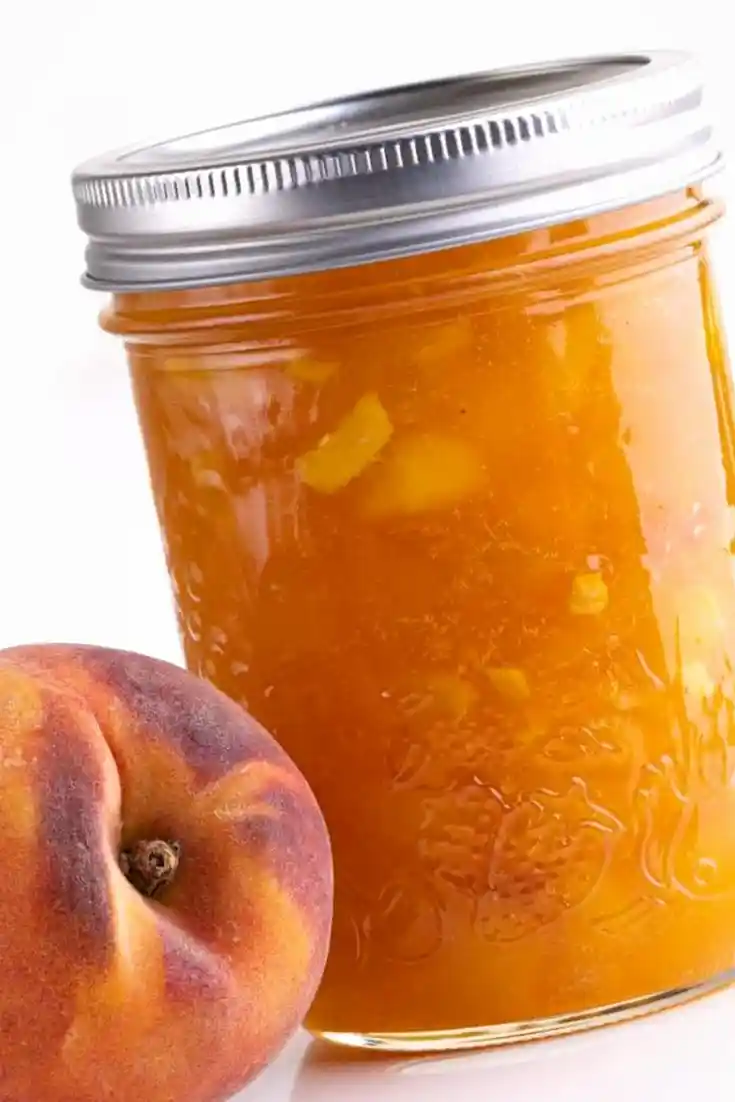
This guide explains how to make thick, golden peach preserves without using commercial pectin. These jars are perfect for long-term storage and adding a burst of summer flavor to your winter breakfast.
List of ingredients
- 8 lbs fresh peaches – peeled and chopped into small pieces.
- 4 cups granulated sugar – essential for thickening and preservation.
- 10 tablespoon fresh lemon juice – approximately 4-5 plump juicy lemons.
- 1/2-inch knob of grated ginger (optional) – about 1/2 tablespoon for warmth.
- 1 cinnamon stick (optional) – adds a spicy depth to the flavor.
step-by-step instructions
- Sterilize Equipment: Clean mason jars and lids in hot soapy water and rinse well. Set up a steamer rack in a 16-quart pot or water bath canner, fill with water to cover the jars, and boil for 10 minutes. Remove with tongs when ready.
- Prepare Peaches: Peel and chop the clean peaches into small pieces. You may use a food processor to accelerate this process.
- Combine Ingredients: Place the peaches in a large stockpot. Add sugar, lemon juice, cinnamon, and ginger, then stir thoroughly to coat all fruit pieces with sugar.
- Macerate: Let the mixture sit for one hour to allow the sugar to draw out the juices. If the peaches have not released enough juice after an hour, add up to 1 cup of water.
- Initial Boil: Bring the mixture to a full rolling boil over medium-high heat, stirring occasionally. Once it has boiled for one full minute, reduce heat to medium (or medium-low if your stove runs hot).
- Slow Simmer: Allow the mixture to simmer for 2 or more hours. Continue until the liquid has reduced significantly and the consistency is thick and sticky.
- Final Reduction: Keep a close eye on the preserves during the final stages of cooking. Stir frequently to prevent burning and skim off any surface foam as needed.
- Jarring: Ladle the hot preserves into the hot jars, leaving exactly 1/2 inch of headspace at the top.
- Remove Air: Use a clean knife to remove any air bubbles trapped in the preserves.
- Clean Rims: Wipe the jar rims with a clean, damp cloth or paper towel to ensure a proper seal.
- Seal Jars: Place lids on the jars and twist the bands until they are finger-tight. Do not overtighten the bands.
- Water Bath Processing: Place the filled jars in a boiling water bath canner for 10 minutes. Adjust the processing time based on your current elevation.
- Cooling: Remove jars with tongs and place them on a cooling rack. Let them sit undisturbed at room temperature for 24 hours.
Fruit Selection and Preparation
Choosing the Best Peaches
Select peaches that are fragrant and yield slightly to gentle pressure. Avoid fruit with deep bruises or soft spots, as overripe peaches can break down too much during the long simmering process.
Blanching Peaches for Easier Peeling
Bring a large pot of water to a boil and submerge the peaches for 40 to 50 seconds. Immediately move them to cool water to stop the cooking, which allows the skins to slip off effortlessly.
Achieving the Right Texture
Chop the peaches into small, uniform pieces to ensure an even cook. While a food processor is faster, hand-chopping provides the characteristic chunks found in traditional preserves.
Canning Safety and Equipment
Sterilizing Your Mason Jars
Use hot soapy water to scrub all mason jars and lids before processing. Boiling the jars for 10 minutes ensures no bacteria interfere with the preservation, keeping your food safe for months.
Using a Water Bath Canner
Always use a rack inside your 16-quart pot to prevent the glass jars from touching the bottom. This prevents thermal shock, which can cause the jars to crack under high heat.
Ensuring a Proper Vacuum Seal
Tighten the bands only until they are finger-tight. Overtightening can prevent the vacuum seal from forming correctly as the jars cool, which may lead to spoilage.
The Role of Acidity in Preservation
Lemon juice provides the necessary acidity to lower the pH of the preserves. This is a critical safety step that prevents the growth of harmful bacteria during room temperature storage.
Thickening and Texture Control
Why This Recipe Works Without Pectin
Peaches contain a moderate amount of natural pectin. By cooking the mixture low and slow, the natural pectins concentrate and the water evaporates, creating a gel-like consistency without additives.
The Importance of Simmer Time
Allowing the preserves to simmer for at least two hours is essential for reduction. Rushing this stage will result in a runny syrup rather than a thick, sticky preserve.
Identifying the Gelling Point
The preserves are ready when they turn a dark golden orange color and appear glossy. The mixture should be thick enough to hold its shape briefly when spooned.
Handling Excess Surface Foam
Use a metal spoon to skim the white foam from the surface as it boils. This step ensures the final preserves are clear and look professionally made.
Ingredient Variations and Substitutions
Adding Warmth with Cinnamon and Nutmeg
Adding a cinnamon stick introduces a spicy depth that complements the sweetness of the peaches. You can also add a half teaspoon of nutmeg for extra warmth; just remember to remove the cinnamon stick before jarring.
The Role of Sugar in Stability
Sugar acts as both a sweetener and a preservative in this recipe. To maintain shelf stability and the correct set, do not reduce the sugar amount below 3 cups.
Alternative Sweeteners for Low-Sugar Needs
If you require a sugar-free version, use Allulose or Splenda. Because these do not gel naturally, you must use a specialized pectin like Pomona’s to achieve the correct thickness.
Fresh versus Bottled Lemon Juice
Fresh lemon juice provides a brighter, cleaner flavor than bottled alternatives. Because this recipe uses 10 tablespoons, there is sufficient acidity to maintain safety without needing bottled concentrates.
Storage and Long-Term Preservation
Optimal Shelf-Stable Conditions
Store your sealed jars in a cool, dark, and dry pantry. When kept away from light and heat, these peach preserves will remain safe and high-quality for up to 18 months.
Refrigerating Opened Jars
Once the vacuum seal is broken, move the jar to the refrigerator immediately. An opened jar of preserves will maintain its freshness for approximately three weeks.
Checking for Seal Integrity
After the 24-hour cooling period, press the center of the lid. If it does not pop up or click, the vacuum seal is successful and the jar is shelf-stable.
Creative Serving Ideas
Pairing with Breakfast Classics
Spread the preserves over a layer of cream cheese on a toasted bagel. The tanginess of the cheese perfectly balances the concentrated sweetness of the peaches.
Using Preserves in Baked Goods
Use the preserves as a filling between layers of a vanilla sponge cake. It adds a burst of fruit flavor and moisture to the dessert without making the cake soggy.
Savory Charcuterie Pairings
Serve the peach preserves alongside a wedge of brie or goat cheese. The contrast between the salty, creamy cheese and the sweet fruit is a sophisticated addition to any appetizer board.
Troubleshooting Common Issues
Fixing Runny Preserves
If the preserves are too thin after cooling, return them to the pot. Simmer the mixture for another 15 to 30 minutes to further reduce the liquid and increase the thickness.
Preventing Fruit from Scorching
Stir the mixture frequently, especially during the final hour of cooking. This prevents the concentrated sugar from sticking to the bottom of the pan and burning.
Solving Jar Seal Failures
If a jar fails to seal after 24 hours, do not store it in the pantry. Move it to the refrigerator to be consumed within three weeks or re-process it immediately.
Frequently Asked Questions
Can I use frozen peaches?
While possible, frozen peaches often lose their structural integrity and flavor vibrancy. Using fresh fruit results in a superior texture and a more authentic peach taste.
How long do these preserves last?
Properly canned jars can be stored for up to 18 months in a cool, dark space. Once opened, they must be refrigerated and used within three weeks.
Can I double the batch size?
Doubling the recipe is not recommended because the larger volume takes much longer to heat. This increases the risk of the bottom burning before the top reaches the necessary temperature.
Why is the color of my preserves different?
The final shade of orange depends on the specific variety of peach used. A longer reduction time will generally result in a deeper, darker golden hue.
Print
Homemade Peach Preserves for Canning Without Pectin
- Total Time: 1 day 3 hours
- Yield: 10 cups 1x
- Diet: Vegetarian
Description
A wonderful peach preserves you can make with very little effort that will keep you in fresh preserves all winter long. This delicious peach preserve recipe does not require any pectin to gel.
Ingredients
- 10 tablespoon fresh lemon juice
- 8 lbs fresh peaches
- 4 cups granulated sugar
- 1/2 tablespoon grated ginger (optional)
- 1 cinnamon stick (optional)
Instructions
- Step: Clean mason jars and lids in hot soapy water and rinse well.
- Step: Set up a steamer rack in a 16-quart pot or water bath canner, cover jars with water, and boil for 10 minutes.
- Step: Peel and chop peaches into small pieces and add them to a large stockpot.
- Step: Add the sugar, lemon juice, cinnamon and ginger to the pot and stir.
- Step: Let the mixture sit for one hour; add up to 1 cup of water if peaches have not juiced.
- Step: Bring the mixture to a full rolling boil for one minute, then reduce heat to medium and simmer for 2+ hours until thick and sticky.
- Step: Stir frequently toward the end of cooking and skim foam as required.
- Step: Ladle hot preserves into hot jars, leaving 1/2 inch headspace at the top.
- Step: Remove any air bubbles with a clean knife.
- Step: Clean jar rims with a damp cloth or paper towel before adding lids.
- Step: Place lids on and twist bands until finger tight.
- Step: Place canning jars in a boiling water bath canner for 10 minutes.
- Step: Remove jars and allow them to cool at room temperature undisturbed for 24 hours.
Notes
Store in a cold, dark, dry space for up to 18 months. Opened jars of peach preserves will last three weeks in the refrigerator.
- Prep Time: 1 hour
- Cook Time: 2 hours
- Category: Canning & Preserving
- Method: Water Bath Canning
- Cuisine: American
Nutrition
- Serving Size: 1 tablespoon
- Calories: 57 kcal
- Sugar: 14 g
- Sodium: 0 mg
- Fat: 0 g
- Saturated Fat: 0 g
- Unsaturated Fat: 0 g
- Trans Fat: 0 g
- Carbohydrates: 14 g
- Fiber: 1 g
- Protein: 0 g
- Cholesterol: 0 mg