
Preserving fresh peaches using a water bath canner allows you to enjoy the flavor of summer fruit throughout the entire year. This process uses a simple syrup to maintain the texture and sweetness of the fruit while ensuring a safe seal.
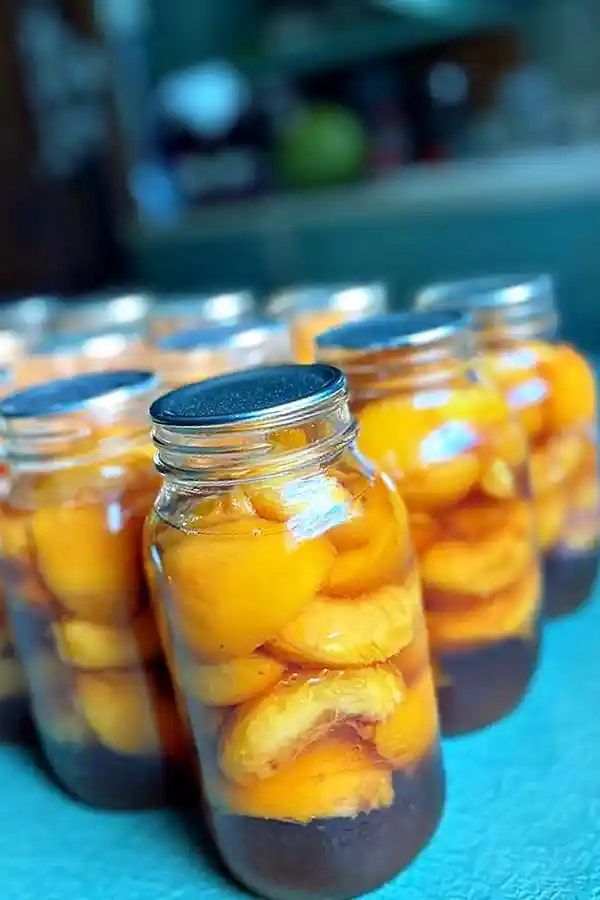
List of ingredients
- Fresh Peeled Peaches – washed and peeled for a better final texture.
- 7 Quart Mason Jars – sterilized and ready for packing.
- 9 Cups Simple Syrup – a medium consistency mixture of sugar and water.
step-by-step instructions
- Sterilize Jars: Prepare your Mason jars by sterilizing them in the oven or boiling water.
- Slice Peaches: Cut the peeled peaches into halves, quarters, or slices based on your preference.
- Pack peaches into jars: Place the sliced peaches into the jars tightly without crushing the fruit.
- Fill jars with simple syrup: Pour the syrup over the peaches, leaving exactly 1/2 inch of headspace at the top.
- Place jars in canner: Set the filled jars into the water bath canner on a rack.
- Water bath jars: Process the jars for 25 minutes if using quarts or 20 minutes if using pints.
Syrup Selection and Preparation
Medium Syrup Ratio
A medium syrup is created using one part sugar to two parts water. This balance provides enough sweetness to preserve the fruit without overpowering the natural flavor of the peaches.
Light Syrup Ratio
For those who prefer less sweetness, a light syrup uses one part sugar to three parts water. This version is thinner and allows the natural acidity of the fruit to be more prominent.
Heavy Syrup Ratio
Heavy syrup consists of a one-to-one ratio of sugar and water. This creates a thick, sweet liquid that is ideal for those who want a dessert-like consistency in their canned fruit.
Using Raw Sugars
Substituting refined white sugar with raw sugars like Demerara can add a richer, deeper flavor profile to the syrup. Ensure the sugar is fully dissolved in boiling water before adding it to the jars.
Dissolving the Sugar
Bring your water to a full boil before adding the sugar to the pot. Stir constantly until the sugar crystals have completely disappeared and the liquid is clear.
Jar Sterilization Techniques
Oven Sterilization Method
Place clean jars in the oven at 275 degrees Fahrenheit for twenty minutes. This method keeps the jars warm, which prevents them from cracking when filled with hot syrup.
Boiling Water Sterilization
Submerge clean jars in a pot of boiling water for ten minutes. This is a quick way to ensure all microorganisms are removed before the packing process begins.
Temperature Balancing
Allow sterilized jars to cool slightly until they are close to the temperature of the peaches and syrup. This prevents thermal shock, which can cause the glass to shatter during filling.
Optimal Packing Methods
Slicing for Consistency
Use a sharp paring knife to cut peaches into uniform sizes. Cutting them over a bowl prevents slippery fruit from falling onto the counter or floor.
Preventing Fruit Bruising
Pack the peaches firmly into the jars to maximize space, but avoid pressing too hard. Smashing the fruit can lead to a mushy texture after the water bath process.
Managing Headspace
Leave one inch of space when packing the fruit alone to ensure there is room for the syrup. The final headspace after adding the syrup must be exactly 1/2 inch to ensure a proper vacuum seal.
Removing Trapped Air Bubbles
Run a clean butter knife or a dedicated canning bubble tool down the inside walls of the jar. This releases trapped air that could interfere with the sealing process.
Ensuring a Clean Rim
Wipe the rim of each jar with a wet, warm dishcloth before applying the lid. Any residue from the syrup or fruit on the rim can prevent the lid from sealing airtight.
Water Bath Processing Guidelines
Canner Depth Requirements
Use a pot or canner deep enough to cover the tops of the jars by at least one inch of water. This ensures the heat is distributed evenly even as water evaporates during the boil.
Preventing Jar Breakage
Place a canning rack or a clean dish towel at the bottom of the pot. This prevents the glass jars from touching the direct heat source of the stove burner.
Monitoring the Boil
Wait for the water to reach a gentle, steady boil before starting your timer. Do not count the processing time while the water is still heating up.
Processing Time by Jar Size
Set the timer for 25 minutes for quart-sized jars and 20 minutes for pint-sized jars. Accurate timing is critical for food safety and fruit texture.
After-Canning Handling and Storage
Safe Jar Removal
Use a jar lifter or insulated rubber gloves to remove the hot jars from the canner. The glass remains extremely hot for several minutes after processing.
The Cooling Period
Place jars on a towel or cutting board to insulate them from the countertop. Allow the jars to sit undisturbed for at least six hours, or ideally overnight, to set the seal.
Efficient Labeling
Use a permanent marker or adhesive labels to mark the date of canning and the contents. This helps in tracking the age of the preserves and managing your inventory.
Storing for Long-term Use
Remove the canning rings after the jars have cooled completely to prevent the rings from rusting. Store the jars in a cool, dark place to maintain the color and quality of the peaches.
Common Canning Troubleshooting
Dealing with Failed Seals
If a lid does not pop down or feels loose after cooling, the seal has failed. Transfer the contents to a fresh jar and re-process it immediately.
Addressing Cloudy Syrup
Cloudiness in the syrup can be caused by residue from the peach skins or under-processing. Ensure peaches are thoroughly peeled and processing times are strictly followed.
Managing Mushy Texture
Over-processing in a water bath can make the fruit too soft. Always adhere to the specific timing for pints and quarts to keep the peaches firm.
Frequently Asked Questions
Do peaches have to be peeled to can them?
Peaches can be canned with the skin on, but peeling them results in a much more pleasant texture and appearance. For the best quality, use the blanching method to remove skins.
How long do you have to hot water bath peaches?
The required processing time is 20 minutes for pint jars and 25 minutes for quart jars. These times ensure the fruit is preserved safely.
How long do home canned peaches last on the shelf?
Home canned peaches generally last between 18 and 24 months. While they remain safe to eat after this period, the flavor and color will begin to degrade.
Do peaches need to be pressure canned?
No, peaches are high-acid fruits and are best processed in a water bath canner. Using a pressure canner often results in overcooked, mushy fruit.
Print
How to Can Peaches in a Water Bath
- Total Time: 55 minutes
- Yield: 7 quarts 1x
- Diet: Vegetarian
Description
Water bath canning peaches at home is simple and delicious!
Ingredients
- Fresh peeled peaches
- 7 quart mason jars
- 9 cups simple syrup
Instructions
- Step: Sterilize Jars
- Step: Slice Peaches as desired (half, quarter, or slices)
- Step: Pack peaches into jars
- Step: Fill jars with simple syrup leaving 1/2″ headspace
- Step: Place jars in canner
- Step: Water bath jars for 25 minutes for quarts or 20 minutes for pints
Notes
We use medium simple syrup for our peaches but light or heavy syrup can also be used.
- Prep Time: 30 minutes
- Cook Time: 25 minutes
- Category: Canning
- Method: Water Bath Canning
- Cuisine: American
Nutrition
- Serving Size: 1 quart
- Calories: 900 kcal
- Sugar: 150 g
- Sodium: 20 mg
- Fat: 1 g
- Saturated Fat: 0 g
- Unsaturated Fat: 1 g
- Trans Fat: 0 g
- Carbohydrates: 220 g
- Fiber: 10 g
- Protein: 5 g
- Cholesterol: 0 mg