
This 30-minute taco rice bowl is a practical solution for busy weeknight dinners. It combines seasoned protein and vegetables over a fluffy rice base to create a nutritionally balanced and filling meal.
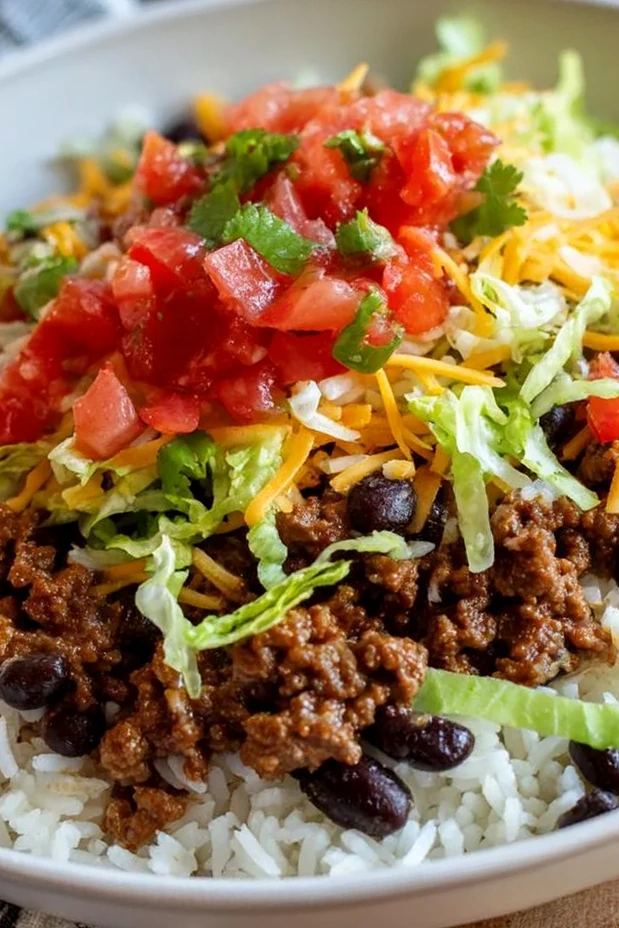
List of ingredients
- 1 cup uncooked white rice – serves as the heartier base for the bowl.
- 2 cups water or chicken broth – chicken broth adds a savory depth to the rice.
- 1 lb ground beef or turkey – the primary protein; turkey is a leaner alternative.
- 1 packet taco seasoning (about 1 oz) – provides a concentrated blend of chili, cumin, and paprika.
- 1 can (15 oz) black beans – drained and rinsed to remove excess sodium and starch.
- 1 cup corn – frozen or canned, drained if canned.
- 1 cup diced tomatoes – fresh for a crisp texture or canned for more moisture.
- 1 cup shredded lettuce – iceberg for crunch or romaine for more nutrients.
- 1 cup shredded cheddar cheese – adds richness and saltiness to the dish.
- 1/2 cup salsa – use a mild or hot variety depending on preference.
- 2 tablespoons olive oil – used for sautéing the meat and vegetables.
- salt and pepper to taste – for basic seasoning of the protein.
- fresh cilantro and lime wedges (optional) – used as a garnish to add acidity and freshness.
step-by-step instructions
- Cook the rice: Prepare the rice according to the package instructions using either water or chicken broth.
- Brown the meat: Heat olive oil in a skillet over medium heat, add the ground beef or turkey, and cook until completely browned.
- Remove excess fat: Drain any accumulated grease from the skillet to prevent the final dish from becoming oily.
- Season the protein: Sprinkle the taco seasoning over the cooked meat and stir until the seasoning is evenly distributed.
- Add vegetables: Incorporate the black beans, corn, and diced tomatoes into the skillet and cook until the mixture is heated through.
- Create the base: Divide the cooked rice evenly among four bowls, placing it at the bottom.
- Layer the bowl: Spoon the meat and vegetable mixture over the rice, then add shredded lettuce and cheddar cheese.
- Final assembly: Top each bowl with a generous portion of salsa and garnish with fresh cilantro and lime wedges if desired.
- Serve: Serve the bowls immediately while the rice and meat are still hot.
Customization and Ingredient Swaps
Use Brown Rice for More Fiber
Brown rice is a heartier and more nutrient-dense alternative to white rice. Note that brown rice requires a higher water-to-rice ratio and a longer simmering time to cook thoroughly.
Substitute Ground Turkey or Chicken
Ground turkey or chicken provides a leaner protein option for those watching their fat intake. These meats tend to be drier, so you may need an extra tablespoon of olive oil to prevent sticking.
Plant-Based Protein Alternatives
Lentils or crumbled tofu can replace beef for a vegetarian version. Ensure the plant-based protein is sautéed long enough to develop a brown crust, which enhances the overall flavor profile.
Dairy-Free Cheese Options
Nutritional yeast or vegan cheddar shreds can be used as a substitute. Some vegan cheeses melt better if you add a small splash of water to the pan during the heating process.
Meal Preparation and Storage
Store Components Individually
To maintain the best texture, keep the rice, meat mixture, and cold toppings in separate containers. This prevents the lettuce from wilting and the rice from becoming soggy from the salsa.
Use Airtight Glass Containers
Glass containers maintain freshness better than plastic and are safer for reheating. They provide a better seal, which prevents the rice from drying out during refrigeration.
Reheating the Rice and Meat
Microwave the rice and meat mixture for 1-2 minutes until steaming. Adding a teaspoon of water to the rice before reheating helps restore the original fluffy texture.
Freezing the Meat Mixture
The cooked beef and vegetable mixture freezes well for up to three months. Store in freezer-safe bags, removing as much air as possible to prevent freezer burn.
Serving and Presentation Ideas
Add Creamy Toppings
Sliced avocado or a dollop of sour cream helps balance the acidity of the salsa and the spice of the taco seasoning. Greek yogurt serves as a high-protein, lower-fat alternative to sour cream.
Include Crunchy Textures
Toasted tortilla strips or crushed corn chips provide a necessary textural contrast to the soft rice. Pickled jalapeños offer both a crunch and a sharp, vinegary kick.
Fresh Garnish Enhancements
Finely chopped cilantro adds a fresh, herbal note that cuts through the richness of the cheese. Squeezing fresh lime juice over the finished bowl brightens the heavy savory flavors.
Family-Style Serving Station
Arrange all the toppings in separate bowls on the table to create a build-your-own station. This allows each person to control the proportions of vegetables and cheese in their meal.
Cooking Variations
Seafood Taco Bowls
Replace ground beef with shrimp or a firm white fish like tilapia. Sauté these quickly over high heat to ensure they remain tender and do not overcook.
Vegetarian-Focused Bowls
Double the amount of black beans or incorporate pinto beans. Sautéing the beans with the taco seasoning creates a rich, hearty base that mimics the texture of meat.
Quinoa Base Substitution
Quinoa provides more protein and fiber than white rice. Cook the quinoa in chicken or vegetable broth for an enhanced flavor that complements the taco seasonings.
Breakfast Taco Bowls
Use scrambled eggs as the primary protein in the morning. Mix in black beans, corn, and cheese for a savory, high-protein breakfast option.
Increasing the Heat Level
Add diced fresh habaneros or a dash of cayenne pepper to the meat mixture. Chipotle peppers in adobo sauce can be stirred in for a smoky, spicy depth.
Troubleshooting Common Issues
Preventing Mushy Rice
Rinse the raw rice under cold water until the water runs clear to remove excess surface starch. This ensures the grains remain separate and fluffy after cooking.
Fixing Overly Salty Meat
If the taco seasoning is too salty, add more canned tomatoes or a splash of water to dilute the concentration. Stirring in a bit of fresh lime juice can also help mask excess salt.
Stopping Meat from Clumping
Break the ground meat apart with a sturdy spatula as soon as it hits the hot pan. Avoid overcrowding the skillet to ensure the meat browns rather than steams.
Nutritional Optimization
Increasing Vegetable Content
Add sautéed bell peppers and onions to the meat mixture. These additions increase the volume and vitamin content of the meal without significantly altering the taste.
Reducing Sodium Levels
Use low-sodium black beans and rinse them thoroughly under running water. You can also make a homemade taco seasoning using chili powder and cumin to control the salt content.
Boosting Protein Content
Incorporate extra beans or serve the bowl with a side of grilled chicken breast. Adding a scoop of plain Greek yogurt increases the overall protein per serving.
Cooking Equipment Suggestions
Using a Cast Iron Skillet
Cast iron provides superior heat retention, which is ideal for browning ground beef. This creates a better sear and a deeper, more complex flavor through the Maillard reaction.
Choosing the Right Rice Cooker
A dedicated rice cooker ensures consistent results by automating the water-to-heat ratio. Use the ‘white rice’ setting for standard long-grain rice to avoid overcooking.
Using a Food Processor for Veggies
Pulse the tomatoes and onions in a food processor for a consistent, fine dice. This ensures a uniform distribution of vegetables in every spoonful of the meat mixture.
Frequently Asked Questions
Can I use instant rice instead of regular rice?
Yes, instant rice is a viable alternative for faster preparation. Follow the package instructions and ensure the rice is fully hydrated before layering it in the bowl.
What is the best way to reheat leftovers?
Microwave the rice and meat together for 1-2 minutes, then add the cold toppings like lettuce and salsa fresh. Alternatively, heat the base in a skillet with a splash of water.
Can I make this recipe vegetarian?
Yes, simply omit the meat and double the quantity of beans or use tofu crumbles. The taco seasoning and toppings provide enough flavor to satisfy without meat.
How long does the meat mixture last in the fridge?
The cooked meat and vegetable mixture remains safe to eat for 3-4 days when stored in an airtight container. Keep it refrigerated at or below 40 degrees Fahrenheit.
Print
30-Minute Taco Rice Bowl
- Total Time: 30 minutes
- Yield: 4 servings 1x
- Diet: Low Calorie
Description
A delicious and easy-to-make Taco Rice Bowl that combines the flavors of tacos with the heartiness of rice. Perfect for a quick family dinner or meal prep.
Ingredients
- 1 cup uncooked white rice
- 2 cups water or chicken broth
- 1 lb ground beef or turkey
- 1 packet taco seasoning (about 1 oz)
- 1 can (15 oz) black beans, drained and rinsed
- 1 cup corn, frozen or canned
- 1 cup diced tomatoes, fresh or canned
- 1 cup shredded lettuce
- 1 cup shredded microbial-rennet cheddar cheese
- ½ cup salsa
- 2 tablespoons olive oil
- Salt and pepper to taste
- Fresh cilantro and lime wedges (optional)
Instructions
- Step: Cook the rice according to package instructions, using water or chicken broth.
- Step: Heat olive oil in a skillet over medium heat. Add ground beef or turkey and cook until browned.
- Step: Drain excess fat from the skillet. Add taco seasoning and stir to combine.
- Step: Add black beans, corn, and diced tomatoes to the skillet. Cook until heated through.
- Step: Assemble the bowls by placing a layer of cooked rice at the bottom.
- Step: Top with the meat and vegetable mixture, shredded lettuce, and cheddar cheese.
- Step: Add salsa and garnish with fresh cilantro and lime wedges if desired.
- Step: Serve immediately and enjoy!
Notes
You can use brown rice for a healthier option. Feel free to add other toppings like avocado or sour cream. This recipe is great for meal prep and can be stored in the fridge for up to 3 days.
- Prep Time: 10 minutes
- Cook Time: 20 minutes
- Category: Main Course
- Method: Stovetop
- Cuisine: Mexican
Nutrition
- Serving Size: 1 bowl
- Calories: 450 kcal
- Sugar: 5 g
- Sodium: 800 mg
- Fat: 18 g
- Saturated Fat: 6 g
- Unsaturated Fat: 10 g
- Trans Fat: 0 g
- Carbohydrates: 45 g
- Fiber: 6 g
- Protein: 25 g
- Cholesterol: 60 mg