
Prepare a hearty and flavorful meal with these slow-cooked beef sandwiches. This recipe uses just a few ingredients to create tender meat and a rich dipping sauce.
List of ingredients
- 3-4 lbs. chuck roast – select a well-marbled cut for maximum tenderness.
- 2 cups beef broth – used for braising and creating the au jus.
- 1 (0.7 oz.) packet dry Italian dressing mix – provides the primary seasoning.
- 2 teaspoons Italian seasoning – adds extra herbal depth.
- 1 (16 oz.) jar pepperoncini with juice – stems removed and cut into 1 inch slices.
- Hoagie rolls – crusty Italian or French rolls work best.
- Butter – for toasting the rolls.
- Sliced provolone or mozzarella cheese – for a melty topping.
- Giardiniera (optional) – pickled vegetable mix for extra zing.
step-by-step instructions
- Sear the Meat: Over medium-high heat in a skillet, sear the roast in oil on both sides until browned, about 4-5 minutes per side. Pour some beef broth into the pan to deglaze and scrape up all the browned bits.
- Prepare Slow Cooker: Place the seared roast into a 6 qt. slow cooker. Sprinkle the dry Italian dressing mix and Italian seasoning evenly over the meat.
- Add Liquids: Pour in the beef broth, the sliced pepperoncini peppers, and 1/2 cup of the pepperoncini juice.
- Slow Cook: Cover the pot and cook for 8 hours on low heat or 4-5 hours on high heat.
- Shred the Beef: Transfer the cooked roast to a cutting board. Use two forks to shred the meat into bite-sized pieces, removing any large pieces of fat.
- Prepare the Rolls: Split the rolls lengthwise and spread with butter. Place provolone cheese slices on the bread and toast or broil until the cheese is melted.
- Assemble and Serve: Pile the shredded beef and sliced pepperoncini onto the toasted rolls. Serve hot with the remaining au jus and optional giardiniera.
Meat Selection and Preparation
Why Chuck Roast is Ideal
Chuck roast comes from the shoulder of the cow and contains a high amount of connective tissue and fat. During the slow cooking process, this collagen breaks down into gelatin, resulting in meat that is incredibly tender and moist. It is the most reliable cut for long braises.
Using Rump Roast as an Alternative
If you cannot find chuck roast, a rump roast can be used as a substitute. However, rump is leaner than chuck, which means it may not be as juicy. You may need to ensure the meat stays submerged in the broth to prevent it from drying out.
The Benefits of Searing
Searing the meat before placing it in the slow cooker creates a brown crust through the Maillard reaction. This process adds a deep, savory complexity to the final flavor of the beef. While optional, it significantly improves the overall taste profile of the sandwich.
Proper Deglazing Techniques
After searing, the pan contains browned bits called fond. Pouring a small amount of beef broth into the hot pan allows you to scrape these bits loose. Adding this concentrated flavor back into the slow cooker ensures no savory elements are wasted.
Optimizing Slow Cooker Settings
Cooking on Low Heat
Setting your slow cooker to low for 8 hours is the recommended method for the best texture. The gradual increase in temperature allows the muscle fibers to relax and the fat to render slowly. This results in the most fork-tender beef possible.
Using the High Heat Setting
If you are short on time, the high setting for 4-5 hours is a viable option. The meat will still be tender, though it may not shred as effortlessly as the low-heat version. Ensure the lid remains closed to maintain consistent internal heat.
Choosing the Right Pot Size
A 6 qt. slow cooker is ideal for a 3-4 lb roast. Using a pot that is too small can lead to uneven cooking or overflow. Conversely, a pot that is too large may cause the liquid to evaporate too quickly, leaving the meat dry.
Avoiding Overcooking
While beef roast is forgiving, cooking it significantly past the 8-hour mark on low can eventually cause the meat to become mushy. Once the beef shreds easily with a fork, it is done. Remove it promptly to maintain the best structure.
Flavor Enhancements and Substitutions
Managing Sodium Levels
The Italian dressing mix contains a significant amount of salt. To control the sodium, use a low-sodium beef broth. Avoid adding extra salt to the roast before cooking, as the packet and the pepperoncini juice provide ample seasoning.
Substituting Beef Consommé
For a more intense, concentrated beef flavor, you can use beef consommé instead of standard broth. Consommé is a clarified stock that offers a richer taste. Use it in a 1:1 ratio with the beef broth called for in the recipe.
Adjusting the Acidity
The pepperoncini juice provides a tangy contrast to the rich beef. If you prefer a more vinegary taste, you can increase the juice to 3/4 cup. For a milder flavor, stick to the 1/2 cup measurement.
Selecting Italian Seasoning Blends
Most Italian seasonings contain a mix of oregano, basil, rosemary, and thyme. Ensure your blend is fresh for the most aromatic results. If you prefer a more herbal note, you can add a pinch of dried parsley.
Bread and Cheese Pairings
The Best Type of Hoagie Rolls
A sturdy, crusty roll is necessary to support the weight of the beef and the moisture of the au jus. Italian rolls or French baguettes are excellent choices. Avoid soft white buns, as they will disintegrate quickly when dipped in sauce.
Toasting for Structural Integrity
Buttering and toasting the rolls creates a moisture barrier between the bread and the meat. This prevents the sandwich from becoming soggy too quickly. Broiling the rolls for 1-2 minutes until golden brown provides a satisfying crunch.
Choosing the Right Melting Cheese
Provolone is the traditional choice for Italian beef because of its mild flavor and excellent melt. Mozzarella is a great alternative for those who prefer a stretchier, creamier cheese. Swiss or Monterey Jack also work well if you want a different flavor profile.
Applying Cheese for Maximum Coverage
Place the cheese slices directly on the buttered bread before toasting. This allows the cheese to fuse with the bread, creating a sealed layer. This technique keeps the roll crisp even after the juicy beef is added.
Serving Styles and Presentations
The Dry Sandwich Method
For a dry sandwich, let the shredded beef drain thoroughly in a colander or on a plate before placing it on the roll. This style focuses on the flavor of the meat and cheese without the extra liquid. It is a cleaner option for eating on the go.
The Wet Sandwich Style
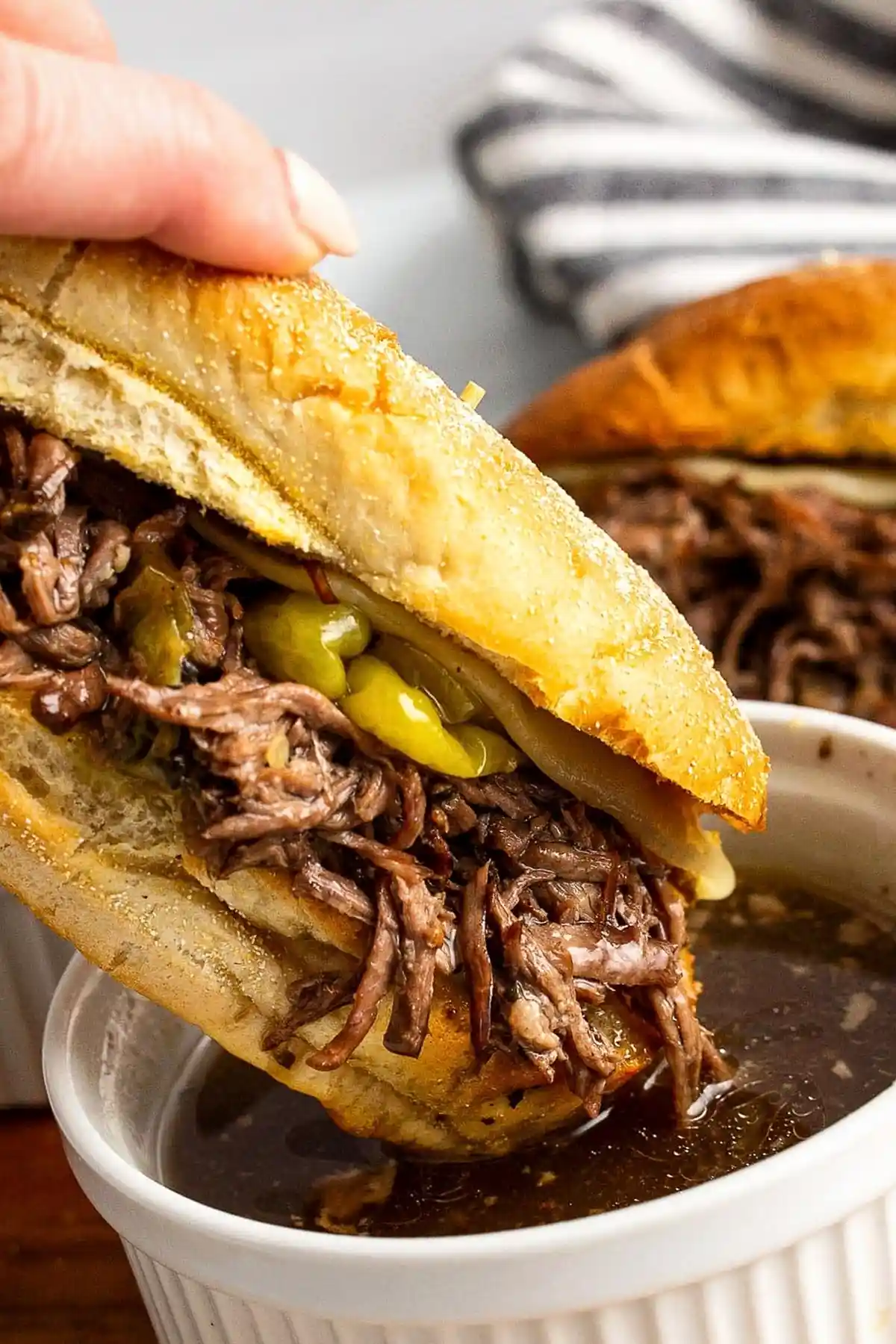
The wet style involves spooning a generous amount of au jus over the beef once it is on the roll. This ensures every bite is succulent and saturated with flavor. This is the classic way to serve Italian beef in many regional delis.
The Dipped Sandwich Experience
To make a dipped sandwich, pour some of the cooking liquid into a small side bowl. Dip the completed sandwich partially into the broth before taking a bite. This allows you to control exactly how much juice each bite contains.
Using Giardiniera as a Topping
Giardiniera is a pickled vegetable relish consisting of cauliflower, carrots, and celery. Adding a spoonful on top of the beef provides a bright, acidic crunch that cuts through the richness of the roast. Choose a mild or hot version based on your spice preference.
Storage and Preservation
Refrigerating Leftovers
Store the shredded beef and the au jus in separate airtight containers in the refrigerator. This prevents the meat from over-absorbing the liquid and becoming too soft. Leftovers can be safely kept for up to 4 days.
Freezing Instructions
Cooked Italian beef freezes exceptionally well for up to 3 months. Place the beef and a portion of the broth in a heavy-duty freezer bag, squeezing out as much air as possible. This prevents freezer burn and preserves the flavor.
Thawing Frozen Beef
The safest way to thaw the beef is in the refrigerator overnight. If you are in a hurry, you can thaw it in a sealed bag submerged in cold water. Avoid thawing at room temperature to prevent bacterial growth.
Managing Liquid Separation
When refrigerating the au jus, you may notice a layer of fat forming on the top. This is normal for beef roasts. You can either stir the fat back in when reheating or skim it off with a spoon for a leaner sauce.
Reheating Guidelines
Microwave Reheating
Place the beef in a microwave-safe dish and add a splash of the au jus to keep it moist. Cover the dish with a damp paper towel to steam the meat. Heat in short 30-second bursts, stirring in between to ensure even warming.
Stovetop Reheating
Place the shredded beef and a cup of au jus in a small saucepan over medium-low heat. Simmer gently until the meat is heated through. This method is superior to the microwave as it maintains a better texture.
Slow Cooker Reheating
If you have a large amount of beef to reheat, place it back in the slow cooker on the warm setting. Add a bit of extra beef broth if the liquid has reduced too much. This is ideal for serving leftovers to a group.
Avoiding Soggy Bread During Reheating
Always reheat the beef and the rolls separately. Toast the rolls fresh in the oven or toaster before adding the hot beef. Adding cold beef to a toasted roll will make the bread soggy instantly.
Troubleshooting Common Issues
Fixing Tough or Dry Meat
If the beef is not shredding easily, it may need more time. Return it to the slow cooker for another hour on low. If the meat is dry, simmer it in a bit more beef broth and pepperoncini juice to rehydrate the fibers.
Reducing Excessive Grease
Chuck roast can sometimes release more fat than desired. To fix this, pour the finished au jus into a fat separator or skim the oil off the surface with a wide spoon. You can also refrigerate the liquid and lift the hardened fat off the top.
Correcting Overly Salty Broth
If the broth tastes too salty due to the seasoning packet, add a small amount of water or unsalted beef stock. Adding a few more sliced pepperoncini or a teaspoon of apple cider vinegar can also help balance the saltiness with acidity.
Preventing Burnt Edges
Ensure there is enough liquid in the pot to cover at least half of the roast. If the liquid level drops too low during the 8-hour cook, the edges of the meat may burn. Check the pot halfway through and add a splash of broth if necessary.
Frequently Asked Questions
Can I use a different cut of beef?
Yes, though chuck roast is best, you can use rump roast or bottom round. Just be aware that leaner cuts may require slightly more liquid to stay moist during the long cooking process.
How do I make the sandwiches spicier?
To increase the heat, use hot giardiniera instead of mild. You can also add sliced jalapeños or a pinch of red pepper flakes to the slow cooker during the cooking process.
Can I make this in an Instant Pot?
Yes, you can adapt this for a pressure cooker. Sear the meat using the sauté function, then pressure cook on high for about 60-80 minutes with a natural release.
What is the best way to store the rolls?
Keep your hoagie rolls in a sealed plastic bag at room temperature for 2-3 days. For longer storage, freeze them in an airtight bag and toast them directly from frozen.
Do I have to sear the meat first?
No, searing is optional. The recipe still works without it, but you will lose the depth of flavor and the rich color that comes from browning the meat in a skillet.
Can I use a different type of cheese?
Absolutely. While provolone is traditional, Swiss, Monterey Jack, or even a sharp white cheddar provide great flavor and melt well under a broiler.
} Print
Slow Cooker Italian Beef Sandwiches
- Total Time: 8 hours 5 minutes
- Yield: 8 sandwiches 1x
- Diet: General
Description
These 5-ingredient slow cooker Italian beef sandwiches have mouthwatering chuck roast on a toasted hoagie roll with melted provolone cheese.
Ingredients
- 3–4 lbs. chuck roast
- 2 cups beef broth
- 1 (0.7 oz.) packet dry Italian dressing mix
- 2 teaspoons Italian seasoning
- 1 (16 oz.) jar pepperoncini with juice, stems removed and cut into 1” slices
- Hoagie rolls
- Butter
- Sliced provolone/mozzarella cheese
- Giardiniera (optional)
Instructions
- Step: Over medium-high heat in a skillet, sear the roast in some oil on both sides until browned, about 4-5 minutes per side. Pour some beef broth to deglaze the pan and scrape the yummy browned bits to mix in with the rest of the broth.
- Step: Add the roast to a 6 qt. slow cooker and sprinkle with the dry Italian dressing mix and Italian seasoning.
- Step: Add beef broth, sliced pepperoncini and 1/2 cup of pepperoncini juice.
- Step: Cover and cook for 8 hours on low heat or 4-5 hours on high heat.
- Step: Remove cooked roast to a cutting board. Shred into bite-sized pieces with two forks and discard any fatty bits.
- Step: Split the rolls lengthwise and butter them. Add some provolone cheese and toast or broil until the cheese has melted.
- Step: Top with shredded beef and pepperoncini peppers then dish and serve hot with/without the au jus and giardiniera.
Notes
Three ways to enjoy the sandwich: Dry – Let most of the juice drip off from the meat before putting it on the roll. Wet – Top the roll with meat still dripping in juices. You can also spoon some au jus over the sandwich before serving. Dipped – The sandwich is dipped into the au jus for a soggy but delicious sandwich.
- Prep Time: 5 minutes
- Cook Time: 8 hours
- Category: Main Dish
- Method: Slow Cooking
- Cuisine: Italian-American
Nutrition
- Serving Size: 1 sandwich
- Calories: 580 kcal
- Sugar: 7 g
- Sodium: 1250 mg
- Fat: 31 g
- Saturated Fat: 14 g
- Unsaturated Fat: 17 g
- Trans Fat: 0 g
- Carbohydrates: 34 g
- Fiber: 3 g
- Protein: 38 g
- Cholesterol: 115 mg