
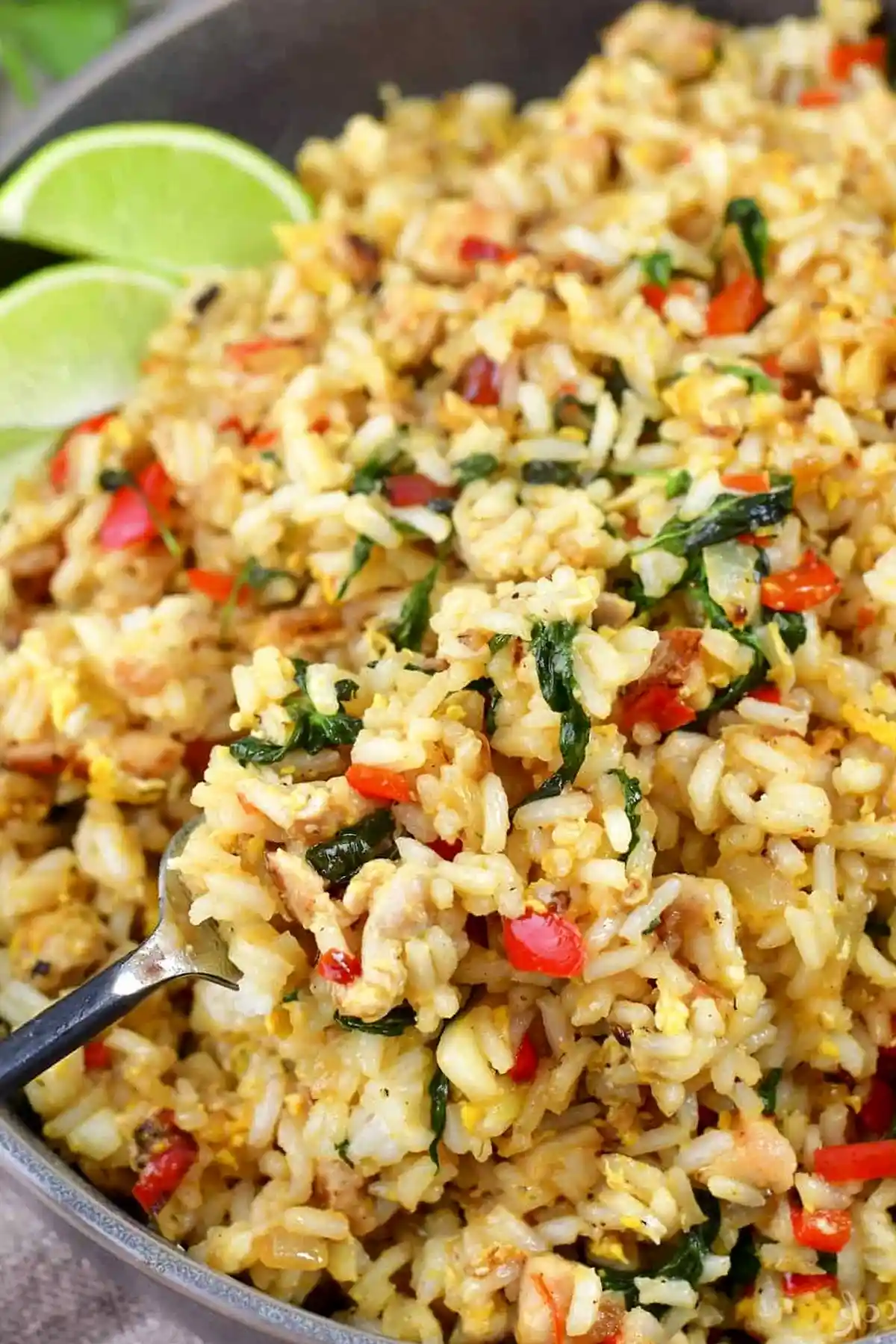
This aromatic Thai Basil Fried Rice blends savory fish sauce and sweet honey with the heat of Thai chilies. It is a fast, high-heat meal that highlights the unique flavor of fresh Thai basil and tender chicken.
List of ingredients
- 4 cups day-old or cold cooked jasmine rice (or another long grain variety)
- 1 lb boneless skinless chicken thighs – cut into small pieces
- 2 tbsp peanut oil – for high-heat sautéing
- 1/2 yellow onion – diced
- 1 small bell pepper – diced
- 4 garlic cloves – minced
- 1-2 Thai chili peppers – seeded and minced, adjust based on heat preference
- 2 eggs – cracked into a bowl with a pinch of salt
- 1 cup fresh Thai basil leaves
- 3 tbsp fish sauce – provides the essential salty depth
- 2 tbsp oyster sauce – use a gluten-free version if necessary
- 1 tbsp honey – for a touch of sweetness
- 2 tsp Thai roasted red chili paste – adds smokiness and heat
- 1/8-1/4 tsp white pepper – for a subtle earthy spice
- Pinch of salt – to taste
step-by-step instructions
- Prepare Mise en Place: Dice the chicken into small, even pieces. Dice the onion and bell pepper, mince the garlic, and seed and mince the Thai chili peppers. Whisk the sauce ingredients together in a small bowl and prepare the salted eggs in a separate container.
- Sear the Chicken: Preheat a large wok or a wide non-stick pan with tall sides over medium-high heat. Add the peanut oil and sauté the chicken pieces with a small pinch of salt until they are almost cooked through.
- Sauté the Vegetables: Push the cooked chicken to the sides of the pan. Add the diced onion and bell pepper to the center and sauté until they have softened, then mix them in with the chicken.
- Fragrance the Aromatics: Move the chicken and vegetable mixture to the sides again. Add the minced garlic and Thai chili peppers, adding a splash more oil if the pan is too dry. Sauté until the garlic becomes fragrant, then stir everything together.
- Cook the Eggs: Clear a space in the center of the pan once more. Pour in the beaten eggs and let them set slightly, stirring slowly. Once the eggs are mostly cooked, fold them into the chicken and vegetable mixture.
- Fry the Rice: Add the cold jasmine rice to the pan, breaking up any large clumps with a spatula. Pour the whisked sauce over the rice while stirring constantly. Mix until every grain is evenly coated and the sauce is well distributed.
- Wilt the Basil: Stir in the fresh Thai basil leaves and cook for only a few seconds until the leaves have just wilted. Remove the pan from the heat immediately and serve.
Technical Guide to Rice Preparation
The Importance of Starch Retrogradation
Using day-old rice is critical because of a process called starch retrogradation. When rice is cooled in the refrigerator, the starch molecules recrystallize, which makes the grains firmer and less sticky. This prevents the rice from clumping together or turning into a mushy texture during the stir-frying process.
Rapid Cooling Method for Fresh Rice
If you do not have leftover rice, you can accelerate the cooling process. Spread freshly cooked rice in a thin, even layer on a rimmed baking sheet lined with parchment paper. Place the tray in the refrigerator for about 20 to 30 minutes to remove excess surface moisture and lower the temperature quickly.
Choosing the Right Rice Variety
Jasmine rice is preferred for its floral aroma and slightly sticky nature that holds onto sauces well. However, any long-grain rice that maintains its individual grain structure after cooking will work. Avoid short-grain or glutinous rice, as these release too much starch and will result in a gummy consistency.
Ingredient Substitutions and Modifications
Using Thai Basil vs Italian Basil
Thai basil is distinct from Italian sweet basil due to its anise-like, spicy flavor profile. If you cannot find Thai basil, you can use holy basil for a more authentic taste. While Italian basil is a functional substitute, it lacks the pungent clove notes essential to this specific dish.
Alternative Protein Options
You can replace chicken thighs with shrimp, beef, or tofu. If using shrimp, sauté them quickly and remove them from the pan early to avoid overcooking. For tofu, use extra-firm varieties cut into half-inch cubes and sear them until the edges are golden brown before adding other ingredients.
Converting to a Vegetarian Dish
To make this recipe vegetarian, omit the chicken and eggs and use tofu as the protein. Replace the fish sauce with soy sauce and use a mushroom-based vegetarian oyster sauce. Note that the flavor will be less pungent than the original version but will still be savory and aromatic.
Gluten-Free Adjustments
The primary source of gluten in this recipe is the oyster sauce. To make the dish gluten-free, ensure you purchase a certified gluten-free oyster sauce. The fish sauce, honey, and chili paste are typically gluten-free, but always verify the ingredient labels on the specific brands you use.
Advanced Cooking Techniques
Mastering Wok Heat Management
A wok is designed to create a temperature gradient, where the bottom is extremely hot and the sides are cooler. This allows you to sear meat quickly in the center while moving ingredients to the side to keep them warm without overcooking. Maintaining high heat is key to achieving “wok hei,” or the breath of the wok, which adds a charred, smoky flavor.
The Role of High-Smoke Point Oils
Peanut oil is used in this recipe because it has a high smoke point, meaning it can be heated to high temperatures without breaking down or smoking. Other suitable options include canola or grapeseed oil. Avoid using extra virgin olive oil or butter, as these will burn and impart a bitter taste at the temperatures required for fried rice.
Correct Sautéing Order
The order of adding ingredients is designed to protect the delicate aromatics from burning. Garlic and chilies cook much faster than onions and peppers; adding them too early would cause the garlic to turn brown and bitter. By adding them after the larger vegetables, you ensure they release their oils without scorching.
Storage and Reheating Instructions
Proper Refrigeration for Leftovers
Store leftover fried rice in an airtight glass or plastic container in the refrigerator. It will remain safe and flavorful for 3 to 4 days. Ensure the rice has cooled slightly before sealing the container to prevent excess condensation from making the rice soggy.
Maintaining Moisture During Reheating
Fried rice tends to dry out in the refrigerator because the grains continue to absorb liquid. When reheating on a stovetop or in a microwave, add a small splash of vegetable broth or water. This introduces steam back into the dish, restoring the moist texture of the chicken and the fluffiness of the rice.
Optimal Reheating Temperature
For the best results, reheat the rice in a skillet over medium heat with a teaspoon of oil. Stir-fry the leftovers until they are steaming hot throughout. This method helps revive the slightly crisp exterior of the rice grains better than a microwave can.
Troubleshooting and Common Issues
Preventing Mushy Fried Rice
Mushy rice is usually caused by using rice that is too fresh or adding too much sauce too quickly. Always use chilled rice and ensure the pan is hot enough to evaporate moisture rapidly. If the pan is too crowded, the temperature drops, and the rice will steam instead of fry.
Balancing the Salt Levels
Fish sauce and oyster sauce vary significantly in saltiness between brands. Start by adding about 80% of the suggested sauce, taste the rice, and then add the remainder if needed. You can balance excessive saltiness by adding a small squeeze of fresh lime juice or an extra teaspoon of honey.
Controlling the Heat Level
The spice in this dish comes from the Thai chili peppers and the red chili paste. To reduce the heat, remove all the seeds and membranes from the chilies before mincing. For those who prefer a mild flavor, you can substitute the Thai chilies with red bell pepper flakes or omit them entirely.
Frequently Asked Questions
Can I use a regular frying pan instead of a wok?
Yes, a large non-stick skillet or a wide sauté pan with tall sides works well. However, you may need to cook the chicken and vegetables in batches to avoid overcrowding the pan and lowering the temperature.
What is a good substitute for fish sauce?
A mixture of soy sauce and a small pinch of salt can mimic the saltiness, but it lacks the fermented depth of fish sauce. For a closer flavor profile, you can use a small amount of vegan fish sauce made from seaweed and soy.
Can I use brown rice instead of jasmine rice?
Brown rice can be used, but it has a nuttier flavor and a chewier texture. Because brown rice takes longer to cook and has a different starch profile, you may need to add a bit more oil to prevent it from sticking.
Why do I need to use white pepper instead of black pepper?
White pepper has a sharper, more floral heat that is characteristic of Thai cuisine. Black pepper has a more pungent, woody taste that can clash with the delicate anise flavor of the Thai basil.
How can I make the basil flavor more prominent?
Do not overcook the basil; only stir it in at the very end of the process. Overheating the leaves destroys the volatile oils that provide the signature aroma and flavor.
Print
Thai Basil Fried Rice with Chicken
- Total Time: 30 minutes
- Yield: 4 servings 1x
- Diet: General
Description
Thai Basil Fried Rice is one of the best fried rice recipes out there, all thanks to the fresh Thai basil, Thai chili pepper, and the mouthwatering sauce. Fish sauce, oyster sauce, honey, and chili paste create a deeply flavorful sauce that’s savory, little sweet, and a little spicy!
Ingredients
- 4 cups day-old/ cold cooked jasmine or another long grain rice
- 1 lb boneless skinless chicken thighs
- 2 tbsp peanut oil
- 1/2 yellow onion
- 1 small bell pepper
- 4 garlic cloves
- 1–2 Thai chili peppers
- 2 eggs
- 1 cup fresh Thai basil
- 3 tbsp fish sauce
- 2 tbsp oyster sauce
- 1 tbsp honey
- 2 tsp Thai roasted red chili paste
- 1/8–1/4 tsp white pepper
- pinch salt
Instructions
- Step: Prepare your ingredients first because this is a fast recipe and you’ll want to have all ingredients ready on hand. So dice chicken into small pieces, dice onion and pepper, mince garlic, seed and mince Thai chili pepper. Crack eggs into a separate bowl and add a sprinkle of salt. Separately, whisk together ingredients for the sauce.
- Step: Preheat a large wok or a large non-stick cooking pan with tall sides over medium-high heat. Add oil and sauté chicken with a little bit of salt until almost done.
- Step: Move chicken to the side and add diced onion and bell pepper. Sauté until softened and start mixing it in with the chicken.
- Step: Move everything to the side and add in minced garlic and Thai chili pepper (add a little oil in needed). Sauté until garlic is fragrant and mix it in with chicken and veggies.
- Step: Move everything aside once again, ad a little bit of oil if needed, and add the eggs. Let the eggs start to cook and you stir them slowly. Once eggs are mostly done, mix it in with veggies and chicken.
- Step: Add in cold rice and break it up in the pan. Give the sauce another whisk and start pouring it over the rice as you mix it. Mix the rice well, until sauce, veggies, and chicken are evenly spread out.
- Step: Stir in basil and let it cook just a few more seconds until basil is wilted. Take off heat and serve right away!
Notes
Use cold rice to ensure grains stay separate. If you don’t have leftover rice, spread freshly cooked rice on a baking sheet and refrigerate for 20 minutes. Store leftovers in an air-tight container for 3-4 days. Reheat with a splash of chicken broth to restore moisture.
- Prep Time: 15 minutes
- Cook Time: 15 minutes
- Category: Main Course
- Method: Stir-frying
- Cuisine: Thai
Nutrition
- Serving Size: 1 serving
- Calories: 481 kcal
- Sugar: 7 g
- Sodium: 1442 mg
- Fat: 14 g
- Saturated Fat: 3 g
- Unsaturated Fat: 10 g
- Trans Fat: 0.03 g
- Carbohydrates: 56 g
- Fiber: 2 g
- Protein: 31 g
- Cholesterol: 190 mg