
This Panang Curry is a rich and creamy dish that balances savory peanut butter with fragrant coconut milk. It is an efficient one-pan meal that pairs perfectly with steamed jasmine rice for a complete dinner.
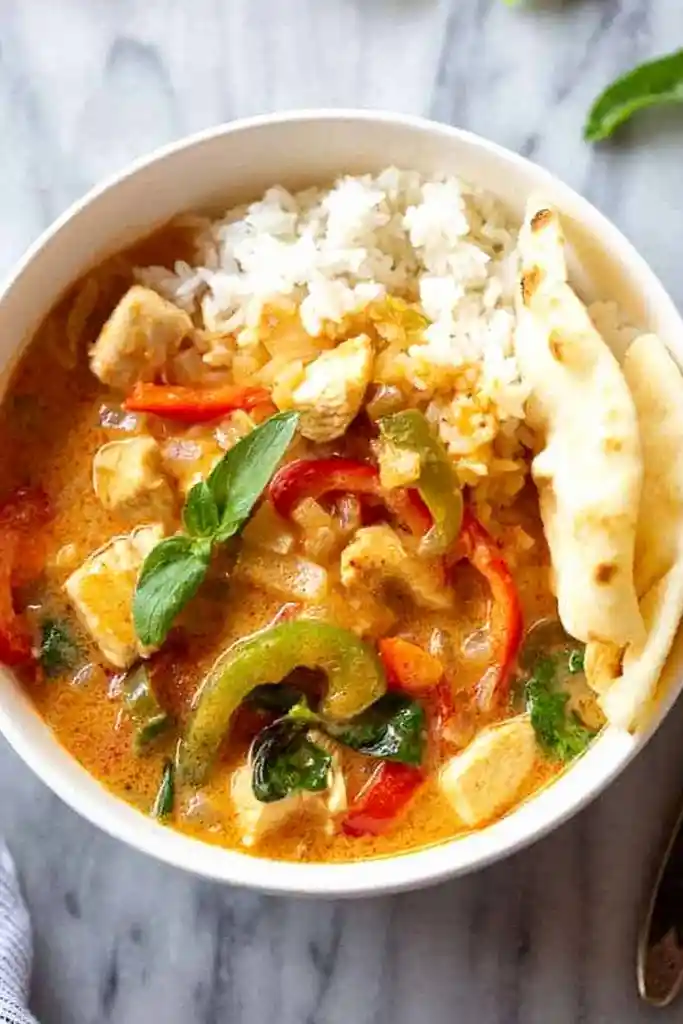
List of ingredients
- 1 tablespoon oil – for sautéing vegetables.
- 2 tablespoons Panang curry paste – provides the primary flavor profile.
- 1 tablespoon peanut butter – adds richness and thickness.
- 2 pounds chicken breasts – cut into pieces against the grain for tenderness.
- 1 small onion – thinly sliced.
- 1 green bell pepper – thinly sliced.
- 1 red bell pepper – thinly sliced.
- 2 teaspoons freshly grated ginger – for aromatic heat.
- 4 garlic cloves – minced.
- 2 14 oz cans coconut milk – use full-fat for maximum creaminess.
- 2 teaspoons cornstarch – used to thicken the sauce.
- 1/4 cup light brown sugar – packed, for sweetness.
- 1 tablespoon fish sauce – for salty, umami depth.
- 1 tablespoon lime juice – adds a fresh, acidic balance.
- 1 cup loosely packed basil leaves – roughly chopped.
- Hot cooked rice – white, brown, or jasmine for serving.
step-by-step instructions
- Sauté the aromatics: Heat oil over medium-high heat in a large non-stick skillet. Saute onions for 2 minutes, then add bell peppers, garlic and ginger and saute for 2 minutes more.
- Build the sauce base: Add curry paste and peanut butter and saute for 1 minute. Add 1.5 cans of coconut milk. Whisk cornstarch into the remaining 0.5 can of coconut milk, then add this mixture to the pan and stir well.
- Cook the chicken: Add chicken pieces, stirring to coat them in the sauce. Simmer for 10-15 minutes or just until the chicken is no longer pink and the sauce begins to thicken.
- Final seasoning: Stir in the brown sugar, fish sauce, lime juice, and chopped basil. Simmer for an additional 5 minutes. Season with salt and pepper to taste.
- Serve: Portion the curry over bowls of hot cooked rice.
Optimizing Your Curry Paste
Selecting the Best Brand
Commercial Panang curry pastes vary in salt and spice levels. Brands like Mae Ploy are often more concentrated and spicy than others. If using a very strong paste, start with slightly less and adjust based on your taste preferences.
Managing Heat Levels
The spiciness of the final dish depends on the paste and the amount used. If the curry is too spicy, adding more coconut milk or a pinch of extra sugar can neutralize the heat. Conversely, adding a dash of Sriracha at the end can boost the spice level.
Difference Between Panang and Red Curry
Panang curry is generally milder and creamier than red curry. It typically incorporates peanut flavors and a thicker consistency. If you cannot find Panang paste, red curry paste can be used as a substitute, but you must add extra peanut butter to achieve the correct flavor profile.
Protein and Vegetable Variations
Alternative Protein Options
While chicken breast is standard, shrimp or firm tofu are excellent alternatives. For shrimp, add them during the last 3-5 minutes of simmering to prevent overcooking. For tofu, press it to remove excess water before sautéing it separately or adding it to the sauce.
Expanding the Vegetable Mix
This recipe works well as a way to use leftover vegetables. Sliced carrots, bamboo shoots, baby corn, and zucchini are traditional additions. Stir in spinach or bean sprouts during the final 5 minutes of cooking to maintain their texture and color.
Low Carb Base Alternatives
Instead of white or jasmine rice, you can serve this curry over zoodles or roasted spaghetti squash. Cauliflower rice is another nutrient-dense option that absorbs the creamy sauce well. These alternatives significantly reduce the carbohydrate content of the meal.
Dietary Adjustments and Substitutions
Converting to a Vegan Recipe
To make this dish vegan, use a vegetarian curry paste that does not contain shrimp paste or fish sauce. Replace the chicken with extra-firm tofu or a variety of hearty vegetables like cauliflower and chickpeas. Ensure the peanut butter is a natural, plant-based variety.
Replacing Fish Sauce
If you avoid fish sauce, you can substitute it with a mixture of soy sauce and a pinch of salt. Alternatively, use a vegan fish sauce made from seaweed and soy. This maintains the salty, umami characteristic required for the sauce balance.
Sugar Substitutes for Sweetness
Light brown sugar provides a molasses-like depth, but coconut sugar is a great alternative for a more authentic Thai flavor. For a lower-calorie version, a small amount of maple syrup or a granulated sugar substitute can be used, though the consistency may vary slightly.
Preparation and Storage Guide
Advanced Meal Prep Steps
To save time on cooking days, you can prep the ingredients in advance. Slice the onions, bell peppers, and chicken, then store them in separate airtight containers. Grating the ginger and mincing the garlic ahead of time also speeds up the sautéing process.
Refrigeration and Shelf Life
This curry stores well in the refrigerator for 5 to 7 days. Keep it in a sealed glass container to prevent the sauce from absorbing other fridge odors. The flavors often deepen and improve after a day of resting in the fridge.
Freezing and Thawing Process
The curry can be frozen for 2 to 3 months. Allow the dish to thaw completely in the refrigerator overnight before reheating. Note that coconut milk may separate during freezing; this is normal and will resolve once the dish is heated.
Reheating Methods
For the best results, reheat the curry on the stove over medium-low heat. Add a splash of water or extra coconut milk to loosen the sauce, as it tends to thicken during storage. If using a microwave, heat in short intervals and stir in between to ensure even warmth.
Technical Cooking Tips
Cutting Chicken Against the Grain
Identify the muscle fibers in the chicken breast and cut perpendicular to them. This breaks up the tough fibers, ensuring the meat remains tender after simmering. Avoid overcooking the chicken to prevent it from becoming dry or rubbery.
Preventing Cornstarch Clumps
Always whisk the cornstarch into a cold or room-temperature liquid, such as the remaining half-can of coconut milk, before adding it to the hot pan. This creates a smooth slurry. Adding dry cornstarch directly to hot liquid often results in stubborn lumps.
Timing the Basil Addition
Add the fresh basil leaves at the very end of the cooking process. Simmering them for only 5 minutes prevents the leaves from turning brown or losing their aromatic oils. This keeps the flavor bright and the color vibrant.
Balancing the Flavor Profile
Thai cuisine relies on the balance of salty, sweet, sour, and spicy. If the dish tastes too salty, add a squeeze more lime juice. If it feels too acidic, add a small amount of brown sugar to round out the taste.
Frequently Asked Questions
Can I use creamy peanut butter instead of natural?
Yes, creamy peanut butter works well and often provides a smoother texture. However, be mindful that some commercial brands contain added sugar, so you may need to reduce the amount of brown sugar in the recipe.
What is the best rice for Panang Curry?
Jasmine rice is the traditional choice because its slightly floral aroma and sticky texture complement the creamy sauce. Basmati is a good alternative, while brown rice offers more fiber and a nuttier taste.
How do I stop the coconut milk from curdling?
Avoid boiling the sauce on extremely high heat for long periods. Keep the heat at a steady simmer. Using a high-quality, full-fat coconut milk also helps maintain a stable emulsion.
Can I use frozen bell peppers?
Frozen peppers can be used, but they may release more water than fresh ones. Sauté them longer to cook off the excess moisture before adding the curry paste to ensure the sauce thickens correctly.
Is this recipe suitable for a slow cooker?
While this is a skillet recipe, you can adapt it for a slow cooker. Sauté the aromatics and paste first, then add all other ingredients except the basil and lime juice. Cook on low for 6-8 hours and stir in the fresh elements at the end.
Print
Creamy Panang Chicken Curry
- Total Time: 40 minutes
- Yield: 5 servings 1x
- Diet: General
Description
Quick and Easy Panang Curry made with chicken and sautéed vegetables in a bold and creamy coconut sauce, served over rice.
Ingredients
- 1 tablespoon oil
- 2 tablespoons Panang curry paste
- 1 tablespoon peanut butter
- 2 pounds chicken breasts, cut into pieces against the grain
- 1 small onion, sliced
- 1 green bell pepper, thinly sliced
- 1 red bell pepper, thinly sliced
- 2 teaspoons freshly grated ginger
- 4 garlic cloves, minced
- 2 14 oz cans coconut milk
- 2 teaspoons cornstarch
- 1/4 cup light brown sugar, packed
- 1 tablespoon fish sauce
- 1 tablespoon lime juice
- 1 cup loosely packed basil leaves, roughly chopped
- Hot cooked rice (white, brown or jasmine)
Instructions
- Sauté: Heat oil over medium-high heat in large non-stick skillet. Saute onions for 2 minutes, then add bell peppers, garlic and ginger and saute for 2 minutes more.
- Base: Add curry paste and peanut butter and saute for 1 minute. Add 1 ½ cans of coconut milk. Whisk cornstarch into remaining 1/2 can coconut milk then add to the pan. Stir well.
- Cook: Add chicken, stirring to coat. Simmer for 10-15 minutes or just until chicken is no longer pink and sauce begins to thicken.
- Finish: Stir in sugar, fish sauce, lime juice, and basil. Simmer for 5 minutes. Season with salt and pepper, to taste.
- Serve: Serve over hot cooked rice.
Notes
This recipe keeps for 5-7 days in the refrigerator and can be frozen for 2-3 months. For a vegetarian version, use a vegetarian curry paste and omit chicken and fish sauce.
- Prep Time: 15 minutes
- Cook Time: 25 minutes
- Category: Main Course
- Method: Simmering
- Cuisine: Thai
Nutrition
- Serving Size: 1 serving
- Calories: 691 kcal
- Sugar: 19 g
- Sodium: 537 mg
- Fat: 48 g
- Saturated Fat: 35 g
- Unsaturated Fat: 8 g
- Trans Fat: 0.03 g
- Carbohydrates: 27 g
- Fiber: 5 g
- Protein: 44 g
- Cholesterol: 116 mg