
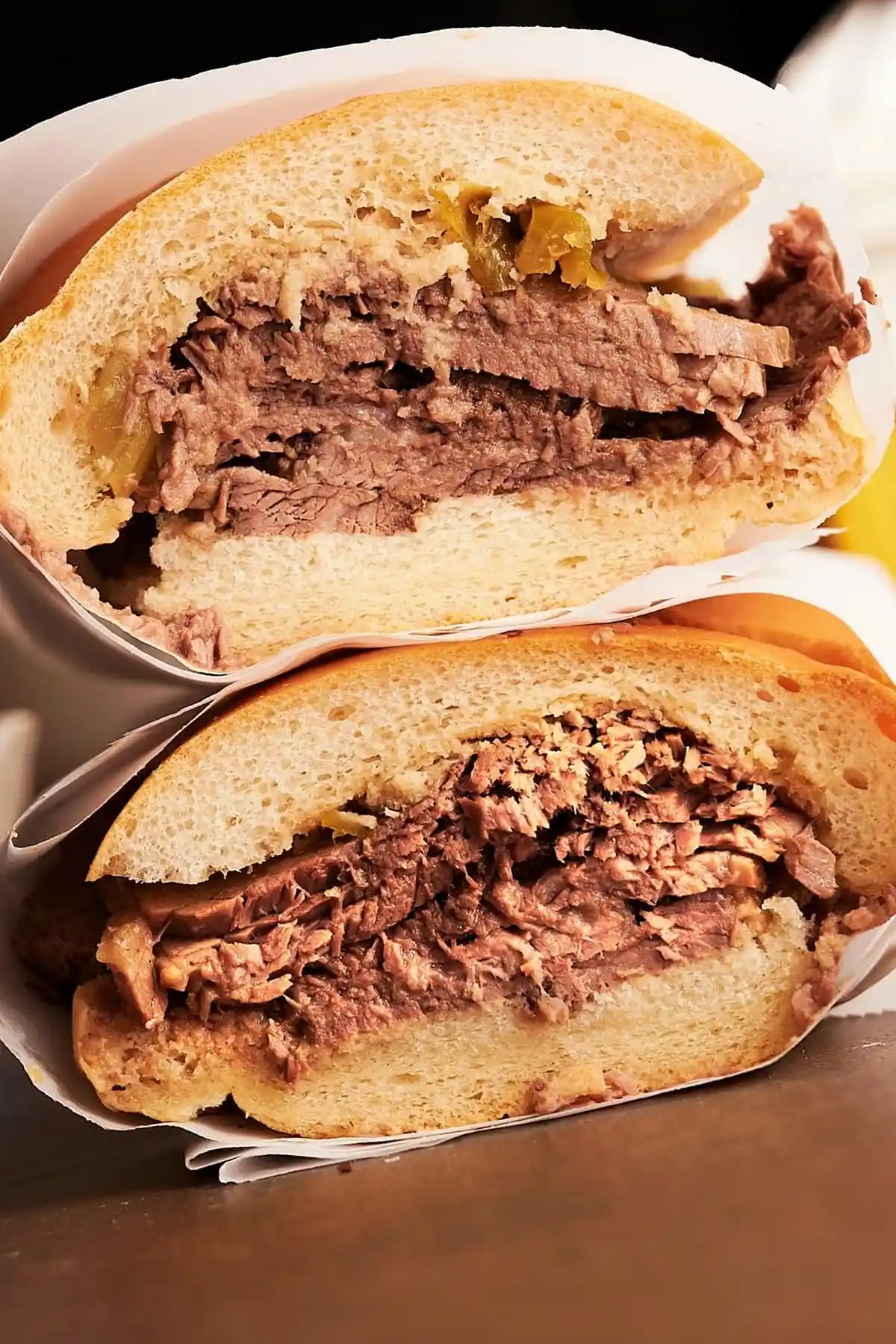
Prepare a hearty and zesty Chicago classic with this slow-braised beef roast. This method ensures the meat is tender enough to slice paper-thin while creating a rich au jus for dipping.
List of ingredients
- 4 lbs top round roast, quartered – a lean cut that becomes tender when braised.
- 3 T veg oil – used for searing the meat on high heat.
- 1 Tablespoon whole fennel seeds – provides the signature aromatic flavor.
- 1 qt beef stock – forms the base of the cooking liquid.
- 1 1/2 qt water – helps keep the roast submerged during the long braise.
- 1 T Better Than Bouillon – adds a concentrated depth of savory beef flavor.
- 1 Tablespoon garlic powder – for pungent seasoning.
- 1 Tablespoon onion powder – adds a sweet, savory aromatic layer.
- 1 Tablespoon celery salt – a key ingredient for an authentic Chicago profile.
- 1 Tablespoon black pepper – provides a fundamental spicy bite.
- 1 Tablespoon smoked paprika – adds warmth and a subtle woody aroma.
- 1 Tablespoon oregano – a classic Italian herb for earthy notes.
- 1 Tablespoon thyme – adds a delicate, lemony herbal quality.
- 1 Tablespoon crushed red pepper – introduces a customizable level of heat.
- Grated cheddar cheese – optional for a beef and cheddar variation.
- Sliced mozzarella or provolone cheeses – optional for a melted cheese topping.
- Sweet peppers – for a mild, tangy contrast.
- Hot peppers (giardiniera) – the traditional spicy Chicago condiment.
step-by-step instructions
- Prepare Oven and Cartouche: Preheat your oven to 300°F and position the oven rack one slot below the center. Trace the bottom of your Dutch oven onto parchment paper and cut out the circle to create a cartouche, which acts as a breathable lid.
- Brown the Beef: Cut the top round roast into equal pieces to fit the pot. Heat veg oil over high heat and brown the meat on all sides for about 2 minutes per side until a golden crust forms.
- Toast Aromatics: Remove the browned beef from the pot and place it on a plate. Add the whole fennel seeds to the hot oil in the pot to toast them briefly.
- Combine Seasonings: In a small bowl, mix the toasted fennel seeds with the garlic powder, onion powder, celery salt, black pepper, smoked paprika, oregano, thyme, and crushed red pepper.
- Deglaze and Simmer: Pour the beef stock into the pot to deglaze the browned bits from the bottom. Stir in the water, bouillon paste, and the prepared spice blend.
- Braise the Meat: Return the beef sections to the pot and place the parchment cartouche directly on top of the meat. Cover with the pot lid and braise in the oven for 3 hours.
- Chill for Slicing: Remove the meat from the au jus. Wrap each piece tightly in plastic wrap and place on a plate in the freezer for 30 minutes for immediate use, or longer if using a meat slicer.
- Refine the Au Jus: Set a strainer over a bowl and pour the cooking liquid through it, pressing the solids to extract all the flavor. Return the strained liquid to the Dutch oven and heat over medium heat.
- Warm the Beef: Use a very sharp knife to slice the chilled beef into paper-thin pieces. Toss the slices into the simmering au jus for about 3 minutes until warmed through.
- Assemble Sandwiches: Slice French bread rolls and open them on one side without cutting all the way through. Pile the beef high into the rolls and top with optional cheddar, mozzarella, provolone, sweet peppers, or hot giardiniera.
Advanced Meat Selection and Preparation
Choosing the Right Cut for Braising
The top round roast is preferred because it is lean and holds its shape well during the long cooking process. While it can be tough if cooked quickly, the low and slow braising method breaks down the connective tissues. This results in meat that is tender yet firm enough to be sliced thinly without falling apart.
Trimming Excess Fat
Before browning the meat, check the roast for a thick fat cap on the exterior. Trim away excess outer fat to ensure the au jus remains a clean, savory broth rather than becoming overly greasy. Leaving a small amount of fat is acceptable as it adds flavor during the searing process.
Maximizing the Sear
Searing the beef on high heat is critical for developing the Maillard reaction, which creates complex brown flavors. Ensure the oil is shimmering hot before adding the meat to avoid sticking. Do not crowd the pan; if the pieces are too large, brown them in batches to maintain the heat.
Braising Techniques for Tenderness
The Function of the Parchment Cartouche
A cartouche is a circular piece of parchment paper that sits directly on the surface of the liquid and meat. It prevents the top of the beef from drying out or oxidizing while allowing some steam to escape. This ensures the meat stays moist and the au jus reduces into a rich, concentrated glaze.
Optimizing Oven Temperature
Maintaining a steady 300°F is essential for the slow breakdown of collagen in the roast. If the oven is too hot, the muscle fibers may tighten and become tough. Using an oven thermometer can help ensure your appliance is calibrated correctly for this low-temperature braise.
Correct Rack Placement
Placing the rack slightly below the center of the oven ensures that heat is distributed evenly around the Dutch oven. This prevents the bottom of the pot from scorching while allowing the top to simmer gently. Proper airflow around the pot is key to a consistent braise.
Precision Slicing Methods
The Importance of Semi-Freezing
Slicing cooked beef while it is hot often leads to shredding or uneven chunks. By wrapping the meat and placing it in the freezer for 30 to 60 minutes, the muscle fibers firm up. This stability allows the knife to glide through the meat, producing the signature paper-thin slices found in Chicago shops.
Cutting Across the Grain
To ensure maximum tenderness, identify the direction of the muscle fibers, known as the grain. Slice perpendicular to these lines rather than parallel to them. Cutting across the grain shortens the muscle fibers, making the meat much easier to chew.
Using a Professional Meat Slicer
For those with access to a deli-style meat slicer, freezing the beef for 1 to 1.5 hours is recommended. The firmer meat allows the blade to cut extremely thin, almost translucent shavings. This increased surface area allows the beef to soak up more au jus when reheated.
Customizing the Sandwich Assembly
Selecting the Ideal French Bread
A sturdy French roll or hoagie bun is necessary to withstand the moisture of the beef and jus. Look for bread with a crusty exterior and a soft interior that can absorb liquid without disintegrating. Avoid overly soft white breads that may collapse under the weight of the meat.
Understanding Dipped vs Dunked
A ‘dipped’ sandwich involves brushing or dipping only the inside of the bread into the au jus before adding the meat. A ‘dunked’ sandwich is completely submerged in the jus after assembly and then wrapped in paper. Dunking is the more intense version, resulting in a very moist, flavor-saturated roll.
Balancing Heat with Peppers
Chicago Italian beef is traditionally served with a choice of sweet or hot peppers. Giardiniera, a pickled vegetable mix with oil and vinegar, provides a sharp acidity that cuts through the richness of the beef. Using a combination of both sweet and hot peppers offers a complex flavor profile.
Adding Melted Cheeses
While classic Italian beef is often served without cheese, adding provolone or mozzarella provides a creamy contrast to the zesty au jus. For a Portillo’s style beef and cheddar, use a sharp grated cheddar. Melt the cheese under a broiler for a minute before adding the beef for a gooey texture.
Storage and Reheating Guidelines
Refrigerating Leftover Meat and Jus
Store the sliced beef and the au jus in separate airtight containers to maintain the quality of both. The beef should be stored in a container that prevents it from drying out. Both components can be kept in the refrigerator for up to four days.
Long-Term Freezer Storage
For long-term storage, freeze the cooked beef and au jus separately in freezer-safe bags for up to three months. Ensure as much air as possible is removed from the bags to prevent freezer burn. Thaw the meat and liquid in the refrigerator overnight before reheating.
The Best Way to Reheat
To avoid overcooking the meat, heat the au jus in a saucepan until it reaches a simmer. Gently add the refrigerated beef slices to the liquid and simmer for about five minutes. This method rehydrates the meat and ensures it is heated evenly without becoming tough.
Alternative Cooking Equipment
Adapting for a Slow Cooker
If a Dutch oven is unavailable, a slow cooker is an excellent alternative. Brown the meat in a skillet first, then transfer it to the crockpot with the liquids and spices. Cook on high for approximately 4 hours, checking for tenderness after 3 hours.
Using a Wide Stock Pot
A wide stock pot can be used on the stovetop over very low heat. Because stock pots are often taller, ensure the beef is sufficiently submerged in the liquid. Simmer with a tight-fitting lid for several hours, occasionally turning the meat to ensure even cooking.
Managing Different Pot Capacities
If doubling the recipe, move to a 9 or 13-quart Dutch oven to prevent overcrowding. Overcrowding the pot can lead to uneven browning and may prevent the liquid from circulating properly. Always adjust the size of your parchment cartouche to fit the diameter of the larger pot.
Frequently Asked Questions
Can I use a different cut of beef?
While top round is traditional, bottom round or chuck roast can also be used. Bottom round is very similar in leaness, while chuck roast has more fat and will result in a richer, more tender meat, though it may not slice as cleanly as round roast.
How do I stop the au jus from being too salty?
If the au jus tastes too salty after reduction, stir in a small amount of additional water or unsalted beef stock. You can also add a splash of apple cider vinegar to balance the saltiness with a bit of acidity.
What is the best way to prevent the bread from getting soggy?
To prevent sogginess, lightly toast the inside of the French roll before adding the beef. If you are dipping the sandwich, do so immediately before serving and wrap it tightly in foil or parchment paper to hold the shape.
Can this recipe be made with a pressure cooker?
Yes, you can use a pressure cooker to reduce the cooking time to about 60-90 minutes. However, the slow-braising method in the oven typically produces a more tender texture and a more concentrated au jus.
How long does the cooked beef last in the fridge?
The cooked beef and au jus will remain safe and flavorful in the refrigerator for up to 4 days. Ensure they are stored in airtight containers to prevent the meat from absorbing other fridge odors.
Print
Authentic Chicago Style Italian Beef Recipe
- Total Time: 3 hours 25 minutes
- Yield: 8 servings 1x
- Diet: General
Description
Famous all over Chicago, Italian beef is the zesty, hearty sandwich recipe perfect for game day, graduation parties, and family gatherings. Cooked in a dutch oven using a traditional braising technique, this recipe produces beautifully tender meat chock full of flavor.
Ingredients
- 4 lbs top round roast, quartered
- 3 T vegetable oil
- 1 Tablespoon whole fennel seeds
- 1 qt beef stock
- 1 1/2 qt water
- 1 T beef bouillon paste
- 1 T garlic powder
- 1 T onion powder
- 1 T celery salt
- 1 T black pepper
- 1 T smoked paprika
- 1 T oregano
- 1 T thyme
- 1 T crushed red pepper
- French bread rolls
- Optional: grated cheddar cheese, sliced mozzarella or provolone, sweet peppers, hot peppers (giardiniera)
Instructions
- Preheat: Preheat the oven to 300°F and place the rack one below the center.
- Prepare Cartouche: Trace the bottom of the dutch oven on parchment paper, cut out the circle, and set aside to use as a lid.
- Brown Meat: Cut the roast into equal pieces and brown in oil on all sides over high heat for about 2 minutes per side until golden.
- Toast Seeds: Remove meat to a plate and add fennel seeds to the pan to toast.
- Season: Mix the toasted fennel seeds and the remaining spices (garlic powder, onion powder, celery salt, black pepper, smoked paprika, oregano, thyme, and crushed red pepper) in a small bowl.
- Deglaze: Deglaze the pan with beef stock.
- Liquid: Add water, bouillon paste, and the combined spice blend.
- Braise: Return beef sections to the pot, cover with the parchment cartouche, and braise in the oven for 3 hours.
- Chill: Remove meat from the au jus, wrap each piece individually in plastic wrap, and place on a plate in the freezer for 30 to 90 minutes.
- Slice: Using a very sharp slicing knife, cut the chilled beef into very thin, paper-thin slices.
- Heat Jus: Strain the juice from the pot through a strainer into a bowl, then pour it back into the Dutch oven and heat over medium heat.
- Combine: Add the thinly sliced beef to the hot au jus and toss for about 3 minutes until warmed through.
- Assemble: Slice French bread rolls, pile in the beef, and top with optional cheese and peppers.
Notes
Storage: Store meat and au jus separately in airtight containers for up to 4 days. Reheating: Heat au jus in a saucepan and simmer meat for about 5 minutes. Freezer: Freeze meat and au jus separately for up to 3 months. Serving: For an authentic experience, dip the inside of the roll in au jus or dunk the entire completed sandwich.
- Prep Time: 10 minutes
- Cook Time: 3 hours 15 minutes
- Category: Main Course
- Method: Braising
- Cuisine: Italian
Nutrition
- Serving Size: 1 sandwich
- Calories: 520 kcal
- Sugar: 4 g
- Sodium: 1250 mg
- Fat: 18 g
- Saturated Fat: 7 g
- Unsaturated Fat: 11 g
- Trans Fat: 0 g
- Carbohydrates: 42 g
- Fiber: 3 g
- Protein: 44 g
- Cholesterol: 115 mg