
Enjoy tender, flavor-packed beef gyros made easily in your favorite electric cooker. This dish combines savory meat with crisp vegetables and a zesty yogurt sauce for a complete Mediterranean meal.
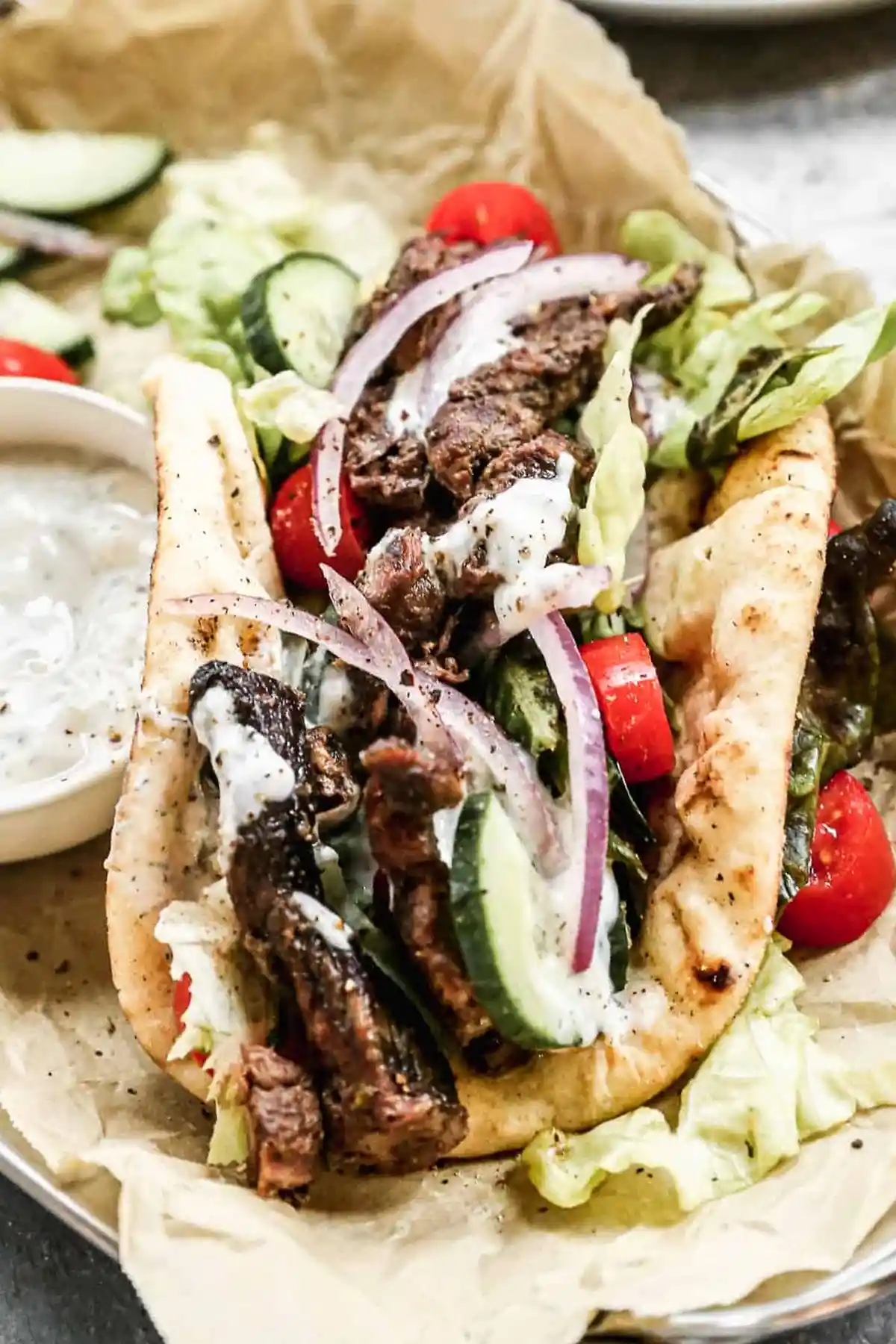
List of ingredients
- 3 pounds beef chuck roast – sliced into thin quarter inch strips
- 3/4 teaspoon salt – basic seasoning
- 1/2 teaspoon freshly ground black pepper – for a slight bite
- 3 Tablespoons olive oil – helps tenderize and blend spices
- 2 1/2 teaspoons garlic powder – provides deep savory flavor
- 2 teaspoons Dried oregano – essential Greek herb
- 1 teaspoon ground cumin – adds earthy warmth
- 1 teaspoon dried thyme – adds subtle herbal notes
- 2 Tablespoons fresh lemon juice – adds brightness and acidity
- 5 soft pitas – for serving
- 5 lettuce leaves – for a fresh crunch
- 1 cup cherry tomatoes – halved
- 1/4 of a red onion – thinly sliced
- 1 English cucumber – sliced and then halved
- 1 cup plain Greek yogurt – base for the sauce
- 1 clove garlic – finely minced
- 1 Tablespoon fresh lemon juice – for the sauce
- 1 Tablespoon olive oil – for the sauce
- 1 teaspoon apple cider vinegar – for tangy flavor
- 1 teaspoon dried dill weed – classic gyro herb
- salt and freshly ground black pepper – to taste for the sauce
step-by-step instructions
- Prepare the Tzatziki: Combine the Greek yogurt, minced garlic, 1 tablespoon lemon juice, 1 tablespoon olive oil, apple cider vinegar, dried dill, salt, and pepper in a bowl. Stir well and refrigerate until you are ready to serve.
- Prep the Beef: Trim any large pieces of excess fat from the chuck roast. Slice the meat across the grain into thin strips, approximately 1/4 inch thick.
- Slow Cooker Method: Place the beef strips in the bottom of the slow cooker. In a small bowl, whisk together the 3 tablespoons olive oil, garlic powder, oregano, cumin, thyme, 2 tablespoons lemon juice, salt, and pepper. Pour this marinade over the meat, cover, and cook on LOW for 6 hours or until the beef is tender.
- Instant Pot Method: Place the sliced beef strips in the Instant Pot. In a small bowl, combine 1/3 cup of water, 3 tablespoons olive oil, garlic powder, oregano, cumin, thyme, 2 tablespoons lemon juice, salt, and pepper. Pour the mixture over the meat.
- Pressure Cook: Close the lid and set the valve to ‘sealing’. Press ‘manual’ or ‘high pressure’ and set the timer for 30 minutes. Once the timer beeps, allow the pot to naturally release pressure for 15 minutes before opening.
- Final Seasoning: Remove the lid and taste the meat. Add additional salt, pepper, or spices if needed to suit your preference.
- Assemble the Gyros: Place a lettuce leaf inside a soft pita. Top with the cooked beef, halved cherry tomatoes, sliced cucumber, and sliced red onion. Drizzle a generous amount of the chilled tzatziki sauce over the top.
Expert Beef Preparation
Selecting the Best Chuck Roast
Choose a well-marbled beef chuck roast to ensure the meat remains juicy during the long cooking process. The fat distributed throughout the roast melts down, basting the strips from within. Avoid lean cuts, as they may become dry or tough in the slow cooker.
Slicing for Maximum Tenderness
Always slice the beef against the grain to break up the tough muscle fibers. This ensures that each bite is tender rather than chewy. For easier slicing, place the roast in the freezer for 30 to 60 minutes to firm up the meat before cutting.
Trimming Excess Fat
While marbling is good, large chunks of hard white fat do not render completely in a slow cooker. Trim these larger pieces away before slicing the meat into strips. This prevents the final dish from feeling overly greasy while keeping the flavor intact.
Tzatziki Sauce Customization
Managing Sauce Consistency
If your tzatziki sauce feels too thin, you can strain the Greek yogurt through a cheesecloth for a few hours. This removes excess whey and creates a thicker, creamier dip. Stir the ingredients back in after the yogurt has thickened.
Enhancing the Herbal Profile
While dried dill is convenient, swapping it for fresh dill adds a brighter, more authentic flavor. Finely chop the fresh fronds and fold them into the yogurt. If using fresh dill, start with one tablespoon and adjust to taste.
Adjusting the Acidity
Depending on the ripeness of your lemon, you may want to adjust the amount of lemon juice or apple cider vinegar. Add these ingredients one teaspoon at a time. Taste the sauce after each addition to ensure the tanginess balances the richness of the yogurt.
Fresh Vegetable Prep Tips
Reducing Cucumber Moisture
English cucumbers are ideal because they have fewer seeds and thinner skins. To prevent the gyro from becoming soggy, slice the cucumbers and let them sit on a paper towel for 10 minutes. Gently pat them dry before adding them to the pita.
Taming the Red Onion Bite
If you find raw red onion too pungent, soak the thin slices in a bowl of ice water for 15 minutes. This process removes the harsh sulfur compounds while keeping the onion crisp. Drain and pat dry before assembling.
Choosing the Right Tomatoes
Cherry or grape tomatoes are preferred over large slicing tomatoes because they hold their shape and have a concentrated sweetness. Halve them lengthwise to ensure they stay nestled in the pita without rolling out.
Pita Warming Techniques
Stovetop Grilling for Flavor
Heat a dry skillet or grill pan over medium-high heat. Place the pitas in the pan for about 30 seconds per side until they are warm and slightly charred. This adds a smoky flavor and makes the bread more pliable.
Oven Warming for Large Batches
Wrap a stack of pitas in aluminum foil and place them in a 350°F oven for 5 to 10 minutes. This method keeps the pitas soft and warm without drying them out. Serve them immediately while they are still steamy.
Quick Microwave Heating
Wrap a single pita in a damp paper towel and microwave it for 10 to 15 seconds. This creates a quick burst of steam that softens the bread. Be careful not to overheat, as the pita can become rubbery if cooked too long.
Storage and Preservation
Refrigerating Cooked Beef
Store the cooked beef and its juices in an airtight glass container in the refrigerator. The juices help keep the meat moist during storage. It will remain fresh and safe to eat for up to 4 days.
Freezing Raw Marinated Beef
For meal prep, place sliced beef and the marinade in a heavy-duty freezer bag. Squeeze out all the air to prevent freezer burn. Thaw completely in the refrigerator overnight before cooking in the slow cooker or Instant Pot.
Storing the Tzatziki Sauce
Keep the tzatziki sauce in a sealed jar in the coldest part of your refrigerator. Because of the fresh garlic and yogurt, it is best consumed within 3 to 5 days. Stir the sauce well before serving to re-incorporate any separated liquids.
Reheating Guidelines
The Skillet Sear Method
To recreate the charred edges of traditional gyros, reheat the beef in a hot skillet with a teaspoon of olive oil. Sauté the strips over medium-high heat for 2 to 3 minutes. This adds a crisp texture that the slow cooker cannot provide.
Oven Reheating for Moisture
Place the beef in a baking dish and add a splash of water or beef broth to the bottom. Cover the dish tightly with foil and heat at 325°F for 15 minutes. This gently warms the meat without drying it out.
Microwave Reheating Tips
Place the beef in a microwave-safe dish and cover it with a damp paper towel. Heat in 30-second intervals, stirring in between. This prevents the meat from toughening and ensures even heating throughout.
Serving Ideas and Variations
Building for Structural Integrity
Start by placing the lettuce leaf at the bottom of the pita to act as a moisture barrier. Add the meat next, followed by the vegetables and the sauce on top. This prevents the pita bread from absorbing too much juice and tearing.
Low-Carb and Grain-Free Alternatives
For a lower-carb option, replace the pita bread with large Romaine lettuce leaves or collard greens. Alternatively, serve the beef and vegetables in a bowl over a bed of quinoa or cauliflower rice. Top with extra tzatziki for creaminess.
Platter Style Presentation
Instead of assembling the gyros, place the warm beef in a central bowl on a large platter. Arrange the pitas, sliced cucumbers, tomatoes, onions, and a bowl of tzatziki around the meat. This allows guests to customize their own portions.
Troubleshooting and FAQs
Why is my beef tough?
Toughness usually occurs if the meat was not sliced against the grain or if the cut was too lean. Ensure you use beef chuck roast and cook it long enough for the connective tissues to break down into gelatin.
How do I stop the pita from tearing?
Tearing happens when the bread is too cold or over-saturated with sauce. Always warm your pitas before filling and use a lettuce leaf as a barrier between the meat juices and the bread.
Can I use a different cut of meat?
You can use beef shoulder or flank steak, but be aware that flank steak cooks much faster. If using a leaner cut, reduce the cooking time significantly to avoid drying out the meat.
What if the sauce is too tart?
If the tzatziki is too acidic, stir in an extra tablespoon of Greek yogurt or a pinch of sugar. This will mellow out the lemon juice and vinegar, creating a more balanced flavor profile.
Can I make this without a slow cooker?
Yes, you can simmer the marinated beef in a covered pot on the stove over low heat. It will take about 3 to 4 hours, and you will need to stir occasionally to ensure the meat doesn’t stick to the bottom.
Print
Beef Gyros (Slow Cooker or Instant Pot)
- Total Time: 4 hours 15 minutes
- Yield: 5 servings 1x
- Diet: General
Description
This Beef Gyro recipe produces the most flavorful and tender beef, and can be made in a slow cooker or instant pot. Topped with fresh vegetables and a homemade tzatziki sauce, this tasty dish is easy to make at home.
Ingredients
- 3 pounds beef chuck roast, sliced into thin 1/4 inch strips
- 3/4 teaspoon salt
- 1/2 teaspoon freshly ground black pepper
- 3 Tablespoons olive oil
- 2 1/2 teaspoons garlic powder
- 2 teaspoons dried oregano
- 1 teaspoon ground cumin
- 1 teaspoon dried thyme
- 2 Tablespoons fresh lemon juice
- 5 soft pitas
- 5 lettuce leaves
- 1 cup cherry tomatoes, halved
- 1/4 red onion, thinly sliced
- 1 English cucumber, sliced and halved
- 1 cup plain Greek yogurt
- 1 clove garlic, finely minced
- 1 Tablespoon fresh lemon juice
- 1 Tablespoon olive oil
- 1 teaspoon apple cider vinegar
- 1 teaspoon dried dill weed
- salt and freshly ground black pepper, to taste
Instructions
- Tzatziki Sauce: Combine Greek yogurt, minced garlic, 1 tablespoon lemon juice, 1 tablespoon olive oil, apple cider vinegar, dried dill, salt, and pepper; stir well and refrigerate.
- Prep Beef: Remove any large pieces of fat from the beef roast and slice into thin 1/4 inch strips.
- Slow Cooker Method: Place beef in the slow cooker. In a bowl, combine olive oil, garlic powder, oregano, cumin, thyme, lemon juice, salt, and pepper; pour over meat and cook on LOW for 6 hours.
- Instant Pot Method: Place beef in the Instant Pot. Combine 1/3 cup water, olive oil, garlic powder, oregano, cumin, thyme, lemon juice, salt, and pepper; pour over meat, seal, and cook on high pressure for 30 minutes. Allow a 15-minute natural release.
- Assemble: Place a lettuce leaf in a pita and top with beef, tomatoes, cucumber, onion, and tzatziki sauce.
Notes
Make Ahead: The tzatziki sauce and sliced vegetables can be prepped in advance and stored in separate containers in the fridge. Freezing: Beef can be frozen in a freezer-safe bag with the marinade before cooking; thaw completely in the fridge before cooking.
- Prep Time: 15 minutes
- Cook Time: 4 hours
- Category: Main Course
- Method: Slow Cooking
- Cuisine: Greek
Nutrition
- Serving Size: 1 gyro
- Calories: 798 kcal
- Sugar: 4 g
- Sodium: 898 mg
- Fat: 44 g
- Saturated Fat: 15 g
- Unsaturated Fat: 28 g
- Trans Fat: 2 g
- Carbohydrates: 40 g
- Fiber: 3 g
- Protein: 63 g
- Cholesterol: 190 mg