
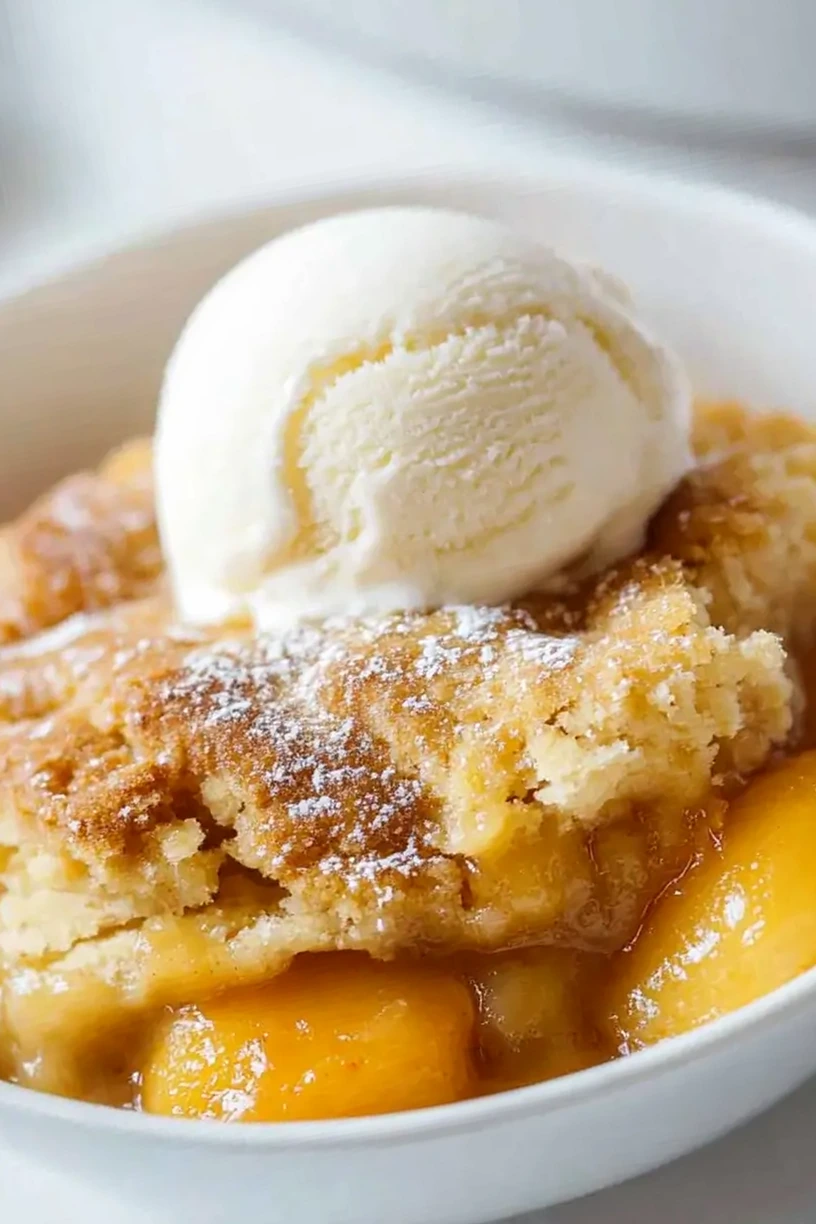
This dessert combines juicy, ripe peaches with a buttery, golden-brown biscuit topping. It is a straightforward recipe that uses basic pantry staples and fresh fruit for a comforting result.
List of ingredients
- 6 to 7 ripe peaches (about 2½ pounds), sliced and peeled if preferred – provide the main flavor and juicy texture.
- ¾ cup granulated sugar – sweetens the fruit filling.
- 1 tablespoon lemon juice – balances sweetness and prevents browning.
- 2 teaspoons cornstarch – thickens the peach juices into a syrup.
- 1 teaspoon vanilla extract – adds a rich aromatic depth.
- ½ teaspoon ground cinnamon (optional) – provides a warm spice note.
- 1 cup all-purpose flour – forms the base of the biscuit topping.
- ½ cup granulated sugar – sweetens the crust.
- 1½ teaspoons baking powder – ensures the topping rises and stays light.
- ¼ teaspoon salt – enhances the overall flavor of the dough.
- ½ cup cold unsalted butter (1 stick), cut into small cubes – creates a flaky, tender texture.
- ¼ cup boiling water – binds the topping ingredients together.
- 1 tablespoon coarse sugar (optional) – adds a decorative crunch to the top.
step-by-step instructions
- Prepare Oven: Preheat your oven to 375°F to ensure it reaches the correct temperature before the cobbler goes in.
- Prep Fruit: Wash the peaches, then slice them into uniform pieces; you may peel them first if you prefer a smoother texture.
- Mix Filling: In a large bowl, stir together the sliced peaches, ¾ cup granulated sugar, lemon juice, cornstarch, vanilla extract, and cinnamon.
- Macerate Peaches: Let the fruit mixture sit for 10 minutes to allow the sugar to draw out the natural juices.
- Combine Dry Ingredients: In a separate bowl, whisk together the flour, ½ cup sugar, baking powder, and salt.
- Cut in Butter: Add the cold cubed butter to the dry mix and use a fork or pastry cutter to work it in until the mixture looks like coarse sand.
- Form Dough: Pour in the ¼ cup of boiling water and stir just until a thick, lumpy dough forms, avoiding overmixing.
- Arrange Filling: Pour the prepared peach mixture into a 9-inch square baking dish or a similar deep pan.
- Apply Topping: Spoon the dough over the peaches in small mounds, leaving some gaps for the filling to bubble through.
- Final Touch: Flatten any oversized mounds slightly with a spoon and sprinkle the top with coarse sugar if desired.
- Bake: Place in the oven for 38 to 42 minutes until the topping is golden brown and the filling is bubbling.
- Cool: Remove from the oven and let the dish rest for at least 15 minutes to allow the sauce to thicken.
- Serve: Present the cobbler warm or at room temperature, optionally paired with vanilla ice cream or whipped cream.
Optimal Peach Selection
Identifying Peak Ripeness
Select peaches that have a deep golden-yellow base color rather than a green hue near the stem. A ripe peach should give slightly when pressed gently near the stem and emit a sweet, fragrant aroma.
Choosing Freestone vs Clingstone
Freestone peaches are ideal for cobblers because the pit separates easily from the flesh. Clingstone peaches stick to the pit, making them more difficult and time-consuming to slice.
Handling Bruised Fruit
Avoid peaches with deep bruises, mold, or shriveled skin, as these will affect the taste. Small surface marks are acceptable, especially when buying from local farmers markets.
Ripening Hard Peaches
If your peaches are too firm, leave them on the kitchen counter for a few days. Placing them inside a brown paper bag can accelerate the ripening process by trapping ethylene gas.
Fruit Preparation Techniques
Efficient Peeling Methods
To peel peaches quickly, cut a small X in the bottom of the fruit and blanch them in boiling water for 30 seconds. Immediately move them to an ice bath, and the skins will slide off effortlessly.
Slicing for Texture Consistency
Aim for slices about ½-inch thick to ensure they maintain their shape during baking. Slices that are too thin may dissolve into a jam-like consistency, while overly thick pieces may stay too firm.
Managing Excess Moisture
Allowing the peaches to sit with sugar for 10 minutes helps release juices before baking. This step ensures the cornstarch can effectively thicken the liquid into a glossy syrup.
Using Frozen Peach Alternatives
If fresh peaches are unavailable, use frozen sliced peaches that have been fully thawed. Be sure to drain any excess water from the thawed fruit to prevent the filling from becoming watery.
Creating the Perfect Crust
Importance of Cold Butter
Keep the butter chilled until the moment it is added to the flour mixture. Cold butter creates small pockets of steam during baking, which results in a flaky and tender biscuit topping.
Using Boiling Water for Binding
Boiling water helps the flour and butter integrate quickly without requiring extensive kneading. This method prevents the development of too much gluten, keeping the topping soft.
Avoiding Overmixing the Dough
Stir the dough only until it just comes together into a thick, lumpy batter. Overworking the dough will lead to a tough, bread-like crust rather than a tender cobbler topping.
Strategizing Topping Placement
Drop the dough in mounds rather than spreading it as a solid layer. Leaving gaps allows steam to escape and lets the bubbling fruit filling caramelize around the edges of the biscuits.
Baking and Finishing Guidelines
Monitoring for Visual Cues
The cobbler is finished when the topping reaches a deep golden brown color. Look for the peach filling to be bubbling actively around the perimeter of the baking dish.
Checking the Center for Doneness
Insert a toothpick into the center of a topping mound to ensure it is baked through. The toothpick should come out clean, indicating the flour and baking powder have set.
Preventing Top Scorching
If the topping browns too quickly before the filling bubbles, tent the dish loosely with aluminum foil. This protects the crust from burning while the fruit continues to cook.
The Role of the Resting Period
Waiting 15 minutes after removing the cobbler from the oven is critical for the sauce. This cooling period allows the cornstarch to fully set, preventing the dessert from being too runny.
Serving and Presentation Ideas
Classic Ice Cream Pairing
Serve a warm scoop of cobbler with a ball of high-quality vanilla ice cream. The cold cream melts into the warm fruit and buttery crust for a traditional contrast.
Lightly Whipped Cream Topping
For a lighter option, top each serving with a dollop of freshly whipped cream. This adds a cloud-like texture that complements the richness of the butter in the crust.
Serving at Room Temperature
While warm is traditional, this cobbler can be served at room temperature for a denser texture. This is a good option for outdoor gatherings where reheating isn’t possible.
Adding a Fresh Garnish
Place a small sprig of fresh mint or a single thin slice of raw peach on top of the serving. This adds a pop of color and a hint of freshness to the plate.
Storage and Preservation
Refrigeration Best Practices
Let the cobbler cool completely before covering it with foil or plastic wrap. Store it in the refrigerator for up to 4 days to maintain the freshness of the fruit.
Freezing for Long Term Storage
Wrap the cooled cobbler tightly in plastic wrap and then aluminum foil, or place it in a freezer-safe container. It can be stored in the freezer for 2 to 3 months.
Thawing Frozen Cobbler
Move the frozen cobbler to the refrigerator 24 hours before you plan to eat it. Thawing slowly helps preserve the texture of the biscuit topping.
Managing Condensation
Avoid sealing the dish while the cobbler is still steaming hot. Trapping steam inside the container will cause the crust to become soggy and lose its crispness.
Reheating Instructions
Restoring Texture in the Oven
Preheat the oven to 350°F and warm the cobbler for about 15 minutes. This is the best method for restoring the golden-brown crispness of the topping.
Quick Reheating via Microwave
Heat individual portions in the microwave for 30 to 40 seconds. While this is faster, the topping will be softer than it would be if reheated in the oven.
Maintaining Moisture During Reheating
If using the oven, you can add a tiny splash of water to the edges of the pan. This creates a small amount of steam that keeps the peaches juicy during the reheating process.
Customizations and Substitutions
Swapping White Sugar for Brown Sugar
Replace the granulated sugar in the filling with light brown sugar for a deeper, molasses-like flavor. This adds a caramelized note that pairs well with the cinnamon.
Gluten-Free Crust Alternatives
Use a 1:1 gluten-free all-purpose flour blend to make the topping accessible for those with gluten sensitivities. Ensure the blend contains xanthan gum to help the dough hold together.
Enhancing Flavor with Almond Extract
Add a quarter teaspoon of almond extract to the peach filling. The nutty flavor of almond complements the sweetness of the peaches and adds professional depth.
Using Different Fruit Combinations
You can replace half of the peaches with sliced nectarines or apricots. These fruits have similar acidity and baking times, resulting in a complex stone-fruit cobbler.
Troubleshooting Common Problems
Addressing Runny Filling
If the sauce is too thin, increase the cornstarch by an extra teaspoon next time. This usually happens if the peaches are exceptionally juicy or if the resting period was skipped.
Fixing a Dense Topping
A heavy or dense crust is often caused by overmixing the dough or using expired baking powder. Ensure your leavening agents are fresh and stir the dough only until combined.
Correcting Bland Fruit Taste
If the filling tastes flat, increase the amount of lemon juice by a teaspoon. The acidity of the lemon brightens the natural flavors of the peaches and balances the sugar.
Handling Burnt Bottoms
If the bottom of the filling burns before the top is done, try baking on a middle rack. Using a glass baking dish instead of metal can also distribute heat more evenly.
Frequently Asked Questions
Can I use canned peaches?
Yes, you can use canned peaches, but you must drain them thoroughly first. Reduce the added sugar in the recipe since canned peaches are often stored in heavy syrup.
Why did my topping not rise?
This is typically due to old baking powder or overmixing the flour. Check the expiration date of your baking powder and use a light hand when stirring the boiling water.
Do I have to peel the peaches?
Peeling is optional and depends on the skin thickness. Thin skins soften during baking and are perfectly edible, while thicker skins may be more noticeable in texture.
Can I make this in a cast-iron skillet?
Yes, a cast-iron skillet is excellent for cobblers because it retains heat well. Simply follow the same steps and bake until the edges are bubbly and golden.
Print
Classic Homemade Fresh Peach Cobbler
- Total Time: 77 minutes
- Yield: 6 servings 1x
- Diet: Vegetarian
Description
This classic peach cobbler is packed with juicy fresh peaches and topped with a golden biscuit-style crust. It’s cozy, simple, and perfect for summer or anytime you need a comforting dessert.
Ingredients
- 6 to 7 ripe peaches (about 2½ pounds, sliced)
- ¾ cup granulated sugar
- 1 tablespoon lemon juice
- 2 teaspoons cornstarch
- 1 teaspoon vanilla extract
- ½ teaspoon ground cinnamon
- 1 cup all-purpose flour
- ½ cup granulated sugar
- 1½ teaspoons baking powder
- ¼ teaspoon salt
- ½ cup cold unsalted butter (1 stick, cut into small cubes)
- ¼ cup boiling water
- 1 tablespoon coarse sugar
Instructions
- Preheat: Preheat oven to 375°F.
- Prep Peaches: Wash, slice, and optionally peel the peaches.
- Mix Filling: In a large mixing bowl, combine sliced peaches, ¾ cup granulated sugar, lemon juice, cornstarch, vanilla extract, and cinnamon if using.
- Rest: Stir gently and let sit for 10 minutes to release juices.
- Dry Ingredients: In a separate bowl, mix the flour, ½ cup sugar, baking powder, and salt.
- Cut Butter: Add cold cubed butter to the flour mixture.
- Blend: Use a fork or pastry cutter to cut in the butter until the mixture is crumbly and resembles coarse sand.
- Form Dough: Pour in ¼ cup boiling water and stir just until a thick dough forms.
- Transfer: Pour the peach filling into a 9-inch square baking dish or similar-sized pan.
- Topping: Spoon the topping over the peaches in small mounds, leaving some gaps.
- Flatten: Flatten large mounds slightly with the back of the spoon.
- Finish: Sprinkle coarse sugar on top if desired.
- Bake: Bake for 38 to 42 minutes, until the topping is golden brown and the peach filling is bubbly around the edges.
- Cool: Remove from oven and let cool for at least 15 minutes before serving.
- Serve: Serve warm or at room temperature, plain or with vanilla ice cream or whipped cream.
Notes
For the best results, use ripe freestone peaches. If using frozen peaches, ensure they are thawed and drained first. Letting the cobbler cool for 15 minutes is essential for the filling to thicken.
- Prep Time: 35 minutes
- Cook Time: 42 minutes
- Category: Dessert
- Method: Baking
- Cuisine: American
Nutrition
- Serving Size: 1 serving
- Calories: 480 kcal
- Sugar: 42 g
- Sodium: 280 mg
- Fat: 12 g
- Saturated Fat: 7 g
- Unsaturated Fat: 5 g
- Trans Fat: 0 g
- Carbohydrates: 75 g
- Fiber: 4 g
- Protein: 6 g
- Cholesterol: 35 mg