
This method for making thick, traditional peach preserves utilizes a slow, multi-day boiling process to ensure a rich consistency. By repeatedly heating and cooling the fruit, the natural pectins concentrate for a superior set without excessive wateriness.
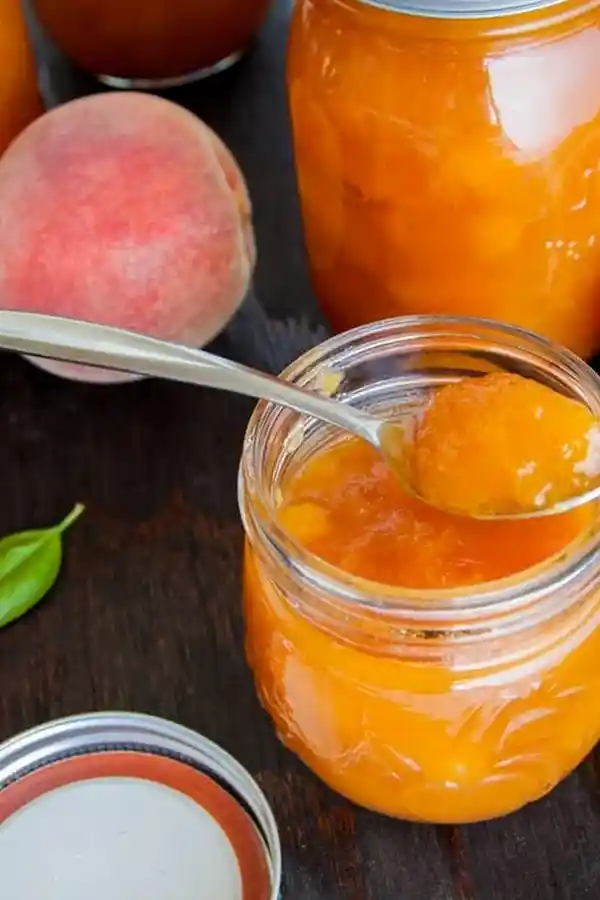
List of ingredients
- 11 lbs peaches, rinsed – use ripe, firm fruit for the best set.
- 4 cups granulated sugar, or more to taste – serves as both a sweetener and a preservative.
- 1/2 cup lemon juice (from 3-4 large lemons) – provides necessary acidity to help the preserves gel.
- 5-6 pint-sized jars with lids – standard 16oz canning jars.
step-by-step instructions
- Blanch the peaches: Fill two-thirds of a large soup pot with water and bring to a boil. Add peaches for 30 to 45 seconds, then remove them immediately with a slotted spoon and place them into a large bowl of cold water.
- Prepare the fruit: Peel the skins by hand or with a knife, cut the peaches into quarters, and remove the pits.
- Combine ingredients: Place all peeled peach quarters into a large stock pot and stir in the lemon juice. Drizzle 2 cups of sugar over the fruit, toss to coat, and then add the remaining 1.5 to 2 cups of sugar.
- Dissolve sugar: Let the peach mixture sit at room temperature for 30 minutes to 1 hour until the sugar has completely dissolved.
- First boil: Place the uncovered pot on the stove and bring the mixture to a light boil, stirring constantly to prevent scorching. Once the entire pot is boiling, simmer for 10 minutes, then turn off the heat.
- Cooling phase: Let the pot stand uncovered until the preserves are just warm to the touch or have reached room temperature.
- Repeat heating: Repeat the boiling and cooling process a total of five times. If you prefer an even thicker consistency, you may bring the mixture to a boil a sixth time.
- Final boil and sterilization: On the fifth (or sixth) boil, use slightly lower heat and stir frequently. While the preserves are boiling hot, sterilize your jars by washing them and drying them in an oven at 215°F for 20 minutes. Boil the lids for 5 minutes.
- Fill the jars: Use a funnel and a glass measuring cup to transfer the hot preserves into the sterilized jars, leaving 1/2 inch of headspace at the top.
- Seal and process: Screw the lids on firmly but not overly tight to allow air bubbles to escape. Place the jars in a canning pot, cover with 1 to 2 inches of water, and boil for 15 minutes.
- Set the seal: Remove the jars with a jar lifter and let them sit undisturbed at room temperature for 12 to 24 hours. Check the seal by pressing the center of the lid; it should not move.
Pro Strategies for Perfect Preserves
Choosing the Right Peach Variety
Select peaches that are fully ripe but still maintain a firm structure. Overripe peaches can break down too quickly during the repeated boiling process, resulting in a jam-like texture rather than preserves. Firm peaches hold their shape better during the multi-day cycle.
Using a Large Capacity Stock Pot
A pot with a 20-quart capacity or larger is highly recommended. As the preserves reach a boil, they tend to foam and bubble up significantly. Extra headspace in the pot prevents boil-overs and ensures a safer cooking environment on the stove.
Preventing Bottom Scorching
Because of the high sugar content, the preserves can burn easily at the bottom of the pot. Use a heavy-bottomed pot to ensure even heat distribution. Stir the mixture frequently, especially as it reaches the boiling point, to keep the sugars from concentrating and scorching.
Managing Temperature during Final Boils
On the fourth and fifth boiling cycles, the mixture becomes significantly thicker and more prone to burning. Lower the heat slightly and increase the frequency of stirring. This ensures the preserves reach the desired thickness without developing a burnt flavor.
Ingredient Substitutions and Adjustments
Adjusting Sugar Levels for Sweetness
If your peaches are exceptionally sweet, you can reduce the total sugar to 3.5 cups. However, do not reduce it too drastically, as sugar is essential for the preservation process and the final texture. You can always stir in additional sugar during the cooking phase if the taste is too tart.
Substituting Fresh Lemon Juice
If fresh lemons are unavailable, bottled lemon juice is a practical alternative. Ensure the bottled juice is 100% lemon juice without added sugar or preservatives. The acidity is critical for the activation of natural pectins in the fruit.
Alternative Sweetener Options
Granulated cane sugar is preferred for the best set and clarity. While honey or maple syrup can be used, they will alter the flavor profile and may result in a softer set. If using liquid sweeteners, you may need an additional boiling cycle to achieve the same thickness.
Flavor Variations
Adding Warm Spices
For a more complex flavor, stir in a pinch of ground cinnamon or a whole vanilla bean during the first boil. These additions complement the natural sweetness of the peaches. Ensure spices are well-incorporated to avoid clumps in the final product.
Introducing Fresh Ginger
Finely minced fresh ginger can be added during the first heating cycle to provide a zesty contrast to the sweet fruit. The ginger infuses into the syrup over the multiple boiling cycles, creating a sophisticated flavor profile suitable for pairing with meats.
Combining with Other Stone Fruits
You can replace a portion of the peaches with apricots or nectarines. These fruits have similar pectin levels and water content, ensuring the set remains consistent. A mix of stone fruits adds depth and a more varied color to the preserves.
Creative Serving Ideas
Breakfast Pairings
These preserves are ideal for topping warm sourdough toast, buttermilk biscuits, or English muffins. They also pair well with Greek yogurt or cottage cheese for a nutrient-dense breakfast. Spread them over warm scones for a classic tea-time treat.
Using Preserves as a Savory Glaze
The thick consistency makes these preserves an excellent glaze for roasted meats. Brush the preserves over grilled chicken, roasted ham, or pork loin during the last ten minutes of cooking. The sugar caramelizes on the meat, creating a sweet and savory crust.
Incorporating into Baked Goods
Use the preserves as a filling for thumbprint cookies or as a layer in a peach cake. They can also be swirled into cheesecake batter before baking for a marbled effect. For a quick dessert, spoon warm preserves over vanilla bean ice cream.
Storage and Preservation Guidelines
Optimal Pantry Storage
Store the sealed jars in a cool, dark, and dry place such as a pantry or cellar. Avoiding direct sunlight and extreme temperature fluctuations helps maintain the color and flavor of the fruit. Properly processed jars can be stored for up to one year.
Verifying the Vacuum Seal
After the 24-hour cooling period, always check the center of the lid. A successful seal is indicated by a concave lid that does not pop or move when pressed. If the lid springs back, the vacuum seal failed, and the jar must be handled differently.
Managing Unsealed Jars
If a jar fails to seal, it cannot be stored at room temperature. Transfer the preserves to a clean container and store them in the refrigerator immediately. Unsealed preserves must be consumed within three months to ensure safety and quality.
Identifying Signs of Spoilage
Discard any preserves if you notice leaking, bulging lids, or an abnormal smell upon opening. Mold on the surface or unusual discoloration are also indicators that the preserves are no longer safe for consumption. When in doubt, discard the product.
Troubleshooting Common Issues
Fixing Watery Consistency
If the preserves are too runny after the fifth boil, you can perform a sixth boiling cycle. The repeated evaporation of water concentrates the solids and pectins. Allow the mixture to cool completely before checking the final set, as preserves thicken as they cool.
Handling Crystallized Sugar
Crystallization can occur if too much sugar is added or if the mixture is stirred too vigorously during the final stages. To fix this, gently reheat the preserves with a small amount of lemon juice. Stir slowly over low heat until the crystals dissolve.
Correcting Overcooked Preserves
Overcooking can lead to a rubbery texture or a burnt taste. If the preserves have become too thick or dark, avoid further boiling. If a burnt taste is present, you may attempt to strain the preserves through a fine-mesh sieve, though this may remove some fruit chunks.
Frequently Asked Questions
Do I need to add commercial pectin?
No, this recipe relies on the natural pectin found in peaches and the concentration achieved through the multi-day boiling method. The repeated heating and cooling process creates a thick, stable set without the need for additives.
Can I make this recipe in a slow cooker?
This specific method requires rapid boiling and complete cooling cycles to achieve the desired thickness. A slow cooker cannot reach the necessary boiling temperatures or cool rapidly enough to replicate this traditional process.
Why do I have to boil the mixture five times?
The multi-day process allows the fruit to break down slowly and the water to evaporate gradually. This results in a denser, more flavorful preserve that is not watery and has a professional-grade consistency.
Can I use frozen peaches instead of fresh?
Yes, frozen peaches can be used. Thaw them completely and drain any excess liquid before beginning the process. Be aware that frozen fruit may have a slightly different water content, which might require an extra boiling cycle.
Is it safe to leave the pot on the counter overnight?
Yes, because of the high sugar concentration and the acidity from the lemon juice, the mixture is stable at room temperature. The sugar acts as a preservative, preventing spoilage between the boiling cycles.
Print
Country Peach Preserves
- Total Time: 24 hours 40 minutes
- Yield: 5.5 pint jars 1x
- Diet: Vegetarian
Description
A traditional, slow-cooked country-style peach preserve that utilizes a multi-day boiling process to ensure a thick, rich consistency without being watery.
Ingredients
- 11 lbs peaches, rinsed
- 4 cups granulated sugar
- 1/2 cup lemon juice
Instructions
- Step: Fill 2/3 of a large soup pot with water, bring to a boil, add peaches for 30-45 seconds, and remove immediately to a bowl of cold water.
- Step: Peel the skins, cut peaches into quarters, and remove pits.
- Step: Place peeled peaches in a large soup pot, add lemon juice, and stir in the granulated sugar.
- Step: Let peaches sit at room temperature for 30 minutes to 1 hour until sugar is dissolved.
- Step: Bring to a light boil, simmer for 10 minutes, turn off heat, and let stand uncovered until it reaches room temperature.
- Step: Repeat the boiling and cooling process until the mixture has been brought to a light boil a total of 5 times.
- Step: Sterilize clean jars by drying them in the oven at 215°F for 20 minutes and boil the lids for 5 minutes.
- Step: Transfer boiling hot preserves to jars leaving 1/2″ space and screw lids on enough to keep a seal without over-tightening.
- Step: Place jars in a canning pot covered with 1-2 inches of water, bring to a boil, and process for 15 minutes.
- Step: Remove jars and leave undisturbed at room temperature for 12-24 hours to seal.
Notes
For an even thicker consistency, the preserves can be boiled up to 6 times. If the seal does not form after 24 hours, refrigerate the preserves and consume within 3 months.
- Prep Time: 40 minutes
- Cook Time: 24 hours
- Category: Condiments, Dessert
- Method: Canning
- Cuisine: American
Nutrition
- Serving Size: 2 tablespoons
- Calories: 65 kcal
- Sugar: 16 g
- Sodium: 2 mg
- Fat: 0 g
- Saturated Fat: 0 g
- Unsaturated Fat: 0 g
- Trans Fat: 0 g
- Carbohydrates: 17 g
- Fiber: 0.5 g
- Protein: 0.3 g
- Cholesterol: 0 mg